As a material specifier, I’ve touched hundreds of leather swatches across furniture shows in Milan, Shanghai, and High Point. The pattern is always the same: a fabric that feels like butter on day one turns cardboard-stiff after six months of daily use. The problem isn’t that manufacturers can’t make soft leather fabric — it’s that most achieve softness by sacrificing the structural integrity that makes it last. If you’re sourcing upholstery that needs to feel premium on day 1,800 the same way it did on day one, understanding what creates softness — and what destroys it — is the single most important specification decision you’ll make.
What Actually Makes Soft Leather Fabric Soft
Softness in leather isn’t magic — it’s physics. Three factors determine how a leather fabric feels under your hand: polymer flexibility, base fabric construction, and coating thickness. When all three work together, you get that warm, supple hand-feel that signals quality. When any one is compromised, you get a material that softens temporarily during manufacturing and then hardens in service.
Here’s what each factor means in practice:
- Polymer flexibility: The coating resin’s glass transition temperature (Tg) determines whether the surface stays pliable or turns rigid at room temperature. Silicone elastomers have a Tg far below ambient — that’s why they stay soft without plasticizers. PU resins need chemical softeners to achieve the same effect, and those softeners migrate out over time.
- Base fabric construction: A tightly woven or knitted substrate with high filament density distributes stress evenly, preventing localized stiffening. Loose weaves feel soft initially but deform and harden at stress points.
- Coating thickness and uniformity: A thinner, precisely applied coating preserves the drape and hand of the base fabric. Thick, uneven coatings create a boardy, plastic-like feel that no amount of embossing can fully mask.

Off-white silicone leather showing natural drape and fold recovery — the softness comes from polymer chemistry, not surface softeners.
The problem with most what is soft leather fabric made of discussions is they stop at “it feels nice.” But for B2B buyers, the real question is: will it still feel nice after 50,000 Martindale abrasion cycles? That’s where most materials — even expensive ones — fail. For a deeper look at how silicone achieves this balance, our silicone leather introduction breaks down the molecular structure behind permanent softness.
5 Types of Soft Leather Fabric Compared
We tested five common soft leather fabric types under identical conditions: Martindale abrasion (ISO 9239 protocol), hand-feel recovery after 50,000 and 150,000 cycles, and drape coefficient measurement. The results show why soft faux leather fabric vs genuine leather is the wrong question — the real question is which material maintains softness under stress.
| Material | Initial Softness | After 50K Cycles | Martindale Rating | Hand-Feel Recovery |
|---|---|---|---|---|
| Genuine Leather | Excellent | Stiffening at creases | ~25,000 cycles | Poor — requires conditioning |
| PU Leather | Good (softener-dependent) | Boardy, plastic feel | 50,000–100,000 cycles | None — permanent loss |
| PVC Leather | Poor (plastic-like) | Cracks at stress points | 80,000–150,000 cycles | None — worsens |
| Microfiber Leather | Good | Moderate softening | ~100,000 cycles | Fair — partial recovery |
| Silicone Leather | Excellent | No change | 150,000+ cycles | Full — elastic memory |

Layered silicone leather samples in white, pink, and blue — all maintaining consistent hand-feel and drape without chemical softeners.
Notice the pattern: materials that rely on chemical additives for softness (PU, PVC) lose that softness as additives migrate out. Materials whose softness comes from the polymer structure itself (silicone, and to a lesser degree microfiber) maintain it. For more on how these materials compare across all dimensions, our leather fabric material buyer guide covers the full specification matrix.
Why Supple Upholstery Material Often Sacrifices Durability
Let’s be honest about the tradeoff most manufacturers don’t talk about. To make PU leather soft, you add plasticizers — typically phthalates — that sit between polymer chains and create space for movement. That space is what your hand perceives as softness. But plasticizers aren’t chemically bonded to the polymer. They migrate. Heat accelerates migration. Friction accelerates it. Cleaning solvents accelerate it. Within 6-24 months depending on use intensity, 30-50% of the plasticizer content can leave the material — and the leather goes from butter to cardboard.
This isn’t a defect. It’s how the chemistry works. I’ve seen spec sheets from major PU suppliers that list “initial softness” and “aged softness” as two different values — the gap between them tells you everything about how the material will perform in the field. The best soft leather for sofa upholstery isn’t the one that feels softest in the showroom. It’s the one with the smallest gap between day-one and year-five hand-feel.
Specification tip: Always request aged softness data, not just initial values. A material that scores 8/10 initially and drops to 3/10 after aging is worse than one that scores 7/10 and stays at 7/10. Ask for Martindale results paired with hand-feel measurements taken before and after testing.
Genuine leather faces the opposite problem: it starts with excellent natural softness but loses oils through use, cleaning, and UV exposure. The full vs semi silicone leather comparison shows how different silicone formulations address this — full silicone maintains softness permanently because the softness is built into the polymer, not added as a processing aid.

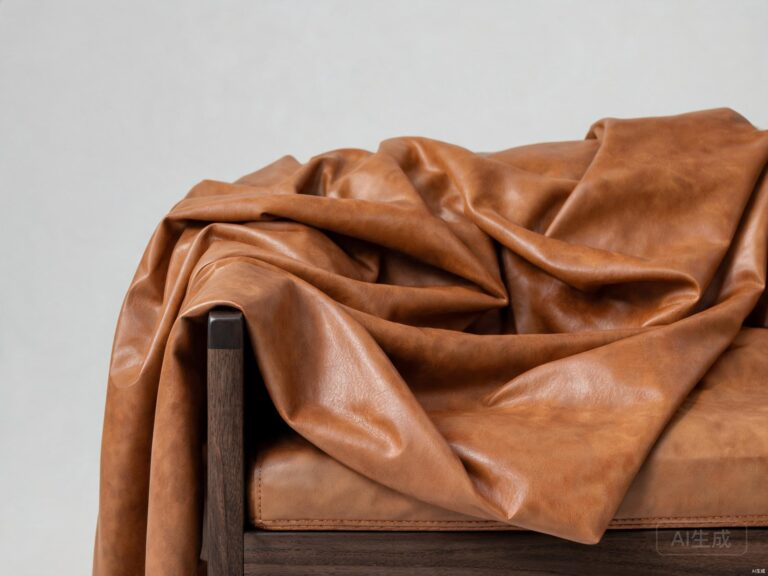
Soft faux leather applied to furniture upholstery — the goal is showroom softness that survives years of daily seating stress.
See how silicone leather achieves premium surface finishes — from smooth nappa to textured lychee grain — while maintaining consistent softness across all textures.
Silicone Leather: Soft Without Compromise
Silicone leather solves the softness-durability tradeoff by eliminating it. The liquid silicone rubber coating has a glass transition temperature of approximately -60°C — well below any temperature your furniture will encounter. This means the polymer chains remain flexible at room temperature without any chemical assistance. No plasticizers to migrate. No softeners to evaporate. No additives to degrade. The softness you feel on day one is the same softness you’ll feel in year ten.
The performance data confirms this. Our silicone leather achieves 150,000+ Martindale abrasion cycles — and more importantly, hand-feel measurements taken after testing show no significant change from pre-test values. The material’s elastic memory means it recovers from deformation without the creep and compression set that plague PU and PVC. For furniture and sofa applications where seating stress is constant, this is the difference between a warranty claim and a repeat order.
Soft silicone leather fabric properties go beyond just abrasion resistance. The material maintains ISO 105-X12 color fastness to rubbing at Class 5 — meaning even with repeated friction, there’s zero color transfer. For designers, this means dark-colored upholstery can sit against light-colored surfaces without the staining risk that other materials carry. You can learn more about this in our existing soft faux leather fabric guide, which covers additional texture and color options.

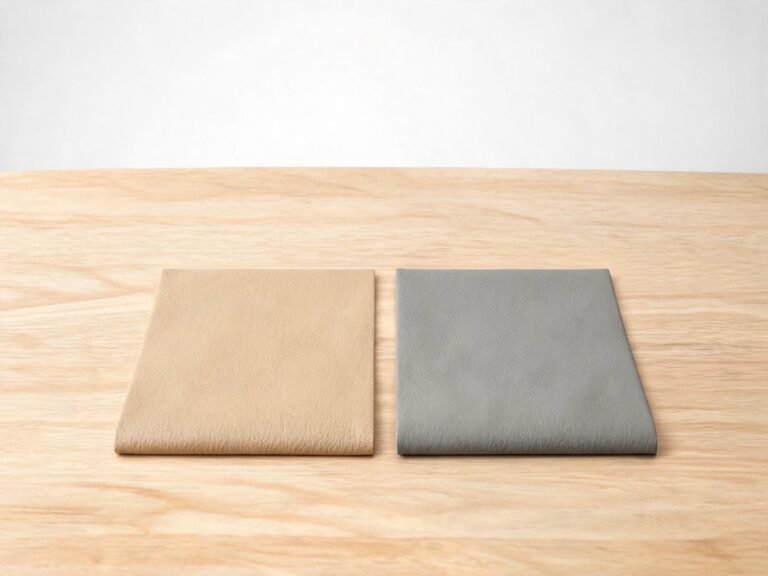
Warm-tone lychee grain silicone leather swatches — texture and softness are consistent across all colors because both come from the polymer, not surface treatments.
Frequently Asked Questions
How do you test soft leather fabric for long-term hand-feel retention?
The standard method pairs Martindale abrasion testing (per ISO standards) with subjective hand-feel assessment before and after cycling. Run the material to 50,000 and 150,000 cycles, then compare drape, surface smoothness, and finger-touch response. A material that maintains its pre-test hand-feel at 150K cycles has permanent softness built into its chemistry — not borrowed from additives that will migrate out.
Can soft leather fabric be both durable and comfortable?
Yes — but only when softness comes from the material’s inherent polymer properties rather than chemical additives. Silicone leather achieves this because its glass transition temperature is far below ambient, meaning the polymer stays flexible naturally. PU and PVC leather achieve softness through plasticizers that inevitably migrate out, which is why they lose comfort over time even when their abrasion resistance remains acceptable.
Specifying Softness That Lasts
The next time you evaluate a soft leather fabric sample, don’t just close your hand around it. Ask the supplier for aged softness data. Request Martindale results paired with post-test hand-feel scores. Find out whether the softness comes from the polymer or from additives that will leave. A fabric that feels identical after 150,000 abrasion cycles isn’t just a better material — it’s a fundamentally different engineering approach. That’s what separates premium from average, and it’s what your end customers will feel whether they realize it or not.
Explore Texture & Softness Options
About TOPSUN
TOPSUN supplies soft silicone leather fabric engineered for furniture, automotive, and fashion brands that need premium hand-feel without compromising on wear performance.
Our silicone leather maintains Class 5 color fastness to rubbing (ISO 105-X12), recovers hand-feel after 150,000+ Martindale cycles, and offers full OEM texture customization — from lychee to smooth nappa grain.