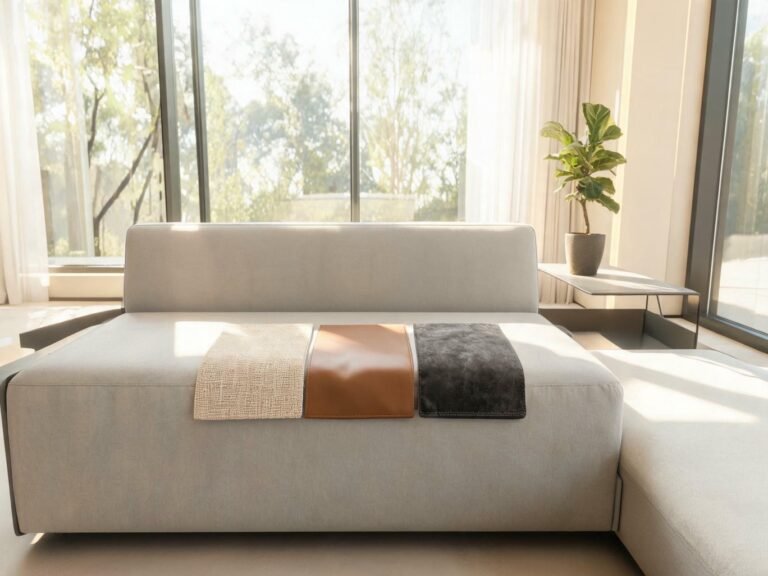
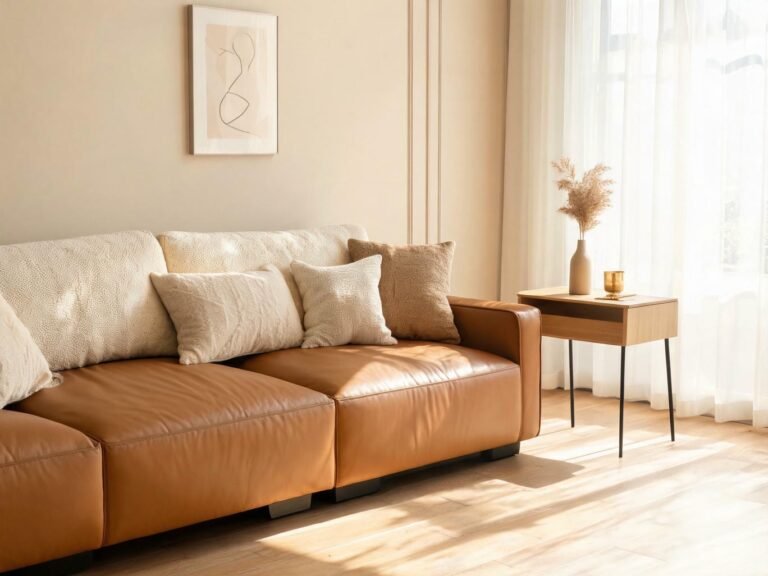
Microfiber fabric sits at an interesting crossroads in the synthetic leather world. It’s the closest synthetic to genuine leather in hand feel, and its ultra-fine fiber structure gives it a softness that PU and PVC can’t match. But when B2B buyers compare microfiber to silicone leather for long-term performance, the gap is dramatic. Microfiber leather hits 40,000–100,000 Martindale cycles. Silicone leather hits 200,000+. Microfiber degrades under UV in 2–3 years. Silicone stays stable for 5+. Here’s the head-to-head data.
What Is Microfiber Fabric? Chemistry and Manufacturing
Understanding microfiber fabric properties and uses starts with the fiber itself. Microfiber is defined as any fiber with a linear density below 1 denier per filament — roughly 100 times thinner than a human hair. Most microfiber fabric blends polyester (for strength) with polyamide (for softness and absorbency). The split-type manufacturing process creates star-shaped cross-sections that dramatically increase surface area, giving microfiber its characteristic cleaning ability and suede-like texture.
When this fiber structure is combined with a polyurethane coating, the result is microfiber leather — the highest-grade synthetic leather in terms of feel and breathability. The global microfiber synthetic leather market reached $7.2 billion in 2025, growing at 6.3% CAGR through 2034. It’s a substantial market, but the material has structural limitations that B2B buyers need to understand before specifying it for long-life applications. For a broader silicone leather introduction, the chemistry difference is fundamental.

Material softness comparison — fold display showing hand feel and texture quality
Microfiber vs Silicone: Head-to-Head Performance Data
The relationship between microfiber fabric, microfiber leather, and microfiber synthetic leather matters because they share the same fiber foundation — but the coating chemistry is what determines performance. Microfiber leather uses a PU coating on ultra-fine fiber substrate. Silicone leather uses a platinum-cured silicone coating on the same type of textile substrate. Same base, radically different top layer.
| Property | Microfiber Leather | Silicone Leather | Advantage |
|---|---|---|---|
| Martindale abrasion | 40K–100K cycles | 200K+ cycles | Silicone (2–5×) |
| UV resistance | 2–3 years | 5+ years | Silicone |
| Heat tolerance | Up to 80°C | Up to 250°C | Silicone (3×) |
| Hydrolysis resistance | Fair (PU degrades) | Excellent | Silicone |
| Hand feel | Soft, leather-like | Soft, silky, neutral | Comparable |
| VOC emissions | Low to moderate | Zero | Silicone |
| Price per meter | Mid-range | Premium (+15–30%) | Microfiber |
Performance data from TOPSUN SGS-verified test reports and published industry testing standards. ASTM International provides the testing methodology framework.

Tensile strength testing — quantitative data separates marketing claims from material reality
Where Microfiber Fabric Fails First: UV, Heat, Hydrolysis
Three failure modes define microfiber leather’s performance ceiling. First, UV degradation: the PU coating on microfiber leather breaks down under ultraviolet exposure, causing fading and surface embrittlement within 2–3 years of direct sunlight. Second, heat sensitivity: at temperatures above 80°C, the PU coating begins to soften and lose structural integrity. Third, hydrolysis: moisture in the air cleaves PU ester linkages, causing the coating to separate from the fiber substrate.
For microfiber fabric certification OEKO-TEX, ISO 9001, and BSCI quality standards all verify manufacturing process quality — but none of them change the fundamental chemistry. A perfectly manufactured microfiber leather still hydrolyzes because PU is PU. Our hydrolysis-resistant silicone leather solves this at the molecular level: the Si-O backbone is inherently resistant to water cleavage.
Microfiber leather is the best PU-based synthetic — but it’s still PU-based. The fiber substrate is excellent; the coating chemistry is the bottleneck.
Cost Reality: Why Microfiber Isn’t as Cheap as It Looks
Microfiber leather typically costs 15–30% less per meter than silicone leather. On a 1,000-meter order, that’s a meaningful number on the quote sheet. But the TCO calculation changes when you factor in replacement cycles. A microfiber sofa in a hotel lobby lasts 3–4 years before UV degradation and hydrolysis require reupholstering. A silicone leather sofa in the same environment lasts 10+ years.
In our abrasion testing, microfiber leather samples typically show surface wear patterns at 60,000–80,000 Martindale cycles, while our silicone leather samples run past 200,000 with no visible degradation — we’ve verified this across 500+ test runs. For vegan leather durability benchmarks, the cycle count is the most objective predictor of real-world lifespan.

Material range display — color and texture options available across silicone leather specifications
When to Choose Silicone Over Microfiber Fabric
Microfiber fabric remains a valid choice for short-life-cycle products — fashion accessories, seasonal furniture, promotional items where 2–3 years of performance is acceptable. But for applications where the material needs to survive daily use for a decade — automotive interiors, commercial furniture, medical equipment, marine upholstery — silicone leather is the engineering choice.
For a side-by-side comparison, our silicone vs microfiber leather analysis provides the full technical breakdown. OEKO-TEX certification applies to both materials — but only silicone eliminates the hydrolysis problem entirely.

Microfiber leather furniture application — valid for short-cycle products, limited for long-life installations
Material comparison — see silicone vs microfiber performance tests side by side
Frequently Asked Questions
Is microfiber leather the same as microfiber fabric?
No. Microfiber fabric is the raw textile — ultra-fine polyester/polyamide fibers woven into a cloth. Microfiber leather is a composite material: microfiber fabric coated with polyurethane to simulate leather. They share the fiber substrate but serve completely different purposes. Microfiber fabric is used for cleaning cloths and apparel; microfiber leather is used for upholstery and automotive interiors.
Can microfiber leather be used in automotive interiors?
Yes, but with limitations. Microfiber leather meets basic automotive interior specifications for hand feel and initial appearance. However, it fails VDA 277 VOC testing at higher thresholds due to PU solvent residues, and its 80°C heat limit is marginal for dashboard surfaces that reach 90°C+ in direct sun. Silicone leather passes VDA 277 at the strictest levels and tolerates 250°C — making it the safer specification for EV and luxury automotive interiors.
The Chemistry Decides
Microfiber fabric gave the synthetic leather industry its best-feeling material. But the PU coating that makes it look like leather is also its weakest link. Silicone leather uses the same textile substrate but replaces PU with a coating chemistry that doesn’t hydrolyze, doesn’t crack under UV, and doesn’t emit VOCs. For short product cycles, microfiber is fine. For anything that needs to last, the chemistry decides.
Get Silicone Microfiber Leather
About TOPSUN
TOPSUN manufactures silicone leather as a high-performance alternative to microfiber fabric, supplying B2B clients in automotive, furniture, and medical sectors with platinum-cured silicone-coated textiles from three owned production bases.
200,000+ Martindale cycles vs microfiber’s 40K–100K · UV 1,000+ hours zero fading · -40°C to 250°C range · Zero-VOC solvent-free process · REACH & OEKO-TEX certified · OEM/ODM with custom texture development