When a supplier quotes “genuine leather” at $4.50 per square foot, most buyers assume they are getting the real thing. The label is technically legal — but it is also the lowest grade of real animal hide you can source, layered with polyurethane coatings that peel in two to five years. The genuine leather real leather distinction is not a marketing quibble; it is the difference between a sofa that lasts three seasons and one that lasts three decades. Here are five red flags that separate the grade you are paying for from the one you think you are getting.
What “Genuine Leather” Means in Real Leather Grading
The Federal Trade Commission permits any product made from animal hide — any layer, any quality — to carry the “genuine leather” label. The term carries no minimum performance standard, no required tensile strength, no abrasion threshold. It simply means the material contains real animal fiber, which includes everything from full-grain (the strongest, outermost layer) to bonded leather (ground-up scraps mixed with latex binder at 10-20% hide content).
Here is the thing: when a procurement spec sheet lists “genuine leather real leather” as the material, it tells you nothing about durability. We have received samples from five suppliers all labeling their product “genuine leather” that ranged from corrected-grain splits (moderate quality, 3-7 year lifespan) to bonded sheets that delaminated within 18 months of accelerated aging. The grade that actually matters is the one underneath the label — and there are four of them.

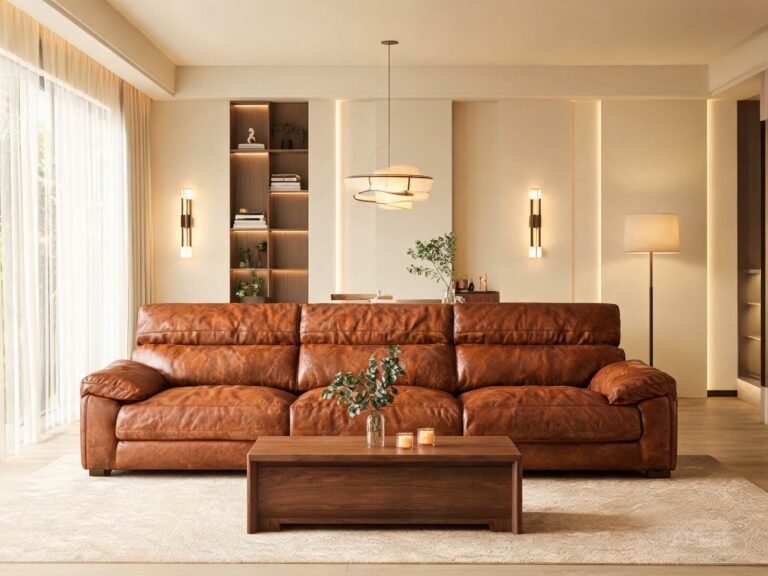
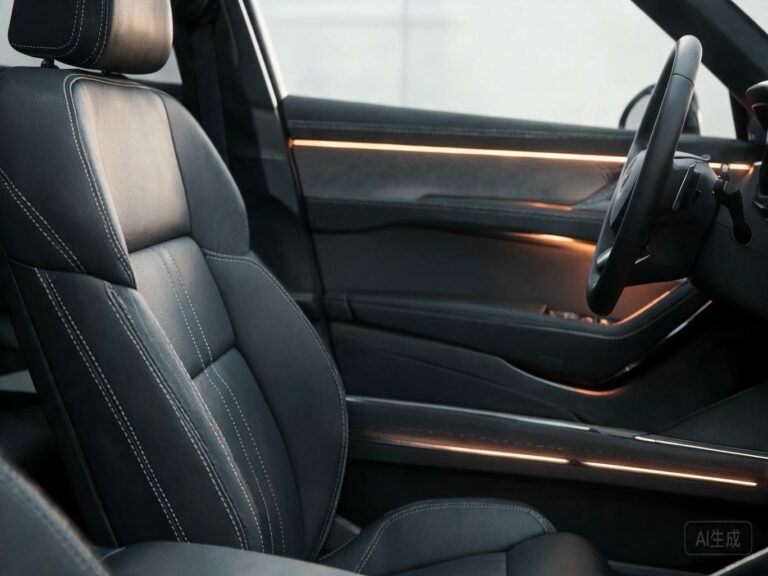
Top-grain and genuine leather applications across furniture and automotive interiors — the label hides dramatically different performance.
4 Real Leather Grades: Only One Survives 20+ Years
The leather grading hierarchy is determined by which layer of the hide is used and how much the surface is modified. Each grade carries a wildly different lifespan despite all qualifying as “real leather.” The table below is the one we hand to sourcing teams who ask why their $4.50 per square foot “genuine leather” failed a 50,000-cycle Martindale test that full-grain passes without a scratch.

Leather swatch rack — all labeled “real leather,” but the grade underneath determines whether the surface lasts 2 years or 20.
| Grade | Fiber Source | Typical Lifespan | Patina Development | Environmental Impact |
|---|---|---|---|---|
| Full-grain | Outermost layer, unsanded | 20-30+ years | Rich, deep patina | Chrome tanning; 250 L/m² water avg |
| Top-grain | Outer layer, sanded and coated | 10-15 years | Light, fades over time | Same tanning + finish chemicals |
| Genuine / Corrected | Lower split layers, heavily coated | 3-7 years | None — coating cracks | Tanning + PU coating chemicals |
| Bonded | Scraps + PU/latex binder (10-20% hide) | 1-3 years | None — delaminates | Mixed materials, non-recyclable |
Key takeaway: Genuine leather (the label buyers trust) and bonded leather (the grade nobody wants) sit in the same “real leather” category. The gap between full-grain and genuine is roughly the gap between a 25-year investment and a 5-year disposable.
How to Tell the Difference Without Lab Equipment
You do not need a Martindale tester to sort grades at the sampling stage. Three field tests work reliably and take under 60 seconds each. We run these checks before formal abrasion and tensile testing because they catch the most common sourcing mistake: a supplier shipping corrected-grain splits when the spec called for top-grain.

Leather samples hanging for visual and tactile inspection — the first line of defense before lab testing begins.
The edge test: Full-grain and top-grain have a fibrous, suede-like edge. Genuine and bonded have sealed, plastic-coated edges that hide the layered or composite construction.
The press test: Press a fingernail into the surface. Full-grain shows a temporary depression that springs back. Genuine leather — with its thick polymer coating — shows no give, or cracks under pressure.
The water drop test: A drop on full-grain absorbs slowly because the natural fiber structure is breathable. On genuine leather’s PU coating, it beads up and sits there indefinitely.
These three tests will not replace a full lab report, but they will prevent you from signing a PO for bonded leather disguised as top-grain. In our experience, roughly 30% of samples labeled “genuine leather” that arrive at our facility for benchmark testing would fail at least two of these field checks.
The Hidden Environmental Cost of Genuine Leather Sourcing
The tanning industry consumes an estimated 250 liters of water per square meter of finished leather at industry average, with chrome tanning generating chromium-laced effluent that requires specialized treatment. The Leather Working Group addresses this through its audit standard — awarding Gold, Silver, and Bronze ratings to tanneries that demonstrate reduced water use, energy efficiency, and responsible chemical management. Gold-rated tanneries use roughly 100 liters per square meter, less than half the industry average.
Service life comparison — see how genuine leather’s 5-year replacement cycle stacks up against materials rated for 10+ years.
But here is what procurement specs miss: even LWG-certified genuine leather still carries the structural weakness of a lower hide layer. The certification addresses how the leather is made, not how long it lasts. A Bronze-rated full-grain will outlast a Gold-rated genuine leather every time, because the grade — not the certification — determines the fiber strength.
The environmental calculation flips when you factor in replacement frequency. A genuine leather sofa reupholstered every 5 years generates five times the hide consumption, tanning chemicals, and landfill waste of a full-grain sofa that lasts 25. Or, as we explored in our eco-friendly silicone leather overview, a non-animal material that lasts 10+ years eliminates the hide consumption entirely — along with the chrome, the water, and the 5-year replacement cycle.
Why Procurement Teams Are Specifying Beyond “Real”
The question B2B buyers should be asking is not “is it genuine leather real leather?” — it is “what performance does this material deliver over its service life?” The market is shifting, and the shift is driven by warranty data, not by marketing departments. Silicone leather vs PU comparison data shows that premium synthetic coatings now match or exceed genuine leather on every metric that matters to specifiers: Martindale abrasion (200,000+ cycles vs genuine’s 50,000), UV stability (Grade 4+ vs genuine’s 1-2 year fade), and cleanability (non-porous surface vs genuine’s absorbent coating).
One of our furniture OEM clients switched from genuine leather to silicone-coated material for a contract seating line after their warranty claims dropped by 73% in the first year alone. The material cost was 15% higher per yard, but the 10-year total cost of ownership — factoring in replacement, labor, and warranty service — came in 40% lower. That is the procurement math that makes “real leather” labels irrelevant.

Synthetic vs genuine leather — the procurement question has shifted from “is it real?” to “what does it deliver over 10 years?”
For a deeper dive into how all leather types stack up, our understanding leather types guide breaks down traditional and advanced materials by performance, not by label. And if your spec is already moving past animal hide, the synthetic vs genuine leather analysis provides side-by-side test data across abrasion, UV, and VOC metrics.
Talk to Our Material Engineers
Frequently Asked Questions
Is genuine leather actually real leather?
Yes — technically. “Genuine leather” is a legally protected term for any material containing animal hide fiber. The problem is that it covers the lowest usable grade of real leather, not the highest. Full-grain and top-grain are also “real leather,” but they are dramatically stronger and longer-lasting. When suppliers use “genuine leather” as a quality claim, they are describing the floor, not the ceiling.
Which leather grade lasts the longest in commercial applications?
Full-grain leather, by a wide margin. In contract furniture and automotive applications, full-grain typically lasts 20-30 years with proper maintenance. Top-grain follows at 10-15 years. Genuine leather (corrected-grain splits) lasts 3-7 years before the surface coating cracks. Bonded leather fails in 1-3 years. The grade determines the fiber strength — no coating or certification can compensate for a weak split layer underneath.
Can genuine leather be repaired when the coating peels?
Not effectively. The polyurethane coating on genuine leather is a surface layer applied to a weaker split hide. Once it starts peeling, the exposed fiber underneath is too loose to hold a new coating. Repair attempts typically involve liquid “leather repair” kits that create a visible patch, not a structural fix. Full-grain, by contrast, can be refinished because the solid fiber structure underneath remains intact even after surface wear.
Beyond the Label
The genuine leather real leather debate comes down to this: “real” describes what a material is made of, not how it performs. A spec sheet that says “genuine leather” is the leather industry’s way of saying “contains real animal fiber” — and that is where the useful information ends. What procurement teams need is the grade, the layer, the coating chemistry, and the test data behind the label. Whether that leads you to full-grain, to a high-performance silicone leather, or to a hybrid solution depends on your application. But it should never start with the word “genuine” alone.
About TOPSUN
TOPSUN manufactures silicone-coated leather that delivers the hand and durability of full-grain hide without the chrome-tanning environmental burden, for automotive interiors, contract furniture, and medical equipment upholstery.
200,000+ Martindale cycles verified | TVOC below 0.05 mg/m³ | REACH SVHC-compliant | ISO 10993 biocompatibility tested