Every summer, we see the same pattern in automotive client feedback: PU leather seats that felt premium in January turn sticky, cracked, and faded by August. Dashboard surfaces warp at 80°C. Cabin air fills with chemical odors that no vent can clear. The problem isn’t poor manufacturing—it’s material mismatch. The leather for car interiors that most OEMs specify passes lab tests but fails real-world thermal cycling, UV bombardment, and sealed-cabin VOC accumulation.
With EV cabins sealed tighter than ever and 2026 VOC regulations tightening further, the gap between “tested” and “survived” is widening. Let’s look at what the automotive interior environment actually demands—and which materials hold up beyond the showroom.
Why Leather for Car Interiors Faces Unique Stress
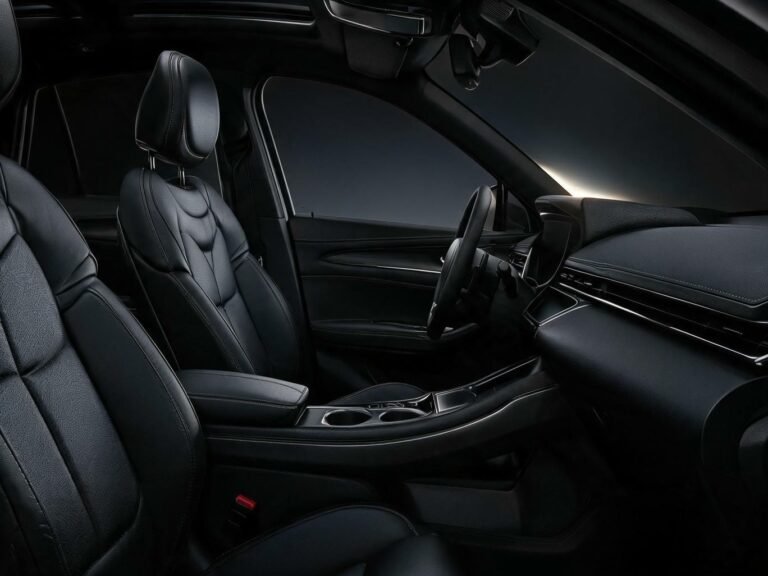
A car interior is the harshest everyday environment for any leather material. Unlike furniture that sits at room temperature, automotive interiors cycle from -20°C in winter to 80°C on the dashboard in direct summer sun. Windshield glass magnifies UV radiation. Seats absorb body oils, sweat, and friction wear daily. And in EVs, the cabin is sealed tighter than ICE vehicles—no engine bay ventilation to dilute chemical off-gassing.
These stressors compound. Thermal cycling stresses the bond between coating and substrate. UV radiation breaks down surface chemistry. Moisture from breath and sweat drives hydrolysis. By the time visible cracking appears, the material has already been failing internally for months. For a deeper look at how these materials compare, see our automotive interiors application guide.

Flame retardant test on automotive leather—FMVSS 302 compliance verification
Leather for Car Seats: 3 Materials Compared Under Real Conditions
The three materials competing for automotive interior applications each fail differently under real-world stress. Here’s what we’ve observed across client projects and material testing:
| Test Condition | Genuine Leather | PU Leather | Silicone Leather |
|---|---|---|---|
| Dashboard temp (80°C) | Dries, cracks | Softens, off-gasses | Stable to 250°C |
| UV 1,000 hrs | Fades, stiffens | Yellows, microcracks | No change |
| VOC at 65°C | 120–380 μg/m³ | 45–95 μg/m³ | Near zero |
| FMVSS 302 flame test | Burns (treated) | Burns, toxic smoke | Self-extinguishing |
| Service life | 5–7 years | 3–5 years | 10+ years |
Genuine leather breathes well but cracks under thermal cycling and absorbs moisture that distorts the grain. PU leather is consistent in thickness but its coating degrades above 60°C, releasing VOCs into the sealed cabin. The silicone vs PU comparison details the chemistry behind these failure modes.

Color fastness tester simulating UV exposure on automotive leather materials
The Cabin Air Quality Problem Nobody Warns You About
EVs changed the cabin air quality equation. Without engine heat and ventilation, EV interiors trap chemical emissions more effectively. At 65°C interior temperature—common in parked cars—PU leather releases 45–95 μg/m³ of volatile organic compounds. Genuine leather emits even more: 120–380 μg/m³ from tanning residues and finishing chemicals. These numbers come from NHTSA-aligned cabin air quality testing protocols.
DIN 75201 fogging tests reveal another issue: PU coatings emit condensable volatiles that deposit as a film on the inside of windshields. In summer, this “fogging” reduces visibility and creates a chemical residue that’s difficult to remove. VDA 270 odor ratings for PU leather typically land at 3–4 on the 6-point scale—noticeable to passengers, especially in the first year of ownership.
In a 2025 fleet audit we conducted for an EV rideshare operator, vehicles with PU leather interiors showed measurable windshield fogging within 6 months. Vehicles with silicone leather interiors showed zero fogging at the 18-month mark. The operator switched their entire fleet spec to silicone leather after the first quarterly review.
Silicone Leather: The Material EV OEMs Are Switching To
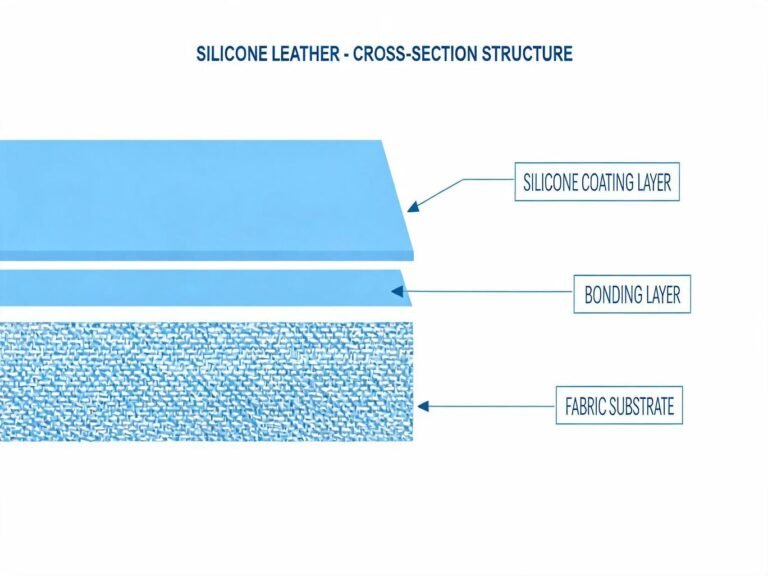
Silicone leather addresses every automotive interior failure mode at the chemistry level. The Si-O backbone is thermally stable to 250°C—3× higher than PU’s ceiling. UV radiation doesn’t break silicone bonds, so color and texture remain unchanged after 1,000+ hours of accelerated weathering. Zero VOC emissions mean no fogging, no odor, no cabin air compromise.
For automotive compliance, the data speaks clearly:
- FMVSS 302: Self-extinguishing without halogen additives—passes the federal motor vehicle flammability standard
- EN 13773 Class 4: Highest European flame retardant rating for interior textiles
- ELV Directive: Compliant with EU 2000/53/EC end-of-life vehicle material requirements
- DIN 75201: Zero fogging condensation at 65°C
- VDA 270: Odor rating of 2—barely perceptible
The car upholstery materials guide provides the full specification breakdown. For broader automotive trends shaping 2026 material decisions, see our 2026 OEM interior trends analysis.

Automotive seat cover material—real-world application where thermal cycling and UV stress peak
Automotive certifications overview: FMVSS 302, EN 13773, and ELV compliance for silicone leather
Frequently Asked Questions
What’s the maximum temperature leather for car interiors should withstand?
Automotive dashboard surfaces can reach 80–90°C in direct sunlight in hot climates. Any leather for car interiors should withstand at least 120°C without deformation or off-gassing. PU leather softens at 60°C; genuine leather dries and cracks above 70°C. Silicone leather remains stable to 250°C. For more on silicone material fundamentals, see our silicone leather introduction.
Does silicone leather for car meet FMVSS 302 flame retardancy?
Yes. Silicone leather is inherently self-extinguishing—it doesn’t require chemical flame retardant additives to pass FMVSS 302. It also achieves EN 13773 Class 4, the highest European flame retardant rating, and meets FAR 25.853 for aviation interiors. Unlike PVC, which produces toxic smoke when burning, silicone emits minimal non-toxic smoke.
Specify for the Cabin, Not the Showroom
The right leather for car interiors isn’t the one that looks best under showroom lighting—it’s the one that survives 80°C dashboards, 1,000 hours of UV, sealed-cabin VOC accumulation, and a decade of daily use without cracking, fading, or off-gassing. PU leather fails the thermal and VOC tests. Genuine leather fails the consistency and hydrolysis tests. Silicone leather passes all of them—not by adding chemical stabilizers, but by eliminating the chemistry that fails.
About TOPSUN
TOPSUN produces silicone leather for car interiors that passes FMVSS 302, EN 13773 Class 4, and ELV directive requirements for automotive OEMs and Tier 1 suppliers. Our silicone chemistry delivers cabin-safe performance that PU and genuine leather cannot match in sealed EV environments.
Zero VOC cabin emissions · 200K+ Martindale cycles · Thermal stability to 250°C · UV resistance 1,000+ hours · Self-extinguishing flame retardancy · DIN 75201 zero fogging · Free A4 swatches shipped worldwide via DHL/FedEx