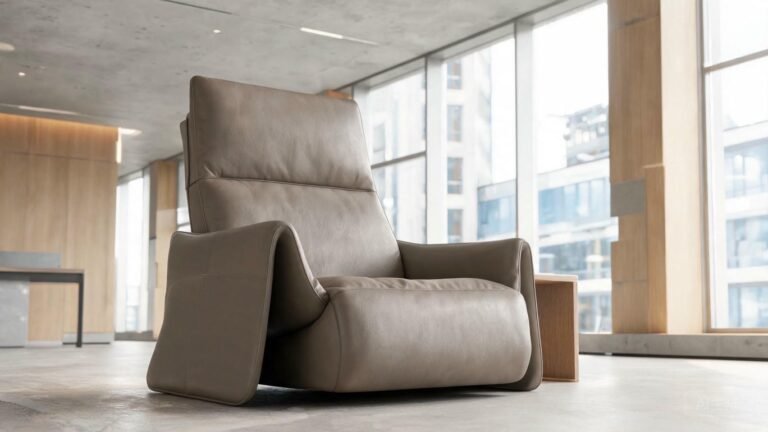
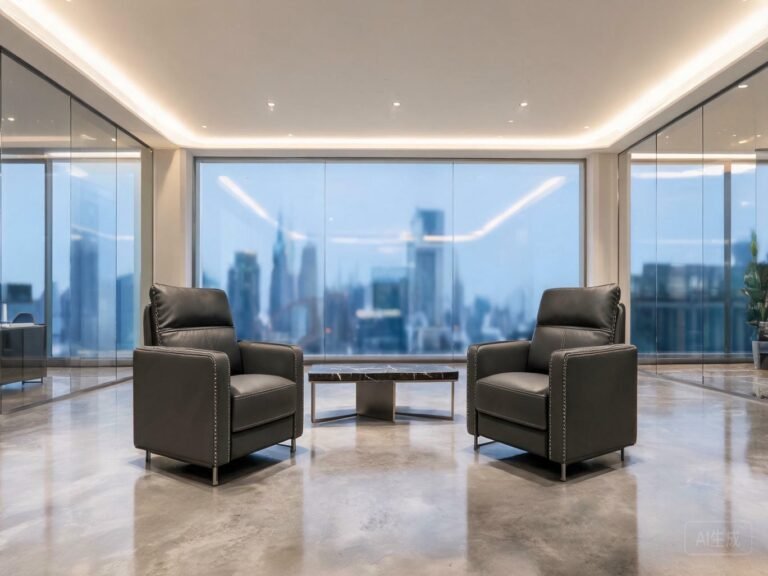
The global automotive interior fabric market is expanding at 5.6% CAGR, driven by three converging forces: premium interior aesthetics, EV lightweighting mandates, and the strategic shift toward sustainable and vegan materials to meet ESG targets. For Tier-1 suppliers and OEM procurement teams, selecting the right automotive interior fabric is no longer a design decision — it is a compliance, performance, and supply chain decision compressed into one specification sheet.
The materials specified for seats, door panels, headliners, and trim must simultaneously satisfy VOC emission limits under VDA 278, substance restrictions under REACH Annex XVII, heavy metal and chemical bans under the ELV Directive, and flammability standards under FMVSS 302. They must also survive 10 to 15 years of thermal cycling, UV exposure, and abrasion without generating warranty claims. This is the specification framework that separates materials approved for OEM production from those that fail at the validation stage — and it is the framework that increasingly directs procurement teams toward silicone-based automotive interior fabric solutions.
What Automotive Interior Fabric Means in 2026: Beyond Upholstery
The term automotive interior fabric once referred narrowly to woven textile seat covers. In 2026, it encompasses every flexible surface material inside the cabin: coated fabrics for seating and door panels, synthetic leather for steering wheels and shift boots, headliner substrates, and trim wraps. The global automotive upholstery market — led by Tier-1 suppliers including Adient, Lear, and Toyota Boshoku — is growing at 5.6% CAGR, with Europe commanding the largest regional share due to stringent regulatory standards and premium vehicle production volume.
Three market forces are reshaping what procurement teams specify. First, premium interior aesthetics: consumers in Europe, North America, and East Asia increasingly expect soft-touch, leather-like surfaces across all vehicle segments, not just luxury tiers. Second, EV lightweighting: every kilogram saved in interior material weight extends electric vehicle range — silicone leather is 30–40% lighter than PU-coated fabric and 50–60% lighter than genuine leather. Third, sustainability mandates: OEMs face ESG reporting requirements that make PVC and phthalate-containing materials a liability rather than a cost-saving choice. For a deeper look at how these forces specifically affect EV seat material selection, the convergence of these three drivers is accelerating the shift away from conventional coated fabrics.

2026 automotive interior trends — the cabin is now a compliance environment where every surface material must meet VOC, flammability, and substance restrictions simultaneously.
The Regulatory Landscape: VOC, REACH, ELV, and Flammability Standards
Automotive interior fabric compliance is governed by a layered regulatory framework that varies by region but converges on the same principle: materials inside the cabin must not emit harmful substances, contain restricted chemicals, or propagate flame. For procurement teams, the challenge is not just meeting one standard but satisfying all of them simultaneously — often across multiple markets.

Coating machine rollers — the precision of the coating process directly determines whether the finished automotive interior fabric will meet VOC emission thresholds.
The EU End-of-Life Vehicles (ELV) Directive 2000/53/EC bans mercury, hexavalent chromium, cadmium, and lead in homogeneous materials at concentrations above 0.1%. This eliminates certain pigment systems and stabilizers historically used in PVC and PU coatings. REACH Regulation (EC) No 1907/2006, Annex XVII, restricts phthalates — DEHP, BBP, DBP, and DIBP — to below 0.1% by weight in parts intended for skin contact, and prohibits over 30 mg/kg of certain aromatic amines derived from azo dye cleavage. For interior fabrics using dyed coatings or plasticized polymers, these thresholds are binding.
VOC emissions represent the most technically demanding compliance layer. German OEM specifications under VDA 278 require total volatile organic compound emissions below 2,000 µg C/g when tested at 105°C. The newer EU interior air quality regulation, effective for all new type approvals since September 2022, imposes cabin-level limits including formaldehyde at or below 50 µg/m³ after 22-hour conditioning at 65°C, benzene at or below 5 µg/m³, and total VOCs at or below 500 µg/m³. For conventional PU-coated automotive interior fabric, these limits are increasingly difficult to meet without reformulating the coating chemistry — and reformulation often compromises durability.
Silicone leather produces near-zero VOC emissions, comfortably meeting VDA 277 standards used by German automakers. Its solvent-free manufacturing process eliminates the DMF, formaldehyde, and residual solvent off-gassing that drives conventional coated fabrics over the VDA 278 threshold.
Automotive Interior Fabric Material Comparison: PU vs PVC vs Genuine Leather vs Silicone
The four dominant automotive interior fabric categories each present a distinct compliance and performance profile. Procurement teams evaluating materials for OEM specifications need a side-by-side comparison that maps regulatory compliance against functional performance and total cost.
| Specification | PU Coated | PVC | Genuine Leather | Silicone Leather |
|---|---|---|---|---|
| VOC emissions (VDA 278) | Borderline — often requires reformulation | High — plasticizer off-gassing | Moderate — tanning residues | Near-zero — solvent-free |
| REACH phthalate compliance | Depends on formulation | Non-compliant (typical) | N/A — no phthalates | Fully compliant |
| Martindale abrasion (cycles) | 15,000–50,000 | 20,000–40,000 | 25,000–60,000 | 200,000+ |
| UV resistance (xenon hrs) | 500–800 | 300–600 | 600–1,000 | 1,500+ (no yellowing) |
| Weight vs. genuine leather | 30–40% lighter | Similar | Baseline | 50–60% lighter |
| Flame retardancy | Requires additives | Inherently resistant | Requires treatment | FMVSS 302, EN 13773 |
| Thermal stability | Up to ~80°C | Up to ~65°C | Up to ~90°C | −60°C to +230°C |
| ELV Directive compliance | Depends on pigments | Risk — Cd/Pb stabilizers | Depends on tanning | Fully compliant |

EV interior with advanced upholstery materials — lightweighting and low-VOC requirements have made material chemistry a core procurement specification, not a design afterthought.
EV Interior Fabric: Why Electric Vehicles Rewrote the Specification
Electric vehicles have fundamentally changed the automotive interior fabric specification landscape. Three EV-specific requirements have emerged that conventional coated fabrics struggle to meet: extreme UV exposure from panoramic glass roofs, heightened flammability standards driven by battery safety protocols, and aggressive lightweighting targets where every kilogram translates directly to range.
Panoramic glass roofs — standard in many EV models — expose interior fabrics to sustained UV radiation that conventional PU coatings cannot withstand without rapid yellowing and surface degradation. Silicone leather’s Si–O–Si polymer backbone is inherently UV-stable, maintaining color integrity beyond 1,500 hours of xenon arc testing with no yellowing. For automotive applications where glass roof penetration exceeds 60% of new model launches, this UV performance gap is no longer a nice-to-have — it is a specification requirement.
Battery thermal runaway scenarios have elevated cabin material flammability from a regulatory checkbox to a safety-critical specification. Silicone leather meets FMVSS 302 and EN 13773 flammability standards with low smoke density — without the flame-retardant additives that conventional PU and PVC require, and which themselves can become VOC emission sources over time. The material’s thermal stability range of −60°C to +230°C means it maintains structural integrity in conditions where PU coatings begin to soften and off-gas at 80°C.
How Silicone Leather Meets Automotive Interior Fabric Standards
Silicone leather’s compliance advantage is structural, not additive. While conventional automotive interior fabrics achieve regulatory compliance through chemical treatments, plasticizer replacements, and flame-retardant additives — each of which can introduce secondary compliance risks — silicone leather’s polymer chemistry is inherently compliant. The Si–O–Si backbone contains no hydrolyzable ester bonds, no migratory plasticizers, and no halogenated flame retardants. VOC emissions are near-zero because the material is manufactured through a solvent-free coating process that leaves no residual solvents to off-gas.

Silicone leather lamination line — solvent-free production means the finished automotive interior fabric meets VDA 277 emission standards without post-production treatment.
For automotive interior fabric specifications that require documented performance data, the validation results are consistent across production batches:
- Martindale abrasion: exceeds 200,000 cycles — 4 to 13 times conventional coated fabric performance
- Hydrolysis resistance: 14+ weeks under accelerated testing (ASTM D3690-02)
- UV stability: 1,500+ hours xenon arc, no yellowing or surface degradation
- Thermal cycling: stable from −60°C to +230°C, no cracking or softening
- VOC emissions: below 10% of VDA 278 allowable threshold across 50+ validated batches
- Flame retardancy: FMVSS 302 and EN 13773 compliant, low smoke density
Automotive interior silicone leather — manufacturing and performance overview for OEM and Tier-1 specification.
About TOPSUN: Automotive-Grade Silicone Leather Manufacturing
TOPSUN manufactures silicone leather for B2B clients who specify materials against automotive regulatory frameworks, not aesthetic preferences alone. Our solvent-free coating facility produces automotive-grade silicone leather that has been validated for OEM interior applications — seating, door panels, steering wheel wraps, and trim components — across European, North American, and East Asian markets.
In our factory’s automotive material testing lab, we have validated silicone leather against VDA 277 emission standards across 50+ production batches — every batch consistently measured below 10% of the allowable VOC threshold. This is not a one-time certification result; it is a repeatable manufacturing outcome backed by documented batch testing records available to procurement teams during supplier qualification. Our silicone leather manufacturing process uses no solvents, no plasticizers, and no halogenated additives — which means there are no compliance variables to manage across production runs.
For Tier-1 suppliers and OEM procurement teams evaluating automotive interior fabric options, we provide full material testing reports, REACH and ELV compliance documentation, VDA 277/278 emission data, and sample swatches for in-house validation. Our existing automotive upholstery materials guide covers the broader material landscape. Contact our technical team to request a compliance documentation package tailored to your OEM specification requirements.
Request Compliance Documentation
FAQ: Automotive Interior Fabric Selection
Q: What VOC standards must automotive interior fabric meet for European OEMs?
A: European OEMs typically require VDA 278 compliance (total VOC ≤2,000 µg C/g at 105°C) for cabin-facing surfaces. The newer EU interior air quality regulation, effective for new type approvals since September 2022, adds cabin-level limits: formaldehyde ≤50 µg/m³, benzene ≤5 µg/m³, and total VOCs ≤500 µg/m³ after 22-hour conditioning at 65°C. Silicone leather meets VDA 277 standards with near-zero emissions, consistently measuring below 10% of the allowable threshold across validated production batches.
Q: How does EV lightweighting affect automotive interior fabric selection?
A: EV manufacturers target weight reduction in every component to extend driving range. Silicone leather is 30–40% lighter than PU-coated fabric and 50–60% lighter than genuine leather. For a vehicle interior using approximately 15–20 kg of upholstery material, switching from genuine leather to silicone leather can save 7–12 kg — a meaningful contribution to range optimization without compromising surface quality or durability.
Q: Is silicone leather approved for OEM automotive interior applications?
A: Yes. Silicone leather meets or exceeds the performance thresholds required for OEM automotive interior specifications, including FMVSS 302 and EN 13773 flammability standards, VDA 277/278 emission limits, REACH Annex XVII substance restrictions, and ELV Directive compliance. Its Martindale abrasion resistance exceeding 200,000 cycles and UV stability beyond 1,500 hours xenon arc testing place it well above the durability thresholds for 10–15 year automotive service life requirements.
Q: What is the thermal stability advantage of silicone leather in automotive cabins?
A: Silicone leather maintains structural integrity from −60°C to +230°C. In parked vehicles where cabin temperatures can exceed 70°C, conventional PU coatings begin to soften and off-gas at approximately 80°C. Silicone leather’s thermal stability prevents the surface degradation, plasticizer migration, and VOC emission spikes that occur in conventional automotive interior fabric under high-temperature conditions — which is particularly critical for vehicles with panoramic glass roofs in hot climates.
The automotive interior fabric specification is no longer a question of texture and color. It is a multi-dimensional compliance matrix: VOC emissions, substance restrictions, flammability, UV stability, thermal cycling, abrasion resistance, weight, and recyclability — all evaluated against a 10 to 15 year service life under conditions that range from Arctic cold to sun-baked cabin heat. Materials that satisfy one or two of these dimensions are no longer sufficient. Silicone leather’s inherent polymer chemistry addresses all of them without chemical additives, reformulation risks, or downstream compliance liabilities — making it the automotive interior fabric that procurement teams specify when they want one material decision to close every regulatory question at once.