We’ve audited enough furniture factories to know the pattern. A supplier hands you a swatch that feels soft, looks rich, and costs almost nothing. The spec sheet lists “abrasion resistant” with no number. Eighteen months later, the sofas in your hotel lobby are pilling, the seams are fraying, and you’re signing a reupholstery invoice for the third time this year. The difference between a sofa material fabric that lasts a decade and one that fails by year three comes down to three numbers — and most procurement teams never ask for them. Here’s what those numbers are, how the five main material types actually compare, and where the cheap option becomes the most expensive one.
The Sofa Material Fabric Spec Most Suppliers Won’t Show You
When you source upholstery, three data points predict everything: Martindale rub count, hydrolysis resistance, and cleanability after repeated cycles. The Martindale test, governed by international textile standards, simulates years of sitting and standing. A fabric rated at 15,000 rubs is residential-grade. Commercial-grade starts at 30,000. Contract hospitality demands 50,000 to 100,000+. If a supplier’s spec sheet says “durable” without a number, that’s not a spec — it’s a marketing word.
In our experience auditing Chinese and Vietnamese furniture factories, roughly 60% of the swatches presented as “commercial grade” test between 20,000 and 25,000 rubs. That’s residential masquerading as contract. The supplier isn’t lying about the test — they’re just not volunteering the number, knowing most buyers won’t ask.

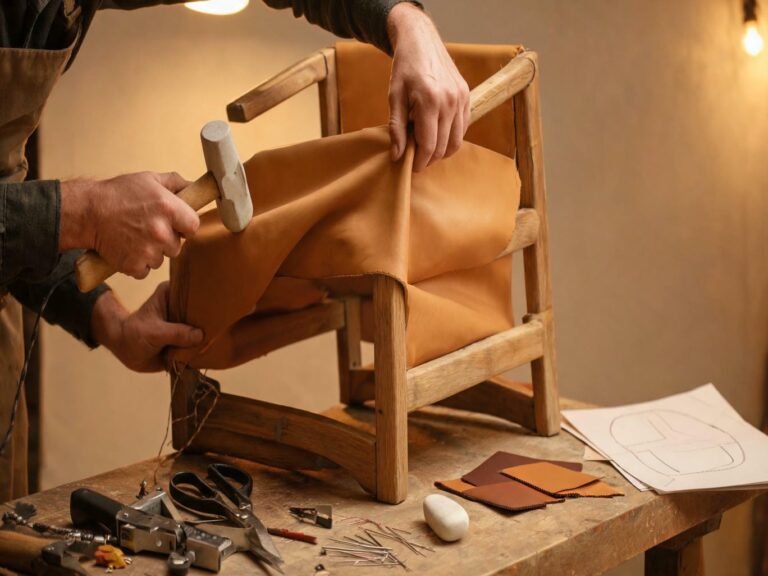
Flex-bending test rig: simulates years of sofa seat compression and recovery.
5 Material Types Ranked by Real-World Survival
Not all sofa upholstery is created equal. Here’s how the five most common categories stack up when you strip away the aesthetics and look at the data that predicts whether the fabric survives the contract term:
| Material Type | Martindale (est.) | Service Life | Cleanability |
|---|---|---|---|
| Cotton / Linen blend | 15,000-30,000 | 3-5 years | Stains set in, needs covers |
| Polyester / Microfiber | 25,000-50,000 | 4-6 years | Better, but traps hair |
| Performance fabric (solution-dyed) | 50,000-100,000+ | 7-10 years | Excellent, PFAS-free options |
| PU faux leather | 20,000-50,000 | 2-5 years | Wipeable, but cracks |
| Silicone leather | 100,000-200,000+ | 10-15+ years | Inherent, no coating to wear |
The gap between polyester and silicone leather isn’t incremental — it’s 2x to 4x on the metric that predicts whether your sofas need replacing before the contract ends. And unlike PU, whose cleanability comes from a surface coating that wears off, silicone’s stain resistance is built into the polymer. It doesn’t degrade.

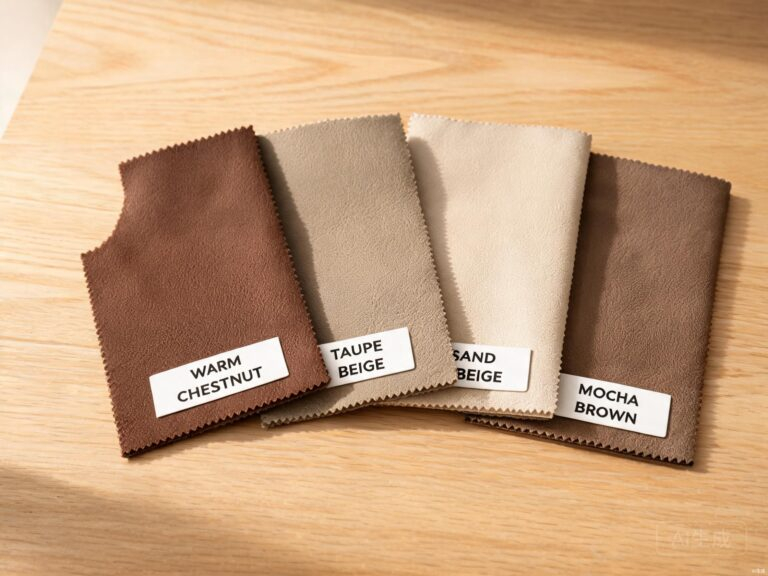
Swatch rack: every color option should come with a verified Martindale number, not just a feel test.
Where Sofa Material Fabric Decisions Go Wrong in Commercial Contracts
Let’s be honest about where budgets leak. A hospitality group sourcing 800 lobby sofas for a new hotel chain specified a 25,000-rub polyester blend because the swatch looked premium and the unit price was attractive. After 14 months of daily lobby traffic, pilling and seam fraying triggered a full reupholstery at roughly $240 per unit — that’s $192,000 across the fleet, plus three weeks of lobby downtime. The replacement spec moved to silicone leather rated at 100,000+ Martindale cycles. That second property is now in year 3 with zero fabric replacements.
The mistake wasn’t choosing polyester. It was choosing a polyester rated for residential traffic and deploying it in a contract environment. If you’re sourcing for furniture and sofa applications where the furniture gets used 12+ hours a day, the Martindale floor is 50,000 — no exceptions.

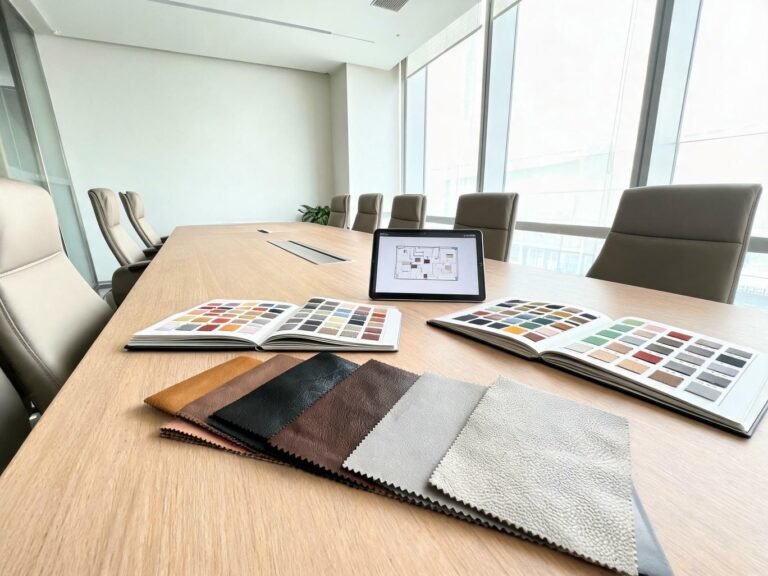
Commercial lobby sofa: the fabric behind it needs to survive thousands of guests, not just a showroom visit.
The 5-Year Cost Reality: Cheap Fabric Is the Most Expensive Choice
Procurement teams optimize unit price because it’s the number that fits neatly on a PO. But the real cost of upholstery is cost-per-year-of-serviceable-life. A fabric that costs $6/meter and lasts 3 years costs $2/meter/year. A silicone leather that costs $14/meter and lasts 12 years costs $1.17/meter/year. The “expensive” option is 42% cheaper over the horizon — and that’s before counting reupholstery labor, downtime, and the soft cost of brand damage when guests sit on fraying furniture.
The commercial sofa upholstery guide we published walks through this calculation line by line. The short version: if your contract term exceeds 3 years, anything rated below 50,000 Martindale is a liability, not a savings.
Across a 5-year hospitality contract, switching from 25K-rub polyester to 100K+ silicone leather saves roughly 42% on total upholstery cost — even though the unit price is more than double.
See how silicone leather performs on commercial sofa frames under repeated stress testing.
Frequently Asked Questions
What Martindale rating should commercial sofa fabric meet?
The floor for contract hospitality is 30,000 rubs. For high-traffic lobbies, airport lounges, and 24-hour environments, specify 50,000 minimum — 100,000+ if the contract term exceeds 5 years. Any supplier who can’t produce a third-party Martindale test report with a specific number is selling you a residential-grade fabric at contract prices. For more on maintaining these surfaces long-term, see our cleaning and maintenance guide.
Is silicone leather a fabric or a leather for sofa upholstery?
It’s a hybrid — a woven fabric base coated with a silicone polymer surface. You get the texture variety and breathability of fabric with the wipe-clean performance and durability of leather. Unlike PU, the silicone coating doesn’t crack or peel because the stain resistance is molecular, not a topical layer. For a deeper comparison of sofa upholstery options, our sofa upholstery material guide breaks down the trade-offs.
The leather sofa upholstery materials comparison is also worth reviewing if you’re weighing specific hide-grade alternatives.
Spec Smarter, Replace Less Often
The sofa material fabric you specify today determines whether your furniture program runs cleanly for a decade or generates reupholstery invoices every 18 months. Ask for the Martindale number. Verify it’s third-party tested, not supplier-claimed. And if your contract term exceeds three years, treat anything below 50,000 rubs as a residential fabric dressed up for a commercial audition. The data is available — the only question is whether you ask for it before the PO, or after the first round of field failures forces you to.
About TOPSUN
TOPSUN manufactures sofa material fabric for B2B furniture brands and contract hospitality buyers who need upholstery that passes 100,000+ Martindale cycles without reupholstery mid-contract — across residential, hotel, marine, and healthcare seating programs.
Verified third-party Martindale reports · 100K-200K abrasion ratings · Inherent stain resistance · REACH / OEKO-TEX compliant · OEM color, texture, and thickness customization from one factory floor.