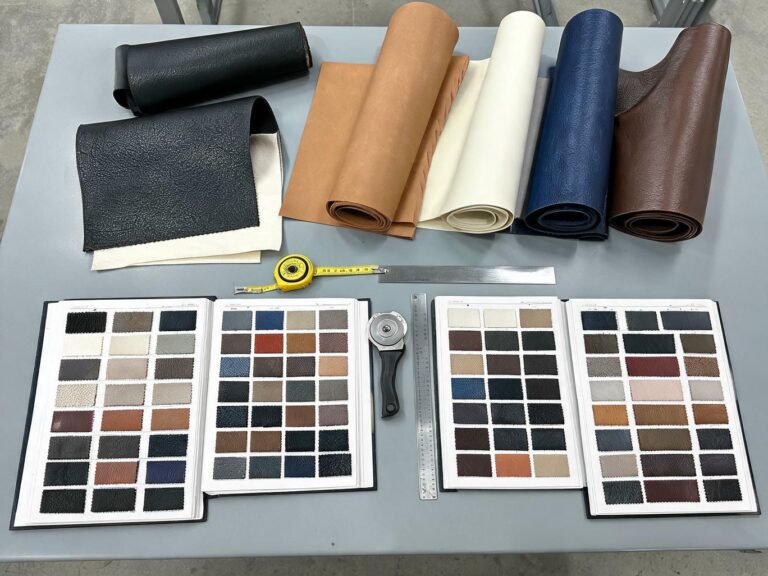
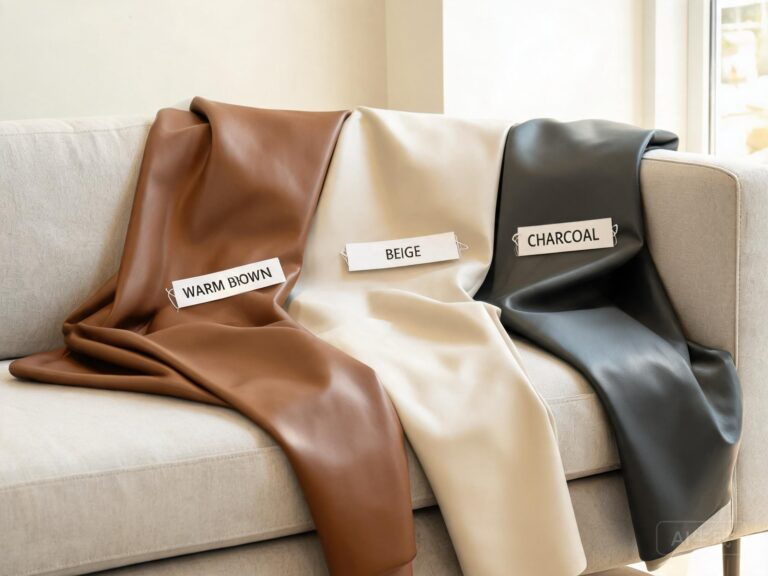
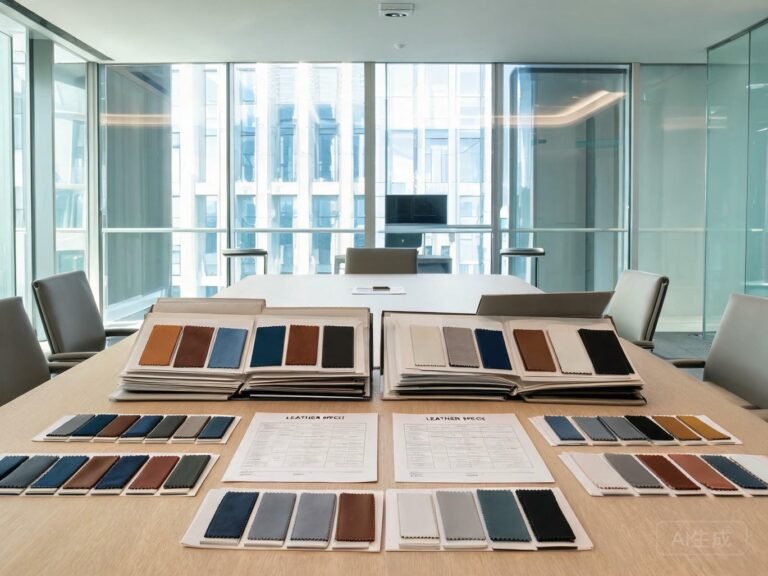
A 10,000-meter leather yardage order lands at your factory. Three rolls in, you discover color mismatch across batches, a soft spot in roll #7 where the coating delaminated, and a width variance that throws off your cutting layout by 6%. Your production schedule stalls while you file a quality dispute with a supplier who promised ISO-grade consistency. Finding a reliable leather yardage supplier isn’t about who has the lowest price per meter — it’s about who can deliver roll-to-roll consistency at your volume, honor their lead times, and pass a systematic quality audit before you commit. Here’s the evaluation framework that separates production-ready suppliers from sample-only suppliers.
Request Supplier Capability Deck
What Makes a Leather Yardage Supplier Worth Your Order
The leather yardage supplier evaluation criteria that actually matter aren’t on most supplier websites. Anyone can list certifications and post factory photos. The real differentiators are production capacity verification, batch consistency history, and the supplier’s willingness to provide third-party test reports for previous production runs — not just a generic spec sheet.
Start with three baseline questions. First: what is the supplier’s actual monthly output in meters, and can they prove it with shipping records or utility bills? A supplier claiming 500,000 meters monthly but operating a single coating line is either outsourcing or exaggerating. Second: how many active customers order at your volume level? If you’re a 5,000-meter buyer and the supplier’s average order is 500 meters, your production run may be deprioritized during peak season. Third: what is the supplier’s defect rate history? A reputable supplier tracks this and will share the data. Anything above 3% roll-level defect rate signals inconsistent process control.

Fabric inspection area where roll-level quality checks are performed before shipment
One of our automotive clients learned this the hard way. They sourced from a supplier quoting 30% below market rate, only to discover that 12% of the rolls had width variations exceeding 5mm. The “savings” evaporated in cutting waste and rework labor. For guidance on selecting the right partner, this guide to choosing a silicone leather supplier covers the qualification process in detail.

Quality inspection process at a leather manufacturing facility
MOQ Planning: Matching Order Volume to Production Reality
MOQ isn’t just a number a supplier throws at you — it’s a function of their coating line efficiency, minimum raw material purchase quantities, and changeover costs. Understanding leather yardage supplier MOQ and lead time dynamics helps you negotiate from a position of knowledge rather than accepting whatever the supplier quotes.
Standard-color MOQs typically range from 300 to 500 meters because the supplier can use existing color batches and embossing rollers. Custom colors push MOQ to 500–1,000 meters due to the minimum batch size for color compounding. Fully custom formulations with special performance additives (flame retardants, antimicrobial agents) can require 2,000+ meters to justify the line setup and testing overhead.
Negotiation tip: If your project volume is below the supplier’s standard MOQ, ask about “shared batch” production — where multiple small orders using the same base color are combined into a single coating run. This can reduce your effective MOQ by 40–60% with a 5–7 day lead time premium.
Lead time follows a similar logic. Standard colors from inventory ship in 3–5 days. Made-to-order standard colors run 7–15 days. Custom colors with new embossing patterns require 20–30 days including sample approval. Always build a 20% buffer into your production schedule for first-time orders with a new supplier — initial runs have higher defect rates as the line adjusts to your specifications. For more context on how factory production capabilities affect MOQ and lead time, review the operational details that matter for procurement planning.
The Quality Audit Checklist Every Leather Yardage Supplier Must Pass
A leather yardage supplier quality audit checklist should cover four dimensions: production capacity, quality systems, material consistency, and delivery logistics. Skipping any dimension creates a blind spot that surfaces as a production crisis later. Here’s the framework we recommend based on eight years of supplier evaluation experience:
| Evaluation Category | What to Verify | Red Flag | Pass Criteria |
|---|---|---|---|
| Production Capacity | Actual monthly output vs. claimed | Single line claiming 500K m/month | Multiple lines, verifiable output records |
| Quality Systems | ISO 9001, in-line QC checkpoints | No documented QC procedures | ISO-aligned, roll-level inspection logs |
| Material Consistency | Batch-to-batch color and thickness data | No batch tracking system | ±0.1mm tolerance, ΔE ≤ 1.5 color variance |
| Delivery & Logistics | On-time rate, export documentation | No export experience, cash-only terms | 95%+ on-time, L/C or T/T terms available |

Abrasion resistance testing equipment used during supplier quality audits
Suppliers operating under ISO 9001 quality management systems maintain documented procedures for every production stage — from raw material intake to final roll inspection. This documentation is your audit trail when disputes arise. A supplier without documented QC procedures will inevitably blame “natural material variation” for what is actually process inconsistency.
Roll-Level Inspection: What to Check When Goods Arrive
Even with a thorough supplier audit, roll-level inspection upon delivery is non-negotiable. The goal isn’t to catch defects — it’s to establish a documented baseline for any future quality claims. When comparing leather roll goods supplier options, the ones who welcome your inspection protocol are the ones who trust their own quality control.
Inspect every roll for five parameters: visual surface defects (scratches, coating voids, embossing irregularities), width consistency (measure at three points along the roll), thickness at the leading edge, middle, and trailing edge, color matching against the approved master sample under D65 lighting, and roll hardness/softness uniformity which affects cutting and sewing behavior. Document everything with photos and measurements — this is your insurance policy. The inspection protocol should be tailored to your specific application requirements, as automotive interior trim demands different tolerance thresholds than hospitality seating.

Rewinding and slitting machine for precision roll preparation before shipment
Inside the quality control process — from raw material inspection to final roll verification
Schedule a Factory Audit Visit
Building a Long-Term Leather Yardage Supplier Relationship
The wholesale leather yardage sourcing process doesn’t end after the first successful order. Long-term supplier relationships deliver compounding value: priority production slots during peak season, faster sample turnaround for new product development, volume-based pricing tiers that kick in automatically, and institutional knowledge of your quality standards that reduces inspection overhead over time.
The suppliers worth retaining share three traits. They invest in process improvement — upgrading equipment, adopting new testing methods, reducing defect rates year over year. They communicate proactively — flagging potential delays before they become emergencies, suggesting cost-saving alternatives when they identify them. And they scale with you — adding capacity, expanding color libraries, developing new performance formulations as your product lines grow. For a broader perspective on sourcing strategies, this upholstery sourcing guide covers supplier relationship management across material types.

Finished leather rolls wrapped and palletized in warehouse, ready for shipment
A supplier’s willingness to provide application-specific technical support — recommending the right thickness for your seating application, suggesting embossing patterns that improve sewing efficiency, or advising on compliance requirements for your target market — is a stronger indicator of long-term partnership potential than any price discount. The consultative conversation that precedes a purchase order often reveals more about a supplier’s capability than any certification document.

Swatch quality testing laboratory where supplier samples are validated before bulk orders
Frequently Asked Questions
What’s a reasonable MOQ for a first-time leather yardage order?
For standard colors and patterns, 300–500 meters is typical for a first order. This volume allows the supplier to run a dedicated coating batch while keeping your inventory risk manageable. If you need a custom color, expect 500–1,000 meters minimum. Some suppliers offer trial orders at 100–200 meters with a 15–20% price premium to cover small-batch setup costs.
How do I verify a supplier’s claimed monthly capacity?
Ask for three pieces of evidence: production logs from the past three months (showing daily output totals), utility bills that correlate with operating equipment, and a virtual or in-person factory tour showing all coating lines in operation. A single coating line produces roughly 80,000–120,000 meters per month — if a supplier claims 500,000 meters but has one line, they’re either outsourcing or overstating capacity.
From First Contact to First Shipment: Your Supplier Roadmap
Selecting a leather yardage supplier is a process, not a transaction. Audit their production capacity against actual output. Negotiate MOQ from a position of understanding their line economics. Demand documented quality procedures and third-party test reports. Inspect every roll on arrival. And invest in the relationship — because the supplier who knows your quality standards, anticipates your production schedule, and scales with your growth is worth more than any per-meter discount. Whether your project calls for PU, PVC, or requires a detailed silicone versus PU material comparison to make the final call, the right supplier isn’t the cheapest. They’re the one whose rolls arrive consistent, on time, and exactly as specified — every single order.
Download Supplier Audit Checklist & Capability Deck
About TOPSUN
TOPSUN operates a 60,000-square-meter leather yardage supplier network across three production bases in Dongguan, Yichang, and Xiangyang, delivering 500,000+ meters monthly to furniture, automotive, and medical manufacturers in 30+ countries.
ISO-aligned quality management with roll-level inspection protocols · MOQ flexibility from 500 meters for standard colors to 2,000 meters for custom development · 7–15 day lead times validated by 8 years of export experience · Third-party test reports available for every production batch.