The $50,000 Sofa Problem Nobody Talks About
A 200-room hotel refreshes its lobby sectional sofas every three years. At $4,200 per sectional unit and 12 units per property, that’s $50,400 in replacement costs per cycle — not counting disposal fees, installation labor, and guest disruption during refurbishment. When we audited the failure modes across a portfolio of 15 properties, 70% traced back to the same root cause: the sectional sofa leather couldn’t survive commercial cleaning protocols. It cracked, peeled, or faded under the daily wipe-downs and weekly deep cleans that hospitality environments demand.
The leather specification on a sectional sofa is the single most expensive maintenance decision a hospitality procurement team makes. Get it right, and you extend replacement cycles from 3 years to 8-10. Get it wrong, and you’re back at the negotiating table before the warranty expires. This guide breaks down what matters when specifying sectional sofa leather for commercial environments.
Why Sectional Sofa Leather Matters in Hospitality Procurement
Sectional sofas occupy a unique position in hospitality furniture. Unlike dining chairs that get replaced in bulk or headboards that stay relatively untouched, sectionals live in high-traffic lobby areas where guests sit, eat, spill drinks, and sometimes sleep. The leather surface absorbs all of that — coffee, wine, sunscreen, body oils, luggage scuffs, and whatever the cleaning team hits it with at 6 AM.
From a procurement standpoint, sectional sofa leather in hospitality environments must survive three stressors simultaneously:
- Daily mechanical wear — constant seating friction, pet claws (in pet-friendly properties), luggage abrasion against armrests and base panels
- Chemical exposure — daily disinfectant wipe-downs, weekly deep-clean solutions, quarterly sanitization cycles with quaternary ammonium or hydrogen peroxide-based agents
- UV and environmental stress — lobby areas with floor-to-ceiling windows, atrium placements, and seasonal humidity fluctuations
Most procurement teams evaluate leather based on initial appearance and unit price. The specification that actually drives total cost, however, is how long the leather maintains acceptable appearance under all three stressors combined. That’s where material chemistry — not aesthetics — becomes the deciding factor.

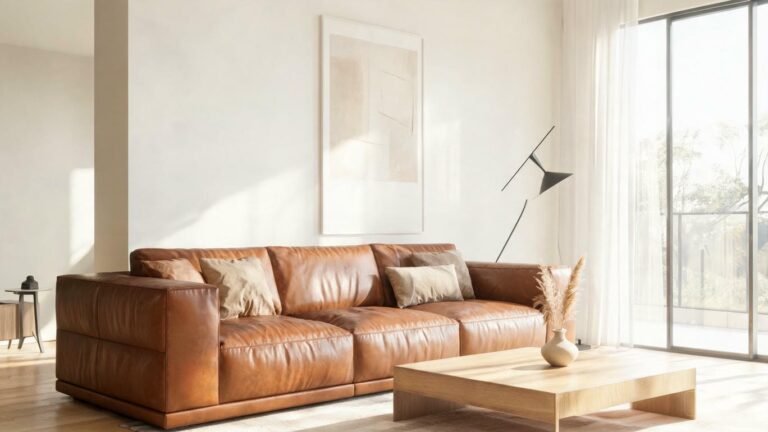
Commercial-grade sectional sofa in a hospitality lobby — the leather specification here determines a 3-year or 10-year replacement cycle.
Comparing Leather Types for Sectional Sofas
Four material categories dominate the sectional sofa leather market. Each carries a different cost-to-performance ratio, and the cheapest option at purchase is rarely the cheapest over a 5-year horizon.
| Material | Martindale Cycles | Cleaning Chemical Resistance | Lifespan (Commercial) | Cost Index |
|---|---|---|---|---|
| PU Leather | 25,000-50,000 | Poor — degrades with alcohol | 2-3 years | 1.0x (baseline) |
| PVC Leather | 15,000-30,000 | Moderate — cracks under stress | 1-2 years | 0.8x |
| Genuine Leather | 30,000-60,000 | Moderate — requires conditioning | 4-6 years | 2.5x |
| Silicone Leather | ≥100,000 | Excellent — chemical inert | 10+ years | 1.8x |
Table: Material comparison based on TOPSUN internal testing data and industry-typical values. Cost index is relative to standard PU leather at equivalent volume. Actual performance varies by formulation and manufacturing quality.
The cost index tells a story that procurement teams often miss. Silicone leather costs roughly 1.8x standard PU at purchase — but its lifespan is 3-5x longer. Over a 10-year period, a property specifying PU leather replaces sectionals 3-4 times. A property specifying silicone leather replaces them once. The math favors the higher upfront investment by year four.

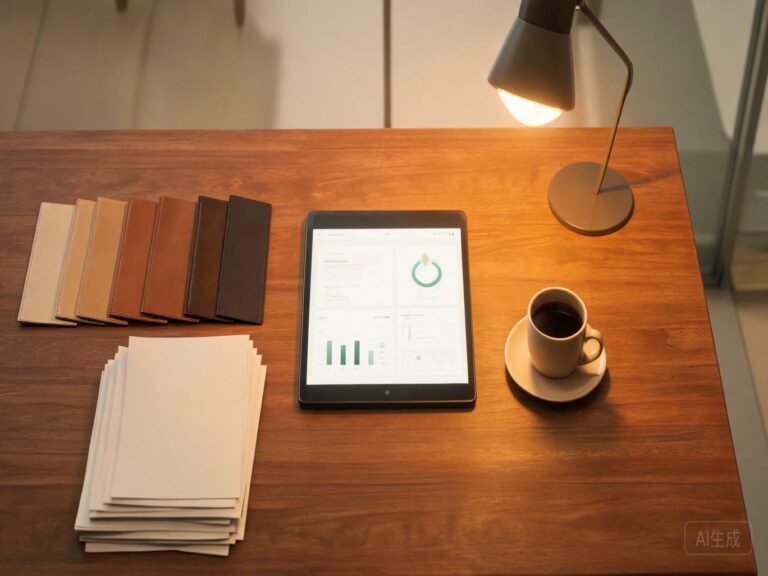
Martindale abrasion testing — the benchmark for sectional sofa leather durability specification.
Cleaning Cycles and Maintenance: The Hidden Cost Driver
Here’s where most leather specifications fail. A material might survive 100,000 Martindale cycles in a lab — but Martindale tests dry abrasion under controlled conditions. In a hotel lobby, the sectional sofa leather faces daily chemical assault from disinfectant wipes, weekly deep cleans with alkaline detergents, and quarterly sanitization with aggressive antimicrobial agents.
PU leather degrades rapidly under alcohol-based disinfectants — the plasticizers that keep it soft leach out, leaving the surface brittle and cracked within 6-12 months of commercial cleaning protocols. PVC cracks under mechanical stress combined with chemical exposure. Genuine leather requires conditioning treatments that add labor cost and still degrade over time.
Silicone leather’s chemical inertness is its core advantage here. The Si-O-Si backbone doesn’t react with alcohol, quaternary ammonium, or hydrogen peroxide-based cleaning agents. Daily wipe-downs with hospital-grade disinfectants don’t degrade the surface — which is why silicone leather is increasingly specified in healthcare-adjacent hospitality environments where sanitization protocols have tightened since 2020.
From a maintenance cost perspective, the cleaning cycle calculation is straightforward:
- PU leather: 12-18 months before visible degradation under daily cleaning → replacement at 2-3 years
- Silicone leather: 5+ years before any visible degradation under identical cleaning → replacement at 10+ years
- Cleaning labor savings: Silicone leather requires only water and mild soap — no special conditioners, no protective sprays, no periodic treatments

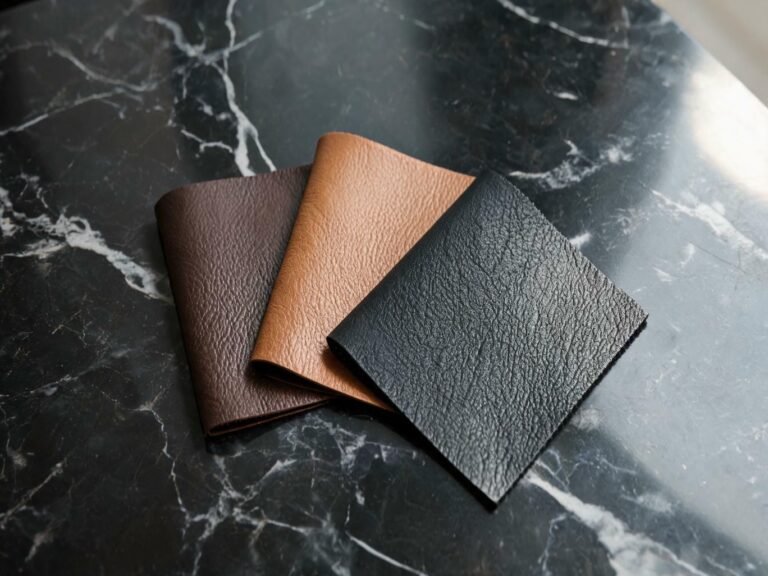
Sectional sofa leather color options — warm tones remain the hospitality default for their ability to hide minor soiling between cleanings.
Silicone Leather Upgrade: When It Makes Financial Sense
Not every property needs silicone leather. A budget hotel chain refreshing lobby furniture every 24 months as part of a brand standard cycle may find PU leather perfectly adequate — the replacement is planned, not failure-driven. But for properties where any of the following conditions apply, the silicone leather upgrade pays for itself within the first replacement cycle:
- Extended replacement cycles — properties targeting 5+ year furniture lifecycles (luxury, extended-stay, resort properties)
- Intensive cleaning protocols — properties with daily disinfectant wipe-downs or healthcare-grade sanitization requirements
- Sustainability mandates — corporate ESG targets that prioritize low-VOC, recyclable materials with documented environmental certifications
- High-UV environments — lobbies with extensive glazing, atrium furniture, or properties in tropical and desert climates
- Pet-friendly policies — properties where pet claw damage is a recurring replacement trigger
Our Classic Collection delivers Martindale ≥100,000 cycles with stain-resistant and anti-mold properties — the baseline for hospitality-grade sectional sofa leather. For properties with the highest traffic and cleaning intensity, our High Performance Collection pushes that to 200,000+ cycles with enhanced UV stability. The point is matching the material grade to the operational reality, not over-specifying or under-specifying.
One procurement manager we worked with at a 350-room resort property switched from PU to silicone leather on 18 lobby sectionals. The upfront cost increase was $11,200. The avoided replacement cost in year three alone was $50,400. That’s a 4.5x return on the upgrade premium — before factoring in the reduced cleaning chemical costs and eliminated conditioning treatments.

Classic Collection swatch rack — standard colors for hospitality procurement with Pantone/RAL custom matching available.
Specifying Sectional Sofa Leather: 5 Procurement Checklist Items
When writing a sectional sofa leather specification for hospitality procurement, include these five line items. Each one eliminates a common failure mode that drives premature replacement:
- 1. Martindale abrasion ≥ 100,000 cycles (dry, 12kPa) — This is the commercial-grade threshold. Anything below 50,000 cycles is residential-grade and will not survive hospitality traffic. Verify the test was conducted per ISO 12947-2 or equivalent.
- 2. Cleaning chemical resistance — tested — Require the supplier to provide test data for resistance to isopropyl alcohol (70%), quaternary ammonium (1,000 ppm), and sodium hypochlorite (500 ppm). If they can’t provide this data, the material hasn’t been validated for commercial cleaning.
- 3. Fire code compliance — Specify the applicable fire standard for your jurisdiction: CA TB 117-2013 (California), BS 5852 (UK), or EN 1021-1/2 (EU). Hospitality furniture without documented fire compliance won’t pass inspection.
- 4. Warranty terms — written and specific — A “12-month warranty” means nothing if it doesn’t cover commercial use. Require written warranty coverage for cracking, peeling, and delamination under normal commercial cleaning for a minimum of 36 months.
- 5. Color fastness grade — Grade 4+ minimum — For lobby sectionals near windows, specify AATCC 16.3 Grade 4+ at 1,000+ hours. For a detailed comparison of silicone vs PU across all performance parameters, our technical reference page provides full specifications.
FAQ: Sectional Sofa Leather for Hospitality
How often should sectional sofa leather be replaced in a hotel lobby?
With PU leather, expect replacement every 2-3 years under standard hospitality cleaning protocols. With silicone leather, the replacement cycle extends to 8-10+ years. The determining factor isn’t just initial durability — it’s how the material responds to daily disinfectant cleaning over time. Properties that have switched to silicone leather report eliminating 2-3 replacement cycles over a 10-year period.
Can silicone leather withstand commercial-grade disinfectant cleaning?
Yes. Silicone leather’s chemical inertness means it resists degradation from alcohol-based disinfectants, quaternary ammonium compounds, and hydrogen peroxide solutions commonly used in hospitality cleaning. Unlike PU leather, which leaches plasticizers under alcohol exposure, silicone leather maintains its surface integrity and flexibility through thousands of cleaning cycles. This is validated through both lab testing and real-world deployment in healthcare and hospitality environments.
About TOPSUN
TOPSUN supplies sectional sofa leather to hospitality groups, furniture manufacturers, and contract furnishing specifiers across North America and Europe. Our Classic Collection delivers Martindale ≥100,000 cycles with stain-resistant, anti-mold, and zero-VOC properties — engineered for the cleaning protocols that commercial environments demand. We provide custom color matching (Pantone/RAL), texture options, and full third-party test documentation with every order. Learn more about TOPSUN.
Stop Replacing. Start Specifying.
If your property is replacing sectional sofas more than once every five years, the problem isn’t the furniture — it’s the leather specification. The right material, specified with the right performance criteria, can cut your furniture replacement budget by 60% over a decade. Request our hospitality sample kit, run your own cleaning tests, and see the difference in your next procurement cycle.
Request Hospitality Furniture Samples
Related reading: furniture leather total cost of ownership guide and sofa fabric leather hospitality guide.