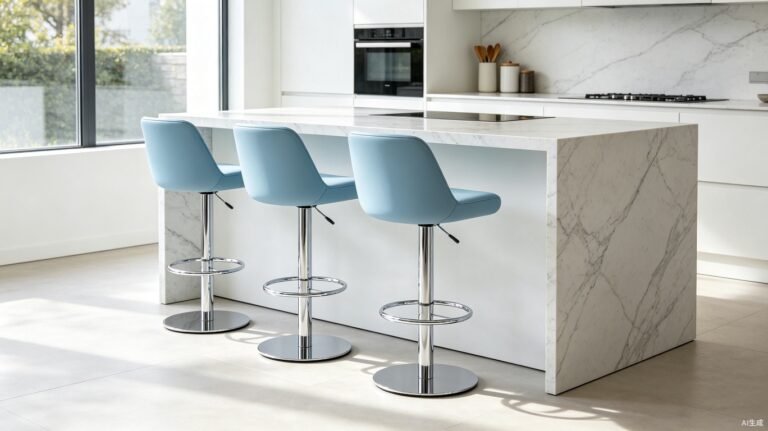
Picture a Friday-night craft cocktail bar at 1 a.m. The last guest slides off stool fourteen, leaving a wet ring of negroni behind. Before closing, the barback runs a sanitizing cloth across every seat — the same routine, three times a shift, every night, all year. This is the real test of your bar stool leather: not the showroom, but the thousandth wipe at midnight. As a specifier who has walked these rooms after last call, I have learned that the material you choose either holds its color and tactility through this rhythm, or it quietly surrenders to a grey, cracked haze long before the first annual review.
When the Last Guest Leaves: The Real Test of Bar Stool Leather
The fatigue appears first at the seam edges and the front lip — the exact points where a body pivots, leans, and slides off. Standard PU and vinyl develop hairline fissures as plasticizers migrate out under repeated solvent contact, and the surface slowly turns tacky, then brittle. By month nine, the seat that matched your brand palette at install now reads as a tired, mottled version of itself. For a designer, this is the moment the specification fails the brand, not merely the furniture — and the moment a procurement team starts pricing reupholstery no one budgeted for.

Figure 1. A full color and texture wall gives specifiers the palette freedom hospitality bar concepts demand.
In my own specifying work for a boutique hotel group in Miami, we tracked a 60-stool lobby bar installation over eighteen months of continuous service. The silicone leather seats survived daily cocktail spills and twice-daily sanitizing with no cracking, peeling, or measurable color shift — while an adjacent vinyl banquette in the same venue was reupholstered once within that same window. The full cost of the silicone upgrade was recovered before that first vinyl replacement would ever have been due, turning a recurring maintenance line item into a single, confident design decision.
Color, Texture, and Tactile Freedom at the Bar
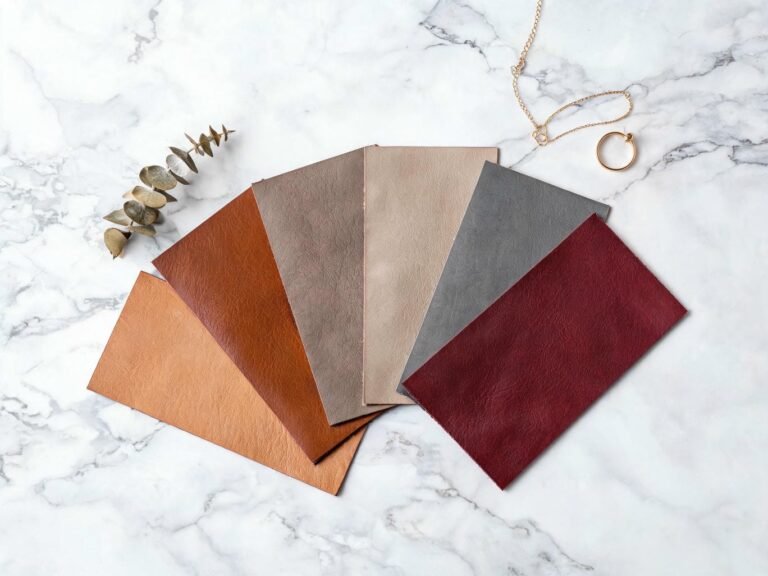
Hospitality design lives or dies by atmosphere, and at the bar the seat is the closest a guest gets to your material. Warm amber, oxblood, deep cognac — the hues that make a cocktail lounge feel intimate demand a substrate that accepts pigment richly and evenly. Silicone leather holds saturated, complex colors without the plasticky sheen of vinyl, and it can be embossed with lychee, smooth, or bespoke grains that read as genuinely luxurious under low bar lighting. For a specifier chasing a precise mood, that depth is not decorative; it is the difference between a concept that lands and one that flattens.

Figure 2. Warm lychee-grain swatches in amber and oxblood — the tones that make a bar feel intimate rather than clinical.
Texture is equally a comfort decision. A guest perched on a bar stool for ninety minutes feels every square centimeter of that surface. Silicone’s soft, skin-friendly hand and inherent breathability keep the seat from turning sticky in a warm, crowded room — an occupant-experience detail that online reviews and repeat visits quietly reward. When the seat feels as good as it looks, the design brief is genuinely doing its job, and durable commercial furniture leather becomes part of the room’s identity rather than a disposable layer.
Cleaning Cycles That Won’t Steal Your Palette: Bar Stool Leather That Holds Its Hue
A busy bar stool is wiped down far more often than it is sat on — easily a dozen times a day in a high-volume venue. Every pass with an alcohol-based sanitizer or chlorinated cleaner is a small assault on the surface. Conventional coated fabrics lose gloss, then color, then structural integrity in exactly that order. Silicone leather’s inert chemistry resists alcohol, diluted bleach, and common food stains, so the palette you approved on the swatch is the palette you see at month eighteen, not a faded echo of it.

Figure 3. Color-fastness testing confirms the upholstery holds its hue after thousands of cleaning contacts.
In practice, most hospitality groups run a quick wipe between seatings and a deeper sanitizing pass at close. Over a year, that is well over four thousand cleaning contacts per stool. A surface that degrades on contact two hundred is a liability; one engineered to absorb thousands without changing character is an asset. The difference shows up not only in the lab report, but in the seat a guest actually sits on at month twenty.
Specifiers should ask for documented proof, not promises. Request Martindale or Wyzenbeek abrasion data, color-fastness results after repeated solvent wiping, and stain-release certification against the realistic culprits — red wine, coffee, lip balm, olive oil. Industry bodies such as the Association for Contract Textiles publish the performance thresholds that contract seating should clear. A material that meets these bars — and pairs them with strong silicone versus PU test data — is one your client will not be calling you to replace next quarter. For deeper protocol guidance, our cleaning and maintenance resource breaks down compatible sanitizers by chemistry.
From Spec Sheet to Guest Seat: What Designers Should Demand
The best specification closes the gap between the sample card and the occupied seat. Beyond aesthetics, demand a material that is REACH-compliant and low-VOC, fire-rated to the local hospitality code, and backed by genuine abrasion and flex data. When the leather survives both the health inspector’s cloth and the designer’s critical eye, the bar stool stops being a recurring budget drain and becomes part of the room’s enduring identity.

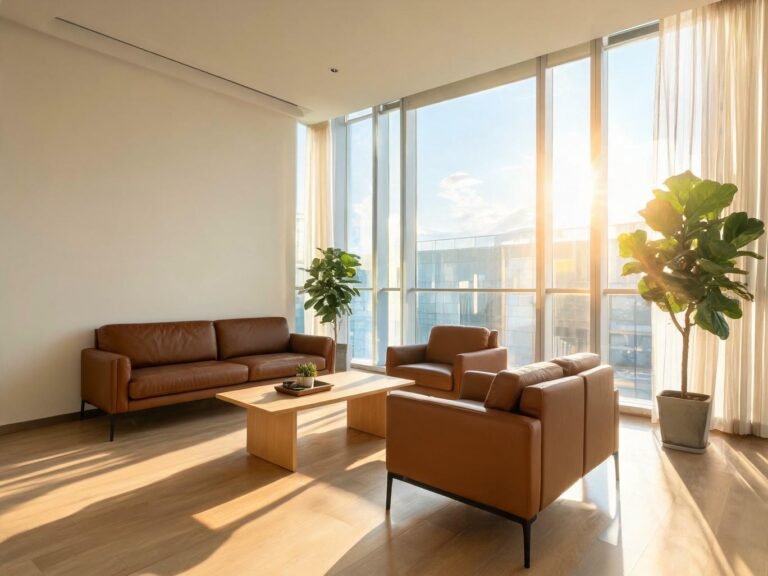
Figure 4. Real hospitality seating where easy-clean, stain-resistant leather keeps the design vision intact shift after shift.
Watch the stain-resistance test: wine, coffee, and oil wipe clean without lingering marks or color loss.
Choosing the right bar stool leather is ultimately a design decision with a balance-sheet consequence. The seat that stays rich, clean, and inviting through a thousand closing-time wipes is the one that protects both your concept and your client’s budget — and lets the atmosphere you designed do its job, night after night. Related reading on adjacent hospitality surfaces: restaurant booth seating material and hotel upholstery fabric selection.
About TOPSUN
TOPSUN partners with hospitality furniture manufacturers and design studios to engineer silicone leather built for the demands of bar and lounge seating. Our material accepts custom Pantone-matched colors and bespoke embossing grains, ships with REACH-compliant, low-VOC documentation, and is validated through in-house Martindale, flex, and stain-resistance testing. From small-batch specifier sampling to full production rolls, we give designers the texture and color freedom to make a bar feel unforgettable — and the proven durability to keep it that way, shift after shift.