PU polyurethane leather remains the world’s most widely used synthetic leather, powering everything from footwear to automotive interiors. But beneath its familiar surface lies a manufacturing chemistry that B2B buyers can no longer afford to ignore. The global water-based PU leather market alone reached $49.5 billion in 2024 and is projected to hit $76.45 billion by 2031—a shift driven not by aesthetics, but by tightening chemical regulations that are reshaping how PU polyurethane leather is specified, sourced, and deployed across industries.
What Is PU Polyurethane Leather? Composition and Manufacturing Reality
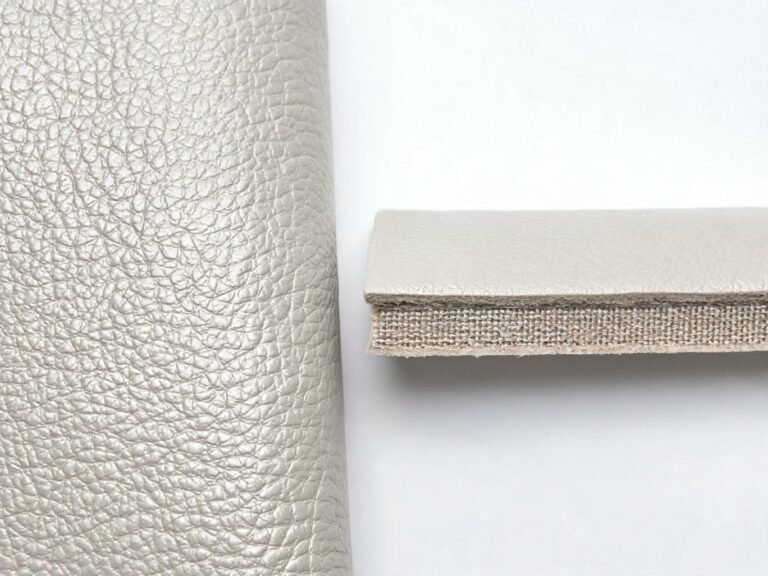
PU polyurethane leather is a synthetic material formed by applying a polyurethane coating onto a fabric substrate—typically polyester or cotton. The coating creates a leather-like surface that is softer and more breathable than PVC, making it the default choice for mid-range furniture, footwear, bags, and automotive interiors. However, the manufacturing process reveals a more complex story.
Traditional PU leather production relies on DMF (dimethylformamide) as the primary solvent. DMF dissolves the polyurethane resin into a coatable liquid, which is then spread onto fabric and dried in long oven lines. The problem: DMF is classified as a substance of very high concern under EU REACH regulations due to its reproductive toxicity. Residual DMF can remain in the finished leather at levels that trigger compliance failures, particularly for products entering the European market. Understanding this chemistry is essential before exploring our silicone vs PU comparison, which breaks down the molecular differences in detail.

Coating machine rollers apply the polyurethane layer onto fabric substrate during PU leather production
In our factory, we’ve observed that many B2B buyers conflate “PU leather” as a single category, when in reality the performance gap between solvent-based and water-based PU can be as dramatic as the gap between PU and genuine leather. The manufacturing method—not just the raw material—determines everything from VOC emissions to hydrolysis resistance.
Compliance tip: Always request DMF residual testing data (GC-MS method) from your PU leather supplier. EU REACH restricts DMF to 0.1% (1000 ppm) in articles, but leading retailers increasingly demand <100 ppm.
DMF Solvent Risks and REACH Compliance Challenges
The regulatory landscape for PU leather is shifting fast. Under EU REACH Annex XVII, DMF is restricted to a maximum concentration of 0.1% in articles placed on the European market. The European Chemicals Agency (ECHA) has also flagged DMF for potential further restriction, with discussions around lowering thresholds specifically for consumer-facing textile products. For B2B buyers sourcing PU leather for EU-bound products, this creates a moving compliance target.
The practical consequences are significant. A furniture manufacturer we worked with had an entire container of PU-upholstered office chairs rejected at EU customs when routine testing revealed DMF residues at 1,400 ppm—above the REACH threshold. The batch was quarantined and eventually returned, costing the buyer over $60,000 in logistics and remediation. After switching to our eco-friendly silicone leather for their EU shipments, they eliminated DMF risk entirely. The ECHA maintains a public database of REACH restricted substances that procurement teams should monitor regularly.

Chemical mixing workshop where PU resin formulations are prepared—the solvent choice here determines compliance outcomes
Beyond DMF, PU leather can also contain residual heavy metals from pigments, phthalate plasticizers (particularly in softer grades), and formaldehyde from crosslinking agents. Each of these carries its own regulatory threshold under REACH, CPSIA (US), and similar frameworks. For buyers managing multi-market distribution, the compliance documentation burden alone can consume weeks of procurement cycle time.
Water-Based PU vs Solvent-Based: The Regulatory Shift
The $49.5 billion water-based PU leather market represents the industry’s attempt to solve the DMF problem without abandoning polyurethane chemistry entirely. Water-based PU replaces DMF with water as the carrier solvent, dramatically reducing VOC emissions and eliminating DMF residue risk. The trade-off is performance: water-based PU typically exhibits lower abrasion resistance, reduced hydrolysis stability, and a narrower processing window compared to solvent-based alternatives.

PU leather manufacturing line—solvent choice between DMF and water-based systems defines the compliance profile
The table below maps the three primary synthetic leather chemistries across the specification factors that matter most for B2B procurement.
| Attribute | Solvent-Based PU | Water-Based PU | Silicone Leather |
|---|---|---|---|
| Solvent System | DMF | Water | None (solvent-free) |
| VOC Emissions | High | Low-Moderate | Zero |
| REACH DMF Risk | Yes (requires testing) | Minimal | None |
| Hydrolysis Resistance | Moderate (3-5 yrs) | Lower (2-3 yrs) | Excellent (10+ yrs) |
| Cost Range ($/meter) | $3-8 | $5-12 | $8-20 |
| Environmental Rating | Poor | Moderate | Excellent |
The data shows a clear progression: each chemistry generation addresses the predecessor’s compliance gap but introduces a cost premium. For buyers weighing hydrolysis-critical applications, our hydrolysis-resistant silicone leather resource explains why the Si-O backbone fundamentally outperforms polyurethane in moisture-rich environments.
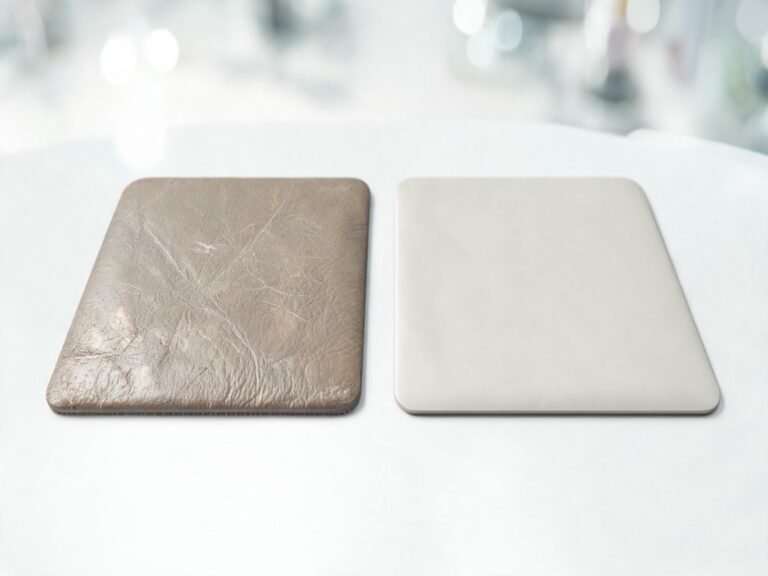
Side-by-side material comparison: PU vs PVC vs silicone leather performance testing
Request Compliance Documentation
PU Polyurethane Leather Specification Planning for Bulk Procurement
For B2B buyers planning bulk PU polyurethane leather procurement, the specification process must account for both performance requirements and regulatory constraints. The following framework helps structure the decision:
- Target market compliance: Map your distribution markets to regulatory frameworks—EU (REACH), US (CPSIA, Prop 65), and China (GB standards) all have different restricted substance thresholds
- Application environment: High-humidity applications (marine, bathroom, outdoor) demand hydrolysis resistance that standard PU cannot deliver—specify accelerated hydrolysis testing (7-day, 70°C, 95% RH)
- DMF residual specification: Contractually require GC-MS test reports per batch, with thresholds set 50% below the regulatory maximum to create a safety margin
- Supplier audit: Verify whether the supplier operates solvent-based or water-based lines, and request their VOC emission permits and waste treatment documentation
One of our automotive clients was specifying solvent-based PU for door panel trim and facing repeated REACH compliance near-misses on DMF residuals. By working with our team to transition the specification to silicone leather, they eliminated DMF testing from their QC protocol entirely—a process that previously consumed 3-5 business days per shipment batch. The PU leather fundamentals guide on our site provides additional context on the material’s properties, and our article on PU leather hidden problems documents the failure modes most commonly encountered in bulk procurement.

Production process flow chart showing the solvent-free manufacturing pathway for silicone leather
Frequently Asked Questions
Is PU polyurethane leather safe for skin contact applications?
It depends on the manufacturing method and residual solvent levels. Solvent-based PU leather can retain DMF residues that pose reproductive toxicity risks with prolonged skin contact. Water-based PU and silicone leather eliminate this risk. For applications involving direct skin contact (wearables, baby products, medical), specify materials with ISO 10993 biocompatibility testing and demand DMF-free certification.
What is the difference between water-based and solvent-based PU leather?
The difference lies in the carrier solvent: solvent-based PU uses DMF (dimethylformamide), while water-based PU uses water. Water-based PU produces lower VOC emissions and eliminates DMF residue risk, but typically offers 20-30% lower abrasion resistance and reduced hydrolysis stability. The cost premium for water-based PU is typically 40-60% over solvent-based equivalents.
Strategic Sourcing: Looking Beyond PU
PU polyurethane leather will remain a workhorse material for cost-sensitive applications, but the regulatory trajectory is clear: DMF restrictions will tighten, VOC thresholds will lower, and compliance documentation requirements will expand. B2B buyers who build specification flexibility into their procurement frameworks—maintaining qualified alternative materials like silicone leather for compliance-critical applications—will avoid the costly supply chain disruptions that inevitably follow regulatory changes. The question isn’t whether to transition away from solvent-based PU, but how strategically to manage that transition across your product portfolio.
Start Bulk Procurement Discussion
About TOPSUN
TOPSUN produces silicone-coated and water-based polyurethane leather alternatives that meet REACH, PAHs, and FDA compliance requirements for B2B buyers navigating tightening chemical regulations across global markets.
Zero-DMF manufacturing process | ISO 10993 biocompatibility testing | Full REACH SVHC documentation | Custom substrate engineering for automotive, furniture, and consumer electronics