You’re shopping for a new bag or a sofa, and you see the label: “Vegan Leather.” Great, you think — no animals harmed, sustainable, eco-friendly. You buy it. A year and a half later, the corners are peeling, the surface is cracking, and you’re wondering how a “sustainable” product fell apart so fast.
Here’s the truth most brands don’t tell you: about 90% of what’s sold as “vegan leather” is just polyurethane leather — PU for short. It’s a plastic coating on a polyester fabric backing. It’s 100% animal-free, yes. But it’s also 100% petroleum-derived, sheds microplastics when it breaks down, and typically lasts 2–5 years before peeling and cracking forces you to throw it away.
This article breaks down what polyurethane leather vegan products actually contain, why “vegan” doesn’t automatically mean “sustainable,” and what your real options are if you want leather alternatives that are both animal-free AND built to last.
See Truly Durable Vegan Options
What Polyurethane Leather Actually Is (and What It’s Made Of)
Let’s start with the basics. Polyurethane leather — usually shortened to PU leather — is made by coating a fabric backing (almost always polyester or cotton) with a layer of polyurethane plastic. The PU layer is embossed with a grain pattern to make it look like real leather. Sometimes a second “skin” layer or topcoat is added for color and a more realistic feel.
A typical PU leather product looks like this, from top to bottom:
- Top finish layer — a thin clear or colored protective coating (PU or acrylic)
- PU foam/grain layer — the main polyurethane coating, embossed with leather grain texture
- Adhesive layer — bonds the PU coating to the backing fabric
- Fabric backing — woven or nonwoven polyester (or sometimes cotton/rayon blend)

Leather surface texture — the grain pattern on PU leather is embossed into the plastic coating, not a natural hide grain
The animal-free part is true — there’s no animal hide in PU leather. It’s genuinely vegan by the dictionary definition: no animal products used. But here’s where the marketing gets slippery:
“Vegan” is often used as a synonym for “eco-friendly” or “sustainable” in product marketing — and that’s where the confusion sets in. A product can be 100% vegan and 100% plastic at the same time. PU leather is both. The “vegan” label tells you what’s NOT in it (animals), but it doesn’t tell you what IS in it (petroleum-based plastic), how long it will last (2–5 years), or what happens to it when you throw it away (sits in a landfill for centuries, shedding microplastics as it breaks down).
Let’s be honest: If a product says “vegan leather” but doesn’t tell you what it’s made of, it’s almost certainly PU. Brands that use genuinely sustainable materials — mushroom leather, cactus leather, silicone leather — put that front and center in their marketing. They’re proud of the material. If they’re hiding behind the generic “vegan leather” label, there’s usually a reason.
The Vegan Leather Landscape: 6 Types, Ranked by Sustainability
Not all vegan leathers are equally problematic. The category ranges from “basically plastic with a green label” to “genuinely innovative biomaterials.” Here’s the full spectrum, from worst to best environmental profile:
| Material Type | Base Material | Vegan? | Lifespan | Eco Profile |
|---|---|---|---|---|
| PVC Vinyl Leather | Polyvinyl chloride + plasticizers | Yes | 3–5 years | Poor — phthalates, chlorine, high carbon footprint |
| PU (Polyurethane) Leather | Polyurethane coating + polyester backing | Yes | 2–5 years | Fair — petroleum-based, microplastic shedding |
| Water-Based PU Leather | Waterborne PU (no DMF solvents) | Yes | 3–5 years | Better — lower VOC, still petroleum-based |
| Plant-Based Leather (cactus, pineapple, apple) | Plant fibers + PU/PLA binder (50–90% plant) | Yes | 1–3 years | Mixed — renewable input but PU binder limits recyclability |
| Silicone Leather | Silicone polymer (from silica/sand) + fabric backing | Yes | 10+ years | Strong — zero VOC, recyclable, 10+ year lifespan |
| Mycelium / Mushroom Leather | Fungal mycelium grown on agricultural waste | Yes | Varies (emerging tech) | Excellent — but still scaling, limited commercial availability |
The most important takeaway: “vegan” covers everything from cheap plastic to cutting-edge biomaterials. You can’t judge a material’s sustainability by whether it’s vegan — you have to look at what it’s actually made of, how long it lasts, and what happens at end of life.

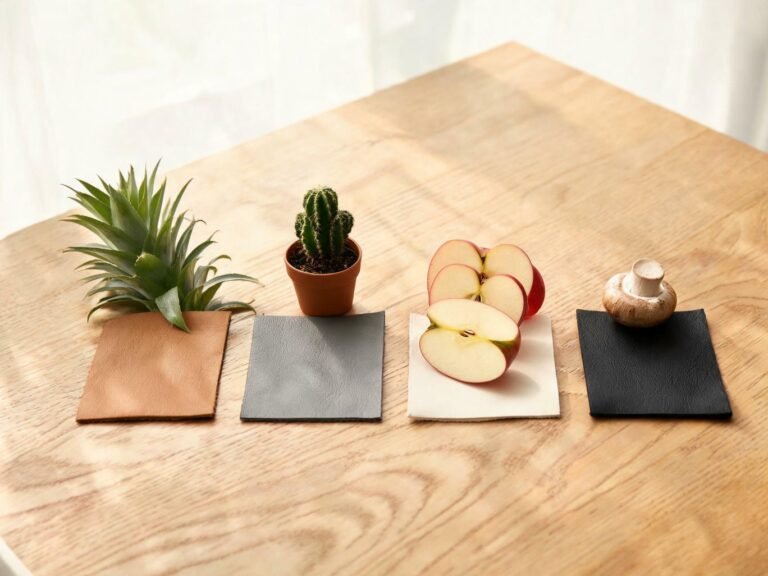
Vegan leather samples — the material composition behind the “vegan” label varies dramatically from product to product
Why Most PU Vegan Leather Peels in 1–2 Years
If you’ve ever owned a vegan leather bag, wallet, or sofa that started peeling after a year or two, you know exactly what we’re talking about. It’s not a defect — it’s a fundamental property of how polyurethane leather is made.
The PU coating is a relatively thin layer — usually 0.1–0.3mm — bonded to a fabric backing. Every time you flex, bend, or sit on it, the PU layer stretches differently than the fabric backing. Over thousands of flex cycles, the bond between layers weakens. Add body heat, sweat, UV light, and the natural hydrolysis of polyurethane in humid conditions, and the coating eventually cracks, flakes, and peels away from the backing.
Here’s what accelerates PU peeling:
- Body contact. Skin oils, sweat, and body heat break down the PU surface from the outside in. That’s why peeling always starts on armrests, seat cushions, bag handles, and shoe heels — the parts you touch most.
- Humidity. Polyurethane absorbs moisture from the air, which causes hydrolysis — a chemical reaction that breaks down the polymer chains. In tropical climates, PU leather can peel in as little as 12 months. Even in air-conditioned spaces, humidity accelerates degradation.
- Sunlight. UV radiation from windows or direct sun oxidizes the PU coating, making it brittle and prone to cracking. This is especially noticeable on sofas and furniture near windows.
- Cleaning products. Alcohol, bleach, and harsh cleaners strip away the protective top coat on PU leather, exposing the softer PU layer underneath to faster degradation.
Once peeling starts, there’s no way to stop it. You can’t re-glue the coating. You can’t re-coat it at home. The only fix is reupholstery or replacement — which means your “vegan sustainable” purchase just generated more waste than a real leather product that would have lasted 10–20 years.
Silicone vs PU: Full Comparison

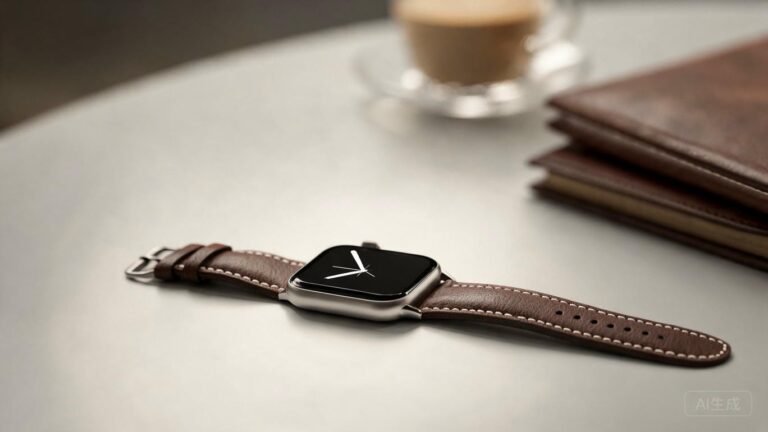
Vegan fashion accessories — most “vegan leather” bags and shoes are made from PU plastic that peels within 1–3 years
See how silicone leather bags and accessories hold up to daily wear compared to PU vegan leather
Silicone Leather: The Vegan Material That Actually Lasts
If you want vegan leather that doesn’t peel, doesn’t shed microplastics, and lasts 10+ years, silicone leather is currently the best balance of performance, sustainability, and availability.
Silicone leather is made with a silicone polymer coating on a fabric backing. Silicone is different from polyurethane in important ways:
- It’s made from silica (sand), not petroleum. The main raw material for silicone is silicon dioxide — the second most abundant element in Earth’s crust. It still requires energy to process, but the feedstock isn’t fossil fuel.
- It doesn’t peel or crack. The silicone coating is thicker (0.5–1.0mm typically) and more durable than PU. With 200,000+ Martindale abrasion cycles and 50,000+ flex cycles, it outlasts PU leather by 3–5x.
- Zero VOC emissions. Silicone leather is produced with a solvent-free process. No DMF, no phthalates, no off-gassing. It’s certified ISO 10993 biocompatible and safe for skin contact.
- Fully recyclable. The silicone coating and fabric backing can be separated at end of life, and each component can be recycled independently — unlike PU leather where the mixed layers make recycling essentially impossible.
- 100% vegan and cruelty-free. No animal products at any stage of production. No animal hides, no animal-based coatings, no animal testing on finished products.

Silicone leather sample — the material flexes and folds without cracking or peeling, maintaining its integrity for 10+ years
For B2B buyers and brands that want to market vegan products without the quality complaints and warranty claims that come with PU leather, silicone leather solves the durability problem that has plagued vegan leather for decades. Your customers get a product that’s genuinely animal-free AND actually lasts — which means fewer returns, fewer replacements, and a better environmental outcome overall.
Frequently Asked Questions
Is all vegan leather made of plastic?
The vast majority of it — about 90% of what’s commercially available — is PU or PVC, both petroleum-based plastics. Some newer plant-based leathers (cactus, pineapple, mushroom) use plant materials as the main component, but most still have PU coatings or polymer binders, so they’re partially plastic. Silicone leather is a synthetic material but not a plastic in the traditional sense — it’s made from silica (sand) rather than petroleum. When evaluating vegan leather, always look at the actual composition, not just the “vegan” label.
Is silicone leather better than PU leather for the environment?
Overall, yes — but the comparison is more nuanced than “X is better than Y.” Silicone leather has advantages in zero VOC emissions, no plasticizer migration, 10+ year service life (which means fewer replacements), and end-of-life recyclability. PU leather may have a slightly lower upfront carbon footprint per square meter, but that advantage disappears when you account for the 3–5x shorter lifespan. The most sustainable product is the one you don’t have to replace every 2 years.
Vegan Is a Starting Point, Not the Whole Story
Buying vegan leather is a great first step if your priority is avoiding animal products. But “vegan” alone doesn’t tell you whether a product is sustainable, durable, or healthy. The vast majority of vegan leather on the market is polyurethane — a petroleum plastic that peels in 1–2 years, sheds microplastics, and ends up in landfill.
The good news is that better options exist. Silicone leather delivers the animal-free benefits of vegan leather with 10+ years of durability, zero VOCs, and end-of-life recyclability. Plant-based leathers are improving every year. And as more consumers ask questions about what’s actually in their “vegan” products, the market will keep evolving toward materials that are genuinely better — not just marketed that way.
The next time you see “vegan leather” on a label, dig deeper. Ask what it’s made of. Ask how long it lasts. Ask what happens when it wears out. Your wallet — and the planet — will thank you.
About TOPSUN
TOPSUN produces 100% vegan silicone leather for fashion accessories, furniture, automotive interiors, and consumer electronics — engineered to outlast PU vegan leather by 3–5x with zero petroleum-based coating and zero harmful emissions.
100% cruelty-free, ISO 10993 biocompatible, REACH compliant, zero VOC, 200,000+ Martindale cycles, custom colors and textures, OEM/ODM customization available.