When procurement teams search “leather and leather,” they are not chasing a definition. They are weighing leather types — genuine, PU, PVC, and silicone — to find the material that best balances durability, maintenance, supply stability, and unit price for a specific application. As a procurement manager who has sourced upholstery materials across automotive, furniture, and medical seating programs, I have seen how the wrong material choice compounds into warranty claims, late deliveries, and margin erosion long after the PO is closed.
No single leather wins on every criterion. This guide breaks down the comparison from a buyer’s perspective — covering material trade-offs, application requirements, and how silicone leather resolves the pain points that keep sourcing teams awake.
Leather And Leather: Mapping the Material Landscape for Procurement
Every leather and leather sourcing decision starts with four material families. Understanding where each sits on the cost-performance curve is the foundation of material selection for procurement teams evaluating suppliers:
- Genuine leather: Tanned animal hide. Premium feel and breathability, but high unit cost, batch variability, and exposure to livestock supply cycles.
- PU (polyurethane) leather: Polymer coating on fabric backing. Lower cost with decent hand feel, but durability and hydrolysis resistance vary by formulation.
- PVC (polyvinyl chloride) leather: Plasticized vinyl coating. Lowest-cost option, but plasticizer migration, cracking, and environmental scrutiny limit regulated-market use.
- Silicone leather: Silicone polymer coated onto fabric. Higher upfront cost than PU or PVC, but exceptional durability, cleanability, and chemical inertness that lower total cost of ownership.
The trade-off procurement teams feel most acutely is between upfront price and lifecycle cost. Genuine leather commands the highest unit price but offers a heritage aesthetic some premium segments demand. PU and PVC win on initial cost but often fail prematurely in demanding environments. Silicone leather sits closer to genuine leather in price but closer to — and frequently beyond — the synthetics in durability and compliance. For a deeper breakdown, see our silicone leather vs PU vs PVC comparison.

A full color and texture range on display — the starting point for any leather and leather material comparison.
Buyer Requirements Across Applications: What Each Leather Type Must Deliver
Upholstery leather durability requirements differ sharply by end use. A material that excels in a residential sofa may fail within months on a hospital chair or marine helm seat. Here is how requirements shift across the applications we source for most:
- Contract furniture: Buyers need 30,000+ Martindale cycles, stain resistance for high-traffic lobbies, and fire-standard compliance (CAL 117). Genuine leather meets durability but stains; PU meets cost but may not survive contract traffic.
- Automotive interiors: OEMs demand UV stability, fogging resistance, and 5-10 year aging. PVC cracks under thermal cycling; PU hydrolyzes in humid climates. Silicone leather holds color and flexibility through UV and heat exposure.
- Medical and healthcare: Cleanability and disinfection resistance are non-negotiable. Genuine leather absorbs fluids and degrades under bleach; silicone leather withstands repeated hospital-grade disinfectant wipe-downs.
- Marine and outdoor: Saltwater, UV, and mildew resistance drive the spec. PVC plasticizers leach; PU coatings peel. Silicone leather is inherently hydrophobic and UV-stable.
Key takeaway: The most expensive sourcing mistake is not choosing the priciest material — it is choosing a material whose weakness aligns with your application’s primary stressor. Match the leather type to the failure mode your product will face, not to the unit price on the quote sheet.
Leather And Leather Trade-Offs: Durability, Maintenance, and Supply Stability
When I evaluate leather total cost of ownership, I look beyond invoice price to four variables that determine what the material really costs over its service life: Martindale durability, maintenance burden, supply stability, and price index. The table below summarizes how the four leather types compare across these procurement-critical dimensions.
| Leather Type | Durability (Martindale) | Maintenance Level | Supply Stability | Price Index |
|---|---|---|---|---|
| Genuine Leather | 25,000–50,000 cycles | High (conditioning required) | Volatile (livestock cycles) | 100 (baseline) |
| PU Leather | 15,000–30,000 cycles | Low–Medium | Moderate (petroleum-linked) | 30–50 |
| PVC Leather | 10,000–25,000 cycles | Low | High (commodity resin) | 20–35 |
| Silicone Leather | 50,000–100,000+ cycles | Low (wipe-clean) | High (controlled production) | 60–80 |

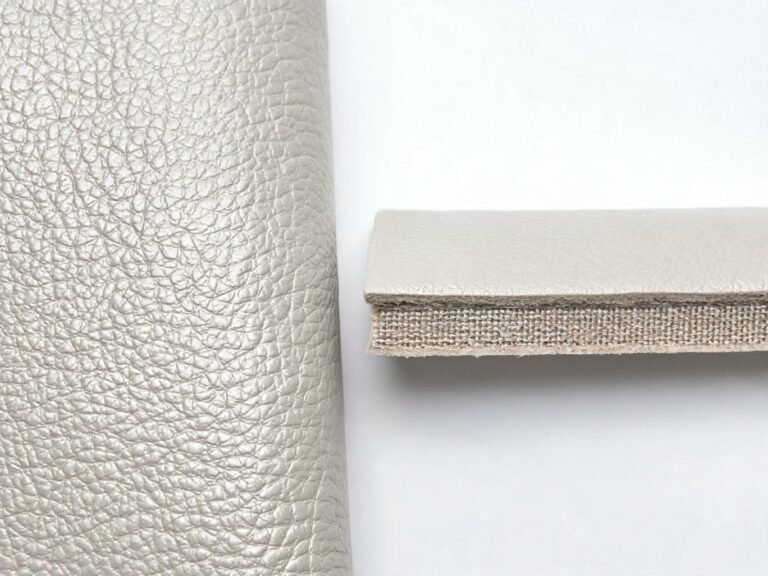
Physical swatch racks let buyers compare hand feel, thickness, and grain across leather types before committing to volume.
Watch TOPSUN’s silicone leather alongside genuine, PU, and PVC samples — a side-by-side comparison of hand feel, flexibility, and surface performance.
Why Genuine Leather And Leather Alternatives Fail the TCO Test
Total cost of ownership is where the genuine leather vs synthetic leather trade-offs become stark. Genuine leather’s TCO is inflated not just by unit price but by maintenance regimes, conditioning products, and replacement cycles 30-50% shorter than silicone leather in high-wear use. One contract furniture client found genuine leather seating required reupholstery every 4-5 years in a transit lounge, while silicone leather lasted 8+ years with wipe-down maintenance only.

Synthetic vs genuine leather — the surface may look similar, but service life and maintenance costs diverge sharply.
PU leather fails the TCO test on a different axis: hydrolysis. In humid or high-temperature environments, PU coatings break down over 2-5 years, leading to peeling, flaking, and full material failure. The replacement cost — including labor, logistics, and downtime — typically exceeds the original material savings several times over. PVC fails on plasticizer migration and cracking, and increasingly on regulatory exclusion from audited supply chains. Our guide to the difference between leather and faux leather explores these failure modes in detail.
The procurement lesson is straightforward: a material that costs 40% less at the PO but fails twice as fast is never the cheaper option. Silicone leather’s higher upfront cost is recovered through extended service life, reduced maintenance labor, and fewer warranty events.
How Silicone Leather Resolves Procurement Pain Points
From a supply chain standpoint, silicone leather resolves the three pain points that cause the most sourcing headaches: supply reliability, compliance documentation, and spec consistency.
- Supply reliability: Unlike genuine leather, hostage to livestock cycles, hide availability, and tannery capacity, silicone leather is produced from abundant silica feedstock in a controlled environment. Lead times are predictable and capacity scales to order volume.
- Compliance documentation: Silicone leather is inherently free of DMF, plasticizers, and heavy metals. One material can satisfy REACH, RoHS, and Oeko-Tex without the layered testing PU and PVC demand — simplifying audit packages.
- Spec consistency: Genuine leather varies by hide, batch, and tannery. Silicone leather is engineered to tight color and thickness tolerances, so roll 1 matches roll 500 — critical for multi-site production.
For buyers weighing silicone leather supply chain stability against animal-hide volatility, the advantage is structural. A polymer-based line does not lose capacity to disease outbreaks, feed-cost shocks, or tannery consolidation — meaning fewer expedited freight charges and line-down events that erode margins faster than any unit-price difference.
Frequently Asked Questions
Is silicone leather considered genuine leather or synthetic leather?
Silicone leather is technically a synthetic leather — a man-made polymer coating on fabric backing. It differs from PU and PVC in that the coating is a silicone elastomer. For procurement classification it falls under synthetic leather, but its performance profile (durability, cleanability, chemical inertness) often exceeds genuine leather in demanding applications. See our synthetic leather vs genuine leather analysis for a full breakdown.
Which leather type offers the best total cost of ownership for contract furniture?
In our sourcing experience, silicone leather delivers the lowest TCO over a 5-8 year horizon. Its unit price is higher than PU or PVC, but Martindale durability (50,000+ cycles), wipe-clean maintenance, and 8+ year service life more than recover the premium. Genuine leather’s TCO is inflated by conditioning and shorter replacement cycles.
How do lead times compare between genuine leather and silicone leather suppliers?
Genuine leather lead times are volatile — they depend on hide availability, tannery backlog, and livestock cycles, and can stretch from 8 to 20+ weeks. Silicone leather lead times are more predictable because production is driven by polymer capacity rather than agricultural cycles. TOPSUN maintains stable lead times through controlled production scheduling.
Matching the Right Leather to the Right Brief
For procurement teams navigating the leather and leather landscape, the goal is not to find a single “best” material but to match each leather type to the application, budget, and risk profile it serves. Genuine leather retains its place in heritage segments; PU and PVC serve cost-driven volume programs. But where durability, compliance, and supply stability matter as much as price, silicone leather is the procurement decision that holds up — on the spec sheet, in the field, and on the balance sheet. Start with our genuine leather vs synthetic buyer’s guide to benchmark silicone leather and leather alternatives.
About TOPSUN
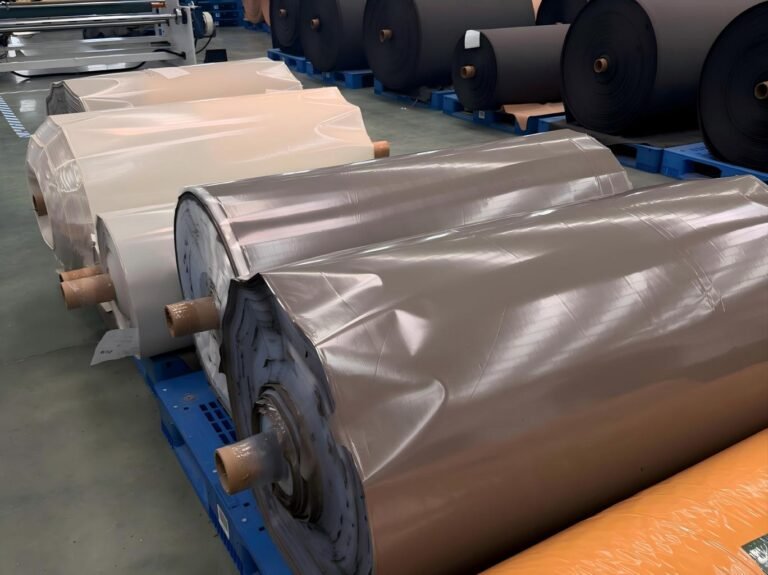
TOPSUN operates a vertically integrated silicone leather facility that gives procurement teams single-source accountability — from raw silica compounding through finished-roll inspection — with stable lead times, full lot traceability, and consolidated compliance documentation across automotive, furniture, and medical seating programs.
Platinum-cured silicone formulation · Predictable lead times · REACH, RoHS, and Oeko-Tex compliant · Multi-site production consistency