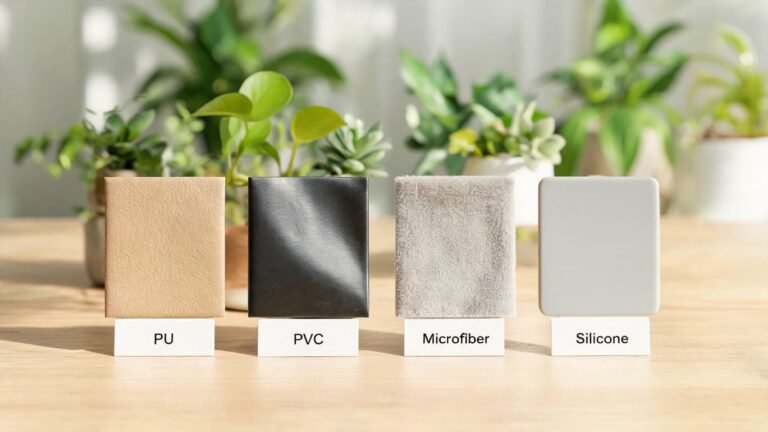
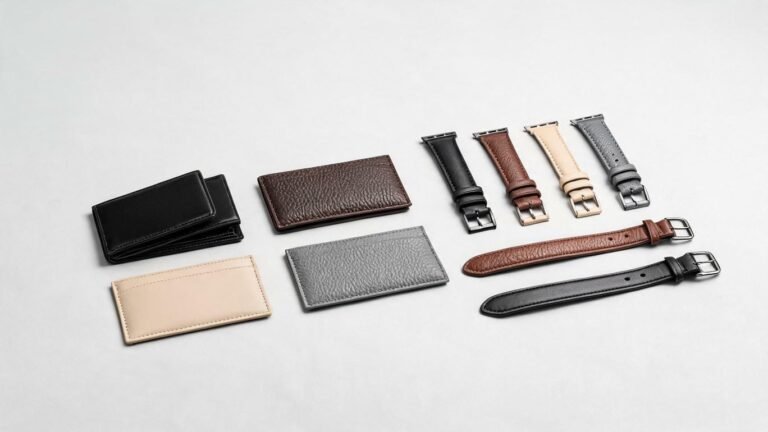
Understanding the silicone leather manufacturing process matters more than most buyers realize. The way a material is produced directly determines its durability, surface feel, and consistency across batches. If you are sourcing silicone leather for automotive interiors, contract furniture, or marine upholstery, knowing what happens inside the factory helps you ask the right questions during vendor evaluation.
This guide breaks down every production stage from raw material selection to the finished roll. We cover six core steps: raw material preparation, compound mixing, coating application, curing and crosslinking, surface finishing, and final quality inspection. Each section includes the technical parameters that separate reliable output from material that fails under real-world use. For a broader look at how we apply these materials across industries, visit our applications overview.

End-to-end production flow from raw material intake to finished roll packaging
Step 1: Raw Material Selection for Silicone Leather Production
Every roll of silicone leather begins with three input streams: the silicone polymer system, the base fabric substrate, and the release paper carrier. The quality of each input sets the ceiling for everything that follows. In our production facility, raw material rejection at intake is not uncommon. We have found that roughly 3 to 5 percent of incoming fabric lots fail our initial tensile and width checks and are returned before any coating begins.
The silicone polymer itself typically arrives as a two-component system: a base resin (Part A) and a crosslinking agent or curing catalyst (Part B). Most formulations use addition-cure (platinum-catalyzed) silicone because it produces zero byproducts during curing. This is what gives silicone leather its zero-VOC advantage over PU-based materials. The alternative, condensation-cure systems, release alcohol or acetic acid as byproducts and are rarely used in premium upholstery applications.
Base fabric selection depends on the end-use requirements:
- Knit polyester \u2014 high stretch and soft hand feel. Standard for automotive seat covers and furniture upholstery where drapability matters. Typical weight range: 150\u2013250 g/m\u00b2.
- Woven polyester \u2014 higher dimensional stability, lower elongation. Used in applications that require tight tensioning, such as wall panels and headliners. Weight range: 120\u2013200 g/m\u00b2.
- Microfiber substrate \u2014 non-woven structure that mimics the fibrous collagen network of genuine leather. Offers superior tear strength and breathability. Weight range: 200\u2013400 g/m\u00b2.
Release paper serves as the temporary carrier that transfers the surface texture during embossing. It comes in silicone-coated kraft paper or PET film, with the embossing pattern engraved into the silicone release layer. The paper is typically 100\u2013200 \u03bcm thick and can withstand multiple reuse cycles if handled correctly. Choosing the right release paper pattern is the first step in defining the final aesthetic of the leather surface.
Our material scientists work with each client to match substrate, polymer grade, and release pattern to the target application. You can learn more about the underlying material science in our companion article on silicone rubber leather manufacturing.

Raw material drums and mixing equipment in the preparation area
Step 2: Silicone Compound Preparation and Formulation
With raw materials verified, the next stage is compound preparation. This is where formulation expertise makes a tangible difference in the final product. The mixing process combines Part A (base resin), Part B (curing agent), color pigments, and functional additives into a homogeneous coating compound.
Mixing typically follows this sequence in a planetary or dual-shaft mixer:
- Base resin loading \u2014 the silicone polymer base is charged into the mixing vessel under vacuum conditions to prevent air entrapment.
- Pigment dispersion \u2014 inorganic or organic pigments are added at 2\u20138% by weight and dispersed at 500\u20131,500 RPM for 15\u201330 minutes. Proper dispersion is critical. Undissolved pigment agglomerates cause surface defects visible on the finished roll.
- Additive incorporation \u2014 flame retardants (aluminum trihydrate or platinum-based inhibitors), anti-microbial agents, or matting agents are added depending on the target application.
- Curing agent addition \u2014 Part B is introduced last, typically at a 1:1 to 10:1 (A:B) ratio depending on the specific polymer system. The mix is stirred for an additional 5\u201310 minutes under vacuum.
Viscosity control is one of the most critical parameters in the entire silicone leather manufacturing process. The coating compound must be fluid enough to spread evenly across the substrate but viscous enough to avoid excessive penetration into the fabric. Target viscosity for knife-over-roll coating typically falls between 5,000\u201320,000 mPa\u00b7s (cP) at 25\u00b0C. Our engineers adjust viscosity in real time by monitoring temperature and adding small amounts of reactive diluent silicone oils.
Here is the reality: batch-to-batch consistency in compound preparation is what separates a reliable silicone leather factory from an inconsistent one. We run viscosity checks on every batch using a Brookfield viscometer before releasing the compound to the coating line. Any batch outside the \u00b15% tolerance window is held for adjustment.
Key takeaway: The mixing ratio tolerance for the A:B curing system is typically \u00b12%. Exceeding this range results in either under-cured (tacky, weak) or over-cured (brittle) leather. Automated dosing systems are strongly preferred over manual weighing for production-scale runs.
Step 3: The Silicone Coating Process
Coating is where the liquid compound meets the substrate and transforms into a continuous film. The silicone coating process can employ several application methods, and the choice depends on the product thickness, surface quality requirements, and production speed targets.
The three most common coating techniques in a silicone leather production line are:
- Knife-over-roll coating \u2014 a precision metering blade spreads the compound onto the substrate as it passes over a backing roller. This is the workhorse method for silicone leather. Coating weight is controlled by the gap between the blade and the roller, typically set to 0.1\u20130.5 mm. It delivers consistent film thickness across the full web width and is well-suited for single-layer and multi-layer builds.
- Roller coating (reverse gravure or kiss coating) \u2014 an engraved roller picks up the compound and transfers a precise amount to the substrate. This method excels at applying thin, uniform layers \u2014 particularly useful for topcoat or surface treatment layers where thickness control below 0.05 mm is needed.
- Wet-on-wet application \u2014 multiple layers are applied sequentially without intermediate curing. A base coat, intermediate foam layer, and top coat are deposited in a single pass through the coating line. This approach significantly boosts line speed but requires careful formulation balance to prevent interlayer mixing.
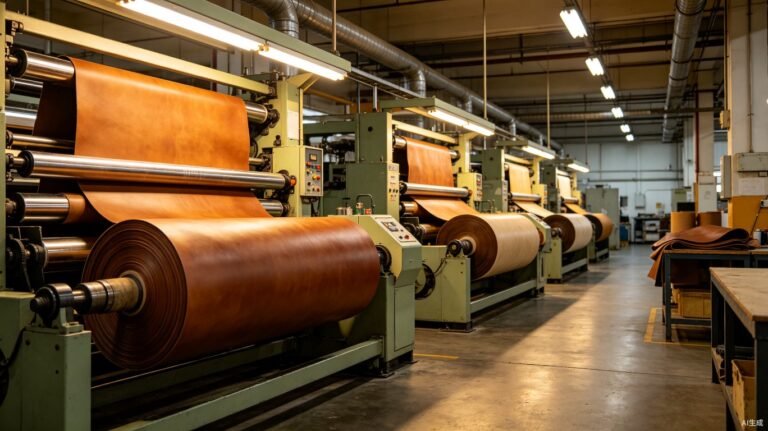
In a typical production run, the release paper is unwound and travels through the coating station first. The silicone compound is applied directly onto the release paper surface, and then the base fabric is laminated onto the wet coating using a nip roller. This ensures the textured surface of the release paper becomes the visible face of the finished leather after demolding. Our factory production floor runs multiple coating lines in parallel to handle different product thicknesses simultaneously without batch delays.
Watch our coating line in action \u2014 from compound application to web lamination

Full view of a multi-station coating and lamination production line
Download Technical Data Sheet
Step 4: Curing and Drying \u2014 Crosslinking the Silicone Network
After coating, the wet web enters the curing oven. This is where the chemistry happens. The addition-cure silicone undergoes hydrosilylation \u2014 a reaction between the vinyl groups on the polymer backbone and the silicon-hydride (Si-H) groups on the crosslinker, catalyzed by platinum. The result is a three-dimensional crosslinked network that gives silicone leather its characteristic flexibility, thermal stability, and chemical resistance.
According to research published in Progress in Organic Coatings, the kinetics of platinum-catalyzed silicone curing are highly temperature-dependent, with reaction rates roughly doubling for every 10\u00b0C increase (Arrhenius behavior). In practice, this means oven temperature control is not optional \u2014 it is the single most important variable in synthetic leather manufacturing quality.
Typical curing parameters for silicone leather include:
- Oven temperature zones: 3\u20135 independent temperature zones, progressively increasing from 80\u00b0C at the entry to 150\u2013180\u00b0C at the peak zone, then tapering to 80\u2013100\u00b0C at the exit for controlled cooling.
- Dwell time: 60\u2013180 seconds depending on line speed and product thickness. Thicker builds (above 1.2 mm total) require longer dwell or higher peak temperatures.
- Air circulation: forced hot-air convection with \u00b12\u00b0C uniformity across the web width. Hot spots cause over-curing and brittleness in localized areas.
In our facility, we run online tack and cure monitoring using surface thermocouples at multiple points across the web width. This catches curing deviations before they become defective product. One of our automotive OEM clients reported a 40% reduction in field complaints after we upgraded from a 3-zone to a 5-zone oven, simply because the tighter temperature control eliminated micro-areas of under-cure.
The curing stage also drives off any residual solvents or low-molecular-weight siloxanes. Because addition-cure systems produce no chemical byproducts, the exhaust from a silicone leather curing oven is primarily water vapor and trace amounts of volatile siloxanes \u2014 a stark contrast to PU manufacturing, where isocyanate emissions require extensive abatement systems. For buyers evaluating manufacturing processes, this difference is worth understanding. You can read our comparison in the article on polyurethane leather manufacturing.

Multi-zone high-temperature curing oven with forced air circulation
Step 5: Embossing, Calendering and Surface Finishing
After the silicone is fully cured, the web moves to the finishing zone. This is where the visual and tactile character of the leather is defined. In many cases, the texture is already formed during curing because the coating was applied against the embossed release paper. However, additional finishing steps refine the surface further.
The key finishing operations include:
- Release paper demolding \u2014 the cured silicone leather is peeled away from the release paper. The paper can be rewound and reused, typically for 3\u20138 cycles depending on pattern depth and handling care.
- Calendering \u2014 the freed leather passes through a set of steel or rubber-coated rollers under pressure. Calendering controls final thickness (typically 0.6\u20132.0 mm) and improves surface smoothness for products that require a more uniform appearance.
- Surface treatment \u2014 optional topcoats can be applied for enhanced stain resistance, matte or gloss adjustment, or anti-fog properties (critical for automotive windshields and instrument panels). Some treatments are applied by a second roller coating pass, followed by a short post-cure at 100\u2013120\u00b0C.
- Perforation (optional) \u2014 for automotive and furniture applications requiring breathability, a rotary needle perforator creates 0.3\u20131.5 mm diameter holes at controlled spacing. This step does not compromise the silicone coating integrity because the perforation pierces through the full composite structure.
For buyers comparing materials, it is worth noting that the finishing flexibility of silicone leather far exceeds that of conventional PU. The inherent thermal stability of the silicone matrix allows post-curing treatments at temperatures that would degrade polyurethane. This gives specifiers far more room to tune the surface for specific application demands.
Process comparison note: Unlike PU leather, which often requires a separate base coat, intermediate coat, and top coat applied in multiple passes with intermediate drying, silicone leather can achieve equivalent performance with fewer layers. This reduces material waste and total production cycle time by 20\u201330% in our experience.
Process Flow Summary
The table below provides a consolidated view of each stage in the silicone leather manufacturing process, including typical parameters and the quality checkpoints that occur at each transition.
| Production Stage | Key Parameters | Quality Checkpoint |
|---|---|---|
| 1. Raw Material Intake | Fabric weight 120\u2013400 g/m\u00b2; polymer viscosity per spec | Tensile test, width check, COA verification |
| 2. Compound Preparation | A:B ratio \u00b12%; viscosity 5,000\u201320,000 cP | Brookfield viscosity, pigment dispersion inspection |
| 3. Coating Application | Knife gap 0.1\u20130.5 mm; line speed 5\u201320 m/min | Coating weight uniformity (\u00b15%), visual defect scan |
| 4. Curing and Drying | Peak temp 150\u2013180\u00b0C; dwell 60\u2013180 s | Surface tack test, web temperature monitoring |
| 5. Finishing | Final thickness 0.6\u20132.0 mm; calender pressure 20\u201360 bar | Thickness gauge, surface gloss measurement |
| 6. Inspection and Rewinding | Roll length 30\u201350 m; core ID 76 mm or 152 mm | Full-width visual inspection, physical testing per lot |
Step 6: Quality Inspection and Roll Finishing
The final stage of the silicone leather manufacturing process is where production quality is confirmed or rejected. No amount of careful coating and curing can compensate for inadequate end-of-line inspection. This step separates manufacturers who ship reliable material from those who leave quality to chance.
Quality inspection at our facility covers both online and offline testing:
- Online visual inspection \u2014 automated camera systems scan the full web width for surface defects including pinholes, streaks, color variation, and coating voids. Defects are marked with UV ink for later removal during rewinding.
- Offline physical testing \u2014 per production lot (typically every 1,000\u20132,000 meters), samples are pulled for laboratory testing: tensile strength (ISO 2411), tear strength (ISO 34-1), abrasion resistance (Martindale or Taber, ISO 12947), color fastness (ISO 105-B02), and flex fatigue (ISO 5402, minimum 100,000 cycles for automotive grade).
- Specialized testing \u2014 for application-specific orders, additional tests may include flame retardancy (FMVSS 302, UL 94), fogging (DIN 75201), UV aging (ISO 4892), and waterproofness (AATCC 127). These are documented on each batch\u2019s certificate of analysis.
After inspection passes, the leather is rewound onto a shipping core. The rewind tension is carefully controlled to prevent stretching or wrinkling. Rolls are then wrapped in kraft paper or PE film, labeled with batch number, color code, thickness, and length, and palletized for shipment. Standard roll lengths are 30 or 50 meters, but custom lengths are available for specific project requirements.
For buyers who want to verify material performance before committing to a bulk order, we provide a comprehensive technical data sheet with every sample package. This includes full test results for the specific batch you receive, not just generic specifications.

Final rewinding and roll packaging at the end of the production line
What This Means for Your Sourcing Decision
The silicone leather manufacturing process involves far more precision than many buyers initially assume. From the mixing ratio tolerance of the two-component silicone system to the multi-zone oven temperature profile, each stage introduces variables that directly affect the performance of the finished material. Understanding these stages helps you evaluate suppliers more effectively and specify requirements that match your application needs.
If you are currently using PU or PVC leather and considering the switch, the structural differences in how silicone leather is manufactured explain why it performs better in heat resistance, UV stability, and long-term durability. The addition-cure chemistry eliminates VOC emissions entirely, and the inorganic silicone backbone resists the hydrolysis that degrades PU over time. Our detailed comparison with conventional materials is available in the PU leather overview for further reading.
About TOPSUN
TOPSUN is a specialized manufacturer of silicone leather with a dedicated production facility equipped with multi-station coating lines, 5-zone curing ovens, and an in-house testing laboratory. We serve automotive OEMs, furniture manufacturers, and marine upholstery suppliers across Europe and the Americas with OEM and ODM capabilities.
Certifications: FDA, REACH, RoHS, ISO 9001, GRS, FMVSS 302, UL 94 HF-1