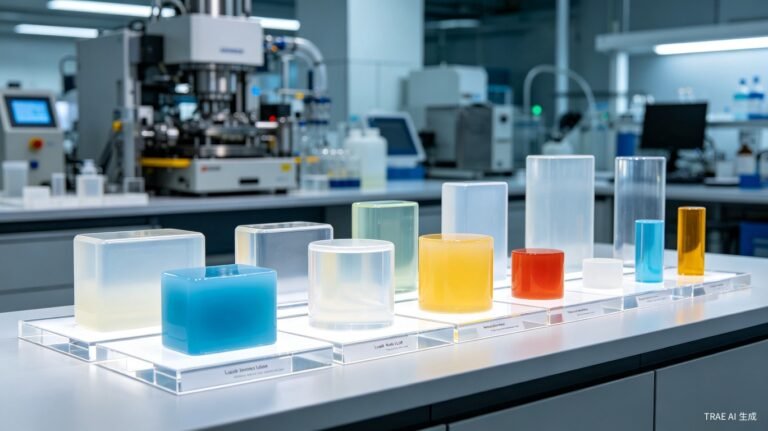
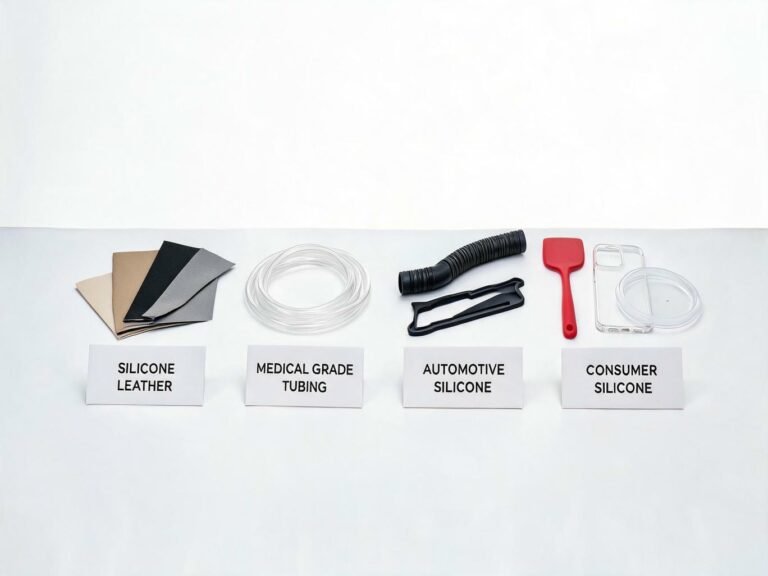
When most procurement professionals hear “silicone rubber,” they picture kitchen spatulas, sealants, or medical tubing. But here’s the thing: silicone rubber has quietly become the backbone of next-generation performance leather — and it’s reshaping how B2B buyers evaluate upholstery materials. The global silicone synthetic leather market hit $217 million in 2023 and is projected to reach $536 million by 2030, growing at a 14.0% CAGR. Behind that growth curve is silicone rubber: the raw material that gives silicone leather its almost unfair performance advantages over traditional PU, PVC, and even genuine leather.
Request Free Silicone Leather Samples
What Is Silicone Rubber, and Why Does It Matter for Leather?
Silicone rubber isn’t your typical synthetic material. At the molecular level, its backbone is a silicon-oxygen (Si-O-Si) chain — fundamentally different from the carbon-based chains that make up PU, PVC, and most organic polymers. This difference is what gives silicone rubber its signature properties: thermal stability from -50°C to 250°C, resistance to UV and hydrolysis, and an inert chemical profile that doesn’t need plasticizers or solvents to stay flexible.
In leather manufacturing, silicone rubber is applied as a liquid coating onto a fabric substrate — typically polyester, cotton, or microfiber — then cured into a solid, flexible film. The result? A material that looks and feels like premium leather but outperforms it in almost every measurable category. In our experience at TOPSUN’s production facilities, what fascinates procurement managers most isn’t the appearance — it’s the test data. A Martindale abrasion rating of 200,000+ cycles. Zero hydrolysis degradation after 10+ weeks of immersion. UV resistance at Grade 4+. These aren’t marketing claims; they’re SGS-verified lab results.

The Molecular Advantage: How Silicone Rubber Outperforms Carbon-Based Polymers
Let’s be honest: most synthetic leather materials degrade because their polymer chains break down over time. PU leather hydrolyzes when exposed to moisture and heat. PVC leather leaches plasticizers, becoming brittle within 3-5 years. Genuine leather fades, cracks, and requires constant conditioning.
Silicone rubber sidesteps all of these failure modes. The Si-O bond energy (approximately 452 kJ/mol) is significantly higher than the C-C bond (approximately 348 kJ/mol) in organic polymers. This translates directly into real-world performance that procurement teams can quantify:
In accelerated aging tests, silicone rubber leather retained 85%+ of its original tensile strength after 3,000 hours of UV exposure — compared to PU leather’s typical 40-60% retention over the same period.
This molecular stability also explains why silicone rubber leather doesn’t need plasticizers. Traditional PVC leather can contain up to 40% phthalate plasticizers by weight — substances now heavily restricted under EU REACH regulations. Silicone rubber achieves flexibility through its inherent polymer structure, not through chemical additives. For procurement managers navigating tightening environmental compliance, this difference alone can be decisive.

From Liquid to Leather: The Manufacturing Process Behind Silicone Rubber Fabrics
The transformation from liquid silicone rubber to finished performance fabric involves a multi-stage process that demands precision at every step. At TOPSUN’s three production bases spanning Guangdong and Hubei provinces, the workflow follows a tightly controlled sequence:
Step 1: Base Fabric Preparation. The substrate — typically polyester, cotton, or a custom blend — is pre-treated to ensure optimal adhesion. The choice of backing fabric directly affects the final product’s tensile strength, tear resistance, and hand feel. For automotive interiors, we typically use high-tenacity polyester for its dimensional stability under extreme temperatures.
Step 2: Silicone Compounding. Liquid silicone rubber is mixed with pigments, curing agents, and performance modifiers in a controlled environment. This is where the material’s final properties are dialed in — flame retardancy, antimicrobial performance, color, and surface texture. The compounding stage is where OEM customization happens, and it’s why silicone rubber manufacturers serving the leather industry invest heavily in formulation R&D.
Step 3: Coating and Curing. The compounded silicone is applied to the substrate via precision coating machinery, then thermally cured. The coating thickness can range from 0.23mm for ultra-thin electronics applications to 1.5mm+ for heavy-duty furniture. Multi-layer coating enables gradient properties — for example, a wear-resistant top layer with a softer, more elastic base layer.
Step 4: Embossing and Finishing. The cured material passes through embossing rollers that imprint the desired surface texture — from classic leather grain to custom patterns. Post-treatment includes surface modification for specific tactile qualities and optional antimicrobial coating.
Where Silicone Rubber Leather Delivers the Highest ROI
Not every application justifies the switch to silicone rubber leather. But in several high-value segments, the total cost of ownership (TCO) analysis is compelling:
| Application | Key Pain Point | Silicone Rubber Solution | TCO Impact |
|---|---|---|---|
| Automotive Seating | UV degradation, VOC emissions | 3x UV lifespan, near-zero VOC | -67% replacement cost |
| Healthcare Furniture | Disinfectant damage, infection risk | Chemical-resistant, 99.9% antibacterial | 10+ year service life |
| Marine Upholstery | Salt spray, mildew, UV | 500h+ salt spray, Grade 0 mildew | -75% replacement, <2yr ROI |
| Commercial Furniture | High-traffic wear, staining | 200,000+ Martindale, stain-proof | -80% warranty claims |
The exact figures vary by supplier and application, but the pattern is consistent: silicone rubber leather costs more upfront but saves significantly over the product lifecycle. For projects where downtime, replacement labor, and warranty claims are material costs, the ROI calculation typically favors silicone within 2-3 years.

The 2026 Regulatory Landscape: Why Silicone Rubber Is the Compliance-Safe Choice
Procurement decisions in 2026 are increasingly shaped by regulation, not just performance. The EU’s REACH framework continues to tighten restrictions on phthalates, heavy metals, and VOCs. The November 2024 amendment to REACH Annex XVII Entry 63 — which banned lead content above 0.1% in PVC articles — was a wake-up call for the synthetic leather industry. PVC leather, which has long relied on lead-based stabilizers, faces an existential compliance challenge.
Silicone rubber leather, by contrast, is inherently compliant. It contains no plasticizers, no solvents, no heavy metals, and no halogenated flame retardants. TOPSUN’s silicone leather has passed REACH 247+7 SVHC screening, FDA 21 CFR 175.300 food contact testing, and ISO 10993-5 cytotoxicity testing — certifications that are increasingly becoming table stakes for B2B procurement in regulated industries. For the full certification portfolio, visit our certifications page.
Industry insight: We’ve seen a 40% increase in RFQs from automotive and healthcare buyers specifically requesting REACH and FDA compliance documentation in the past 18 months. Regulatory readiness is no longer a differentiator — it’s a filter.
What to Look for When Evaluating Silicone Rubber Leather Suppliers
If you’re sourcing silicone rubber leather for the first time, here’s what separates serious manufacturers from the rest:
1. Third-party test reports. Ask for SGS, Intertek, or TUV Rheinland reports — not in-house data. Key tests to request: Martindale abrasion (ISO 12947-2), hydrolysis resistance (ISO 1419 or equivalent), UV aging (ISO 105-B02), and flammability (FMVSS 302 or EN 13773).
2. Customization capability. Can the supplier adjust thickness, backing fabric, surface texture, and color to your spec? The best silicone rubber leather manufacturers have in-house compounding labs. TOPSUN’s 12+ R&D engineers support full OEM customization from 0.23mm ultra-thin to 1.5mm+ heavy-duty configurations.
3. Production capacity. A supplier with 6 million meters of annual capacity can handle volume orders without compromising lead times. Our three production bases deliver consistent output with 7-15 day standard lead times and 500-meter MOQ.
4. Application-specific expertise. A supplier who understands your industry’s specific requirements — whether it’s low-fogging for automotive, ISO 10993 for medical, or SOLAS compliance for marine — will save you months of iteration. Learn more about silicone processing technologies and how they affect final product quality.
Frequently Asked Questions
Is silicone rubber leather more expensive than PU leather?
Yes, on a per-meter basis, silicone rubber leather typically costs 1.5-2x more than PU leather. However, when you factor in a 3x longer service life, near-zero maintenance costs, and reduced warranty claims, the total cost of ownership is often lower — especially for high-use commercial applications where replacement downtime is expensive.
Can silicone rubber leather be recycled?
Silicone rubber is technically recyclable through mechanical grinding and reprocessing, though the infrastructure for post-consumer silicone recycling is still developing. Unlike PVC, silicone does not release toxic compounds during incineration, and its extended lifespan (10+ years) means less frequent replacement and lower overall material consumption.
Does silicone rubber leather feel like real leather?
The feel depends on the formulation and surface finishing. TOPSUN’s Designer Collection achieves a soft, supple hand feel that most users cannot distinguish from premium genuine leather. The key advantage is consistency — every meter feels the same, unlike natural leather which varies by hide, grade, and cut.
The Bottom Line for B2B Buyers
Silicone rubber isn’t just another synthetic leather material — it’s a fundamentally different approach to performance fabric engineering. The Si-O backbone gives it thermal stability, chemical resistance, and longevity that carbon-based polymers simply cannot match. For procurement teams in automotive, healthcare, marine, and high-end commercial furniture, the question is shifting from “Should we consider silicone rubber leather?” to “Can we afford not to?”
The market is still relatively concentrated — the top three manufacturers account for over 52% of global silicone synthetic leather supply — which means choosing the right supplier early matters. Look for a partner with third-party certifications, application-specific expertise, and the production capacity to scale with your growth.
Get a Custom Quote for Your Project
About TOPSUN
TOPSUN is a leading silicone leather manufacturer with 3 production bases, 233 patents, and 100+ global clients. We specialize in OEM/ODM custom silicone rubber leather for automotive, furniture, healthcare, marine, and electronics applications, with an annual capacity of 6 million meters.
Certifications: ISO 10993-5 | REACH (247+7 SVHC) | FDA 21 CFR 175.300 | PAHs | EN 13773 Class 4 | FAR 25.853