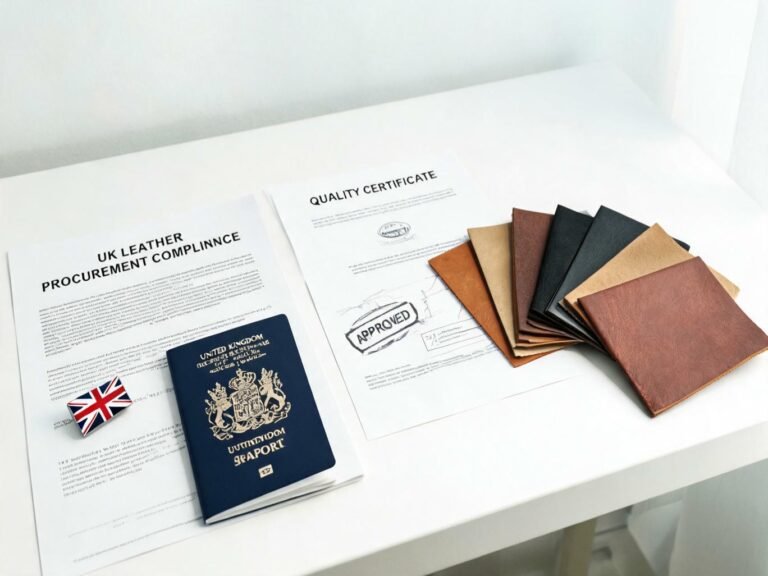
As a sustainability consultant for furniture, automotive, and consumer goods manufacturers, I evaluate man made leather materials against three criteria: what’s in it, what comes out during production, and what happens at end-of-life. The results are stark. PVC leather contains phthalate plasticizers linked to endocrine disruption. PU leather production involves isocyanate chemistry with measurable VOC emissions. Microfiber leather improves on both but still relies on polyurethane binders. Only one man made leather — silicone leather — uses a solvent-free process, contains zero plasticizers, emits near-zero VOCs, and carries FDA food-contact certification. When B2B buyers ask “Which man made leather is actually safe?” the answer depends entirely on chemistry. Here’s the comparison that sourcing committees need before approving a material specification.
The 5 Types of Man Made Leather: What B2B Buyers Need to Know
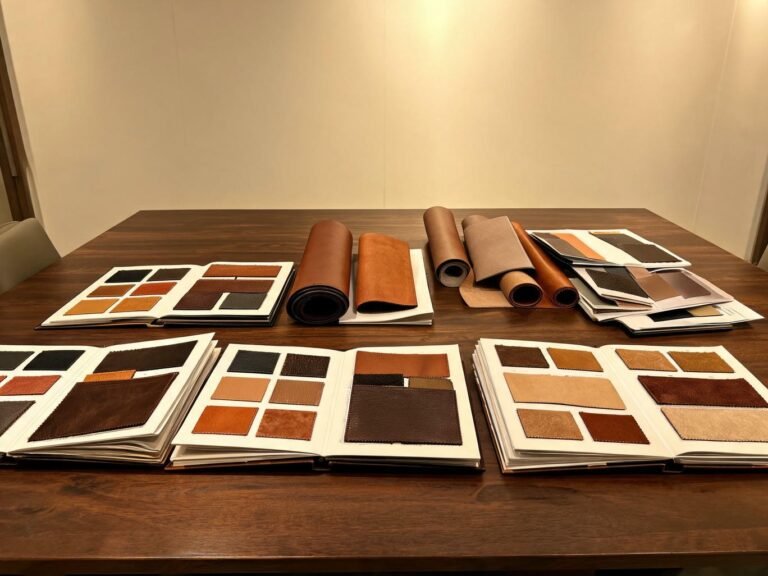
Man made leather encompasses any material designed to replicate the look, feel, and function of animal leather without using animal hides. The term covers five distinct material types, each with fundamentally different chemistry, safety profiles, and environmental footprints. Understanding these differences is the first step in responsible B2B sourcing.
PVC (polyvinyl chloride) leather — the cheapest and oldest synthetic leather. Uses phthalate plasticizers for flexibility and chlorine in its polymer backbone. Dominated the market from the 1960s through the 2000s but is increasingly restricted by REACH, RoHS, and California Prop 65 due to plasticizer toxicity and dioxin formation during incineration.
PU (polyurethane) leather — the most common man made leather today. Uses a polyurethane coating over a fabric base. More flexible and breathable than PVC, but production involves isocyanate chemistry (MDI/TDI), and the material relies on plasticizer additives that migrate and evaporate over time. Moderate environmental impact, significant VOC concerns in enclosed applications.

Quality and safety standards in production — EHS compliance determines which man made leather types pass B2B audits
Microfiber leather — a higher-performance synthetic using ultra-fine fiber bundles bonded with polyurethane. Better breathability and durability than standard PU, and lower environmental impact than PVC. However, the PU binder still raises VOC and end-of-life recycling concerns. Commonly specified for automotive interiors and premium furniture.
Silicone leather — the newest and most advanced type of man made leather. Uses a PDMS (polydimethylsiloxane) silicone coating applied through a solvent-free process. Contains no plasticizers, no phthalates, no chlorine. Carries FDA food-contact certification, ISO 10993-5 biocompatibility, and meets REACH/RoHS standards. Derived from silica — one of Earth’s most abundant minerals.
Bonded leather — the lowest-grade option, made from leather scraps mixed with polyurethane binder. Technically “man made” despite containing some animal fiber. Degrades faster than any other type and offers no sustainability advantage over PU or PVC. Not recommended for B2B specification.
Safety Comparison: VOCs, Plasticizers, and Chemical Content
For B2B buyers — especially in automotive, healthcare, children’s products, and food-contact applications — the chemical safety profile of man made leather isn’t optional. It’s regulated. Here’s how the four primary material types compare on the safety metrics that matter:
| Material | VOC Emissions | Plasticizers | Recyclability | End-of-Life Safety | Certifications |
|---|---|---|---|---|---|
| PVC | High (chlorinated) | Phthalates (restricted) | Poor (chlorine contamination) | Dioxin risk in incineration | REACH restricted |
| PU | Moderate (isocyanate-based) | Yes (migrating) | Limited | Hazardous emissions possible | REACH compliant (varies) |
| Microfiber | Low-Moderate | PU binder (reduced) | Limited | Better than PU/PVC | REACH compliant |
| Silicone | Near-zero (solvent-free) | None | Fully recyclable | Safe incineration (no toxins) | FDA, REACH, RoHS, ISO 10993-5 |
VOC data per ISO 16000 indoor air quality testing. Plasticizer content assessed per REACH SVHC list. FDA certification per 21 CFR Part 177.2600. Source: ISO standards and TOPSUN material documentation.

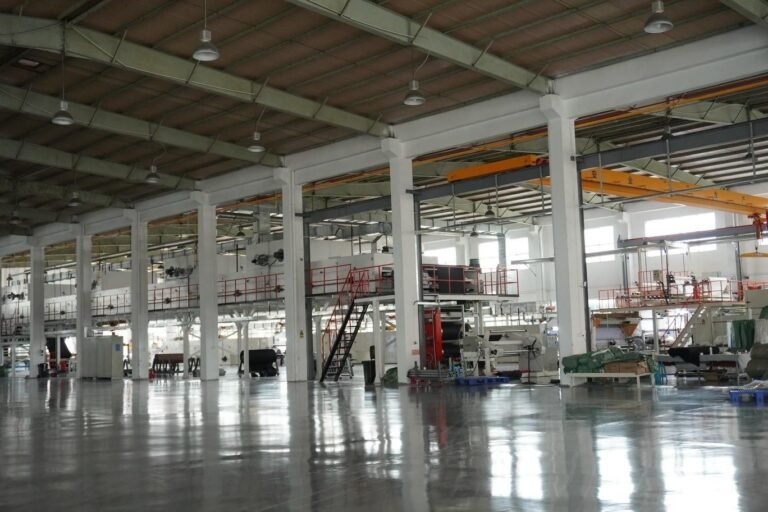
Solvent-free coating production line — silicone leather manufacturing without VOC-emitting solvents or plasticizers
Environmental Impact: From Production to Disposal
A material’s sustainability footprint spans its entire lifecycle — from raw material extraction through production, use phase, and end-of-life. Each man made leather type tells a different story across these stages:
Production phase: PVC leather production involves chlorine chemistry and phthalate plasticizer addition — both carry environmental and worker safety risks. PU production uses isocyanate chemistry (MDI/TDI) that requires careful emission controls. Microfiber production uses less binder but still involves PU processing. Silicone leather is produced through a solvent-free coating process — the entire production workflow achieves near-zero emissions, with no organic solvents, no reaction solvents, and no solvent-related VOC release.
Use phase: A material that lasts 10 years generates one-third the waste of a material that lasts 3 years. Silicone leather lasts 3x longer than PU and PVC alternatives (10–15 years vs 3–5 years). This directly reduces replacement frequency, manufacturing energy, and material waste — the most impactful sustainability metric for B2B furniture programs.
End-of-life: PVC leather creates dioxins when incinerated and leaches plasticizers in landfill. PU leather is difficult to recycle due to its composite fabric-polymer structure. Silicone leather can be fully recycled or safely incinerated without releasing hazardous chemical emissions. Compared to genuine animal leather production, silicone eliminates the resource-intensive tanning process and all associated wastewater pollution — a significant environmental advantage recognized by the SEAL Sustainability Award (awarded to Dow’s LUXSENSE silicone leather).
Carbon footprint reality: Genuine animal leather carries high livestock methane impact and tannery wastewater pollution. Silicone leather delivers a lower carbon footprint from cradle to gate compared to both genuine and artificial leathers. When B2B buyers specify silicone instead of PU or PVC, they reduce lifecycle emissions, eliminate plasticizer pollution, and extend product life by 3x — the triple bottom line of sustainable man made leather.

Waterproof test on silicone leather — non-porous surface prevents chemical absorption throughout the material’s lifecycle
The Certification Gap: What Each Material Can and Cannot Prove
Flame retardant performance — silicone leather’s inherent fire safety without additive chemicals
For B2B sourcing, certifications aren’t marketing — they’re proof. The certification gap between man made leather types is wide and consequential:
- FDA food-contact (21 CFR Part 177.2600): Only silicone leather carries this certification. PU and PVC are not approved for repeated food contact due to plasticizer migration. This matters for restaurant seating, food packaging, and kitchen surfaces.
- ISO 10993-5 biocompatibility: Only silicone leather passes this medical-device standard for cytotoxicity. PU and PVC leach plasticizers that fail biocompatibility testing. This matters for healthcare furniture and children’s products.
- REACH SVHC compliance: PVC leather frequently fails due to restricted phthalates. PU leather varies by supplier — many formulations contain SVHC-listed plasticizers. Silicone leather is fully compliant with no restricted substances.
- RoHS (Restriction of Hazardous Substances): PVC leather may contain restricted lead-based stabilizers. PU leather varies. Silicone leather meets RoHS with no restricted heavy metals or compounds.
- Inherent flame retardancy: Silicone leather is inherently flame retardant — meets EN 13773 and FAR 25.853 without additive chemicals. PU and PVC require additive flame retardants that can themselves be environmentally harmful.
Circular Economy: Recyclability and End-of-Life Solutions

Sustainable furniture application — silicone leather supports circular economy goals with full recyclability
The circular economy framework asks three questions of every material: Can it be recycled? Can it be safely disposed of? Does its longevity reduce waste generation? Man made leather types answer these questions very differently:
PVC leather contaminates recycling streams with chlorine and phthalates — most waste ends up in landfill or incineration, where it releases toxins. PU leather’s fabric-polymer composite structure makes separation and recycling economically impractical at scale. Microfiber leather faces similar recycling challenges due to its PU binder system. Only silicone leather offers a genuine circular pathway: the material can be fully recycled into new silicone products or safely incinerated without hazardous emissions.

Eco-conscious furniture — long-lasting silicone leather reduces replacement waste and supports sustainable design programs
While not biodegradable, silicone leather’s durability and recyclability make it a circular-economy material — far greener than single-life PU or PVC. The 3x lifespan advantage means one silicone leather sofa replaces three PU leather sofas over 15 years. That’s two fewer production cycles, two fewer disposal events, and two fewer material replacements in the waste stream.
Frequently Asked Questions
Is man made leather safe for skin contact and children’s products?
It depends on the material type. PVC leather contains phthalate plasticizers that can migrate to skin and are linked to endocrine disruption — not safe for children’s products. PU leather is generally safe for adult skin contact but lacks FDA food-contact certification. Silicone leather is the only man made leather that passes ISO 10993-5 biocompatibility testing for cytotoxicity and carries FDA food-contact approval (21 CFR Part 177.2600) — making it safe for baby products, medical devices, and food-contact surfaces.
Which man made leather is most environmentally friendly?
Silicone leather is the most environmentally friendly man made leather. It’s produced through a solvent-free process with near-zero VOC emissions, contains no plasticizers or phthalates, is derived from abundant silica (sand), can be fully recycled, and safely incinerated at end-of-life without hazardous emissions. Its 3x longer lifespan than PU or PVC also reduces total material waste. Dow’s LUXSENSE silicone leather won the SEAL Sustainability Award, confirming the material’s industry-leading environmental profile.
Does silicone leather contain PFAS or phthalates?
No. Silicone leather contains neither PFAS (per- and polyfluoroalkyl substances) nor phthalates. The PDMS (polydimethylsiloxane) polymer backbone is chemically distinct from both fluorochemicals and phthalate plasticizers. TOPSUN’s silicone leather is fully REACH SVHC compliant, RoHS compliant, and free of all restricted substances. Full chemical disclosure documentation is provided as standard with every order — a level of transparency that PU and PVC suppliers typically cannot match.
Download Sustainability Report
About TOPSUN
TOPSUN manufactures solvent-free silicone leather with near-zero VOC emissions, no plasticizers, and FDA food-contact certification for B2B buyers across automotive, furniture, healthcare, and consumer goods industries requiring safe, sustainable, and high-performance man-made leather.
FDA 21 CFR 177.2600 certified, ISO 10993-5 biocompatible, REACH/RoHS compliant, solvent-free production, fully recyclable, 3x lifespan of PU/PVC alternatives.