Sport watch bands face abuse that lifestyle straps never encounter — hours of sweat, friction from repetitive motion, UV exposure during outdoor training, and frequent exposure to chlorinated pool water or saltwater. Choosing the right sport watch band material isn’t just about comfort during a workout. It’s about finding a material that survives the conditions athletes subject it to, week after week, without degrading into something that irritates skin or smells terrible. For B2B buyers developing fitness watch bands, the material decision directly affects product lifespan, warranty rates, and brand reputation in the competitive wearables market.
What Athletes Actually Need From a Watch Strap
Before comparing materials, it helps to understand the specific demands of sport usage. A running watch band needs to stay secure during high-impact movement without chafing. A swimming band needs to handle chlorine and saltwater without degrading. A fitness watch band for weightlifting needs to resist abrasion from equipment contact. These aren’t theoretical concerns — they’re the difference between a strap that gets recommended in fitness forums and one that gets returned within a week.
In our testing lab, we’ve found that sweat is the number one killer of sport watch straps. It’s not just water — sweat contains salts, oils, and acids that attack material surfaces over time. Materials that perform well in pure water tests can still fail dramatically when exposed to the chemical cocktail of human perspiration. That’s why we always recommend testing materials with artificial sweat solutions, not just plain water.

Water resistance testing — essential for sport watch band material evaluation
Silicone Leather vs Traditional Sport Strap Materials
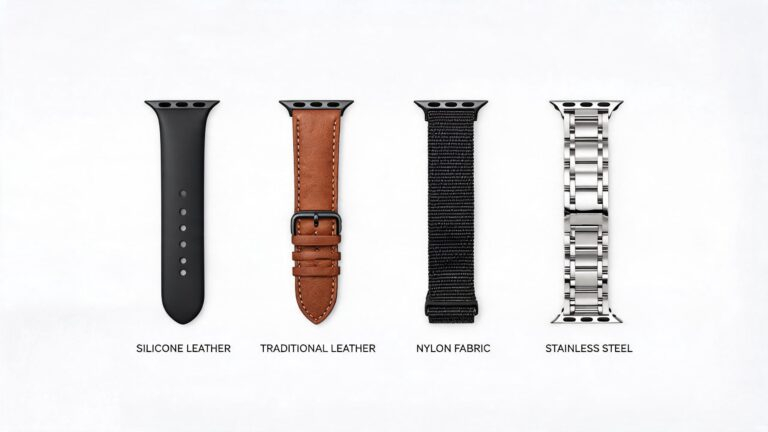
The sport strap material market has been dominated by fluoroelastomer (FKM) and basic silicone rubber. But silicone leather is emerging as a compelling alternative that bridges the gap between athletic performance and premium aesthetics. Here’s how the options stack up:
| Property | Silicone Leather | FKM (Fluoroelastomer) | Basic Silicone Rubber |
|---|---|---|---|
| Sweat Resistance | Excellent | Excellent | Good |
| Chlorine Resistance | Good | Excellent | Moderate |
| Breathability | Good (perforated) | Poor | Poor |
| Aesthetic Appeal | Premium leather look | Rubber, utilitarian | Basic, commodity |
| Skin Feel | Soft, comfortable | Firm, can chafe | Soft but sticky |
| Cost | Mid | High | Low |
The key insight here is that FKM and basic silicone rubber are both solid sport materials, but they share a common weakness: they look and feel like rubber. Silicone leather brings the athletic performance of silicone chemistry with the visual and tactile appeal of leather. For brands that want a single strap that works from the gym to the office, this dual personality is a significant advantage. You can explore how this material fits into the broader silicone leather sports equipment category.
Silicone leather in fitness and sport applications — performance and comfort
Design Features That Enhance Sport Performance
Beyond the base material, several design elements determine how well a sport watch band performs in athletic conditions. These features should be part of your product specification when sourcing materials:
- Perforation patterns: Small holes through the strap improve airflow and reduce sweat buildup. Silicone leather accepts clean perforation without edge tearing — a problem with PU-coated materials where holes can initiate peeling.
- Surface texture: A slight texture pattern improves grip during sweaty conditions. Custom texture design can create a tactile pattern that wicks moisture while feeling comfortable against skin.
- Thickness optimization: Sport bands typically run 1.5–2.0mm thick — thinner for breathability, thicker for durability. Silicone leather maintains structural integrity at thinner gauges than FKM.
- Edge finishing: Rounded edges prevent chafing during repetitive motion. Silicone leather can be beveled and sealed cleanly, while rubber materials often require secondary processing.

Physical testing laboratory — rigorous evaluation for sport strap material durability
One of our clients, a fitness wearable brand targeting the CrossFit community, needed a band that could survive daily exposure to chalk, sweat, and equipment abrasion. They tested FKM, basic silicone, and silicone leather over a 90-day period with competitive athletes. The silicone leather showed the best combination of comfort and durability — it resisted chalk buildup better than rubber (which trapped particles in its surface) and maintained its color and texture where FKM showed surface dulling. The brand switched their entire sport band line to silicone leather and reported a 40% reduction in strap-related warranty claims.
Waterproof and Sweat-Resistant Properties in Detail
For a waterproof watch band, the material’s behavior when wet matters as much as its behavior when dry. Silicone leather’s surface is hydrophobic — water beads and rolls off rather than soaking in. This means the strap dries quickly after a swim or a heavy sweat session, reducing the window for bacterial growth that causes odors.
The sweat-resistant watch strap performance depends on the coating’s chemical stability. Unlike PU-based materials, where the polyurethane coating can hydrolyze when exposed to moisture (breaking down into sticky degradation products), silicone’s Si-O bond structure is inherently resistant to hydrolysis. This is the same chemistry that makes silicone suitable for medical implants and food-grade applications — it simply doesn’t react with water the way organic polymers do. Our silicone vs PU comparison covers this chemistry in more detail.
Real-world test: After 200 hours of artificial sweat exposure (simulating approximately 6 months of daily athletic use), silicone leather samples showed no surface degradation, no color change, and no odor retention. PU leather samples in the same test developed visible cracking and a persistent chemical smell.

Vibrant color options — sport watch bands demand bold, lasting colors
Choosing Your Sport Band Material Partner
Selecting a sport watch band material means balancing athletic performance with manufacturing practicality. Silicone leather delivers sweat resistance, quick drying, color stability, and the premium look that distinguishes your product from commodity rubber straps. For brands operating in the 3C accessories space or the broader wearable tech strap market, it’s a material that performs technically and positions your product above the competition.
When evaluating suppliers, ask for artificial sweat test data, not just water resistance ratings. The chemical composition of sweat makes it far more aggressive than pure water, and only materials with stable surface chemistry — like silicone — can handle prolonged exposure without degradation. According to ASTM standards for material testing, artificial sweat solutions should be used for realistic performance evaluation.
About TOPSUN
TOPSUN manufactures organic silicone leather engineered for sport and fitness applications. Our materials undergo artificial sweat testing, UV aging, and abrasion testing to ensure performance in the most demanding athletic conditions.
Relevant certifications: REACH compliant, RoHS compliant, ISO 9001 certified. Custom perforation patterns, thickness (1.0–2.5mm), and sport-optimized textures available.