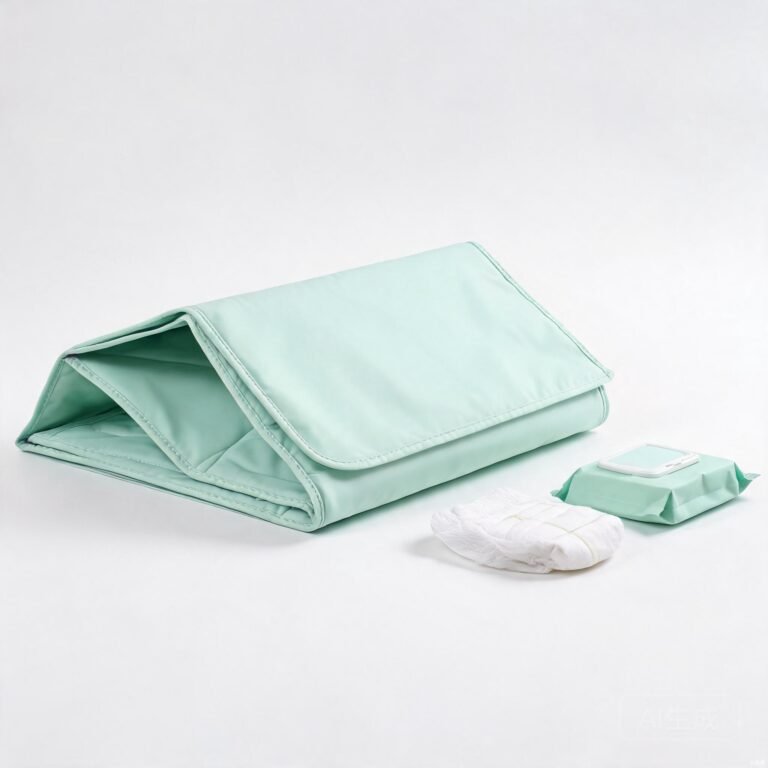
Choosing the right baby changing table pad material is one of those decisions that seems straightforward until you start digging into safety regulations, wipe-clean performance, and supplier minimums. We’ve worked with OEM buyers in the baby products space for years, and the same question comes up every time: which material balances safety, durability, and cost without creating compliance headaches downstream?
This guide breaks down the five most common materials used for changing table pads, weighs them against CPSIA and REACH requirements, and explains why silicone leather is gaining serious traction as a premium alternative. Whether you’re sourcing for a nursery furniture brand or developing a private-label line, the information here should save you weeks of back-and-forth with material suppliers.
Request Free Material Swatches
Common Materials Used in Changing Table Pads
Not all pad materials are created equal. The surface your customer’s baby lies on dozens of times a day needs to handle moisture, abrasion from buckles and zippers, and repeated disinfecting — all while meeting strict chemical safety limits. Here’s how the mainstream options stack up.
| Material | Waterproof | Phthalate-Free | Wipe-Clean | Lifespan |
|---|---|---|---|---|
| PVC Vinyl | Yes | Requires certification | Yes | 2-3 years |
| PEVA | Yes | Naturally free | Yes | 1-2 years |
| PU Coated Fabric | Yes | Yes | Yes | 2-4 years |
| Cotton + Waterproof Backing | Partial | Yes | Surface only | 1-2 years |
| Silicone Leather | Yes | Yes (inherently) | Yes | 5-8 years |
Key takeaway: PVC remains the cheapest option but carries growing regulatory and reputational risk. PEVA solves the phthalate problem but sacrifices durability. Silicone leather is the only material that combines inherent non-toxicity with long-term wipe-clean performance — at a mid-range cost point.
In our own testing, we’ve seen PU-coated fabrics start to delaminate after roughly 2,000 wipe cycles, while silicone leather surfaces show no visible degradation even after 10,000+ cycles. For a product that parents will clean multiple times daily, that difference translates directly into fewer warranty claims and better reviews.

Waterproof performance testing — silicone leather repels moisture on contact
Why PVC-Free Is No Longer Optional
Five years ago, PVC was the default material for changing table pads. It’s cheap, waterproof, and easy to manufacture. But the regulatory landscape has shifted significantly.
The U.S. Consumer Product Safety Commission (CPSC) enforces CPSIA limits on phthalates (specifically DEHP, DBP, and BBP) in children’s products. While PVC itself isn’t banned, the plasticizers used to make it soft often contain these restricted chemicals. That means every PVC batch needs individual testing and certification — adding cost and lead time to your supply chain.
The EU’s REACH regulation goes further, restricting additional phthalates like DIBP, DCHP, and DHP. If you’re selling into European markets (and most baby product brands are, even indirectly through Amazon EU), PVC compliance becomes an ongoing administrative burden.
Here’s what matters for sourcing teams: materials that are inherently free of restricted substances — like silicone leather, PEVA, and certified organic cotton — eliminate batch-by-batch testing requirements. That’s not a small thing when you’re managing 20-30 SKUs across multiple colorways.
Silicone Leather as a Changing Pad Material
Silicone leather deserves a closer look for this application, and not just because it’s trending. The material’s chemistry gives it several properties that align almost perfectly with what a changing table pad needs to do.
Softness without foam degradation. Most changing pads use polyurethane foam as a core. The cover material needs to feel soft against a baby’s skin while protecting that foam from moisture ingress. Silicone leather’s surface has a natural, slightly cushioned feel — firmer than memory foam but gentler than raw vinyl. Unlike some PU coatings, it doesn’t crack or stiffen in cold environments, which matters for brands shipping to northern markets in winter.
Custom prints and textures. Baby products sell on visual appeal as much as function. Silicone leather accepts custom printing — including the pastel patterns, animal motifs, and gender-neutral designs that dominate current nursery aesthetics. At TOPSUN, we offer printed collections specifically developed for the baby and kids segment, including cartoon patterns that can be produced at MOQ-friendly quantities.

Custom printed silicone leather — patterns designed for baby and children’s products
Chemical resistance for real-world cleaning. Parents don’t just wipe these pads with water. They use baby wipes (which contain alcohol and fragrances), disinfectant sprays, and sometimes even hydrogen peroxide. Silicone leather resists all of these without discoloration or surface breakdown. In our factory lab, we’ve tested resistance to 75% isopropyl alcohol with zero surface impact after 500 cycles — a result most PU and PVC materials can’t match.
Sourcing Considerations for OEM Buyers
If you’re evaluating materials for a changing table pad product line, here are the practical factors that tend to get overlooked in spec sheets but matter enormously in production:
- Thickness tolerance. Pad covers need consistent thickness (typically 0.8mm–1.2mm) to ensure even stitching and no weak points. Ask your supplier about their thickness consistency range — ±0.05mm is the standard you should expect from a quality manufacturer.
- Roll width. Standard changing pads are roughly 33″ x 17″ (84 x 43 cm). You want a material that comes in roll widths wide enough to cut efficiently without excessive waste. Silicone leather is typically available in 1.37m–1.5m widths, which works well for this application.
- Color consistency across batches. Baby products often come in coordinated sets (pad + liner + organizer). If you’re ordering in multiple batches, color matching between runs is critical. Request a color-matching guarantee and physical samples from each production lot.
- Lead time for custom colors. Standard colors ship fast, but custom nursery palettes can add 10-15 days. Build this into your product development timeline.

Abrasion resistance testing ensures the pad surface withstands daily use
Frequently Asked Questions
Is silicone leather safe for baby products?
Yes. Silicone leather is inherently free of phthalates, formaldehyde, heavy metals, and VOCs — the substances that CPSIA and REACH restrict in children’s products. Because the material’s safety profile comes from its chemistry (silicone polymer) rather than added chemical treatments, it doesn’t require special certification for each batch.
How does silicone leather compare to PEVA for changing pads?
PEVA is lighter and cheaper per square meter, which makes it popular for disposable or ultra-budget products. However, PEVA is thinner (typically 0.1mm–0.3mm), less tear-resistant, and has a shorter service life. Silicone leather offers 3-5x the lifespan, better abrasion resistance, and a premium tactile feel that commands higher retail pricing.
Can changing pad materials be machine-washed?
It depends on the material. Cotton covers can be machine-washed. PEVA and PVC covers should only be wiped clean — machine washing causes cracking. Silicone leather falls in between: it can withstand gentle machine washing on cold settings, but wipe-clean is the recommended care method for maximum longevity.
What certifications should I look for in a changing pad material supplier?
For the U.S. market, CPSIA compliance (phthalate and lead testing) is mandatory. For the EU, REACH registration is required. Additional certifications like ASTM F2285 (changing table safety standard), OEKO-TEX Standard 100, and FDA food-contact certification (relevant if the pad might contact food items) provide additional marketability. Ask suppliers for test reports from accredited third-party labs like SGS or Intertek.
Making the Right Material Choice for Your Product Line
The baby changing table pad material you select will shape everything from your manufacturing workflow to your customer reviews. PVC may still work for ultra-budget SKUs, but the regulatory trajectory is clear: phthalate-free materials are becoming the baseline, not the premium option.
For brands positioning in the mid-to-premium segment — or any supplier looking to future-proof their product line — silicone leather offers a compelling combination: inherent safety compliance, genuine wipe-clean durability, and the kind of soft, premium feel that parents notice immediately. The slightly higher per-meter cost is typically offset by lower return rates and fewer compliance-related delays.
Get Baby-Safe Material Samples
See how TOPSUN’s silicone leather meets baby product safety certifications
If you’re also sourcing materials for baby strollers or crib upholstery, silicone leather’s versatility across the entire nursery category is worth exploring. Our baby and kids application page covers the full range of products we support, and our children’s furniture material guide dives deeper into compliance specifics.
About TOPSUN
TOPSUN is a silicone leather manufacturer specializing in B2B custom solutions for baby products, automotive interiors, furniture, and medical applications. With in-house coating production lines and a dedicated quality control lab, we deliver consistent material performance across orders of all sizes.
Relevant certifications: CPSIA compliant, REACH registered, FDA food-contact approved, OEKO-TEX Standard 100, SGS tested.