Walk into any furniture showroom, automotive dealership, or hotel lobby, and you are likely sitting on faux leather — whether you realize it or not. The synthetic leather market has grown into a $40+ billion industry, driven by cost efficiency, consistent quality, and increasingly by sustainability demands that make animal leather less attractive for large-scale OEM procurement. According to Grand View Research, global synthetic leather demand is expected to reach $85 billion by 2030. But “faux leather” is not a single material — it is a category that encompasses dramatically different chemistries with vastly different performance profiles. This guide gives sourcing managers a clear, practical framework for understanding faux leather types, matching them to applications, and evaluating supplier quality.
Request Free Faux Leather Samples
The Four Main Types of Faux Leather — and How They Differ
Understanding the chemistry behind each faux leather type is the single most important thing a buyer can do. The material you choose determines everything from fire compliance to warranty claim rates.
| Type | Chemistry | Key Strength | Key Weakness |
|---|---|---|---|
| PU Faux Leather | Polyurethane, DMF or water-based solvent | Good hand-feel, wide color range, affordable | 3-5 year life, hydrolysis, poor UV/alcohol resistance |
| PVC Faux Leather | Polyvinyl chloride + plasticizers | Very low cost, water resistant | Plasticizer migration, poor cold flexibility, environmental concerns |
| Microfiber Faux Leather | Ultra-fine polyester fiber + PU coating | Closest to genuine leather feel, good breathability | Higher cost than PU, still has PU-related degradation |
| Silicone Faux Leather | Platinum-cured silicone on textile substrate | Zero VOC, 10+ year life, -40 to 250°C, inherently flame retardant | Higher per-meter cost, fewer texture options than PU |
The right choice depends entirely on your application requirements. A cinema seating manufacturer has different priorities than a baby stroller brand. We will cover application-specific recommendations shortly, but the table above should be your starting reference.

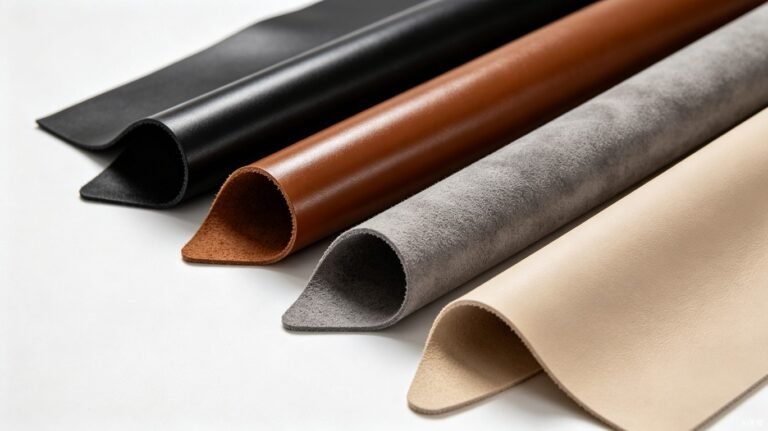
Texture detail closeup — surface quality is a key differentiator between faux leather types at the micro level.
Durability by the Numbers: Faux Leather vs. Faux Leather
Claims are cheap — test data is what matters. The following comparisons use standardized test methods, giving you a reliable basis for material specification decisions. Data sourced from our Technical Data Sheet:
| Test (Standard) | PU Faux Leather | PVC Faux Leather | Silicone Faux Leather |
|---|---|---|---|
| Martindale (ISO 12947-2) | 40,000-80,000 cycles | 30,000-60,000 cycles | ≥ 200,000 cycles |
| Flex Endurance (ISO 5402) | 30,000-50,000 | 20,000-40,000 | ≥ 100,000 |
| UV Resistance (ASTM G154) | 300-500 hrs | 200-400 hrs | 1,000-1,500 hrs |
| Temperature Range | -20°C to 80°C | -20°C to 60°C | -40°C to 250°C |
| Alcohol Resistance | Degrades after 50-200 wipes | Poor — surface cracking | No degradation after 1,000+ wipes |
| Service Life (Typical) | 3-5 years | 2-4 years | 10+ years |
Real-World Data Point: We recently supplied silicone faux leather to a cinema chain that had been replacing their PU seats every 3.5 years. After switching to silicone, the seats showed zero cracking and no color fade after 6 years of continuous daily use. The procurement director told us the total cost savings — including reduced replacement labor — exceeded 35% compared to their previous PU cycle.
Matching Faux Leather Material to Your Application
Different applications demand different material properties. Here is a practical guide to which faux leather type works best for common OEM use cases:
Automotive Interiors. For car seats and interior panels, the requirements are demanding: low fogging (FMVSS 302), UV stability for dashboard exposure, temperature tolerance for heated/cooled seats, and long-term flex endurance for seat adjustments. Silicone faux leather and high-quality microfiber are the top contenders. PU works for lower-priced vehicle segments but expect a shorter replacement cycle.
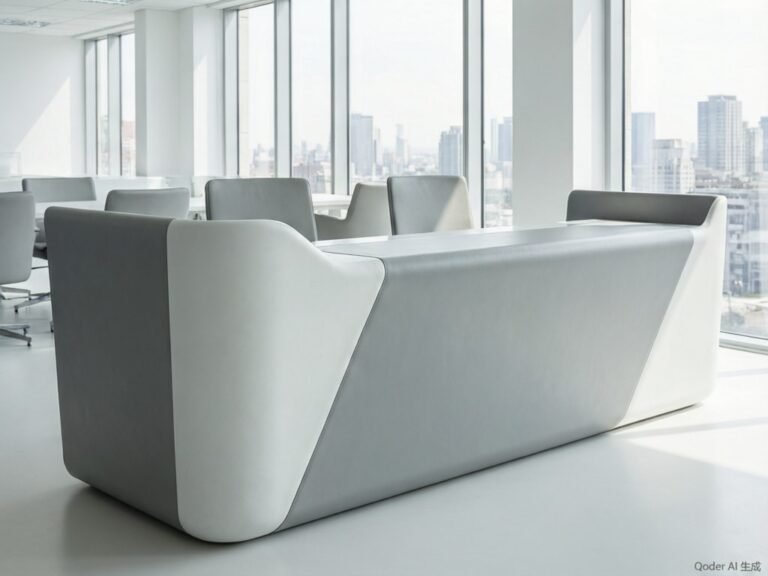
Contract Furniture. Hotels, restaurants, and offices need upholstery that survives heavy daily traffic and aggressive cleaning. Silicone faux leather excels here — alcohol resistance, inherent flame retardancy, and 10+ year service life make it ideal for furniture and sofa applications in hospitality.
Baby & Children’s Products. Safety is paramount. Faux leather for baby strollers, high chairs, and crib mattresses must be free of phthalates, BPA, and heavy metals (REACH, PAHs compliance). Silicone faux leather is inherently free of these substances. PVC should be avoided entirely for children’s products due to plasticizer migration concerns.
Fashion Accessories. Bags, wallets, belts, and watch straps prioritize aesthetics and hand-feel over extreme durability. Microfiber faux leather and premium PU are well-suited here — they offer the closest tactile experience to genuine leather at a fraction of the cost.

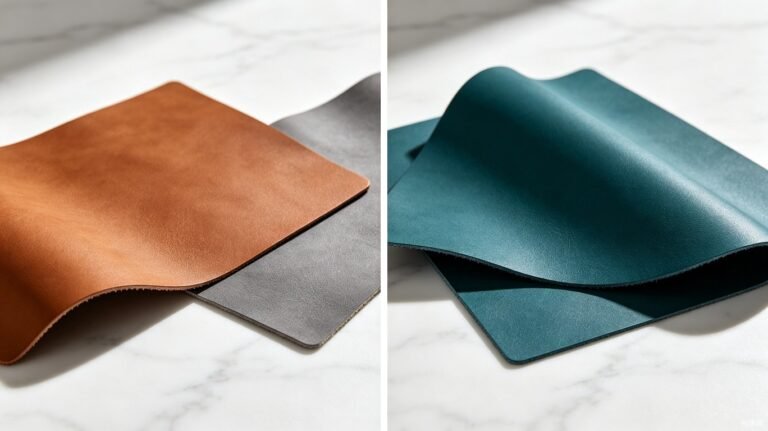
Side-by-side comparison: modern faux leather vs. genuine leather — the visual gap has narrowed dramatically.
See the Durability Difference in Action
Numbers in a table are useful, but seeing how different faux leather materials respond to real stress tests makes the comparison tangible. The video below shows silicone leather versus conventional materials in side-by-side durability testing:
Watch side-by-side durability testing: silicone faux leather vs. PU and PVC under abrasion, flex, and UV stress.
How to Evaluate a Faux Leather Manufacturer
The faux leather market is crowded, and quality varies enormously between suppliers. Here is what separates a reliable manufacturer from a risky one:
- Standardized Test Reports. Every legitimate supplier should provide Martindale abrasion, ISO 5402 flex endurance, ISO 105-B02 light fastness, and ASTM G154 UV resistance data — tested by third-party labs (SGS, Intertek, TÜV). If the only performance data you see is on a marketing brochure, proceed with caution.
- Production Process Transparency. Ask about the coating method, curing system, and quality checkpoints. A manufacturer that uses solvent-free processes (like silicone leather) will gladly explain their environmental advantages. Those using DMF solvents may be less forthcoming.
- Consistency Across Batches. Request samples from at least three different production batches and compare color, thickness, and texture consistency. Batch-to-batch variation is the most common quality complaint in synthetic leather sourcing.
- Minimum Order & Customization. Can they handle your volume needs? Do they offer custom colors, textures, and widths? OEM buyers often need 1,370-1,500 mm widths and specific thickness ranges — not every supplier can accommodate this.
- After-Sales Support. What happens when there is a quality issue? A reputable manufacturer offers technical support, replacement policies, and clear communication channels. For a deeper dive on this, see our faux leather manufacturer evaluation guide.

Martindale abrasion resistance testing — the gold standard for evaluating faux leather durability for commercial applications.
Frequently Asked Questions
Is faux leather the same as vegan leather?
They overlap but are not identical. All vegan leather is free of animal-derived materials, which includes most faux leather. However, not all faux leather qualifies as “vegan-friendly” — PVC faux leather, for example, contains chlorine-based compounds that many vegan consumers reject on environmental grounds. Silicone and bio-based faux leathers are both faux and vegan. For more on this distinction, see our faux vs. real leather comparison.
Which faux leather is most durable?
Silicone faux leather leads in nearly every durability metric: Martindale abrasion (≥200,000 cycles vs. PU’s 40,000-80,000), UV resistance (1,000-1,500 hrs vs. PU’s 300-500 hrs), temperature tolerance (-40°C to 250°C vs. PU’s -20°C to 80°C), and service life (10+ years vs. PU’s 3-5 years). For high-traffic commercial applications, silicone is the clear durability leader.
Can faux leather be used outdoors?
Only certain types. PU and PVC faux leather degrade quickly under UV and moisture exposure. Silicone faux leather passes 500+ hours of salt spray testing and 1,000+ hours of UV testing without cracking or fading — making it suitable for marine and outdoor applications. Microfiber with UV-protective coatings is a secondary option. Learn more from our waterproof faux leather guide.
Is faux leather waterproof?
Most faux leather types offer some degree of water resistance, but silicone faux leather is the only type that is genuinely waterproof — the non-porous silicone surface prevents water penetration entirely. PU faux leather resists light moisture but will absorb water at seams and pinholes over time. PVC is water-resistant initially but can become brittle and crack after repeated wet-dry cycles.
Choosing Faux Leather That Delivers Real Value
Faux leather has evolved far beyond the cheap, sticky vinyl of decades past. Today’s synthetic leather options — particularly silicone and high-quality microfiber — can match or exceed genuine leather in durability, consistency, and ease of maintenance. The key is matching the right faux leather type to your application’s specific stressors: UV exposure, flex cycles, cleaning chemicals, flame requirements, and budget constraints.
Whatever faux leather type you choose, insist on third-party test data, verify batch consistency, and run your own physical samples through the conditions your product will face in the real world. The best sourcing decisions are always evidence-based.
About TOPSUN
TOPSUN is a leading faux leather manufacturer specializing in silicone-based synthetic leather. Our 60,000 sqm facility with 18 production lines delivers 600,000 sqm monthly, serving OEM buyers in automotive, furniture, medical, marine, and consumer electronics sectors across 40+ countries.
Relevant Certifications: REACH | RoHS | FMVSS 302 | EN 13773 Class 4 | ISO 16000-6 Zero VOC | FDA 21 CFR 177.2600 | SGS & Intertek Tested