Among the growing array of synthetic leather alternatives, silicone faux leather occupies a unique position: it delivers genuine leather aesthetics with performance characteristics that no other synthetic material can match. Built on a platinum-catalyzed silicone polymer bonded to a textile substrate, this material combines zero VOC production, inherent flame retardancy, and a service life exceeding 10 years — all while looking and feeling like premium upholstery leather. For OEM buyers evaluating synthetic leather options for automotive, furniture, marine, or medical applications, this guide provides a comprehensive overview of what silicone faux leather is, how it compares to alternatives, and how to specify it effectively.
Request Silicone Faux Leather Swatches
What Sets Silicone Faux Leather Apart
Silicone faux leather is made by coating a textile substrate — typically polyester or cotton — with a liquid silicone polymer that is thermally cured into a flexible, durable surface layer. Unlike PU faux leather, which relies on polyurethane chemistry with solvent-based processing, or PVC faux leather, which requires plasticizers and chlorine, silicone faux leather uses a clean, solvent-free process that produces zero emissions.
The practical implications of this chemistry difference are significant. The Si-O (silicon-oxygen) backbone of the cured silicone provides resistance to hydrolysis, UV radiation, extreme temperatures, and chemical attack — none of which PU or PVC can match without trade-offs. This is why silicone leather has become the fastest-growing segment in the synthetic leather market for high-performance applications.

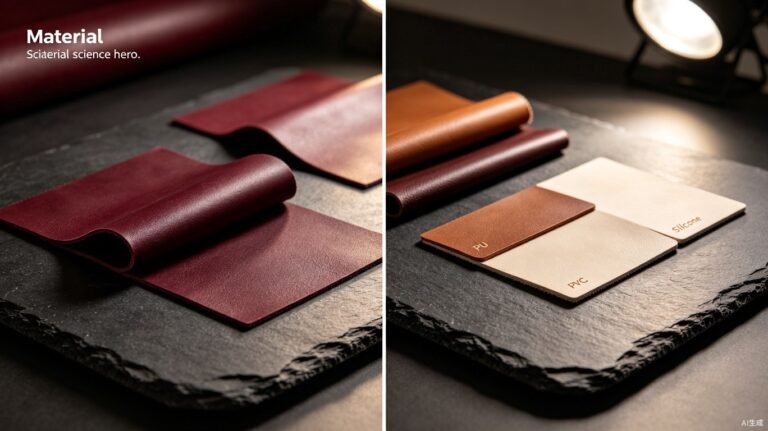
Silicone faux leather structure configurations — the coating layers, substrate, and optional back coating can be customized for each application.
Silicone Faux Leather vs. PU vs. PVC vs. Genuine Leather
Buyers comparing faux leather options need data, not marketing claims. Here is a comprehensive side-by-side comparison using our independently tested Technical Data Sheet values and industry benchmarks:
| Characteristic | Silicone Faux Leather | PU Faux Leather | Genuine Leather |
|---|---|---|---|
| Abrasion (Martindale) | ≥ 200,000 cycles | 40,000-80,000 | 50,000-100,000 |
| Flex Endurance | ≥ 100,000 cycles | 30,000-50,000 | High (natural) |
| Temperature Range | -40°C to 250°C | -20°C to 80°C | Moderate (cracks) |
| UV Resistance | 1,000-1,500 hrs | 300-500 hrs | Fades without treatment |
| Waterproof | Yes (100%) | Resistant (partial) | No |
| Alcohol Safe | Yes (1,000+ wipes) | No (cracks) | Requires treatment |
| Flame Retardant | Inherent | Additives needed | Naturally resistant |
| VOC Emissions | Zero | DMF / solvent off-gassing | Variable |
| Cost (per meter) | $$ | $ | $$$ |
| Service Life | 10+ years | 3-5 years | 5-15 years (varies) |
Cost Perspective: Silicone faux leather occupies the middle ground between PU (cheapest) and genuine leather (most expensive). But the cost analysis that matters is total cost of ownership. When you factor in that one silicone installation outlasts three PU installations and requires significantly less maintenance, the 10-year total cost often favors silicone. The American Chemistry Council notes that material performance longevity is increasingly a key purchasing criterion for commercial buyers.
Silicone Faux Leather Grades and Product Lines
Not all silicone faux leather is the same. Different product lines are optimized for specific application requirements:
Classic Collection. Standard-weight silicone leather for general furniture and indoor applications. Available in 0.8-1.5mm thickness with smooth, pebble grain, and embossed textures. Our most versatile and cost-effective line.
High-Performance Collection. Enhanced abrasion and UV resistance for automotive, marine and outdoor, and high-traffic contract use. Thicker silicone layer (1.0-1.5mm coating) for maximum durability.
Ultra-Thin Collection. Lightweight (0.4-0.6mm total) for fashion accessories, 3C electronics cases, and applications where thinness and flexibility are priorities without compromising silicone performance.
Super Flame Retardant Collection. Engineered for aviation (FAR 25.853), public transport, and high-rise hospitality where fire code compliance is critical. Exceeds EN 13773 Class 4 requirements.

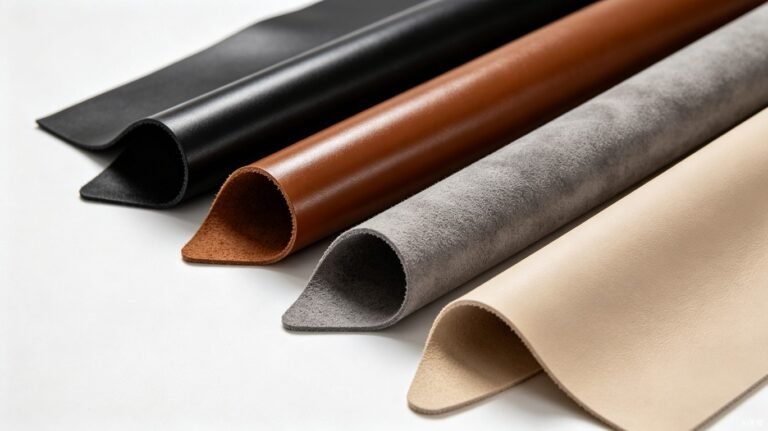
Color samples — silicone faux leather is available in hundreds of colors with custom color matching capability.
Seeing the Quality Difference
For buyers comparing silicone faux leather against conventional alternatives, visual evidence is compelling. The video below provides a direct material comparison across key performance tests:
Service life comparison: see how silicone faux leather outlasts PU, PVC, and even genuine leather in accelerated aging tests.
Browse All Product Collections
How to Specify Silicone Faux Leather for Your Project
Effective specification of silicone faux leather requires clear communication of your requirements. Here is a framework for structuring your specification to a supplier:
- Application and Stress Profile. Define the use case (automotive seating, hospitality sofa, marine cushion, medical chair), expected traffic level, and primary stressors (flex, UV, cleaning chemicals, fire code).
- Performance Thresholds. Specify minimum Martindale cycles, required fire standard, UV hours, and flex endurance based on your product’s warranty period and use conditions.
- Physical Specifications. Thickness range, width (standard 1,370-1,500mm or wide 1,800mm), color (Pantone or RAL reference), texture (smooth, grain, embossed pattern), and perforation requirements.
- Certification Requirements. List all applicable standards for your target market — REACH, RoHS, FMVSS 302, EN 13773, California TB 117, ISO 10993, etc.
- Order Volume and Timeline. Minimum order quantity (typically 300-500m per color), delivery requirements, and whether prototype samples are needed before volume production.

Packed silicone faux leather rolls — each shipment includes batch documentation, test reports, and full traceability records.
Frequently Asked Questions
Is silicone faux leather real leather?
No — it is a synthetic material. Silicone faux leather is a composite of silicone polymer coating on a textile substrate. It replicates the look, feel, and many performance characteristics of genuine leather, but contains no animal-derived materials. It is fully vegan and cruelty-free. For a deeper comparison, see our genuine vs. synthetic leather guide.
Is silicone faux leather waterproof?
Yes. The non-porous silicone surface provides 100% waterproof performance — verified by AATCC 127 testing. Liquids bead on the surface and can be wiped clean without absorption. This makes it ideal for marine, outdoor, hospitality, and medical applications where moisture exposure is a given.
How does silicone faux leather compare to vegan leather?
“Vegan leather” is a broad category encompassing any leather alternative without animal content — including PU, PVC, bio-based materials, and silicone. Silicone faux leather is a type of vegan leather, but with the distinct advantage of being both vegan and environmentally superior (zero VOC, no plasticizers, no halogens). Not all vegan leather can make this claim — PVC-based vegan leather is particularly problematic environmentally. Read our vegan leather materials guide for the full picture.
What is the minimum order quantity?
Standard minimum order is 300-500 meters per color and thickness. For custom colors or textures, the minimum may be 500-1,000 meters for the initial run. Prototype samples (1-5 meters) are available for evaluation before committing to volume orders. Lead time is typically 7-15 days for stocked items, 20-30 days for custom production runs.
Making the Switch to Silicone Faux Leather
Silicone faux leather represents the most significant performance advancement in synthetic leather since the introduction of PU. The combination of durability (10+ years), safety (zero VOC, inherent flame retardancy), and practicality (alcohol-safe, waterproof, easy-clean) addresses the real-world problems that PU and PVC simply cannot solve. For OEMs whose products face demanding environments — automotive, hospitality, marine, healthcare, or outdoor — silicone faux leather is the material that lets you specify with confidence.
The best next step is simple: order physical samples, test them under your actual use conditions, and compare the results against your current material. For most buyers, the performance data confirms the switch; the physical samples seal the decision.
Start Your Silicone Faux Leather Project
About TOPSUN
TOPSUN is a silicone faux leather manufacturer operating a 60,000 sqm facility with 18 production lines, producing 600,000 sqm monthly. We serve OEM and ODM buyers across automotive, furniture, marine, medical, and consumer electronics sectors in 40+ countries, offering full customization including color, texture, thickness, and width.
Relevant Certifications: REACH | RoHS | FMVSS 302 | EN 13773 Class 4 | FAR 25.853 | California TB 117-2013 | ISO 10993 | ISO 16000-6 Zero VOC | SGS & Intertek Tested