Negotiating leather MOQ and pricing is one of the first hurdles every B2B buyer faces. Whether you are sourcing upholstery for furniture, automotive interiors, or fashion accessories, suppliers often set minimum order quantities that feel rigid and unit prices that vary wildly. The good news? Most of these numbers are negotiable when you understand what drives them. In this guide, we break down how MOQs are calculated, what factors influence leather pricing, and proven tactics to lower your total procurement cost without sacrificing quality.
What Determines Leather MOQ?
Minimum order quantity is not a number suppliers pull out of thin air. It reflects production efficiency, material waste, and profit margins. Here is what typically shapes the MOQ:
- Production line setup costs. Each color or texture change requires cleaning rollers, recalibrating machines, and discarding initial meters. A supplier will spread these costs across a minimum batch size.
- Raw material batch sizes. Base fabrics and coating chemicals are often purchased in fixed volumes. Ordering below that volume leaves the supplier with unused inventory.
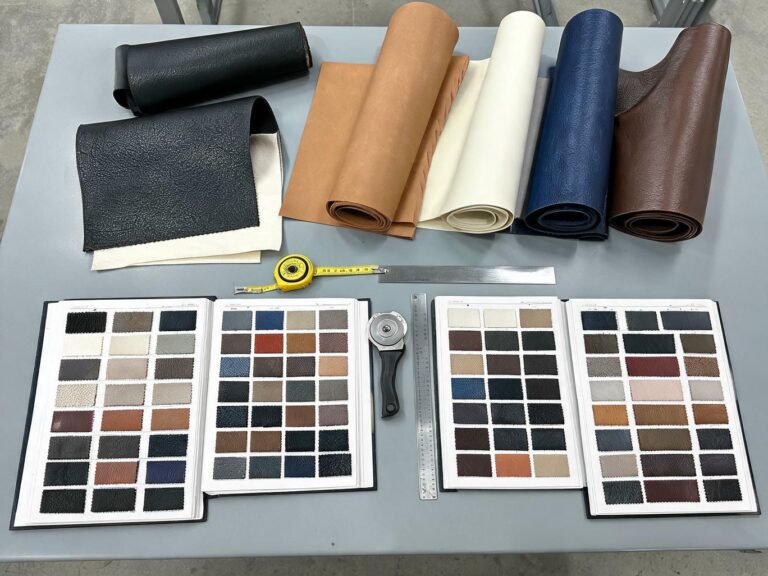
- Customization level. Stock colors and standard textures usually have lower MOQs. Custom shades, embossed patterns, or special backings push the minimum higher because they cannot be resold to other buyers.
At TOPSUN, standard silicone leather collections typically start at 500 linear meters per color for bulk orders. For fully customized projects, the threshold adjusts based on coating complexity and backing type.
Key Factors That Drive Leather Pricing
Leather price per yard or per square foot depends on far more than the material itself. Buyers who understand these levers can spot hidden costs and ask the right questions during quoting.
| Cost Factor | Impact on Price |
|---|---|
| Material type (PU, PVC, silicone, genuine) | Silicone and high-performance synthetics command 15-40% premiums over standard PU. |
| Coating thickness & layer count | Thicker topcoats and multi-layer structures increase raw material use. |
| Backing substrate | Microfiber, woven, or knit backings vary in cost and affect hand feel. |
| Surface finish & texture | Embossing, printing, and special effects add processing steps. |
| Certifications required | FDA, REACH, or automotive-grade testing adds compliance overhead. |
| Order volume | Larger quantities unlock tiered pricing; small trial orders pay a premium. |
One detail many buyers miss: shipping and Incoterms. EXW pricing looks cheaper on paper, but adding freight, duties, and insurance can shift the real landed cost by 10-20%. Always ask for FOB or CIF equivalents when comparing quotes. For authoritative guidance on international trade terms, refer to the International Chamber of Commerce.

Proven Negotiation Strategies for Bulk Orders
Here is the reality: suppliers expect negotiation. The first quote is rarely the final price. Use these tactics to move the numbers in your favor without damaging the relationship.
Consolidate SKUs and colors. Instead of ordering 200 meters each of ten colors, negotiate 2,000 meters across three colors. Fewer changeovers mean lower production costs, and suppliers often pass part of that saving back to you.
Accept longer lead times. Rush orders compress the supplier’s scheduling flexibility and may require overtime shifts. Offering a 45-60 day window instead of 21 days can shave 5-10% off the unit price.
Commit to annual volumes. A single 1,000-meter order is less attractive than a quarterly 1,000-meter commitment over twelve months. Frame your negotiation around total annual volume, and ask for tiered pricing brackets.
Request value-adds instead of discounts. When the price is firm, negotiate free lab testing reports, extended payment terms (Net 60 instead of Net 30), or complimentary sample yards for future collections. These have real cash-flow value.

Insider tip: Ask to see the supplier’s scrap rate. If their waste factor is 8-12%, propose a trial order with tighter tolerances. Reducing waste is pure margin recovery for them, and they may split the benefit with you.
Hidden Costs to Watch Before Signing
A low unit price can evaporate quickly once hidden fees surface. Before you commit, audit the full cost stack:
- Tooling and cylinder charges. Custom embossing rollers or printing screens often carry one-time setup fees ranging from $300 to $2,000.
- Color-matching fees. Matching to Pantone or customer-supplied standards may require 2-3 lab dips, each billed separately.
- Testing and certification. Third-party reports for flame retardancy, REACH, or automotive fogging are sometimes quoted as extras.
- Packaging upgrades. Standard packing may use kraft paper rolls. If you need individual foam wrapping, cartons, or pallets, clarify upfront.
- Payment method surcharges. Letter of credit fees, PayPal percentages, or wire-transfer charges vary widely.
The safest approach is to request an all-in landed cost estimate. Reputable suppliers will itemize every line. If they resist, that is a red flag. For buyers sourcing furniture upholstery or automotive-grade materials, the cost of skipping due diligence can far exceed the price of transparency.

When to Walk Away and When to Commit
Not every supplier is the right fit, and not every price is negotiable to your target. Here is how to decide.
Walk away if the MOQ is more than 3x your quarterly sell-through, if the supplier cannot provide coherent test data, or if payment terms demand 100% upfront on a first order. These signals suggest either poor flexibility or financial instability.
Commit when the supplier offers transparent pricing, documented quality control, and a clear escalation path for defects. A slightly higher unit price from a reliable partner often costs less over a product lifecycle than the cheapest bid from an unproven factory.
At TOPSUN, we publish clear technical data sheets and encourage buyers to start with sample evaluations before discussing volume commitments. It saves both sides time and builds trust from day one.
About TOPSUN
TOPSUN is a leading manufacturer of silicone leather materials for B2B buyers across furniture, automotive, marine, medical, and consumer goods sectors. We specialize in custom color, texture, and performance specifications with OEM/ODM support.
Certifications: REACH, RoHS, FDA, ISO 10993 | Capabilities: Custom colors, embossed textures, flame-retardant grades, anti-mildew treatments