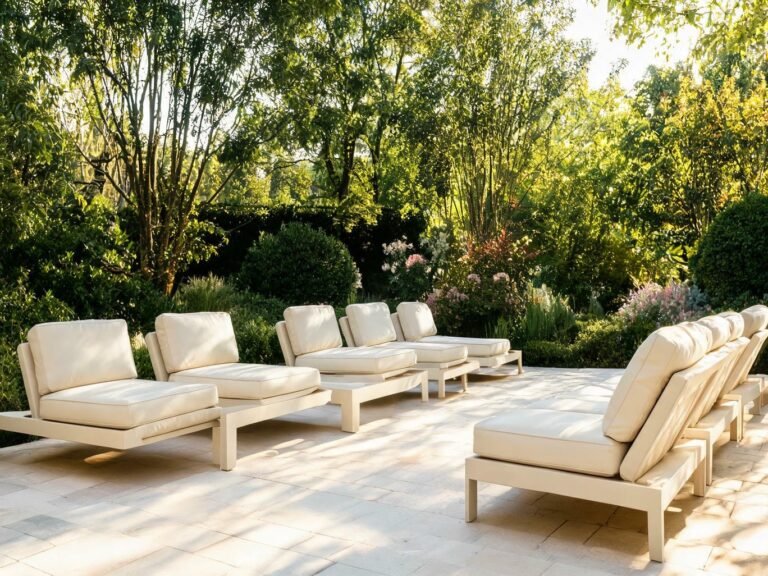
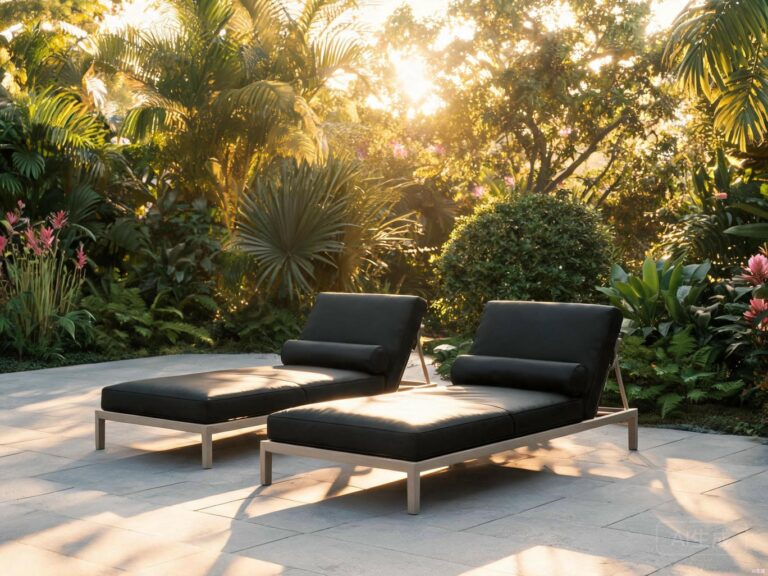
Most procurement managers we speak with have lived through the same frustration: a premium-looking patio set starts cracking, peeling, or growing mold within two seasons, and warranty claims pile up shortly after. The root cause is almost always the upholstery, not the frame. Outdoor furniture waterproof leather built on a silicone polymer backbone solves this at the molecular level — instead of relying on a surface coating that wears off, the water-resistant character is engineered into the material itself. This guide walks through why conventional covers fail outdoors, the science behind silicone’s climate resistance, the weathering standards that matter, and how to specify the right configuration for your production line.
Why Conventional Materials Fail Outdoors
PVC, PU, and genuine leather dominate the outdoor upholstery fabric market for cost reasons, but each carries a well-documented failure mode when exposed to sun and rain. PVC depends on plasticizers to stay flexible; under sustained UV and heat those additives migrate to the surface and evaporate, leaving the material brittle and cracked within three to five years. PU performs better aesthetically, yet it hydrolyzes in humid conditions — ester-based formulations can delaminate in as little as two years of tropical or coastal exposure.
Genuine leather, while prestigious indoors, absorbs moisture, rots, and supports mold growth when rained on repeatedly. None of these chemistries were designed for sustained outdoor weathering. For a deeper look at how waterproof faux leather alternatives compare on durability, our earlier analysis covers the failure mechanisms in detail. When a buyer specifies any conventional option for patio or marine use, they are accepting a replacement cycle that silicone chemistry simply does not share.
What Makes Silicone Leather Naturally Waterproof
Silicone leather’s outdoor performance comes from its Si-O-Si backbone — the same silicon-oxygen bond found in glass and silica sand. Carbon-carbon bonds in PU and PVC break under UV-A and UV-B wavelengths (roughly 315-400 nm); the Si-O bond energy is significantly higher, so the ultraviolet radiation that degrades conventional polymers passes through silicone without restructuring it. To understand the full silicone leather technology behind this stability, the molecular chemistry matters more than any surface treatment.
The polymer is also inherently hydrophobic — water beads and rolls off rather than wicking into the fabric substrate — so there is no coating to wear away over time. Thermal resilience spans -40°C to 250°C, meaning freeze-thaw cycles and desert heat do not embrittle the material. In our testing, TOPSUN silicone leather maintains structural integrity after 1,000+ hours of accelerated UV aging, with no visible cracking, chalking, or color shift on the surface. For buyers sourcing weather resistant leather, that is the difference between a 10-15 year service life and a three-year one.

Weathering Standards Every Buyer Should Know
Specifying all weather leather without reference to standardized test methods invites vague marketing claims. Three standards matter most for outdoor furniture procurement. ASTM G154 operates fluorescent ultraviolet lamps to simulate sunlight exposure and condensation cycles; reputable suppliers publish cycle counts and irradiance levels rather than generic “UV stable” language. ASTM B117 and ISO 9227 govern salt spray corrosion testing, typically run for 96-500 hours at 35°C to evaluate coastal durability. EN 581-1:2017 sets safety and durability requirements specific to outdoor seating.
TOPSUN validates every outdoor-grade batch through SGS and Intertek laboratories against these protocols, so the numbers on a datasheet are independently confirmed rather than self-reported. For outdoor furniture waterproof leather specifically, this means the UV aging and salt spray figures carry third-party weight, not just a supplier’s internal claim. A buyer who cannot access such reports is being asked to trust marketing copy with their warranty budget.
Key test data summary: 1,000+ hrs UV aging (ASTM G154) · 96-500 hrs salt spray (ISO 9227) · Martindale ≥200,000 cycles · tensile ≥20 N/mm · 10-15+ year service life — all SGS and Intertek verified.
Silicone vs PVC vs PU: Outdoor Performance
A side-by-side comparison clarifies why choosing outdoor furniture waterproof leather over conventional options reshapes a product’s total cost of ownership. For any patio furniture material, the metrics below separate a five-year replacement cycle from a fifteen-year one.
| Metric | Silicone Leather | PVC | PU |
|---|---|---|---|
| Lifespan | 10-15+ years | 3-5 years | 2-5 years |
| UV resistance | 1,000+ hrs, no degradation | Cracks, plasticizer migration | Hydrolyzes, yellows |
| Water absorption | 0% (inherent) | Low-moderate (coating) | Moderate-high |
| Plasticizer-free | Yes | No | No |
| Temp range | -40°C to 250°C | -10°C to 60°C | -20°C to 80°C |
| Abrasion cycles | ≥200,000 Martindale | 10,000-30,000 | 10,000-30,000 |

Matching Material to Your Climate Zone
Different climates stress upholstery in different ways, and garden furniture fabric should be specified against the dominant local failure mode. Coastal environments drive salt spray corrosion combined with high humidity — silicone’s hydrophobic surface and ISO 9227 compliance handle both without surface treatment. Our marine upholstery weather-resistant materials guide covers saltwater exposure in greater depth for buyers serving waterfront markets.
Desert zones combine intense UV with temperature swings exceeding 40°C in a single day; the wide thermal range and UV-stable Si-O bond prevent the cracking and embrittlement that plague PVC under those conditions. Tropical climates test mold and mildew resistance — silicone is inherently antibacterial and does not provide the nutrient surface that supports fungal growth on organic leather. Temperate regions cycle through freeze-thaw repeatedly; because silicone does not absorb water, there is no expansion-damage mechanism when trapped moisture freezes and expands. Whatever the zone, the underlying chemistry holds without supplemental coatings or treatments.
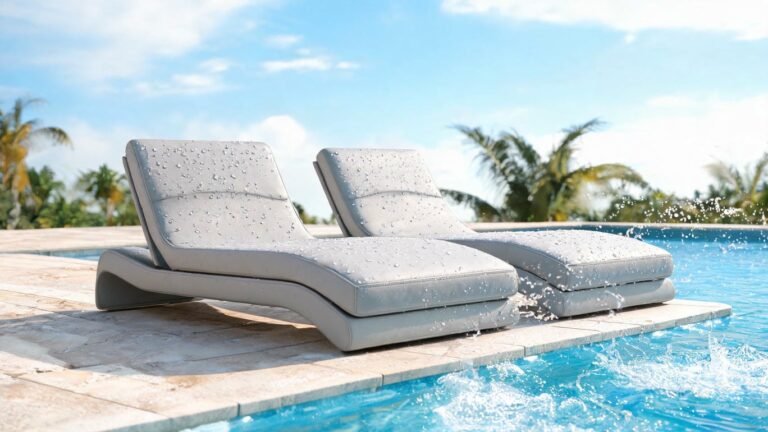
Watch silicone leather repel water and stains in real time — no coating, no wipe-down needed.
Specifying the Right Configuration
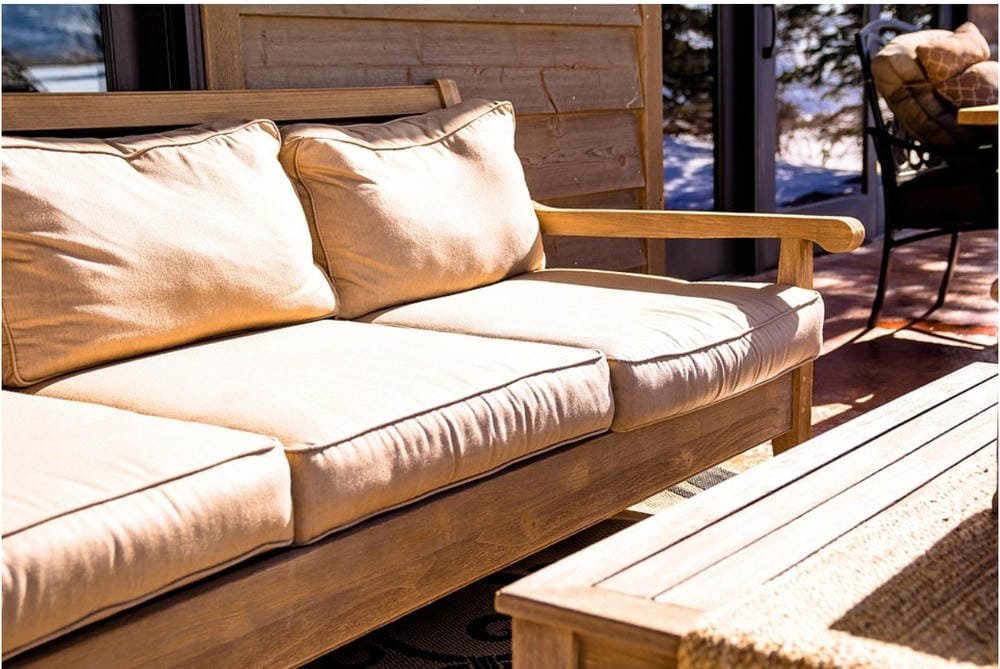
For outdoor sofa material and related furniture applications, TOPSUN’s marine and outdoor technical data sheet sets these baselines: thickness 0.8-2.5mm, tensile strength ≥20 N/mm, Martindale abrasion ≥200,000 cycles, and color fastness Grade 4-5 under ISO 105-B02. Customization covers unlimited color matching, embossed grain patterns, and fabric substrates (polyester or cotton) tuned to the hand-feel and draping your frame design requires. Buyers sourcing for marine and outdoor applications can request the full TDS with third-party test attachments.
Production runs start at MOQ 500m with a 7-15 day lead time, and urgent orders can ship in 5-7 days. Requesting physical samples before committing to a full run lets you verify color, texture, and flexibility against your specific frame — a step we always recommend for first-time buyers. Width runs 1,370-1,500mm to accommodate standard cutting patterns with minimal waste.
Frequently Asked Questions
How long does silicone leather last outdoors?
In properly specified outdoor applications, TOPSUN silicone leather delivers a 10-15+ year service life. The Si-O-Si backbone does not hydrolyze, migrate plasticizers, or embrittle under UV, so the failure modes that end PU and PVC lifespans at two to five years simply do not apply. Independent UV aging to 1,000+ hours confirms this in accelerated testing.
Can it withstand coastal saltwater?
Yes. TOPSUN outdoor-grade silicone leather is tested to ISO 9227 salt spray standards (96-500 hours at 35°C) with no corrosion, delamination, or surface degradation. Salt residue rinses off with fresh water — no special cleaners required, and the hydrophobic surface prevents chloride penetration into the substrate.
Does it need a waterproof coating?
No. Unlike PU or PVC, where waterproofing depends on a surface coating that eventually wears off, silicone’s hydrophobicity is a property of the polymer itself. Water beads and rolls off naturally, and the performance does not degrade over the material’s service life. This is why we describe it as inherently waterproof rather than coated.
The Bottom Line on Outdoor Upholstery
The economics of outdoor furniture shift completely when the upholstery stops being the first component to fail. A frame rated for fifteen years is wasted under a cover that cracks in three. By moving waterproofing from a coating into the molecular structure — UV-stable, salt-spray resistant, thermally resilient, and independently verified to standards buyers can audit — outdoor furniture waterproof leather closes the gap between frame life and cover life. For manufacturers building climate-proof outdoor lines, specifying silicone leather is the single decision that most predictably extends product longevity and reduces warranty exposure.
About TOPSUN
TOPSUN has manufactured silicone leather since 2018 across three production bases totaling 60,000+ m², supplying marine, outdoor, automotive, and medical applications to clients in 30+ countries. Every outdoor-grade batch is produced under a solvent-free dry coating process on automated lines with 6 million m/year capacity.
REACH EC 1907/2006 compliant (247 SVHC screened, all <0.1% w/w) · PAHs verified to AfPS GS 2019:01 (all ND) · ISO 9227 salt spray compliant · SGS and Intertek test reports available on request