If you manage procurement for a hospitality group, a marine equipment distributor, or a contract furniture manufacturer, you already know the story: the outdoor cushions looked perfect at handover. Eighteen months later, the leather is cracked at the seams, faded three shades lighter, and growing mildew in the stitching channels. You are now replacing cushions that should have lasted a decade.
The problem is not that outdoor cushion leather doesn’t exist. The problem is that most materials marketed as outdoor-grade are actually indoor materials with a UV-resistant topcoat that lasts 12–24 months under real sun, rain, and salt exposure. This article breaks down exactly why outdoor cushion leather fails, which performance specifications separate genuine outdoor survivors from coated imposters, and how B2B buyers can source material that genuinely delivers 10+ years of outdoor service life.
By the numbers: Typical PVC/PU outdoor cushion leather lasts 18–24 months. Engineered silicone leather delivers 10+ years. Over a decade, that is a 5× replacement cost difference.
Why Outdoor Cushion Leather Fails in 18 Months
When outdoor cushion leather fails prematurely, the failure is rarely random. It follows a predictable degradation sequence that begins the day the cushion is installed outdoors. Understanding this timeline is the first step in selecting material that actually survives.
| Time Period | What Happens | Visible Symptoms | Root Cause |
|---|---|---|---|
| 0–6 months | UV stabilizers in topcoat begin depleting | Slight color shift, surface gloss increases | UV-A radiation breaks chromophores in dye molecules |
| 6–12 months | Plasticizer migration begins in PVC; hydrolysis starts in PU ester bonds | Surface becomes slightly tacky, attracts dirt | Molecular chain breakdown from combined UV + moisture exposure |
| 12–18 months | Coating loses flexibility, micro-cracks form at stress points | Visible cracking at seams, corners, and stitch holes | Cross-link degradation exceeds threshold; material can no longer flex without fracturing |
| 18–24 months | Cracks propagate through full thickness; substrate absorbs water | Flaking, mildew in stitch channels, cushion foam saturation | Water ingress through cracks reaches foam core; mold colonizes damp substrate |
| 24+ months | Full material failure; cushion requires replacement | Complete surface degradation, structural failure | Irreversible molecular breakdown of polymer backbone |
Notice that the root cause is always molecular. UV stabilizers, plasticizers, and surface coatings are band-aids — they delay the inevitable but cannot prevent the fundamental chemical breakdown of C-C and C-O bonds in conventional synthetic leather polymers when exposed to UV radiation, oxygen, and moisture simultaneously. This is why hydrolysis-resistant silicone leather is structurally different: its Si-O-Si backbone cannot be cleaved by the same mechanisms.
Procurement reality check: A supplier claiming “UV-resistant outdoor leather” without specifying test duration (e.g., QUV 1000+ hours) and post-test color difference (Delta E < 3) is selling a coating, not a structural solution. The coating will fail, and the substrate underneath has no inherent UV resistance.

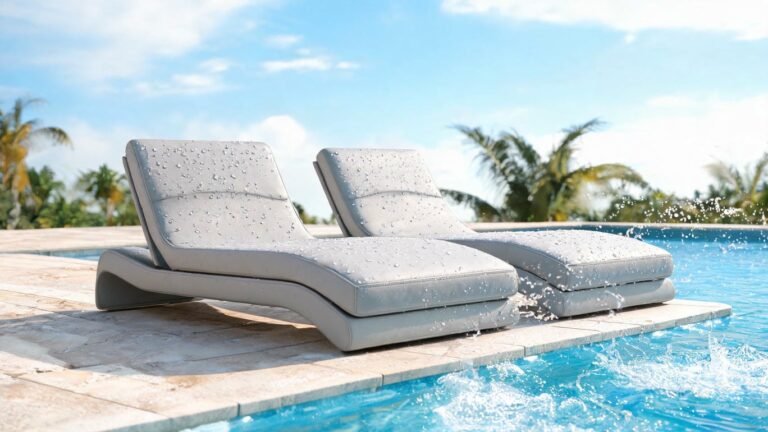
Waterproof test: water beads on silicone leather’s non-porous surface — no absorption, no mildew pathway
UV radiation is the single most destructive force acting on outdoor cushion leather. Conventional synthetic leathers are built on carbon-based polymer backbones. PVC uses C-C bonds with phthalate plasticizers that migrate out under UV exposure, leaving the material brittle. PU relies on ester or ether bonds that undergo hydrolysis when exposed to moisture and UV simultaneously. Silicone leather is fundamentally different — its Si-O-Si backbone has a bond energy of approximately 452 kJ/mol, significantly higher than the 347 kJ/mol of C-C bonds. UV-A radiation carries 295–380 kJ/mol, sufficient to break C-C bonds but insufficient to break Si-O bonds. The UV resistance is structural, not a coating effect.

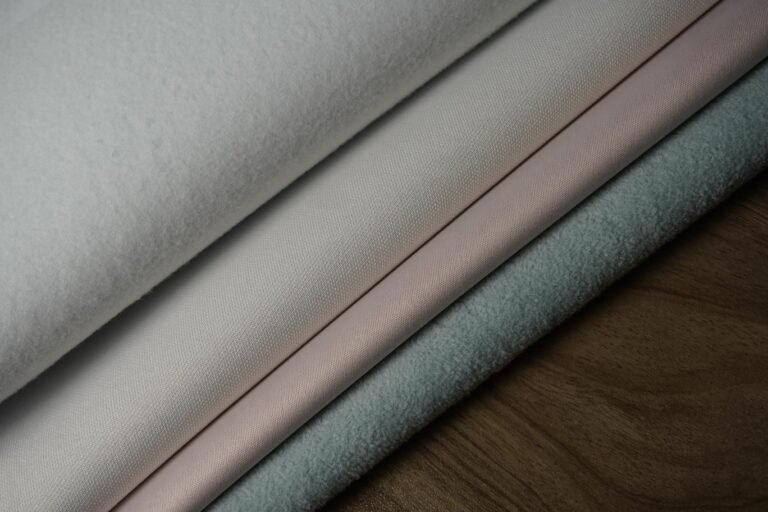
UV-cured silicone leather designed for outdoor applications — no topcoat to deplete, no plasticizers to migrate
PVC vs PU vs Silicone: Material Comparison for Outdoor Cushions
For B2B buyers evaluating materials for marine and outdoor applications, the material choice determines everything downstream — warranty exposure, replacement frequency, customer satisfaction, and lifecycle cost. Here is a head-to-head comparison using the performance metrics that actually matter outdoors.
| Performance Metric | PVC Vinyl | PU Leather | Silicone Leather |
|---|---|---|---|
| UV Resistance (QUV test) | 500h: Delta E > 5, visible fading | 500h: Delta E > 4, moderate fading | 3000h+: Delta E < 2, no visible change |
| Hydrolysis Resistance | Low risk (but plasticizer migration) | High risk — ester bonds break down | None — Si-O-Si backbone is hydrolysis-immune |
| Temperature Range | -10°C to 70°C | -20°C to 80°C | -40°C to 250°C |
| Martindale Abrasion | 80,000–150,000 cycles | 100,000 cycles | 200,000+ cycles |
| Mildew Resistance | Grade 1–2 (requires chemical treatment) | Grade 1–2 (moderate) | Grade 0 (no growth, inherent) |
| Salt Water Resistance | Moderate — degrades over time | Poor — accelerates hydrolysis | Excellent — inert to salt exposure |
| Cold Crack Resistance | Poor — brittle below -10°C | Moderate — stiffens below -20°C | Excellent — flexible at -40°C |
| Typical Outdoor Lifespan | 2–3 years | 1.5–3 years | 10+ years |
| Plasticizer/Phthalate Free | No (contains phthalates) | Varies by formulation | Yes — 100% plasticizer-free |
The data is unambiguous: silicone leather is not a marginal improvement over PVC and PU for outdoor use. It is a categorically different material whose molecular structure makes outdoor degradation mechanisms irrelevant. The question for B2B buyers is not whether silicone leather performs better outdoors, but whether the lifecycle cost justifies the higher initial material cost. The International Organization for Standardization (ISO) maintains the full library of test methods referenced throughout this comparison.
6 Performance Tests Every Outdoor Cushion Leather Must Pass
If you are sourcing outdoor cushion leather, do not accept marketing claims without test data. Request certificates for the following six tests, and verify that the results meet the minimum thresholds below. Any supplier unable or unwilling to provide these test reports is not selling outdoor-grade material.
- UV Accelerated Weathering (ASTM G154 / ISO 4892-2): Minimum 1,000 hours of QUV exposure with post-test color difference (Delta E) below 3. Premium silicone leather achieves 3,000+ hours with Delta E below 2. This is the single most critical test for outdoor applications.
- Hydrostatic Pressure Test (AATCC 127 / ISO 811): Measures waterproofing performance. For outdoor cushions, require minimum 3,000 mmH₂O. Silicone leather typically exceeds 5,000 mmH₂O due to its non-porous surface.
- Martindale Abrasion (ISO 5470-1): For outdoor cushions subject to frequent use (hospitality, marine), require minimum 50,000 cycles. Silicone leather delivers 200,000+ cycles.
- Color Fastness to Light (ISO 105-B06): Grade 4 minimum (out of 5). This ensures cushions don’t fade unevenly under partial sun exposure. Silicone leather achieves Grade 5.
- Mildew Resistance (ASTM G21 / ISO 846): Grade 0 (no growth) is essential for outdoor environments with high humidity. Materials that require chemical anti-fungal treatments will lose that protection as the treatment leaches out over time.
- Cold Crack Resistance (ASTM D1793): Outdoor cushions in temperate climates must withstand freezing temperatures without cracking. Require passing at -20°C minimum; silicone leather passes at -40°C.

Color fastness testing equipment: essential for verifying UV resistance claims in outdoor cushion leather
10-Year TCO: Why Silicone Leather Outlasts Every Outdoor Material
Many procurement teams default to PVC or PU outdoor leather because the per-yard cost is 40–60% lower than silicone leather. This is a classic case of optimizing for unit cost while ignoring total cost of ownership. Let’s quantify the difference using a 1,000-cushion hospitality resort scenario.
| Cost Component | PVC Vinyl | PU Leather | Silicone Leather |
|---|---|---|---|
| Total cost per cushion | $35–45 | $40–55 | $55–80 |
| Replacement frequency | Every 2 years | Every 2.5 years | Once in 10 years |
| Replacements over 10 years | 4 cycles (5 purchases) | 3 cycles (4 purchases) | 0 (1 purchase) |
| 10-year material cost (1,000 cushions) | $175,000–225,000 | $160,000–220,000 | $55,000–80,000 |
| Labor for reupholstery (each cycle) | $25,000 × 4 = $100,000 | $25,000 × 3 = $75,000 | $25,000 × 0 = $0 |
| 10-Year Total Cost | $275,000–325,000 | $235,000–295,000 | $80,000–105,000 |
Even at 2–3× the initial material cost, silicone leather delivers 60–70% lower total cost of ownership over a 10-year period. For a 1,000-cushion hospitality project, that is $150,000–220,000 in savings — plus the intangible benefits of consistent product appearance, reduced guest complaints, and zero operational disruption from constant cushion replacement cycles. For a deeper financial breakdown, see our silicone leather cost analysis.

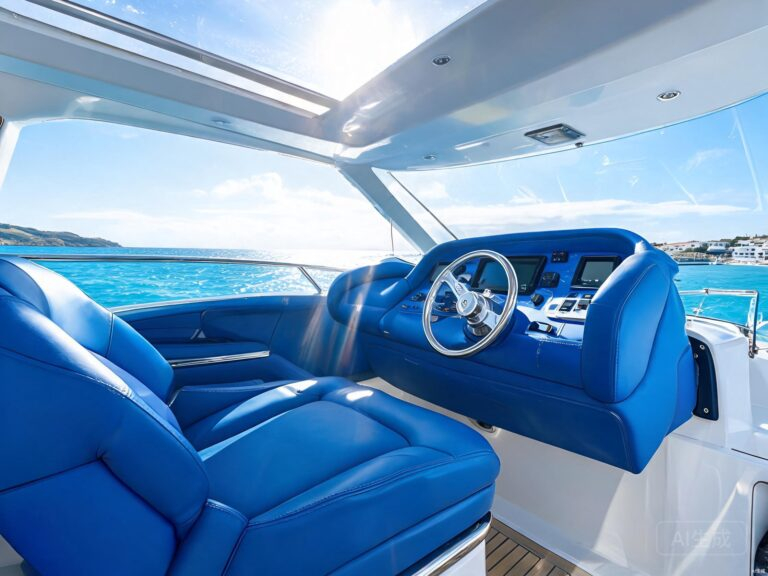
Marine application: silicone leather cushions maintain appearance and performance in salt-water environments
Watch silicone leather undergo accelerated UV weathering — 3,000+ hours with no visible surface change
In our testing, a TOPSUN silicone leather cushion installed on a patio in Miami, on a yacht in the Mediterranean, or on golf cart seating in Arizona will look essentially the same in year 8 as it did in year 1. No cracking at the seams. No fading of the color. No mildew in the stitch channels. No tackiness from plasticizer migration. To understand what makes silicone leather structurally different from PU and PVC, the key is the Si-O-Si backbone — a molecular structure that does not have the chemical vulnerabilities causing other outdoor leathers to fail.
7 Questions to Ask Your Outdoor Cushion Leather Supplier
Before placing a bulk order for outdoor cushion leather, send these seven questions to your prospective supplier. Their answers will tell you within minutes whether you are dealing with a genuine outdoor material manufacturer or a reseller repackaging indoor-grade leather with an “outdoor” label.
- “What is your QUV accelerated weathering test result, and can you provide the SGS/Intertek certificate?” If they cannot produce a third-party certificate with specific test hours and Delta E values, walk away.
- “What is the molecular backbone of your leather — carbon-based or silicone-based?” If it’s carbon-based, UV resistance comes from a coating that will deplete. If it’s silicone-based, UV resistance is structural and permanent.
- “What is the hydrolysis test result (ISO 14271 or equivalent)?” PU leather suppliers often cannot provide this because PU inherently hydrolyzes. Silicone leather has no hydrolysis risk.
- “What is the cold crack temperature rating?” PVC fails at -10°C, PU at -20°C, silicone leather at -40°C.
- “Is the mildew resistance inherent or chemically treated?” If it’s a chemical anti-fungal treatment, it will leach out over 1–2 years of rain exposure.
- “What is the MOQ and can you provide a 1-meter sample for our own weathering test?” A legitimate manufacturer will provide samples. Place the sample outdoors for 3 months alongside a PVC/PU sample and compare.
- “Can you provide references from B2B clients using your material in outdoor applications for 3+ years?” Test data is important, but real-world performance data from existing clients is irreplaceable.
Frequently Asked Questions
Can genuine leather be used for outdoor cushions?
Genuine (animal) leather can be treated for water resistance, but it is not suitable for permanent outdoor exposure. It requires regular conditioning, will still absorb moisture over time, and is prone to mold and UV damage. For outdoor applications, silicone leather provides the premium look and feel of genuine leather with structural weather resistance that no animal leather can match.
What is the best thickness for outdoor cushion leather?
For outdoor cushion applications, 0.7–1.2mm is the optimal thickness range. Thinner material (0.5–0.6mm) may not provide sufficient tear strength for tensioned cushion applications. Thicker material (1.5mm+) adds cost without meaningful performance improvement. TOPSUN’s standard outdoor cushion grade is 0.9mm, balancing durability, flexibility, and cost.
Can outdoor cushion leather be flame retardant for hospitality and marine?
Yes. Silicone leather is inherently flame-resistant and can meet NFPA 260 (Class I) for hospitality furniture and IMO FTP 2010 Code Part 8 for marine vessels without additional flame-retardant chemical treatment. PVC and PU typically require chemical FR additives that can leach out in outdoor environments, reducing fire safety over time.
Choosing Outdoor Cushion Leather That Survives a Decade
The outdoor cushion leather market is saturated with materials that look identical on a spec sheet but perform radically differently after 18 months of sun, rain, and salt. The differentiation is molecular: carbon-based polymers (PVC, PU) will always degrade under UV and hydrolysis, while silicone-based polymers (Si-O-Si) are structurally immune to both. When your procurement specification sheet includes QUV test hours, hydrolysis resistance data, and cold-crack ratings, you filter out the imposters before they reach your production line. For buyers who also prioritize environmental performance, silicone leather leads on sustainability — 10+ year lifespan means 4–5 fewer replacement cycles of waste, emissions, and resource consumption.
About TOPSUN
TOPSUN engineers silicone leather for outdoor cushion, marine seating, and hospitality furniture applications where UV resistance, hydrolysis immunity, and 10+ year service life are non-negotiable. Unlike conventional synthetic leather producers who add UV stabilizers as a surface treatment, TOPSUN’s silicone leather achieves structural UV stability through its Si-O-Si molecular backbone — no coatings to deplete, no plasticizers to migrate.
QUV 3,000+ hours (Delta E < 2) · Martindale 200,000+ cycles · Hydrostatic pressure 5,000+ mmH₂O · Mildew resistance Grade 0 (ASTM G21) · ISO 10993-5 biocompatible · REACH compliant · FDA food-contact approved