If you’re sourcing upholstery materials for automotive interiors, furniture, or consumer goods, you’ve probably asked this question more than once: what is leather made of? The answer isn’t as straightforward as it used to be. Today’s market spans everything from traditional animal hides to advanced silicone polymers, and each material carries its own performance profile, cost structure, and sustainability story.
At TOPSUN, we’ve spent over 12 years manufacturing silicone leather for B2B buyers across eight industries. We’ve tested virtually every material on the market. In this guide, we’ll break down exactly what goes into genuine leather, faux leather, vegan leather, and the newer silicone-based alternatives—so you can make an informed decision for your next project.
What Is Genuine Leather Made Of?
Genuine leather starts as animal rawhide—typically cattle, but also sheep, goat, or pig. The hide undergoes tanning, a chemical preservation process that prevents decomposition while adding flexibility and durability. Traditional vegetable tanning uses tannins from tree bark. Chrome tanning, which dominates industrial production, relies on chromium salts and cuts processing time from months to days.
The finished material is essentially preserved collagen fibers. Full-grain leather keeps the outer surface intact. Top-grain leather sands away imperfections and adds a protective coating. Split leather uses the lower fibrous layers and usually gets coated with polyurethane for strength.
Here’s the reality for buyers: genuine leather offers unmatched tactile warmth and develops a patina over time. But batch-to-batch consistency is difficult. Prices fluctuate with livestock markets. And the tanning process raises environmental concerns—chrome tanning produces wastewater containing heavy metals that require careful treatment, as noted by the U.S. Environmental Protection Agency.
What Is Faux Leather Made Of?
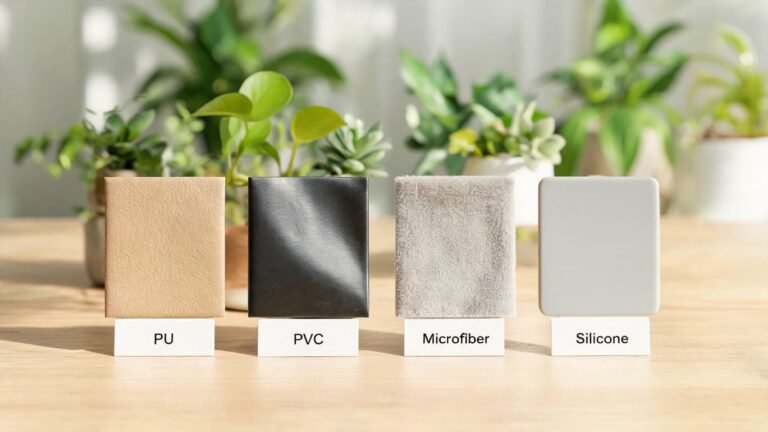
Faux leather—sometimes called synthetic leather or leatherette—contains no animal products. The vast majority falls into two categories: polyvinyl chloride (PVC) and polyurethane (PU).
PVC leather begins as a petroleum-based plastic. Manufacturers apply liquid PVC onto a fabric backing—usually polyester or cotton—then heat-cure it into a flexible sheet. Plasticizers make it soft. Stabilizers prevent UV degradation. The result is inexpensive, highly water-resistant, and easy to wipe clean. The downside? Plasticizers can migrate over time, causing hardening or cracking. In cold climates, PVC becomes stiff.
PU leather takes a different route. A polyurethane coating bonds to a woven or non-woven base fabric. Some versions use a wet-coagulation process that creates a porous structure, giving better breathability than PVC. PU generally feels softer and more leather-like. However, hydrolysis remains a concern—in humid conditions over several years, the polyurethane layer can break down and flake.
Both PVC and PU offer design flexibility. Embossing can replicate crocodile, lizard, or grain patterns. Color matching stays consistent across large orders. For furniture upholstery and budget automotive trims, these materials have long been the default choice.
Vegan Leather Materials: From PVC to Cactus Fiber
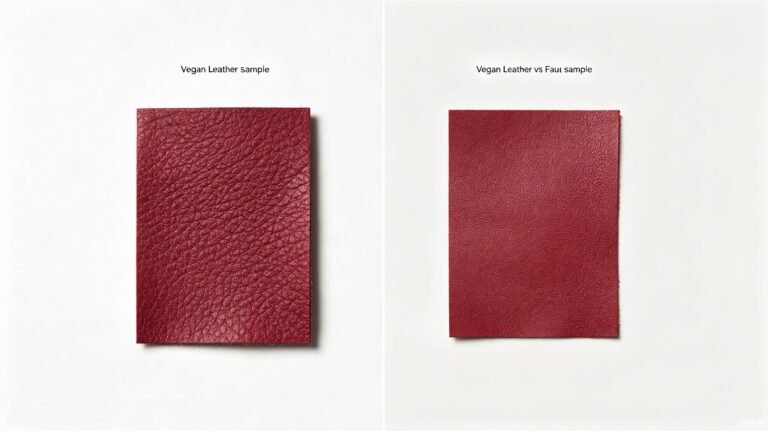
Vegan leather is a broader category than many buyers realize. It simply means “no animal origin.” That includes the PVC and PU variants mentioned above, but the term increasingly points to plant-based and bio-based alternatives. So what is vegan leather made of exactly? The answer depends on the grade.
Some vegan leather comes from pineapple leaf fibers (Piñatex), cactus leaves (Desserto), apple peels, or mushroom mycelium. These materials use agricultural waste or cultivated biomass as the structural base, often combined with a small percentage of synthetic resin for binding. The appeal is clear: lower reliance on petroleum, reduced landfill burden, and a story that resonates with eco-conscious consumers.
That said, procurement teams should look closely at performance data. Many plant-based options excel in aesthetics but lag in abrasion resistance, UV stability, or hydrolysis resistance. Supply chains can also be less mature, meaning longer lead times and limited color ranges at scale. If you’re specifying materials for automotive interiors or marine seating, durability testing should come before brand storytelling.

Material composition and performance comparison across synthetic leather types.
Artificial Leather and the Silicone Polymer Breakthrough
Artificial leather has entered a new phase. If you’re wondering what artificial leather is made of at the high-performance end, the answer is increasingly silicone. Silicone leather—made from silica-based polymers derived from sand—offers a fundamentally different chemistry from PVC, PU, or plant-based alternatives. The base polymer is polysiloxane, an inorganic-organic hybrid chain that provides exceptional thermal stability and UV resistance.
In our factory, the process looks like this: liquid silicone coats a premium woven or knitted substrate, then cures at controlled temperatures to form a cross-linked molecular structure. No plasticizers. No solvents. No volatile organic compounds. The finished sheet is inherently hydrolysis-resistant, flame-retardant, and soft to the touch.
The numbers back it up. Our High Performance collection withstands over 200,000 Martindale abrasion cycles—roughly double what most PU leathers achieve. The Super Flame Retardant grade meets FAR 25.853 aviation standards and EN 13773 Class 4. We’ve passed ISO 10993 biocompatibility testing for medical applications, and our materials carry FDA, REACH, PAHs, and RoHS compliance.

Precision coating line at TOPSUN’s 20,000㎡ manufacturing facility.
Thickness ranges from 0.23mm in our Ultra-Thin series—ideal for 3C electronics and smartwatch bands—up to 2.0mm for heavy-duty furniture and automotive seating. Across eight production lines, we ship over 2,000 tons annually to OEMs in Europe, North America, and Asia.
Material Comparison at a Glance
| Property | Genuine Leather | PVC Leather | PU Leather | Silicone Leather |
|---|---|---|---|---|
| Base Material | Animal hide (collagen) | Polyvinyl chloride + fabric | Polyurethane + fabric | Polysiloxane polymer + fabric |
| Abrasion Resistance | High (varies by grade) | Moderate | Moderate to High | Very High (200,000+ cycles) |
| Hydrolysis Resistance | Good | Good | Fair (degrades in humidity) | Excellent |
| UV / Weather Resistance | Poor (fades, cracks) | Moderate | Moderate | Excellent |
| Flame Retardancy | Poor | Poor (releases toxic gas) | Poor | Certified (FAR 25.853, EN 13773) |
| Chemical Safety | Chrome / tannin dependent | Plasticizer concerns | Solvent residue possible | VOC-free, solvent-free |
| Price Range | High (volatile) | Low | Low to Moderate | Moderate to High |
Which Material Works Best for Your Application?
The “best” leather material depends entirely on the end-use environment and your client’s priorities. Here’s how we guide buyers:
- Automotive & aviation: Silicone leather wins on flame retardancy, low fogging, and long-term UV exposure. OEMs increasingly specify it for EV interiors where weight and safety standards are strict.
- Healthcare & medical: ISO 10993 compliance and disinfectant resistance make silicone leather the clear choice for examination tables and wheelchair cushions.
- Marine & outdoor: Salt spray, constant moisture, and intense sun destroy most synthetics within two seasons. Silicone polymers laugh at these conditions.
- Fashion & 3C accessories: Ultra-thin silicone down to 0.23mm enables designs that PU simply cannot match—without sacrificing softness.
- Budget furniture: PU still dominates mass-market sofas. But if your client wants a 5-year warranty instead of 18 months, the math shifts.

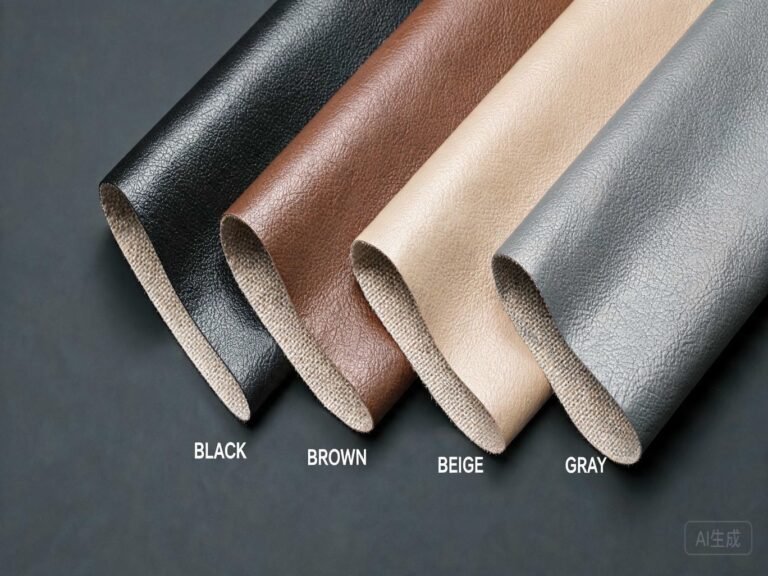
Custom color matching across Classic, Ultra-Thin, Designer, and High Performance collections.
Final Thoughts: It Depends on What’s Inside
So, what is leather made of? It could be preserved animal collagen. It could be petroleum-based plastic. It could be cactus fiber. Or it could be a silica polymer engineered for 200,000 abrasion cycles. The label “leather” no longer tells the full story.
For B2B buyers, the real question is performance per dollar over the product lifecycle. Spec sheets matter more than marketing names. If you’re evaluating materials for a upcoming project, we recommend testing swatches in real-world conditions—not just reading datasheets.
At TOPSUN, we produce silicone leather at scale for brands that refuse to compromise on safety, durability, or design freedom. Whether you need a rigid substrate for automotive dashboards or a featherweight 0.23mm skin for wearable tech, our engineering team can match the spec.
About TOPSUN
TOPSUN is a leading silicone leather manufacturer with 12+ years of B2B OEM/ODM experience. Our 20,000㎡ facility houses 8 production lines and delivers 2,000+ tons annually to automotive, furniture, medical, and electronics brands worldwide.
Certifications: FDA, REACH, PAHs, ISO 10993, RoHS, EN 71, EN 13773 Class 4, FAR 25.853, ISO 9001