Wheelchair users who sit for twelve hours or more need a cushion cover that does more than look clean. Wheelchair cushion material must manage shear forces during transfers, allow the underlying foam or gel to conform, and survive daily disinfection without cracking at seams. The wrong surface can trap heat, increase friction, and undermine even the most advanced pressure-relief core. This guide explains how to specify wheelchair seat cushion materials and where silicone leather fits into a pressure-care strategy.
Download Material Specifications
Pressure mapping reveals that shear during transfers is often as damaging as sustained pressure. A cushion cover must allow the user to slide without creating excess friction, while still protecting the foam or gel beneath from skin oils and moisture. For active wheelchair users who perform independent transfers dozens of times daily, surface abrasion at the thighs and lateral edges becomes the dominant wear mode. A cover that whitens or delaminates in these zones fails before the cushion core does.
The International PU/PI Guideline emphasizes that pressure injury prevention requires system-level thinking. International PU/PI Guideline recommendations cover surface support, nutrition, and repositioning together. Wheelchair cushion material selection should align with these protocols rather than being treated as a cosmetic afterthought. A surface that generates heat or traps perspiration can accelerate skin breakdown even when the underlying cushion provides excellent pressure redistribution.
User profile shapes specification. An active paraplegic athlete needs high abrasion resistance and low friction for lateral transfers. A long-term care resident with limited mobility needs a surface that prioritizes skin microclimate and pressure mapping compatibility. Bariatric users impose higher shear loads at seams. Writing these conditions into the RFQ helps suppliers recommend grain structure, backing weight, and seam placement instead of sending a generic catalog sample.

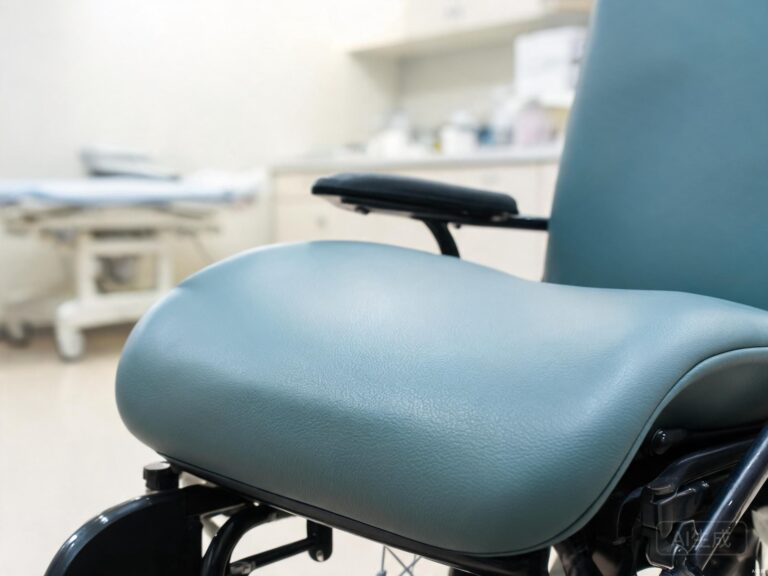
Abrasion resistance testing ensures wheelchair cushion material withstands daily friction and transfer wear.
Pressure mapping reveals that shear during transfers is often as damaging as sustained pressure. A cushion cover must allow the user to slide without creating excess friction, while still protecting the foam or gel beneath from skin oils and moisture. For active wheelchair users who perform independent transfers dozens of times daily, surface abrasion at the thighs and lateral edges becomes the dominant wear mode. A cover that whitens or delaminates in these zones fails before the cushion core does.
The International PU/PI Guideline emphasizes that pressure injury prevention requires system-level thinking. International PU/PI Guideline recommendations cover surface support, nutrition, and repositioning together. Wheelchair cushion material selection should align with these protocols rather than being treated as a cosmetic afterthought. A surface that generates heat or traps perspiration can accelerate skin breakdown even when the underlying cushion provides excellent pressure redistribution.
User profile shapes specification. An active paraplegic athlete needs high abrasion resistance and low friction for lateral transfers. A long-term care resident with limited mobility needs a surface that prioritizes skin microclimate and pressure mapping compatibility. Bariatric users impose higher shear loads at seams. Writing these conditions into the RFQ helps suppliers recommend grain structure, backing weight, and seam placement instead of sending a generic catalog sample.
| Decision Area | What to Specify | Best Fit |
|---|---|---|
| Pressure redistribution | Surface that preserves foam or gel conformity under load | All-day wheelchair users and pressure-care cushions |
| Transfer durability | High abrasion resistance at lateral edges and seating surface | Active users performing independent sliding transfers |
| Disinfection cycles | Resists quaternary ammonium and alcohol-based cleaners | Shared-use wheelchairs in hospitals and care facilities |
| Skin contact | Biocompatibility and low-VOC for prolonged skin exposure | Long-stay patients with reduced mobility |
How TOPSUN Builds Wheelchair-Grade Silicone Leather
TOPSUN develops silicone leather specifically for wheelchair seating and pressure-care applications. The surface is engineered for low friction during transfers, hydrolysis resistance against sweat and moisture, and low odor during extended skin contact. Backing options can be tuned for stretch recovery to match foam compression cycles, while grain patterns are selected to minimize shear forces during patient repositioning. See our medical and healthcare silicone leather applications for typical healthcare seating solutions.
For wheelchair OEM projects, we usually start by understanding the transfer method: sliding lateral transfers, assisted lifts, or independent user-propelled movement. Then we tune color, grain, thickness, and backing to match the expected wear pattern. Related references include our medical-grade silicone leather guide and hospital bed upholstery material.

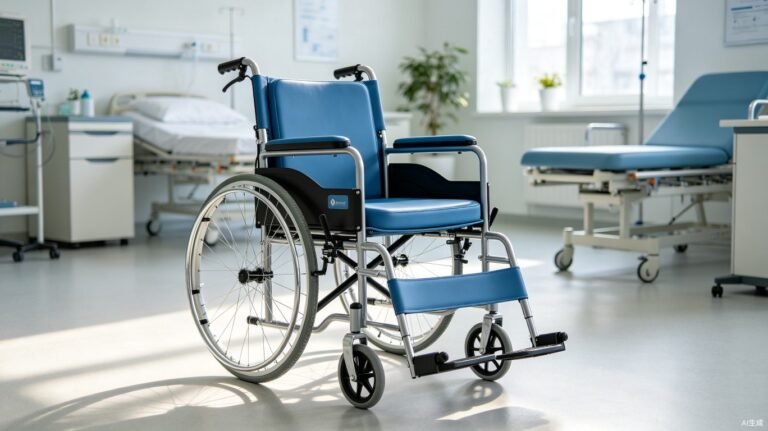
Healthcare seating and wheelchair upholstery environment.
Stain resistance test — see how silicone leather handles daily spills and disinfectant wiping.
Specifying Wheelchair Cushion Material for OEM Production
A good RFQ for wheelchair cushions should include target thickness, backing type, expected transfer cycles per day, cleaning agents, seam design, color tolerance, and sample test expectations. Do not specify only price per meter. For wheelchair products, a cover with better transfer abrasion resistance can reduce warranty claims and replacement frequency over the product life. TOPSUN can support custom color, embossing, and backing trials before bulk production.
Before approving mass production, request swatches from the same construction that will be used in the order. Test them after simulated transfer abrasion, repeated wiping with your specified disinfectant, and edge folding at the cushion perimeter. This simple step catches many problems early: color shift after cleaning, weak adhesion at transfer zones, overly stiff hand feel that reduces foam conformity, or backing that does not bond well to the chosen pressure-relief base.
Frequently Asked Questions
Does the cover material affect pressure relief performance?
Yes. A cover that is too stiff or creates high friction can reduce the effectiveness of pressure-relief foam or air cells. The material should conform with the cushion rather than fighting it, while still providing protection against moisture and wear.
What transfer-related testing should buyers request?
Request abrasion data for lateral edge wear, friction coefficients for sliding transfers, seam strength after repeated loading, and cleaning compatibility with the disinfectants used in your facility.
Next Step for Buyers
Selecting the right wheelchair cushion cover requires balancing pressure-care goals with real-world durability. TOPSUN works with mobility device manufacturers and clinical suppliers to develop silicone leather surfaces that support independent transfers, daily disinfection, and long-term pressure mapping. We can provide abrasion data, cleaning compatibility charts, and OEM color matching for your cushion program.
Request Wheelchair Cushion Samples
About TOPSUN
TOPSUN develops silicone leather for mobility and patient support applications, including wheelchair cushions, transfer surfaces, and pressure-care seating.
Relevant capabilities include ISO 10993 biocompatibility references, transfer abrasion validation, low-VOC solvent-free formulation, and OEM color matching for medical device brands.