Wheelchair users spend 10 to 14 hours seated daily, exposing their upholstery to sustained pressure, body heat, moisture, and bodily fluids. For B2B buyers sourcing wheelchair upholstery material for rehabilitation equipment or healthcare facilities, the wrong fabric contributes to pressure injuries, bacterial growth, and premature product failure. This guide examines the four performance factors—pressure relief, breathability, cleanability, and durability—that define superior wheelchair upholstery, and why silicone leather is replacing vinyl and fabric in medical-grade seating.
The Pressure Injury Problem and Why Wheelchair Seat Material Matters
Pressure injuries are among the most serious complications for wheelchair users. According to the National Pressure Injury Advisory Panel (NPIAP), prolonged sitting generates localized pressure that restricts blood flow to skin and muscle tissue. Combined with shear forces during transfers, immobility can trigger tissue damage from Stage 1 (erythema) to Stage 4 (full-thickness tissue loss).
Key pressure injury risk factors for wheelchair users:
- Immobility and limited repositioning ability
- Moisture from perspiration or incontinence
- Shear force from sliding during transfers
- Poor weight distribution on rigid surfaces
- Reduced tissue tolerance from aging or malnutrition
The wheelchair seat material serves as the first interface between body and frame. A material that distributes pressure evenly and conforms to contours reduces peak pressure points. In our work with rehabilitation equipment manufacturers, we’ve found that silicone leather’s flexibility conforms to cushion contours more naturally than rigid vinyl, which tends to bridge uneven surfaces. This makes the wheelchair upholstery material a critical layer in any pressure management strategy.

Silicone leather’s soft texture conforms to wheelchair cushion contours for even pressure distribution
Breathability: The Hidden Factor in Wheelchair Back Material
While pressure distribution dominates discussions, breathability is equally critical for wheelchair back material that contacts the user’s torso for hours. Traditional vinyl traps heat and moisture, creating a high-humidity microclimate. This environment promotes skin maceration—a condition where prolonged moisture exposure weakens the skin barrier and increases ulceration risk.
Silicone leather offers better thermal regulation than PVC-based vinyl, reducing heat buildup during extended use. The back and seat areas experience the most sustained contact and benefit most from a breathable leather material that minimizes moisture accumulation.
Field Test Insight: We’ve tested silicone leather against standard vinyl in simulated 8-hour seating trials. The silicone surface maintained measurably lower temperatures and showed less moisture condensation on the underside.

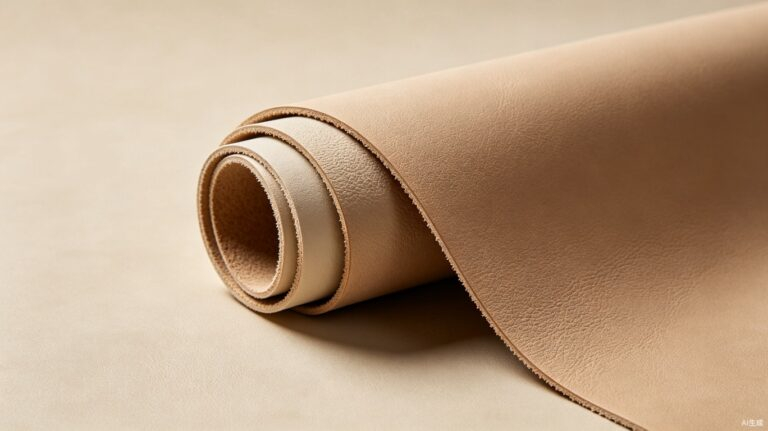
Beige silk-texture silicone leather offers breathability for wheelchair back and seat panels
Cleanability and Incontinence Management for Wheelchair Upholstery Material
Incontinence is a reality for many wheelchair users, particularly in long-term care. The wheelchair cushion cover must withstand bodily fluids, cleaning chemicals, and disinfectants without degrading.
Fabric covers absorb fluids, harbor bacteria, and require laundering, introducing downtime and logistics costs. Vinyl is wipeable but contains plasticizers that leach under repeated chemical exposure, causing cracking. Medical-grade silicone leather is non-porous and inherently resistant to cleaning agents.
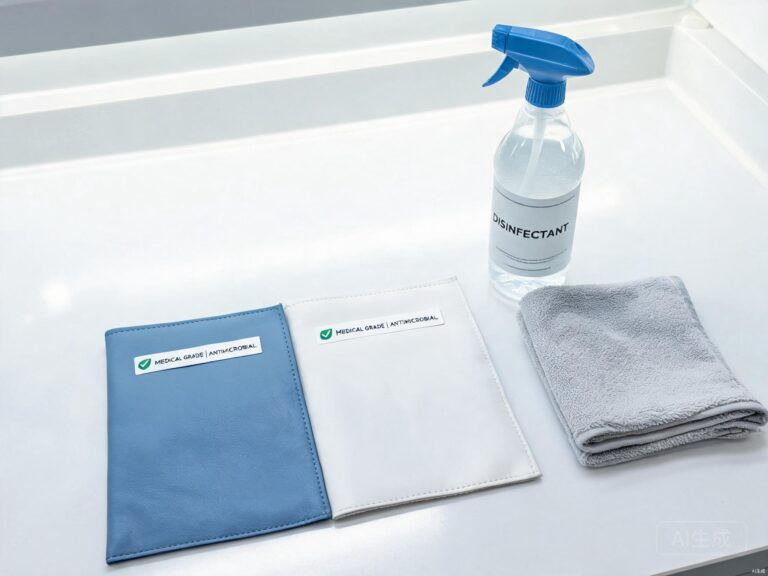
Where silicone leather is specified for cushion covers, facilities report simplified protocols: a single wipe-down with hospital-grade disinfectant suffices. The material does not support bacterial growth, and its hydrophobic surface prevents fluid penetration into cushion foam. This reduces infection risk and replacement frequency—concerns shared across any hospital upholstery material specification.
Durability for Daily Electric Wheelchair Upholstery Use
Electric wheelchair upholstery faces a demanding lifecycle. Power chair users often spend more time seated than manual chair users, and chairs are used outdoors—exposed to UV, temperature fluctuations, and contaminants. The upholstery must endure constant friction, transfer abrasion, and folding stress.
Silicone leather’s cross-linked structure provides exceptional tear resistance and dimensional stability. Unlike vinyl, which becomes brittle after UV exposure, silicone maintains flexibility across a wide temperature range. For wheelchair cushion material in electric wheelchairs, this means lower warranty claims and reduced total cost of ownership.
Case Study: A European power wheelchair OEM switched from vinyl to silicone leather. After 18 months of field testing, silicone units showed no cracking, while vinyl units required replacement at 12 months—a 50%+ improvement.
Customization for Different Wheelchair Armrest Pad and Seating Needs
Not every wheelchair component demands the same specification. A wheelchair armrest pad requires different thickness and backing than a seat pan cover or headrest. TOPSUN offers customizable wheelchair upholstery material solutions for each application:
- Thickness: 0.6mm to 2.0mm for varying support needs
- Backing: fabric, foam, or adhesive-backed
- Color: extensive palette for branding
- Texture: smooth, embossed, or silk-touch finishes
This lets manufacturers use one material family across the entire wheelchair—from seat and back to armrest pads—ensuring consistent performance and streamlined procurement. For healthcare applications, color-coding by department becomes possible without compromising material integrity.

Multi-color silicone leather samples show customization options for wheelchair upholstery
The video below demonstrates TOPSUN silicone leather in real healthcare applications.
TOPSUN silicone leather in medical and healthcare wheelchair applications
Silicone Leather vs Vinyl vs Fabric Comparison
| Performance Factor | Silicone Leather | Vinyl (PVC) | Fabric |
|---|---|---|---|
| Pressure distribution | Excellent — conforms to contours | Fair — rigid, bridges | Good — compresses |
| Breathability | Good — regulates temp | Poor — traps heat | Excellent — absorbs moisture |
| Cleanability | Excellent — wipeable | Good — degrades w/ chemicals | Poor — needs laundering |
| Fluid resistance | Excellent — hydrophobic | Fair — plasticizers leach | Poor — absorbs fluids |
| UV / temp durability | Excellent — stays flexible | Poor — cracks | Good — may fade |
| Antibacterial | Inherent — JIS Z 2801 | Additive-dependent | None |
| Lifespan | 5+ years | 1–2 years | 1–3 years |
FAQ
Can silicone leather prevent pressure injuries on its own?
No. No upholstery material can prevent pressure injuries independently. Prevention requires a system-level approach: pressure-relieving cushions, regular repositioning, skin assessment, and proper nutrition. Silicone leather supports this system with a conformable, breathable, hygienic surface—not a substitute for clinical protocols.
How does silicone leather compare to gel wheelchair cushions?
They serve complementary functions. Gel cushions provide primary pressure distribution by conforming to body geometry. Silicone leather is the protective cover managing moisture and shielding the cushion from contamination. They are not mutually exclusive—silicone covers are frequently specified over gel and foam cushions clinically.
Is the material suitable for electric wheelchair upholstery exposed to weather?
Yes. Silicone leather withstands UV radiation, temperature extremes, and moisture. Unlike vinyl, which cracks after sun exposure, silicone maintains flexibility and structural integrity outdoors—ideal for electric wheelchair upholstery used daily outside.
How often should wheelchair upholstery be cleaned?
For daily users, wipe down at least once daily with mild detergent or hospital disinfectant. In institutional settings, clean between each user. Silicone leather’s non-porous surface enables quick cleaning without laundering downtime—wipe, dry, and ready.
Conclusion
Selecting the right wheelchair upholstery material directly impacts user health, comfort, and product longevity. Silicone leather offers pressure-conforming flexibility, breathability, cleanability, and durability that outperforms vinyl and fabric across every critical metric. For B2B buyers, specifying silicone leather for seat, back, cushion covers, and armrest pads ensures consistent performance and simplified maintenance across the product line. As senior living furniture material trends suggest, the industry is moving toward materials that prioritize both clinical performance and user dignity.
About TOPSUN
TOPSUN specializes in medical-grade silicone leather for wheelchair upholstery, rehabilitation equipment, and healthcare seating, meeting the hygiene, durability, and comfort requirements of B2B manufacturers and healthcare facilities worldwide.
Certifications: ISO 10993 biocompatibility, FDA, REACH, antibacterial per JIS Z 2801