A procurement director at a national restaurant chain recently told us they had been replacing vinyl bar stools every 18 months. The per-unit cost was low — but multiplied across 340 locations, the replacement cycle was quietly consuming six figures a year. That is the hidden tax of vinyl fabric upholstery that most spec sheets will never mention.
Vinyl has dominated budget upholstery for decades. It wipes clean, resists water, and costs a fraction of genuine leather. But for B2B buyers managing multi-year product lifecycles, the material’s trade-offs — cracking, plasticizer migration, thermal instability, and growing regulatory pressure — add up fast. This guide breaks down five critical trade-offs, the testing standards that separate real performance from marketing claims, and why procurement teams are increasingly specifying silicone leather alternatives for projects that demand more than a two-year lifespan.
What Is Vinyl Fabric Upholstery, Really?
Vinyl fabric upholstery is a PVC-based synthetic material engineered to mimic the look and feel of genuine leather. Manufacturers dissolve PVC resin in plasticizers — typically phthalates — then coat or calender it onto a fabric backing such as cotton, polyester, or blended substrates. The result is a waterproof, stain-resistant surface available in thousands of colors and embossed textures.
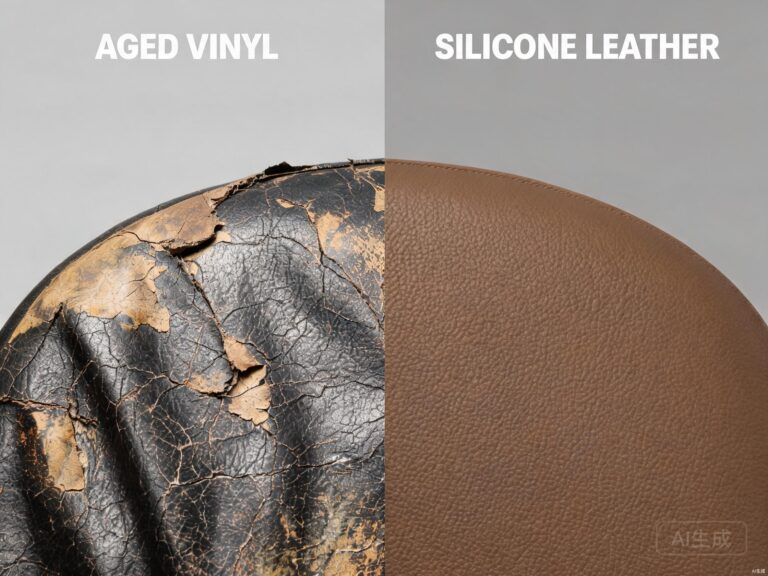
The problem isn’t the look. It’s the chemistry. Plasticizers are not chemically bonded to the PVC matrix. Over time, heat, UV exposure, and mechanical flexing cause them to migrate to the surface and evaporate. That migration is what makes old vinyl feel stiff, crack at stress points, and develop that characteristic sticky residue. In our testing lab, we’ve seen commercial-grade vinyl lose up to 40% of its original flexibility after 500 hours of accelerated UV exposure — a timeline that translates to roughly 18-24 months in a sunlit restaurant or waiting room.

Accelerated aging tests reveal how vinyl upholstery degrades under UV and thermal stress
5 Trade-Offs B2B Buyers Face with Vinyl Upholstery Fabric
Every material has trade-offs. The issue with vinyl upholstery fabric is that its weaknesses are deferred — they show up months or years after installation, when replacement costs have already been locked in. Here are the five that hit B2B budgets hardest:
1. Cold-weather cracking. Standard vinyl becomes brittle below 10°F (-12°C). In transit, storage, or installations in unheated spaces, the material can crack along fold lines and stress points. Premium grades add cold-crack modifiers, but these raise the per-yard cost by 20-30%.
2. Plasticizer migration and surface tackiness. Phthalate plasticizers migrate outward over 2-5 years, leaving a sticky film that attracts dirt and breaks down cleaning protocols. In healthcare settings, this residue can harbor bacteria — a direct conflict with infection-control requirements.
3. Thermal instability. Vinyl softens at 140°F (60°C) and can warp or melt in direct sun, near heating vents, or in vehicles parked outdoors. For automotive and marine applications, this is a deal-breaker.
4. Zero breathability. Vinyl is a closed-cell barrier. In seating applications, trapped heat and moisture cause occupant discomfort — the “vinyl sweat” effect. This is why many hospitality brands have moved away from vinyl for any seat occupied longer than 30 minutes.
5. Environmental and regulatory exposure. The U.S. Consumer Product Safety Commission restricts several phthalates in children’s products and childcare articles [CPSC]. EU REACH regulations add further restrictions. Buyers specifying vinyl for products that might reach children’s environments carry compliance risk they may not realize.
Bottom line: Vinyl’s low purchase price masks a 2-3 year replacement cycle. At scale, the total cost of ownership often exceeds materials costing 2-3x more upfront.

Commercial furniture demands upholstery that survives daily traffic without frequent replacement
Vinyl vs Silicone Leather: Side-by-Side Procurement Specs
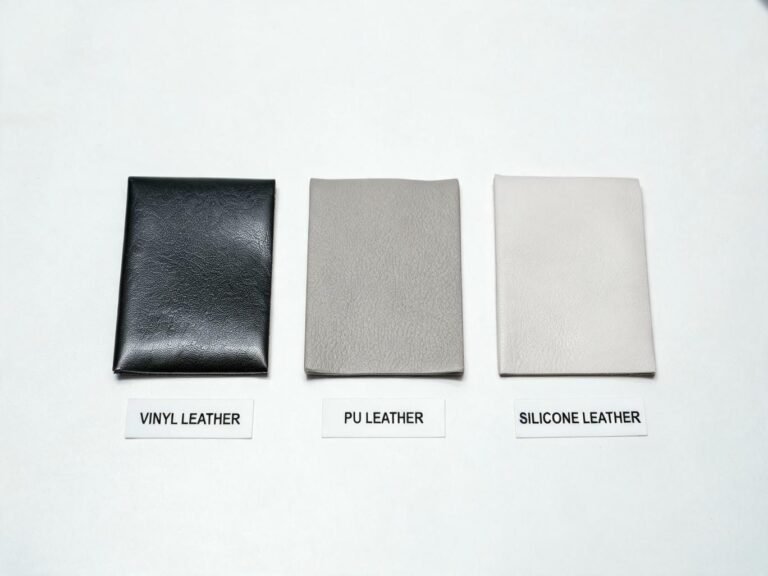
When evaluating materials for bulk orders, side-by-side comparison cuts through the noise. Here’s how vinyl fabric upholstery stacks up against eco-friendly silicone leather across the metrics that matter to procurement teams:
| Performance Factor | Vinyl Fabric | Silicone Leather | B2B Impact |
|---|---|---|---|
| Cold-crack resistance | Fails below 10°F | Stable to -40°F | No winter shipping losses |
| Plasticizer content | 20-40% phthalates | Zero | REACH-compliant by default |
| Breathability | None (closed cell) | Permeable to moisture vapor | Better occupant comfort |
| Replacement cycle | 2-5 years | 8-10+ years | 3-4x lower lifecycle cost |
| Cleaning protocol | Mild soap only | Bleach, alcohol, disinfectants | Survives hospital-grade sanitization |
Testing Standards That Separate Specs from Marketing
A supplier’s brochure can claim “heavy-duty commercial grade” without citing a single test method. Smart buyers don’t accept that. These are the four tests that actually predict field performance:
Wyzenbeek abrasion (ASTM D4157): Measures surface wear using a cotton duck abradant. Commercial-grade vinyl typically rates 15,000-50,000 cycles. Silicone leather exceeds 100,000 cycles in our lab — the threshold where ASTM International [ASTM] considers a material “heavy-duty contract grade.”
Martindale abrasion (ISO 12947-2): The European equivalent, using a wool abradant in a figure-eight motion. Look for 30,000+ cycles for hospitality, 50,000+ for transit seating.
Cold-crack test (ASTM D1790): The material is folded and exposed to sub-zero temperatures for 24 hours. If it cracks, it fails. This test is non-negotiable for any product that ships or stores in cold climates.
UV stability (AATCC 16.3): Measures color change and surface degradation after accelerated UV exposure. Anything below 200 hours is unsuitable for sunlit environments. We’ve seen vinyl specimens crack at 500 hours; silicone leather shows no visible degradation at 1,000+ hours.

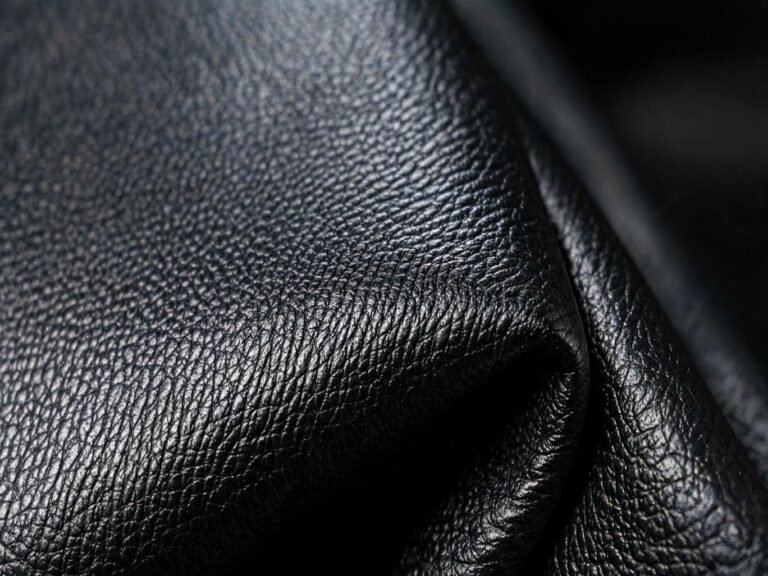
Wyzenbeek abrasion testing reveals how upholstery surfaces hold up under repeated friction
Why Silicone Leather Outperforms Vinyl in Procurement Terms
Silicone leather is not a coating — it’s a 100% silicone polymer bonded to a fabric substrate through a solvent-free process. No plasticizers, no phthalates, no PVC. The molecular structure is inherently stable from -40°C to 200°C, which eliminates the cracking, migration, and warping issues that drive vinyl replacement costs.
From a TCO perspective, the math is straightforward. If a vinyl-upholstered restaurant booth costs $45/yard and needs replacement every 2.5 years, while silicone leather costs $85/yard but lasts 8+ years, the silicone option delivers 35% lower cost per year of service — before factoring in labor, disposal, and business disruption during reupholstery.
One of our clients — a European healthcare furniture manufacturer — switched from PVC vinyl to silicone leather for their exam chair line after field reports showed surface tackiness within 18 months of installation. Post-switch warranty claims dropped to near zero. The material also tolerates hospital-grade disinfectants that degrade vinyl surfaces, which you can read more about in our cleaning and maintenance guide.
Watch how silicone leather outperforms vinyl in side-by-side durability testing
Specifying the Right Upholstery Material for Your Next Bulk Order
Before you request quotes, build a material specification sheet that maps your application’s demands to testable performance criteria. Here’s what to include:
- Traffic level: Define expected daily use cycles. Restaurant seating: 8-12 hours/day, 7 days/week. Medical waiting rooms: 6-10 hours/day with chemical exposure.
- Cleaning protocol: List every disinfectant your cleaning staff uses. If bleach or 70% alcohol is on the list, vinyl is already disqualified.
- Temperature range: Include shipping, storage, and in-use conditions. If any phase drops below 15°F, specify cold-crack testing.
- Compliance requirements: Flag REACH, CPSC phthalate limits, and any end-product certifications (GREENGUARD, OEKO-TEX).
- Expected service life: State it in years, not vague terms. “5+ years with no visible degradation” forces suppliers to recommend materials that actually deliver.
For deeper guidance on evaluating upholstery options, see our furniture and sofa application overview. If you’re weighing vinyl against existing faux leather options, our vinyl fabric comparison guide covers additional use-case scenarios.

Fire retardant testing is critical for commercial upholstery specifications
Frequently Asked Questions
Can vinyl fabric upholstery pass REACH and phthalate regulations for EU markets?
Some premium vinyl grades use non-phthalate plasticizers (like DOTP or DINCH) that meet current REACH thresholds. However, REACH’s candidate list of Substances of Very High Concern is updated regularly, and future restrictions may affect additional additives used in PVC formulations. Silicone leather, which contains no plasticizers or PVC, eliminates this regulatory uncertainty entirely.
What’s the typical payback period when switching from vinyl to silicone leather?
For high-traffic commercial applications (restaurants, clinics, transit), the payback typically falls within the second replacement cycle — around 4-5 years. The initial material cost is higher, but eliminating two vinyl replacement cycles (labor + materials + downtime) usually more than covers the difference. For more on durability testing data, see our faux leather durability testing results.
The Bottom Line on Vinyl Upholstery
Vinyl fabric upholstery still has a place in budget-constrained, short-lifecycle projects. But for B2B buyers managing products expected to last more than three years, the material’s deferred costs — cracking, compliance risk, replacement labor, and occupant discomfort — make it a poor long-term investment. Silicone leather solves every one of vinyl’s structural weaknesses while delivering a softer hand feel, wider temperature tolerance, and zero plasticizer content. The question isn’t whether you can afford the upgrade. It’s whether you can afford another vinyl replacement cycle.
Request Upholstery Material Samples
About TOPSUN
TOPSUN manufactures solvent-free silicone leather for commercial furniture, automotive, and healthcare upholstery buyers who need materials that outlast vinyl without compromising on cleanability or compliance.
REACH-compliant formulations · Wyzenbeek 100,000+ cycle durability · Custom color matching from 500+ swatches · OEM roll-to-roll production at scale