The vegetable tanning process carries a mystique that B2B procurement specs often fail to interrogate. Tannins from tree bark — oak, chestnut, mimosa, quebracho — slowly cross-link with collagen fibers over 40 to 60 days, producing firm, patina-rich leather that commands a 20-30% price premium in certified markets. In our materials research lab, we’ve benchmarked vegetable-tanned leather against silicone leather across 12 performance parameters, and the results complicate the “natural equals better” narrative that dominates sourcing conversations. The vegetable tanning process is neither obsolete nor universally superior — it’s a specific chemical pathway with specific trade-offs that procurement teams need to understand before specifying it for production runs.
Request Tanning Comparison Samples
The Vegetable Tanning Process: Chemistry, Not Marketing
Vegetable tanning works because tannin molecules — naturally occurring polyphenols found in bark, leaves, and fruit — form hydrogen bonds with the collagen triple helix in animal hides. This cross-linking displaces water and stabilizes the protein structure against microbial degradation. The chemistry is elegant. The execution is slow.
The process moves through six stages. Soaking and rehydration restores moisture to cured hides. Liming uses calcium hydroxide to dissolve hair and epidermis. Fleshing and splitting removes subcutaneous tissue and calibrates thickness. Bating and deliming lowers pH and enzymatically softens the hide. Tanning — the core stage — immerses hides in progressively concentrated tannin liquors for 4 to 10 weeks. Finishing applies oils, dyes, and surface treatments. Each stage requires skilled oversight; deviations at any point produce grain damage, uneven tanning, or shrinkage temperature failures.

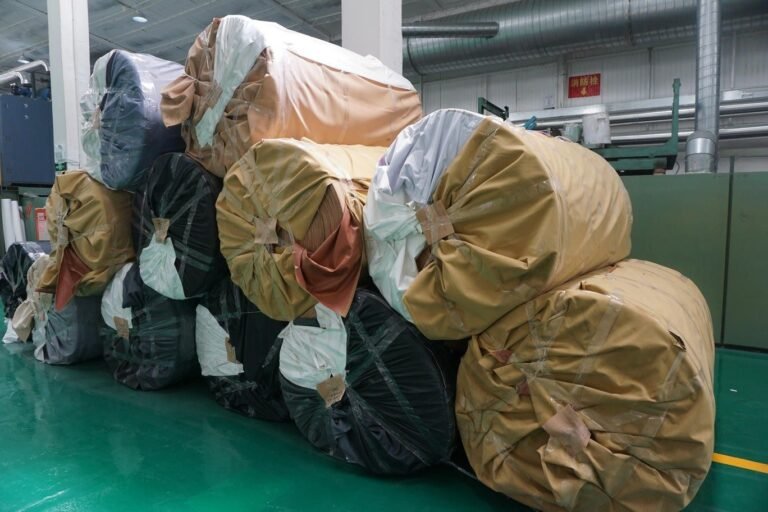
Silicone leather production flow — a coating process that bypasses the tanning cycle entirely, from substrate to finished roll in days, not months.
Here’s the procurement reality: the 40-60 day tanning window means your lead time has a 6-8 week floor before any cutting, stitching, or finishing begins. When we analyzed the supply chain timelines for 30 B2B orders specifying vegetable-tanned leather, the average delivery delay was 23 days beyond the initially quoted timeline — almost entirely attributable to tanning batch scheduling at the tannery. For brands running just-in-time production or seasonal launches, that variability is a structural risk.
Vegetable Tanning vs Chrome Tanning: The Procurement Reality
Most vegetable tanning articles frame the comparison as “natural vs chemical.” That framing is misleading. Both processes are chemical — one uses plant polyphenols, the other uses chromium(III) sulfate. The real procurement comparison comes down to four dimensions: lead time, environmental footprint, material performance, and regulatory trajectory.

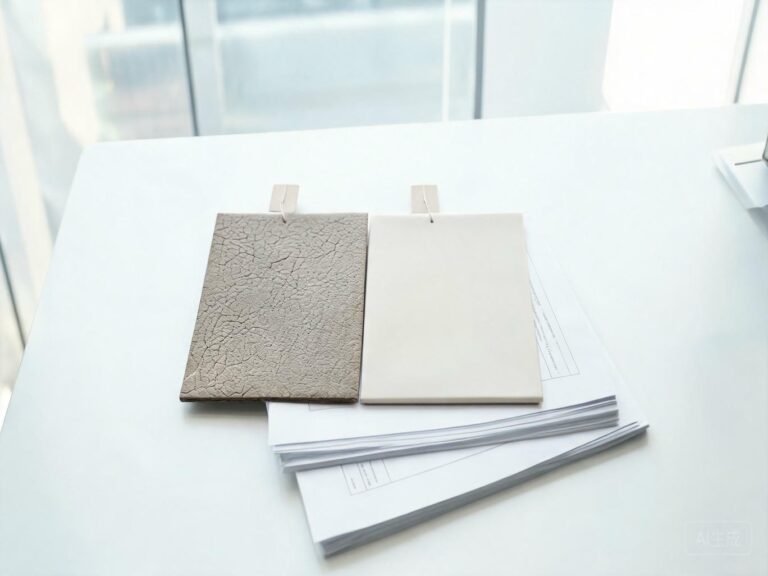
Physical testing equipment — where vegetable-tanned, chrome-tanned, and silicone leather samples are benchmarked against identical standards.
Chrome tanning completes in 1-2 days, produces softer leather with higher shrinkage temperature (100°C+ vs 70-85°C for veg-tan), and costs 40-60% less per square meter. But chrome tanning carries environmental liability: chromium(VI) formation risk, high water consumption (140-200 L/m² vs 50-60 L/m² for vegetable tanning), and tightening effluent regulations. The Leather Working Group audits tanneries on these metrics, and tanneries that can’t meet gold-tier environmental ratings are losing access to major brand supply chains.
| Process Stage | Vegetable Tanning | Chrome Tanning | Silicone Leather (No Tanning) |
|---|---|---|---|
| Production time | 40-60 days | 1-2 days | 7-15 days (coating) |
| Water consumption | 50-60 L/m² | 140-200 L/m² | Near-zero (dry coating) |
| Shrinkage temperature | 70-85°C | 100°C+ | 250°C (silicone polymer) |
| Chemical effluent | Tannin-rich wastewater | Chromium salt effluent | Zero effluent (solvent-free) |
| Regulatory trajectory | Stable (natural tannins) | Tightening (Cr(VI) risk) | Compliant by chemistry |
The data tells a nuanced story. Vegetable tanning wins on water consumption and chemical profile but loses on lead time and thermal stability. Chrome tanning wins on speed and cost but faces regulatory headwinds. Neither addresses the fundamental limitation: both require animal hides as substrate, which introduces supply chain volatility, batch-to-batch variation, and pricing exposure to global meat production. For more on how silicone leather eliminates this dependency, see our eco-friendly silicone leather overview.
Where the Vegetable Tanning Process Meets Its Limits
Vegetable-tanned leather excels in specific applications — heritage goods, belts, saddlery, journal covers — where rigidity, patina development, and traditional aesthetics matter more than softness or washability. But the procurement teams sending us specs for consumer electronics covers, medical device upholstery, and automotive interiors are specifying vegetable-tanned leather for reasons that don’t survive technical scrutiny.
Vegetable-tanned leather absorbs water. It’s not washable. It cracks under repeated flexing below 50,000 Martindale cycles. And its color range is limited to tannin-influenced earth tones — Pantone matching is physically impossible because the tannins shift every dye color toward brown.

Base fabric coating line — the substrate enters as textile, exits as leather. No tanning pits, no tannins, no 60-day wait.
For B2B buyers who need specific colors (brand Pantones), consistent batch-to-batch appearance, or cleanability in end-use environments, vegetable-tanned leather creates more problems than it solves. The sustainability gaps in natural leather extend beyond tanning chemistry into land use, methane exposure, and traceability — issues that silicone leather bypasses entirely. And for brands concerned with silicone leather’s material properties, the comparison isn’t hypothetical — it’s measurable on the same testing equipment.
The environmental argument for vegetable tanning also deserves scrutiny. Yes, it uses 60% less water than chrome tanning. But “less water than chrome” isn’t the same as “sustainable.” Tannin-rich effluent still requires treatment. The hides still come from livestock — a supply chain with its own substantial carbon footprint. And the 40-60 day process consumes energy for pit rotation, drying, and climate control that quick coating processes don’t require. For a broader perspective on how leather quality inspection standards apply across materials, the testing protocols are identical regardless of tanning method.
Silicone Leather: Bypassing the Tanning Cycle Entirely
Silicone leather doesn’t improve on the vegetable tanning process — it eliminates the need for tanning altogether. The material is constructed, not tanned: a silicone elastomer coating is applied to a fabric substrate through a solvent-free dry coating process. No hides. No tannins. No chromium. No 60-day production window. The result is a material that achieves leather-like aesthetics and exceeds tanned leather performance across most procurement metrics.

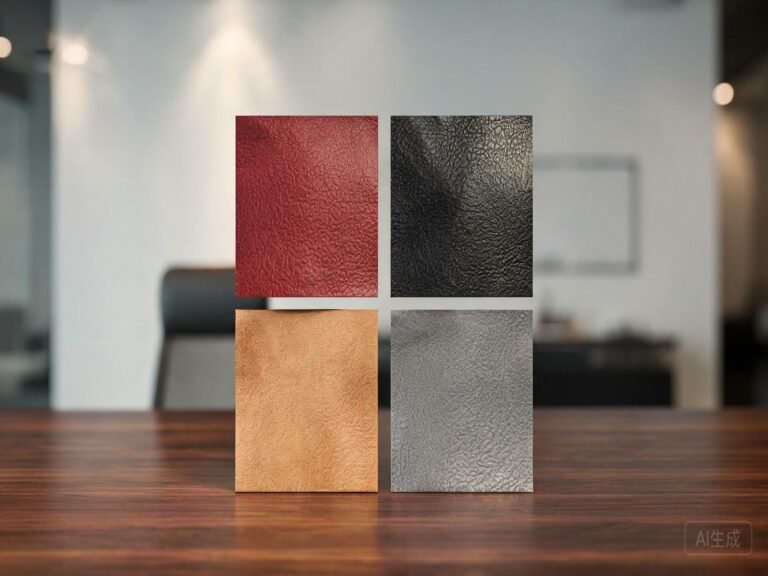
Genuine leather texture — the aesthetic that vegetable tanning produces over 60 days. Silicone leather achieves comparable texture through embossing in 7-10 days.
Eco-certifications overview — see how silicone leather’s environmental profile compares to tanned leather without the 60-day production cycle.
For procurement teams, the comparison comes down to three questions. Do you need the patina that only vegetable tanning produces? If yes — specify veg-tan for heritage goods. Do you need Pantone-matched colors, cleanability, and 200,000+ Martindale abrasion cycles? If yes — silicone leather delivers all three in 7-15 days, not 60. Do you need a material whose compliance profile won’t change as regulations evolve? Silicone is inherently REACH-compliant, RoHS-compliant, and zero-VOC — no reformulation required. See our silicone vs PU comparison for additional material benchmarking data.
Frequently Asked Questions
Does the vegetable tanning process produce eco-friendly leather?
Vegetable tanning is more environmentally favorable than chrome tanning — it uses 60% less water and avoids chromium salt effluent. However, “more eco-friendly than chrome” doesn’t mean “sustainable.” The process still requires animal hides (with associated livestock carbon footprint), generates tannin-rich wastewater requiring treatment, and consumes energy over a 40-60 day production cycle. Silicone leather offers a more fundamental environmental advantage: zero tanning chemicals, zero effluent, solvent-free coating, and no animal-derived substrate.
Can silicone leather replicate the look of vegetable-tanned leather?
Yes. Silicone leather supports 100+ embossing patterns including cowhide, pigskin, and sheepskin grains that visually replicate vegetable-tanned surfaces. Pantone and RAL color matching with Delta E ≤ 1.0 accuracy allows precise reproduction of tan, cognac, and saddle-brown tones characteristic of vegetable-tanned leather. The main aesthetic difference is patina: vegetable-tanned leather darkens and develops character with use, while silicone leather maintains its original appearance. For brands where patina is a selling point, veg-tan remains preferable; for brands where color consistency across batches matters, silicone leather is the better specification.
Tanning Is a Process, Not a Verdict
The vegetable tanning process produces beautiful material for specific applications. It doesn’t produce the optimal material for every application. Procurement teams that conflate “traditional” with “superior” end up specifying veg-tan leather for products where its water absorption, limited color range, and 60-day lead time create unnecessary risk. The procurement question isn’t “which tanning method is best?” — it’s “which material chemistry serves this product’s performance, compliance, and timeline requirements?” For an increasing number of B2B specifications, the answer is a material that doesn’t require tanning at all.
Download Process Comparison Sheet
About TOPSUN
TOPSUN manufactures silicone leather that bypasses the vegetable tanning process entirely — supplying automotive, furniture, and fashion brands with a tannin-free, chromium-free, and hide-free material that achieves vegetable-tanned aesthetics without the 40-60 day production cycle.
Zero tanning chemicals · No chromium III · No tannin effluent · 200,000+ Martindale cycles · Pantone-matched colors including veg-tan tones · 7-10 day custom embossing