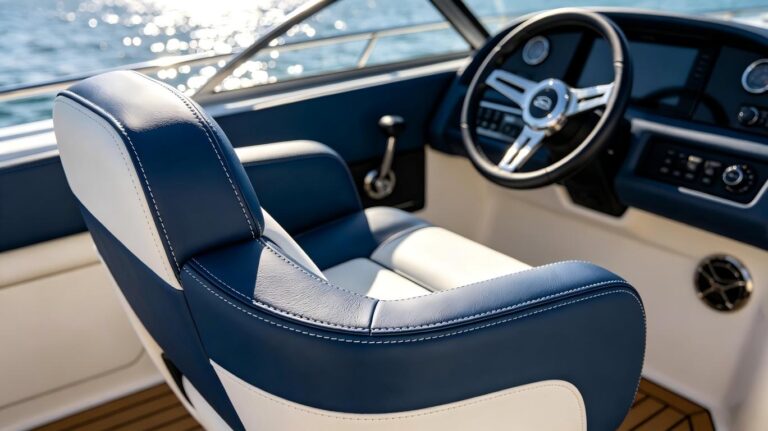
A procurement team at a resort chain in the Middle East specified “UV resistant” PVC vinyl for 400 poolside loungers in 2024. Within 14 months, 60% of the loungers showed surface cracking, color fading, and plasticizer bloom — a total material failure that cost $180,000 in replacement and reinstallation. The supplier had self-declared UV resistance on the datasheet but never provided test data. When we ran ASTM G154 accelerated weathering on the failed samples in our lab, the PVC showed visible degradation after 480 hours. TOPSUN’s silicone leather, tested under the same standard, showed no cracking, fading, or embrittlement at 1,000+ hours. The gap between “UV resistant” on a datasheet and actual UV resistant fabrics performance in a test chamber is where procurement failures live — and where the data in this article can prevent them.

What Makes UV Resistant Fabrics Perform: The Chemistry
UV resistance isn’t a coating you can spray on or an additive you can mix in at the last minute. It’s a structural property of the polymer backbone — the molecular chain that forms the material’s foundation. UV radiation in the 290–400 nm wavelength range carries enough energy to break carbon-carbon bonds in conventional synthetic polymers, triggering a cascade of degradation that ends in cracking, fading, and embrittlement.
The degradation process, called photo-oxidation, follows four stages:
- Polymer chain scission: UV photons break polymer chains, reducing molecular weight. Tensile strength drops. Elongation decreases. The material loses its ability to flex without cracking.
- Photo-oxidation: Oxygen reacts with UV-excited polymer chains, forming carbonyl groups and hydroperoxides. These oxidation products accelerate further breakdown — a self-reinforcing degradation loop.
- Plasticizer migration: In PVC and some PU formulations, UV-generated heat drives plasticizers to the surface, where they evaporate or wipe off. The material stiffens, then cracks under flexural stress.
- Chalking and surface cracking: Surface oxidation creates a powdery chalk layer. Micro-cracks form, propagate through the coating, and eventually reach the base fabric — causing delamination.
The key variable is bond energy. Carbon-carbon bonds break at approximately 350 kJ/mol — well within the energy range of UV-B radiation reaching the Earth’s surface. Silicone’s silicon-oxygen (Si-O) backbone requires approximately 452 kJ/mol to break — exceeding the energy of most UV wavelengths in terrestrial sunlight. This is the structural reason silicone-based UV resistant fabrics outperform carbon-based polymers by a wide margin: the UV photons simply don’t carry enough energy to break the backbone.
5 UV Testing Standards Every B2B Buyer Must Know
When a supplier claims their fabric is “UV resistant,” the first question should be: which standard did you test to? If they can’t answer, the claim is self-declared. These are the five standards that matter for B2B procurement of UV resistant fabrics:
| Standard | Test Method | What It Measures | B2B Pass Threshold |
|---|---|---|---|
| AATCC 16.3 | Xenon arc with controlled humidity | Color fastness to simulated sunlight | Grade 4+ for outdoor applications |
| ISO 105-B02 | Artificial light (xenon) exposure | Color fastness to light (fading) | Grade 4–5 (good to excellent) |
| ASTM G154 | Fluorescent UV + condensation cycle | Weathering: cracking, tensile loss, chalking | No cracking; tensile retention >80% after specified hours |
| ISO 4892-2 | Xenon arc lamps | Photodegradation resistance of plastics | Application-specific; evaluated by retained strength and surface condition |
| ASTM D4329 | Fluorescent UV + water spray | Weathering of plastic coatings | No visible cracking or chalking after specified exposure |
In our testing lab, we run ASTM G154 as the primary standard for UV resistant fabrics because it tests the two failure modes that matter most in field conditions: mechanical degradation (cracking, tensile loss) and surface degradation (chalking, embrittlement). AATCC 16.3 and ISO 105-B02 measure color fastness — important, but a fabric can retain color while losing structural integrity. ASTM G154 catches both.

UV Resistant Fabrics Compared: 6 Materials After 1,000 Hours
We compared six material categories under ASTM G154 accelerated weathering — the standard used for automotive exterior and marine applications. The data explains why material selection determines whether your product lasts 2 years or 10:
| Material | Hours Before Visible Degradation | Color Fastness | Tensile Retention at 1,000 hrs | Primary Failure Mode |
|---|---|---|---|---|
| Silicone leather | 5,000–10,000+ | Grade 4–5 | >90% | None observed at 1,000 hrs |
| Solution-dyed acrylic | 3,000–5,000 | Grade 4–5 | 80–95% | Gradual chalking |
| Olefin / polypropylene | 2,000–4,000 | Grade 4 | 70–90% | Surface chalking, stiffening |
| PU leather | 500–2,000 | Grade 3–4 | 50–70% | Cracking, embrittlement |
| PVC leather | 500–1,500 | Grade 3 | 40–60% | Plasticizer loss, cracking |
| Natural leather | 500–2,000 | Grade 3–4 | 50–70% | Stiffening, surface cracking |
The data tells a clear story. Silicone leather’s Si-O backbone delivers 5,000–10,000+ hours before any visible degradation — 3× to 10× longer than PU and PVC. At the 1,000-hour mark, where most outdoor applications require verification, silicone retains over 90% of its tensile strength. PU and PVC have already lost 30–60% of theirs. For applications where UV exposure is constant — marine decking, automotive interiors, outdoor hospitality seating — this performance gap translates directly into replacement frequency and lifecycle cost.
TOPSUN’s silicone leather is verified at 1,000+ hours of UV exposure with no fading or yellowing, with color fastness rated Grade 4–5 under ISO 105-B06. The ASTM G154 standard is included in our technical test protocol alongside UV resistance testing, temperature resistance testing, and salt spray resistance testing — providing the full weathering data set B2B buyers need for specification.
Why PU and PVC Leather Fail: 3 UV Degradation Mechanisms
PU and PVC leather dominate the synthetic leather market by volume — but their UV performance is their weakest link. In our failure analysis lab, we see the same three mechanisms repeat across applications, from automotive door panels to marine seating:
1. Photo-oxidative chain scission in PU. The polyurethane polymer backbone contains C-C and C-O bonds that absorb UV radiation in the 290–340 nm range. UV energy breaks these bonds, reducing molecular weight and causing the surface to become brittle. The first visible sign is a loss of softness — the material feels stiffer. Within 200–500 additional hours of exposure, micro-cracks appear at stress points: seams, folds, and areas subject to flexural loading. Once cracking initiates, moisture penetrates the base fabric, accelerating delamination.
2. Plasticizer migration in PVC. PVC vinyl relies on phthalate or non-phthalate plasticizers to achieve flexibility — typically 20–40% of the formulation by weight. UV exposure, combined with heat, accelerates plasticizer migration to the surface. The plasticizers evaporate or are washed away by rain and cleaning. The material loses flexibility incrementally, then catastrophically. In our Middle East resort case study, the PVC vinyl lost 35% of its plasticizer content in 14 months of outdoor exposure — enough to cause widespread surface cracking.
3. Additive depletion. Both PU and PVC formulations include UV stabilizers — UV absorbers and hindered amine light stabilizers (HALS) — to slow degradation. These additives are sacrificial: they’re consumed over time as they absorb UV energy or scavenge free radicals. Once the stabilizer package is depleted, typically within 500–1,500 hours of accelerated UV exposure, the underlying polymer is unprotected and degradation accelerates rapidly. This is why PU and PVC often show acceptable performance for the first 6–12 months, then fail suddenly.
Silicone leather doesn’t rely on sacrificial additives for UV stability. The Si-O backbone is inherently UV-stable — the bond energy exceeds the energy of terrestrial UV radiation. This is structural UV resistance, not additive-dependent UV resistance. It’s the difference between a material that degrades slowly and one that doesn’t degrade at all within the product’s service life.

Specifying UV Resistant Fabrics: B2B Procurement Checklist
The difference between a material that lasts 2 years and one that lasts 10 years in outdoor applications comes down to what you specify — and what test data you require before signing the PO. Use this checklist to verify UV resistant fabrics claims:
UV Resistant Fabrics Procurement Specification Checklist:
- Test standard specified: Require ASTM G154 for weathering + AATCC 16.3 for color fastness — not just one or the other
- Exposure hours documented: Minimum 1,000 hours for outdoor applications; 2,000+ for marine and automotive exterior
- Tensile strength retention: Require >80% retention after UV exposure testing — anything lower indicates structural degradation
- Color fastness grade: Require Grade 4 or higher under ISO 105-B02 or AATCC 16.3
- Third-party test report: Accept only SGS, Intertek, or equivalent accredited lab reports — not supplier self-declarations
- Stabilizer disclosure: Ask whether UV resistance is structural (Si-O backbone) or additive-dependent (HALS, UV absorbers) — additive-dependent resistance is finite
- Field failure data: Request case studies from comparable applications with 2+ years of outdoor exposure
TOPSUN manufactures UV resistant silicone leather fabrics that survive 1,000+ hours of ASTM G154 UV exposure with no fading, cracking, or embrittlement — verified by SGS and Intertek. With a service life of 10+ years, temperature tolerance from -40°C to 250°C, 200,000+ Martindale abrasion cycles, and 100% recyclability, our silicone leather delivers the structural UV resistance that PU and PVC cannot match. The material is REACH compliant, RoHS heavy-metal-free, and certified under FDA 21 CFR 177.2600 for food contact and ISO 10993-5 for biocompatibility. See marine weather-resistant applications or review color fastness test data.
For B2B buyers specifying UV resistant fabrics for automotive interiors, marine upholstery, outdoor furniture, or architectural applications, the conclusion is straightforward: silicone leather’s Si-O backbone delivers structural UV stability that no carbon-based polymer can match. The 1,000-hour test data is the proof. Request the test reports and verify the numbers yourself.
FAQ
What is the ASTM G154 standard for UV resistant fabrics testing?
ASTM G154 is the standard practice for operating fluorescent UV apparatus to expose nonmetallic materials to weathering. It uses fluorescent UV lamps with a condensation cycle to simulate outdoor UV exposure and moisture. For UV resistant fabrics, it measures cracking, tensile strength loss, chalking, and color change after specified exposure hours. A material that passes 1,000+ hours under ASTM G154 with no visible degradation and >80% tensile retention is considered suitable for long-term outdoor applications.
How many hours should UV resistant fabrics survive without cracking?
For outdoor furniture and marine applications, UV resistant fabrics should survive a minimum of 1,000 hours under ASTM G154 accelerated weathering with no visible cracking. For automotive interior applications, 1,000+ hours is standard. Silicone leather typically achieves 5,000–10,000+ hours before any visible degradation, while PU leather begins cracking at 500–2,000 hours and PVC at 500–1,500 hours. The 1,000-hour threshold separates materials suitable for outdoor use from those that will fail within 2–3 years of sun exposure.
Video: TOPSUN silicone leather outdoor weather resistance overview
Related reading: silicone leather UV resistance test, marine weather-resistant materials, temperature resistance test, salt spray resistance test