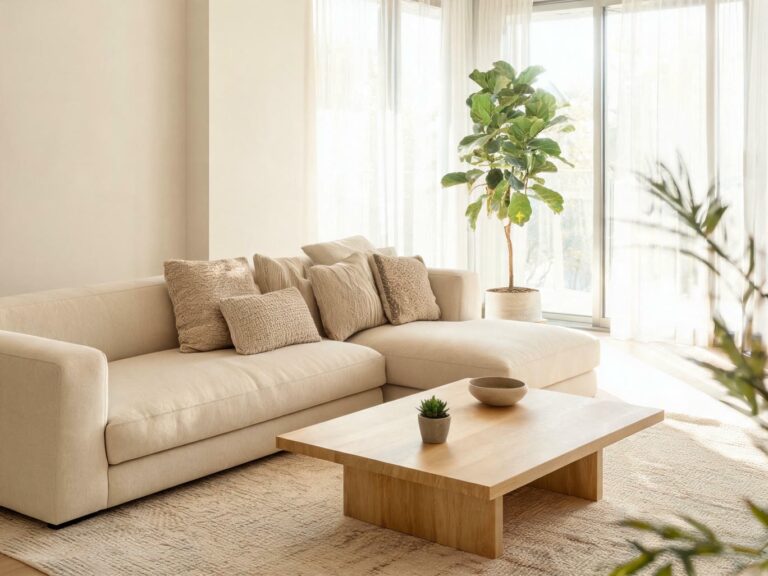
A marina operator in Florida ordered forty lounge chairs for his dock in the same week — twenty from one vendor, twenty from another. The fabric swatches looked identical under showroom lighting. Eighteen months later, one set had bleached to pastel and cracked along the seat seams; the other still looked new enough to photograph for his website.
Same sun, same salt air, same foot traffic. The difference wasn’t the stitching or the frame — it was that one supplier spec’d UV protection fabrics on two numbers instead of one. Most buyers never learn there are two, and that gap is where outdoor upholstery budgets quietly die.
The Two Meanings of UV Protection Fabrics — and Why Mixing Them Up Costs Money
“UV protection” answers two different questions, and a spec sheet that confuses them protects neither. The first question: how much UV passes through the fabric to whatever sits beneath it — skin on a sling chair, a cushion below an awning. That’s the UPF (Ultraviolet Protection Factor) world. The second question: how long the fabric itself survives UV exposure before fading, embrittlement and tensile loss take it out of service. That’s the accelerated-weathering world — QUV hours, ASTM G154.
The stakes are bigger than most quotes suggest. Industry testing found that most fabrics lose roughly 50% of their tensile strength after just 500 hours of UV exposure if they aren’t engineered to resist it. A cushion in direct Arizona sun accumulates 3,000+ UV hours per year, and even the Pacific Northwest logs 1,500 to 2,000 hours annually. Do the regional math before you accept a swatch that “looks fine on the patio.”
What UPF 50+ Actually Guarantees for Canopies and Shade Seating
UPF is the skin-protection side of the spec. A UPF 50 rating allows only 1/50th of incident UV — about 2% — to pass through the textile, blocking 98% of total radiation, with rating classes governed by protocols like AS/NZS 4399. For a shade sail, umbrella or canopy over commercial seating, this is the number that matters: it’s a transmission guarantee, measured on the tested textile rather than the fiber named on a sample card.
Two nuances catch buyers out. First, UPF describes the fabric as tested — coatings, finishes and wear change it, so a rating without a dated test report is a hope, not a spec. Second, reflected UV is real: in dense urban settings, glass towers bounce radiation onto the underside of furniture that standard labels never account for. We’ve had hospitality clients in high-rise districts treat underside exposure as seriously as top-side sun after seeing exactly that failure mode.

Both spec sheets live in the lab: transmission testing for UPF, accelerated weathering for QUV hours.
The Other Spec Sheet: How a UV-Resistant Fabric Survives Itself
The marina’s bleached chairs failed on the second spec — the one nobody printed. Standard outdoor polyester loses significant color saturation within 12 to 24 months of direct sun because UV breaks the chemical bonds between surface dye and fiber. The fix in woven goods is solution-dyeing pigment into the fiber; the fix in coated materials is chemistry that doesn’t degrade on the same pathway at all.
This is where silicone-coated material earns its place in the outdoor conversation. Our marine-grade fabric holds 1,500+ hours of QUV accelerated weathering (ASTM G154) with no degradation. Field data backs the lab number: material installed across Southeast Asia, the Middle East and the Caribbean has passed five-plus years outdoors with tensile strength retained within 10% and zero hydrolysis failures. Light fastness runs Class 4.5 under ISO 105-B06, which is why the second set of lounge chairs still photographed well in year two.

Weathering is a package deal: UV stability, water repellency and flex life are certified together on the same lot.
Outdoor UV resistance, demonstrated: what 1,500+ QUV hours looks like when the polymer itself refuses to break down.
Field Numbers: What Five Years of Marina Sun Does to a Seat
Translate the lab numbers into procurement terms and the picture sharpens. A UPF 50+ canopy with weak weatherability replaces its cover every two seasons; a weatherable substrate under it outlasts the furniture frame. When we spec marine and outdoor seating applications, the table below is the entire conversation — four lines that separate a five-year install from an eighteen-month regret:
| Spec Line | What It Measures | Test Standard | Number to Demand |
|---|---|---|---|
| UPF rating (shade fabrics) | UV transmission through the textile | AS/NZS 4399 | UPF 50+ (≥98% blocked) |
| QUV weathering (fabric itself) | Fade, embrittlement, degradation | ASTM G154 | 1,500+ hrs, no degradation |
| Light fastness | Color stability under sun | ISO 105-B06 / B02 | Class 4.5 / Grade 4–5 |
| Tensile retention (field) | Real-world strength after years outdoors | Field validation + ISO 3376 | ≥90% after 5+ years |
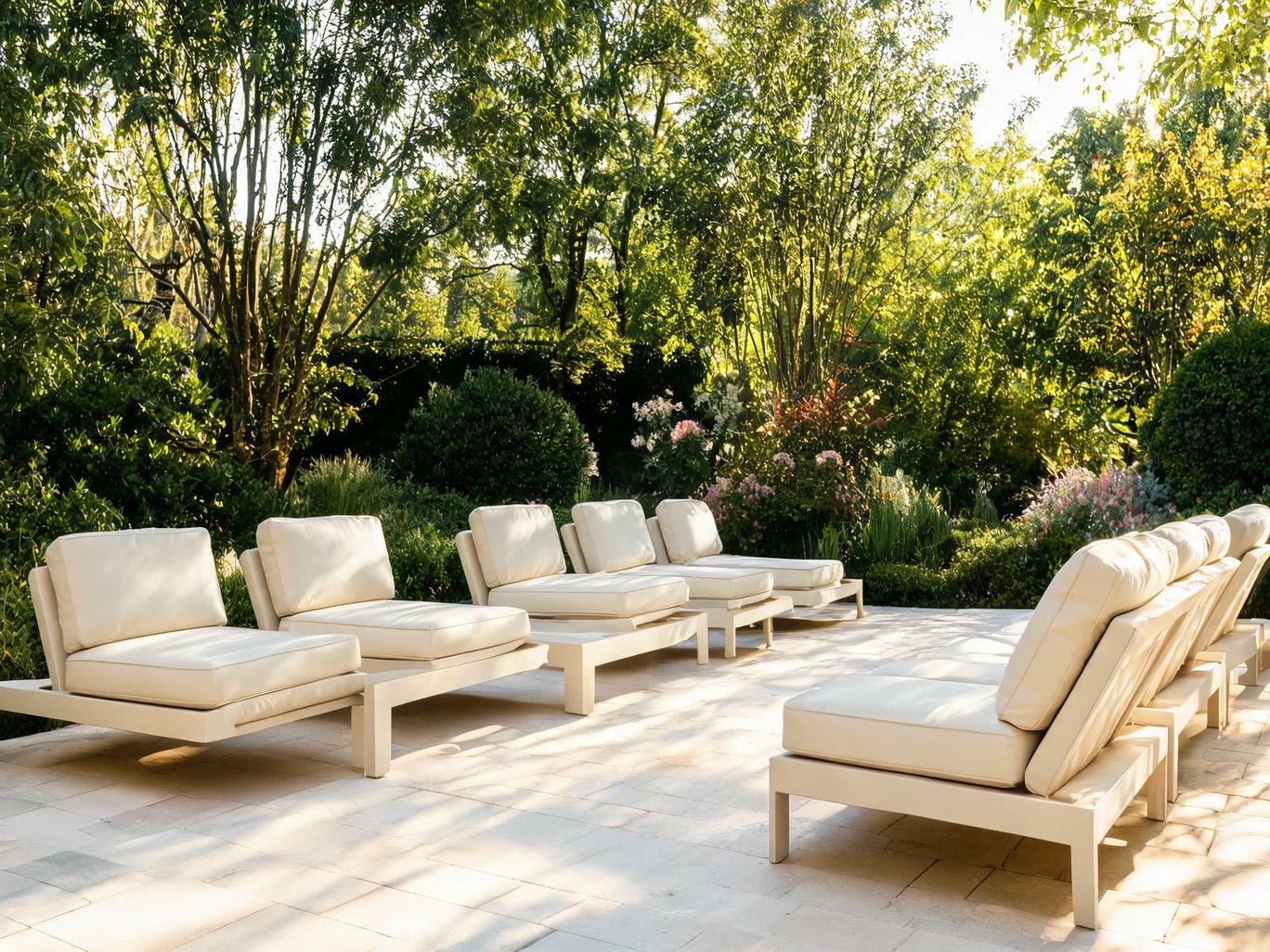
Patio and dock seating live at the intersection of both specs: shade for guests, survivability for the fabric.
Maintenance plays a supporting role, not a leading one — no cleaning schedule rescues a polymer that UV has already embrittled. That said, a realistic cleaning and maintenance routine protects surface treatments and keeps warranties intact. For buyers mapping full seating programs for docks, decks and terraces, the marine and outdoor applications page consolidates the salt-spray, UV and flex data in one place.
Our production team puts it bluntly: sunlight is a test you can’t opt out of, only pre-qualify for. Every roll we ship carries both spec lines on its test report, and as a silicone leather manufacturer, we treat the 1,500-hour figure as a floor rather than a headline.
About TOPSUN
TOPSUN manufactures silicone-coated UV protection fabrics for marine, patio, RV and outdoor furniture programs, with dock-side performance validated across three continents and more than five years of continuous exposure.
Programs run on 1,500+ QUV hours (ASTM G154), Class 4.5 light fastness, 1,000+ hour salt-spray resistance and 200,000-cycle Martindale abrasion — documented per lot with verifiable third-party report numbers.
Two numbers, one decision: demand UPF for what sits beneath the fabric and QUV hours for the fabric itself. UV protection fabrics that only carry one spec line are quietly financing your competitor’s five-year install.
Get Weathering-Tested Swatches
References
1. https://globalfabricwholesale.com/best-fabric-outdoor… — Most fabrics lose 50% tensile strength after 500 UV hours; Arizona 3,000+ UV hrs/year (2026)
2. https://patiofurnituresco.com/fr/upf-50-ratings-comm… — UPF 50 blocks ~98% of UV; rating classes per AS/NZS 4399