Silicone textiles occupy a unique position in material science: they are textiles — flexible, drapable, sewable fabrics — but they function as leather, delivering the surface performance, durability, and aesthetics that traditional leather provides. The distinction matters because it changes how specifiers think about material selection. A “leather product” doesn’t require actual leather; it requires a surface that performs like leather. Silicone-coated textiles deliver that performance across seven product categories where traditional leather — whether genuine, PU, or PVC — fails on safety, durability, compliance, or cleanability. Understanding where silicone textiles function as product leather helps B2B specifiers identify migration opportunities they might otherwise miss.
This guide maps the silicone textile application landscape across seven product categories, with performance data showing where coated fabrics outperform traditional leather types.
What Makes a Textile Function as Leather?
A textile becomes “leather” when its surface coating provides four properties that the base fabric alone cannot deliver:
- Surface density: Non-porous surface that repels liquids, resists stains, and prevents particle penetration. The base fabric is porous; the coating makes it impermeable.
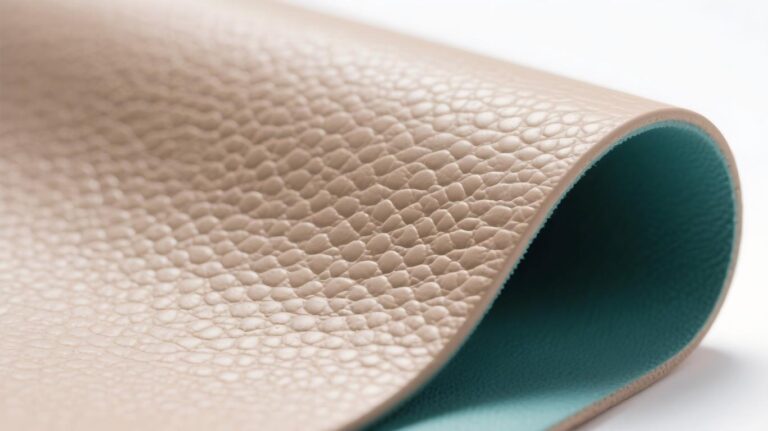
- Aesthetic grain: Embossed texture that mimics natural leather patterns (cowhide, pigskin, sheepskin, or custom designs). Achieved through heated embossing rollers.
- Mechanical resilience: Resistance to abrasion (200,000+ Martindale cycles), scratching (3H pencil hardness), and flexing (100,000+ cycles). The coating provides the surface hardness; the fabric provides the tear strength.
- Chemical inertness: Non-reactive surface that doesn’t leach, off-gas, or absorb contaminants. The coating chemistry determines food-contact and skin-contact safety.
Silicone-coated textiles deliver all four properties while remaining fundamentally textiles — they can be sewn, cut, laminated, and thermoformed using standard textile manufacturing equipment. This is why they’re classified as “textile-based leather” rather than “synthetic leather” in technical specification systems.

Silicone textile surface — the coating creates a leather-like grain while the knit base retains textile flexibility and sewability.
Category 1: Automotive Interior Leather
Automotive interiors represent the largest and fastest-growing application for silicone textiles functioning as leather. The requirements are uniquely demanding: the material must withstand temperature cycling (-40°C to 85°C in-vehicle), UV exposure through windows, repeated flexing at seat seams, and chemical exposure from cleaning products — all while meeting strict VOC and flammability standards.
| Requirement | Standard | Silicone Textile Performance |
|---|---|---|
| Flammability | FMVSS 302 / FMVSS 302 | Pass (self-extinguishing) |
| VOC emission | VDA 277 / VDA 270 | 0 µgC/g; odor rating 1 |
| Temperature cycling | -40°C to 85°C | No cracking or delamination |
| UV resistance | 1,000+ hrs ASTM G154 | No yellowing, no cracking |
| Flex at seams | ISO 5402 | 100,000+ cycles |

Automotive application — silicone textile functioning as seat upholstery leather, meeting OEM interior specifications.
Category 2: Medical and Healthcare Leather
Medical applications require the most stringent safety profile of any leather product category. The surface must be biocompatible, sterilizable, and resistant to 500+ disinfection cycles without surface degradation.
- Certifications required: ISO 10993-5 cytotoxicity, FDA 21 CFR 177.2600 food-contact, OEKO-TEX Class I
- Applications: Examination table upholstery, dental chair surfaces, surgical table pads, hospital bed covers, rehabilitation equipment
- Key advantage: Bleach-safe and alcohol-compatible surface tolerates hospital disinfection protocols that destroy PU and PVC leather surfaces within 50-100 cycles
- Thermal advantage: Temperature tolerance to 250°C enables autoclave-compatible variants for surgical settings
Category 3: Marine and Outdoor Leather
Marine environments combine UV, saltwater, humidity, and mechanical stress — the harshest combination for any surface material. Traditional leather types fail rapidly:
- Salt spray resistance: Silicone textiles withstand 1,000+ hours salt spray (ISO 9227) without surface change. PU leather shows corrosion at 200 hours; PVC at 150 hours.
- UV stability: 1,000+ hours with no yellowing. Marine UV intensity (reflected off water) accelerates PU degradation to 6-8 months.
- Hydrolysis immunity: Silicone’s Si-O-Si backbone doesn’t react with water. Marine humidity (85%+ RH average) causes PU ester bond hydrolysis within 18 months.
- Applications: Yacht upholstery, boat seating, outdoor furniture, marine canopy interiors
Category 4: Infant and Children’s Product Leather
Products that contact infants require the strictest chemical safety certifications. Silicone textiles are the only leather-functional material that meets all requirements simultaneously:
- EN 71 toy safety: No hazardous chemical migration when mouthed/chewed by children
- OEKO-TEX Class I: Tests for 100+ restricted substances at the strictest baby-product level
- ISO 10993-5: Non-toxic to human cells for extended skin contact
- FDA 21 CFR 177.2600: Food-contact safe — important for feeding mats, bibs, and high chair covers
- Applications: Stroller upholstery, baby changing mats, crib bumpers, high chair covers, children’s furniture

Lychee grain texture — embossed pattern on silicone textile surface creates leather-like tactile feedback while maintaining non-toxic composition.
Category 5: Hospitality and Contract Furniture Leather
Hospitality furniture combines high-traffic wear, frequent cleaning, and fire safety requirements. Silicone textiles outperform traditional leather types on all three dimensions:
- Wear resistance: 200,000+ Martindale cycles vs PU’s 25,000-50,000 — 4-8x longer surface life in hotel lobbies, restaurants, and bar seating
- Cleaning compatibility: Water + mild soap only; no solvent cleaners needed. Bleach-safe for sanitary environments.
- Flame retardancy: EN 13773 Class 4 (highest) without chemical additives. PVC achieves flame retardancy via chlorine content but releases toxic HCl smoke. PU requires additive flame retardants.
- Applications: Hotel room furniture, restaurant booths, bar stools, cinema seating, airport terminal seating, co-working space furniture
Category 6: Consumer Electronics Protection Leather
The 3C (computers, communications, consumer electronics) sector uses ultra-thin silicone textiles as protective covers and cases:
- Thickness range: 0.23–0.8mm (Ultra Thin Collection) — wraps phone cases, tablet covers, laptop sleeves without adding bulk
- Key property: Non-slip grip surface that doesn’t collect fingerprints or skin oils
- Drop protection: Elastomeric coating absorbs impact energy that rigid PU/PVC surfaces transmit to the device
- Applications: Phone cases, tablet covers, laptop skins, wearable device straps, headphone covers
Category 7: Wall Decoration and Interior Architecture
Silicone textiles function as architectural leather for wall paneling, acoustic panels, and decorative surfaces in commercial interiors:
- Fire code compliance: EN 13773 Class 4 and FAR 25.853 enable use in aviation cabins, theaters, and public buildings
- Acoustic properties: Textile base absorbs sound; silicone coating controls reflection — ideal for concert halls, recording studios, and theaters
- Maintenance: Wall-mounted panels can be wiped clean without solvents; no repainting or refinishing needed over 10+ year lifespan
- Applications: Hotel wall panels, acoustic theater panels, retail boutique interiors, corporate office feature walls, aviation cabin panels

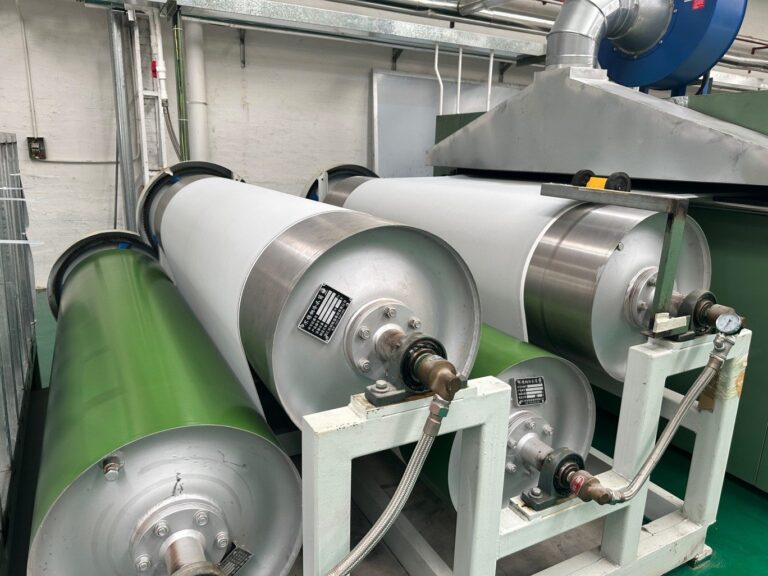
Coating line — silicone elastomer applied to textile substrate, converting a standard fabric into a leather-functional surface.
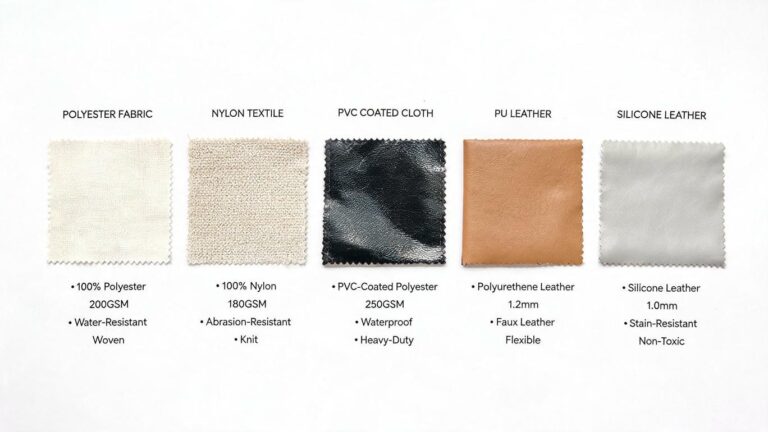
Texture variety — silicone textiles can replicate cowhide, lychee, pigskin, and custom grain patterns across all seven application categories.

Fire safety texture — silicone textile surface self-extinguishes, making it suitable for aviation, hospitality, and public space applications.
About TOPSUN
TOPSUN manufactures silicone-coated textiles that function as leather across all seven product categories. Our product collections include: Classic Collection (0.8-2.0mm for furniture), Ultra Thin Collection (0.23-0.8mm for 3C electronics), Designer Collection (metallic finishes for fashion), High Performance Collection (hospitality and transport), Super Flame Retardant Collection (aviation and public seating), and Silicone PET Leather (wall panels and rigid substrates). With 60,000+ m² of production capacity and 100+ textures available, we supply silicone textiles that function as leather to brands across automotive, medical, marine, infant products, hospitality, consumer electronics, and architectural interiors in 30+ countries.
Specifying Silicone Textiles for Your Product Category
| Application | Recommended Collection | Thickness | Key Cert |
|---|---|---|---|
| Automotive interior | High Performance | 0.8-1.2mm | FMVSS 302, VDA 277 |
| Medical/healthcare | High Performance | 0.8-1.5mm | ISO 10993-5, FDA |
| Marine/outdoor | High Performance | 1.0-2.0mm | ISO 9227 salt spray |
| Infant products | Classic | 0.5-1.0mm | EN 71, OEKO-TEX I |
| 3C electronics | Ultra Thin | 0.23-0.8mm | RoHS, REACH |
| Aviation/public | Super Flame Retardant | 0.8-1.5mm | FAR 25.853, EN 13773 |
| Wall/architecture | Silicone PET | 0.5-1.5mm | EN 13773 Class 4 |
Silicone textiles aren’t replacing leather by pretending to be leather. They’re replacing leather by outperforming it — delivering the surface properties that leather is valued for (durability, aesthetics, cleanability, safety) while eliminating the properties that make traditional leather problematic (chemical off-gassing, cracking, conditioning dependency, and regulatory exposure). When a textile functions as leather, the product benefits from both material categories: the sewability and flexibility of textiles plus the performance and durability of leather.
Specifying silicone textiles for your product category? Request collection-specific spec sheets, certification documentation, and free A4 swatch samples from TOPSUN. Contact info@topsunsiliconeleather.com or WhatsApp +44 744 461 7933.