In a busy outpatient clinic, the infection prevention team flags a recurring problem: the polyurethane upholstery on examination tables is cracking after six months of daily disinfectant wipe-downs. Microbes colonize the hairline fissures, and the surface begins failing biocompatibility re-checks. Procurement is told to find a material that survives thousands of disinfection cycles without degrading — and that is exactly where the silicone leather medical device future begins. What started as a search for tougher upholstery is now pushing silicone leather from passive surfaces toward active, implantable, and wearable medical device roles.
Medical facilities face mounting pressure from hospital-acquired infections (HAIs), tightening reprocessing standards, and longer device lifecycles. For biomedical engineers and compliance managers, the material question is no longer about look and feel — it is about documented biocompatibility, antimicrobial performance, and cleanability under aggressive hospital disinfectants. This article traces how medical-grade silicone leather is evolving from examination table upholstery toward advanced device applications, and what regulatory teams should verify before specifying it.
Request ISO 10993 Test Reports
From Examination Table Upholstery Toward the Silicone Leather Medical Device Future
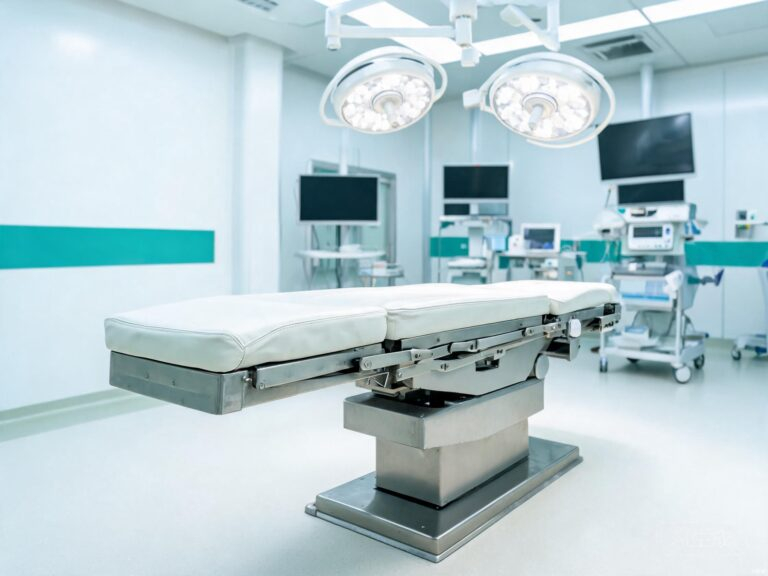
Walk through any large hospital and silicone leather is already quietly at work. It covers examination tables in urgent care bays, lines wheelchair cushions on rehabilitation wards, and wraps dental chair backrests where patients sit for hours. In each scenario the demand is identical: a surface that patients touch directly, that staff wipe dozens of times per shift, and that must not harbor pathogens between patients.
Traditional polyurethane upholstery was designed for comfort and cost, not for repeated chemical assault. Within a year of bleach and quaternary ammonium wipe-downs, PU coatings embrittle, micro-crack, and delaminate. Those cracks become microbial reservoirs that no wipe can reach — a direct contributor to environmental transmission of HAIs. Silicone leather, by contrast, is a non-porous, crosslinked elastomer that resists both the disinfectant chemistry and the mechanical abrasion of daily cleaning. That is why facilities are rethinking the entire surface specification, not just swapping fabrics. The evolution underway in medical silicone applications is pushing these surfaces toward device-grade performance.

Medical-grade silicone leather on an examination surface — non-porous and disinfectant-ready for high-turnover clinical environments.
Why ISO 10993 Biocompatibility Sets the Medical-Grade Benchmark
When a biomedical engineering team evaluates any patient-contact material, the first checkpoint is ISO 10993 — the international standard for the biological evaluation of medical devices. Silicone leather intended for clinical use must clear the same biological endpoints as device housings and patient-contact components, not just furniture flammability standards.
ISO 10993 is not a single test. For a surface that touches intact skin, the relevant endpoints typically include cytotoxicity (ISO 10993-5), sensitization and irritation (ISO 10993-10), and chemical characterization of extractables (ISO 10993-18). For prolonged or mucosal contact, the evaluation extends to systemic toxicity and material-mediated pyrogenicity. The scenario compliance teams fear is a “medical-looking” upholstery that carries no biological evaluation data at all — a gap that surfaces during a Notified Body audit or a 510(k) predicate review. Detailed guidance on these endpoints is covered in our breakdown of medical-grade silicone leather and ISO 10993.

Tensile strength testing verifies that the silicone coating and fabric backing maintain integrity under the mechanical stress of repeated clinical use.
The table below contrasts how traditional PU upholstery and medical-grade silicone leather meet each property requirement a clinical environment demands:
| Property | Requirement | Traditional PU | Silicone Leather |
|---|---|---|---|
| Biocompatibility (ISO 10993) | Cytotoxicity, sensitization, irritation cleared | Rarely evaluated; plasticizer migration risk | Passes ISO 10993-5/-10; documented evaluation |
| Disinfectant Resistance | Withstands repeated bleach / quat / IPA cycles | Cracks and embrittles within months | Stable after 10,000+ wipe cycles |
| Microbial Growth | Non-supportive surface; no colonization in fissures | Micro-cracks harbor bacteria | Non-porous; no microbial reservoirs |
| Skin Contact Safety | No sensitizing plasticizers or residual solvents | Phthalates, DMF residuals possible | Platinum-cured; no plasticizers, no DMF |
| Cleaning Frequency | Tolerates per-patient disinfection, all shifts | Degrades with high-frequency cleaning | Maintains integrity under continuous reprocessing |
Antimicrobial Performance and Resistance to Hospital Disinfectants
The environmental services (EVS) team in a 400-bed hospital runs a brutal test on every new surface: they subject it to the full disinfectant rotation — sodium hypochlorite, quaternary ammonium compounds, and 70% isopropyl alcohol — applied at the frequency required between patients. Only a material that survives this rotation over a realistic lifecycle is worth specifying.
Silicone’s crosslinked polymer network is chemically inert to the oxidizing and alcohol-based chemistries that destroy PU. Because there are no plasticizers to leach and no urethane bonds to hydrolyze, the surface does not embrittle, discolor, or lose tensile strength after thousands of wipes. Independent antimicrobial testing further shows that silicone surfaces do not support bacterial or fungal colonization the way micro-cracked PU does — a property explored in depth in our coverage of antibacterial silicone leather technology.

Scratch resistance testing confirms the surface will not develop the micro-fissures that turn upholstery into a microbial reservoir.
Compliance tip: Ask any supplier for disinfectant-compatibility data expressed in wipe cycles, not just a “resistant to bleach” claim. A claim means little without a documented test protocol and a named chemistry list.
Watch how TOPSUN’s medical-grade silicone leather withstands repeated disinfection while keeping its surface intact.
The Road to Implantable and Wearable Medical Device Applications
The deeper story is that silicone leather is crossing a boundary that upholstery never could: the line between a passive surface and a medical device component. Silicone elastomers already have a decades-long, regulator-accepted track record inside the body — in cardiac leads, mammary implants, and long-term indwelling catheters. That established implant pedigree is what makes the jump from examination table covering to device-grade material credible rather than speculative.
Near-term, the growth is in skin-contact wearables: continuous glucose monitor patches, ECG electrode bands, and wearable infusion sets where a soft, hypoallergenic surface that survives skin oils and sweat for 7–14 days is essential. Further out, research is exploring silicone composites for short-term implantable covers and tissue-contact scaffolds, where long-term ISO 10993 testing and extractables control define the requirement. For suppliers, the materials and documentation that serve upholstery today must scale toward device-grade traceability tomorrow.
This is why the distinction between medical-grade silicone leather and ordinary upholstery matters: a material that may one day sit against a patient’s skin must be qualified against biological endpoints from day one — not retrofitted after clinical use.
How Compliance Teams Should Prepare for the Silicone Leather Medical Device Future
For regulatory and procurement teams, the shift to device-grade material changes what a supplier file must contain. A data sheet is no longer enough. Compliance teams should expect biological evaluation reports under ISO 10993, disinfectant-compatibility protocols tied to named chemistries and cycle counts, extractables data, and change-control commitments that prevent silent reformulation.
Because the material may move from non-contact upholstery into patient-contact or implantable territory over its lifecycle, early supplier qualification should follow medical-device logic, not furniture logic. That means audits against medical quality systems (ISO 13485), raw-material traceability, and Master File or DMF-style documentation where warranted. Teams that build this documentation in at the upholstery stage avoid costly re-qualification when the same material is later proposed for a wearable or device component.
The trajectory is unmistakable: silicone leather is moving from the examination table toward the device itself, driven by biocompatibility, antimicrobial performance, and disinfectant durability that traditional synthetics cannot match. For manufacturers and healthcare systems planning multi-year material strategies, the silicone leather medical device future is not a distant prospect — it is a compliance decision that should be made, and documented, today.
Download Medical Compliance Datasheet
Frequently Asked Questions
Is silicone leather biocompatible enough for medical devices?
Medical-grade silicone leather is evaluated against ISO 10993 endpoints — typically cytotoxicity (Part 5), sensitization and irritation (Part 10), and extractables characterization (Part 18) for skin-contact use. It is not automatically “implant-grade,” but it carries the biological evaluation data that PU upholstery almost never does, making it a credible substrate for device-adjacent and skin-contact applications.
Can silicone leather withstand hospital-grade disinfectants long-term?
Yes. Its platinum-cured, crosslinked network is chemically inert to sodium hypochlorite, quaternary ammonium compounds, and isopropyl alcohol. Because it contains no plasticizers to leach and no hydrolyzable urethane bonds, it resists embrittlement and cracking across thousands of wipe cycles, unlike PU which typically degrades within months.
What ISO 10993 tests should medical-grade silicone leather pass?
For intact-skin contact, expect ISO 10993-5 (cytotoxicity), ISO 10993-10 (sensitization and irritation), and ISO 10993-18 (chemical characterization of extractables). Prolonged or mucosal contact adds systemic toxicity and material-mediated pyrogenicity endpoints. Always request the full biological evaluation report, not just a pass/fail certificate.
About TOPSUN
TOPSUN manufactures medical-grade silicone leather engineered to clear ISO 10993 biological evaluation endpoints, survive thousands of hospital disinfectant cycles, and carry the traceability documentation that biomedical and compliance teams require — supplying examination tables, wheelchair cushions, and skin-contact wearable surfaces from a single controlled material platform.
ISO 10993 biocompatibility tested · Disinfectant-compatibility documented · Platinum-cured, plasticizer-free · ISO 13485-aligned quality system