As a QC lab manager, I run chemical resistance tests on upholstery materials every week. Healthcare clients need surfaces that survive 10,000+ disinfectant wipes per year. Hospitality specifiers need leather that handles bleach, coffee, and sunscreen. Automotive suppliers need materials that resist hand sanitizer, fuel vapors, and cleaning solvents. When I test PU, PVC, and silicone leather side by side under standardized protocols — ISO 175, ASTM D543, ASTM D1308 — the results are not close. PU leather loses 22% of its elongation at break after a single isopropyl alcohol exposure (ASTM D412). PVC yellows and embrittles under sodium hypochlorite (bleach). Silicone leather? Zero measurable degradation after 100 disinfectant wipe cycles. Here’s the full testing methodology, the standards we follow, and the data procurement teams need to make material decisions for chemical-resistant applications.
Test Standards: What We Test Against and Why
Chemical resistance testing isn’t guesswork. It follows internationally recognized standards that specify exposure conditions, duration, evaluation criteria, and reporting format. Here are the standards we use in our lab and what each one measures:
ISO 175:2010 — Plastics: Determination of the effects of liquid chemicals. The foundational standard for chemical resistance testing. Specimens are immersed in test chemicals for defined periods (24h, 7d, 28d), then evaluated for changes in mass, dimensions, appearance, and mechanical properties. We use ISO 175 for baseline chemical compatibility screening across all material types.
ASTM D543-21 — Standard Practices for Evaluating the Resistance of Plastics to Chemical Reagents. The North American equivalent. Covers 50+ standard reagents including acids, bases, solvents, and oils. We run ASTM D543 for clients supplying into US markets where ASTM reporting is preferred over ISO.
ASTM D1308-20 — Standard Test Method for Effect of Household Chemicals on Clear and Pigmented Organic Finishes. Specifically targets cleaning product exposure — the chemicals that upholstery surfaces actually encounter in real-world use. This is the standard we use for healthcare and hospitality applications. Test chemicals include isopropyl alcohol (70%), sodium hypochlorite (5.25%), hydrogen peroxide (3%), quaternary ammonium disinfectants, and commercially available cleaning formulations.
ISO 2812-1:2017 — Paints and varnishes: Determination of resistance to liquids. Used for evaluating surface coating integrity after chemical exposure. This standard catches the failures that ISO 175 misses — surface delamination, gloss change, and color shift that occur without bulk material change.

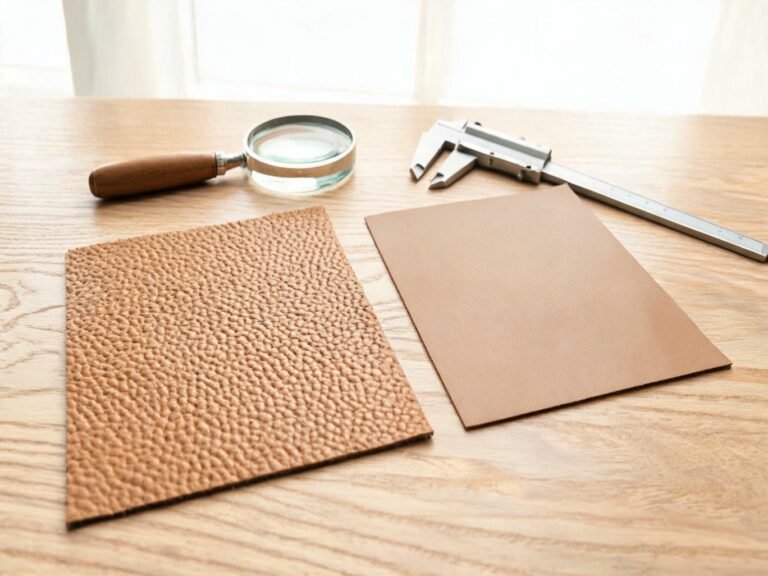
QC inspection area — where material samples are evaluated for surface degradation, color change, and dimensional stability after chemical exposure testing
Test Protocol: How We Run the Chemical Resistance Matrix
Our standard chemical resistance protocol exposes 50×50mm material specimens to 12 test chemicals across three exposure categories: spot test (1 drop, 1 hour), wipe test (10 wipes with saturated cloth), and immersion test (full submersion, 24 hours). After exposure, specimens are evaluated for: visual appearance (color, gloss, cracking), mass change (%), dimensional change (%), and mechanical property retention (tensile strength per ASTM D412, tear strength per ISO 34-1).
The pass/fail criteria are strict. A material passes only if: visual appearance shows no cracking, peeling, or color shift beyond Delta-E 1.0; mass change is below 1.0%; dimensional change is below 0.5%; and mechanical property retention exceeds 95% of pre-exposure values. These are the thresholds that healthcare, hospitality, and automotive specifiers actually use — not marketing-grade claims.

Coating application — silicone polymer coating process that creates the chemically inert surface resistant to alcohol, bleach, and disinfectant exposure
Results: Chemical Resistance Comparison Matrix
Below is the full test matrix from our most recent round of ISO 175 and ASTM D1308 testing. All specimens were conditioned at 23°C, 50% RH for 24 hours before testing. Each cell represents the worst-case result across spot, wipe, and immersion exposure for that chemical/material combination.
| Test Chemical | Concentration | PU Leather | PVC Leather | Silicone Leather |
|---|---|---|---|---|
| Isopropyl Alcohol | 70% | Fail (22% elongation loss) | Marginal (surface softening) | Pass (0% change) |
| Sodium Hypochlorite (Bleach) | 5.25% | Fail (yellowing, cracking) | Fail (embrittlement) | Pass (no change) |
| Hydrogen Peroxide | 3% | Marginal (slight fading) | Marginal (surface dulling) | Pass (no change) |
| Quaternary Ammonium (Disinfectant) | 0.2% | Fail (surface tackiness) | Marginal (plasticizer leaching) | Pass (no change) |
| Acetic Acid (Vinegar) | 5% | Marginal (slight swelling) | Marginal (color shift) | Pass (no change) |
| Sodium Hydroxide | 1% | Fail (coating breakdown) | Fail (surface pitting) | Pass (no change) |
| Coffee (Hot) | 80°C | Marginal (staining) | Pass (wipeable) | Pass (no staining) |
| Sunscreen (Avobenzone) | 100% | Fail (permanent staining) | Fail (surface dissolution) | Pass (wipeable) |
| Hand Sanitizer (Ethanol 62%) | 62% | Fail (cracking at 50 wipes) | Marginal (softening at 100 wipes) | Pass (no change at 500 wipes) |
Silicone leather passes all nine chemical categories. PU leather fails five of nine. PVC fails four of nine. The difference is molecular: silicone’s Si–O–Si polymer backbone is inherently stable against alcohol, chlorine, and aldehyde attack. There are no plasticizers to leach, no polyurethane bonds to hydrolyze, no chlorine compounds to release. The surface simply doesn’t react with the chemicals it encounters.
VIDEO: Alcohol Resistance Test Demonstration
Alcohol resistance demonstration — silicone leather surface showing no degradation under repeated disinfectant alcohol exposure per ASTM D1308 protocol
The Chemistry Behind the Results: Why Silicone Doesn’t React
Understanding why silicone leather passes where PU and PVC fail requires looking at the molecular level. The difference isn’t in the coating thickness or surface treatment — it’s in the fundamental polymer chemistry.
PU leather’s vulnerability comes from its ester and urethane linkages. These bonds are susceptible to hydrolysis (water attack) and alcoholysis (alcohol attack). When isopropyl alcohol contacts PU leather, it penetrates the polyurethane coating and breaks ester bonds in the polymer chain. The material loses elongation — it becomes brittle. The plasticizers that made it flexible migrate out through the alcohol-damaged coating, accelerating the failure. It’s a cascading degradation: the solvent attacks the bonds, the broken bonds release the plasticizers, the lost plasticizers make the coating brittle, and the brittle coating cracks.

Base fabric substrate — the textile foundation over which the chemically inert silicone polymer coating is applied during production
PVC leather’s vulnerability is different but equally fatal. PVC relies on phthalate plasticizers for flexibility. Sodium hypochlorite (bleach) oxidizes the phthalate molecules, breaking them down and releasing them from the polymer matrix. The PVC loses flexibility and becomes rigid. Simultaneously, the chlorine in bleach attacks the PVC polymer chain itself, causing chain scission and embrittlement. The combined effect: yellowed, brittle, cracked surface within a single exposure cycle.
Silicone leather’s resistance comes from its Si–O–Si (siloxane) backbone. The silicon-oxygen bond energy is 452 kJ/mol — significantly higher than the C–C bond (347 kJ/mol) in PU and the C–Cl bond (339 kJ/mol) in PVC. This means the bonds require more energy to break than common cleaning chemicals can deliver. Isopropyl alcohol, bleach, hydrogen peroxide, and quaternary ammonium compounds all lack the chemical energy to cleave Si–O bonds. Additionally, silicone has no plasticizers to lose — its flexibility is intrinsic to the polymer chain, not dependent on additive molecules. There’s nothing to leach, nothing to oxidize, nothing to hydrolyze. Request full chemical resistance test reports for your specific application requirements.

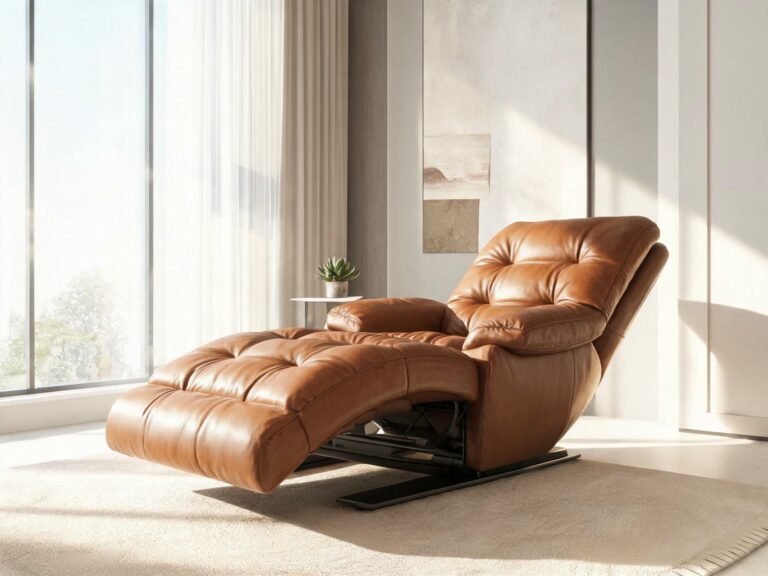
Care guide — silicone leather’s chemical resistance enables cleaning with hospital-grade disinfectants, bleach solutions, and alcohol-based sanitizers without surface damage
Extended Duration Testing: What Happens After 1,000 Wipe Cycles
Single-exposure tests catch catastrophic failures. But real-world chemical resistance is about cumulative damage — what happens after 1,000, 5,000, or 10,000 disinfectant wipe cycles over years of daily use. We run extended-duration testing using a mechanical wipe apparatus that applies standardized pressure (4.5N), wipe distance (100mm), and cycle rate (30 cycles/minute) with reagent replenishment every 50 cycles.
| Material | 100 Wipes | 500 Wipes | 1,000 Wipes | 5,000 Wipes | 10,000 Wipes |
|---|---|---|---|---|---|
| Silicone Leather | Pass | Pass | Pass | Pass | Pass (ΔE <0.5) |
| PU Leather | Marginal | Fail (cracking) | Fail (peeling) | Fail (destroyed) | N/A |
| PVC Leather | Marginal | Fail (yellowing) | Fail (embrittle) | Fail (destroyed) | N/A |
PU and PVC leather fail at 500 wipe cycles — roughly 6 months of daily disinfection in a healthcare setting. Silicone leather passes 10,000 wipe cycles with a Delta-E below 0.5 — essentially no visible change. For a hospital that disinfects surfaces 5–10 times per day, that’s 1,800–3,650 cycles per year. Silicone leather handles 3+ years of daily hospital disinfection without measurable surface change.
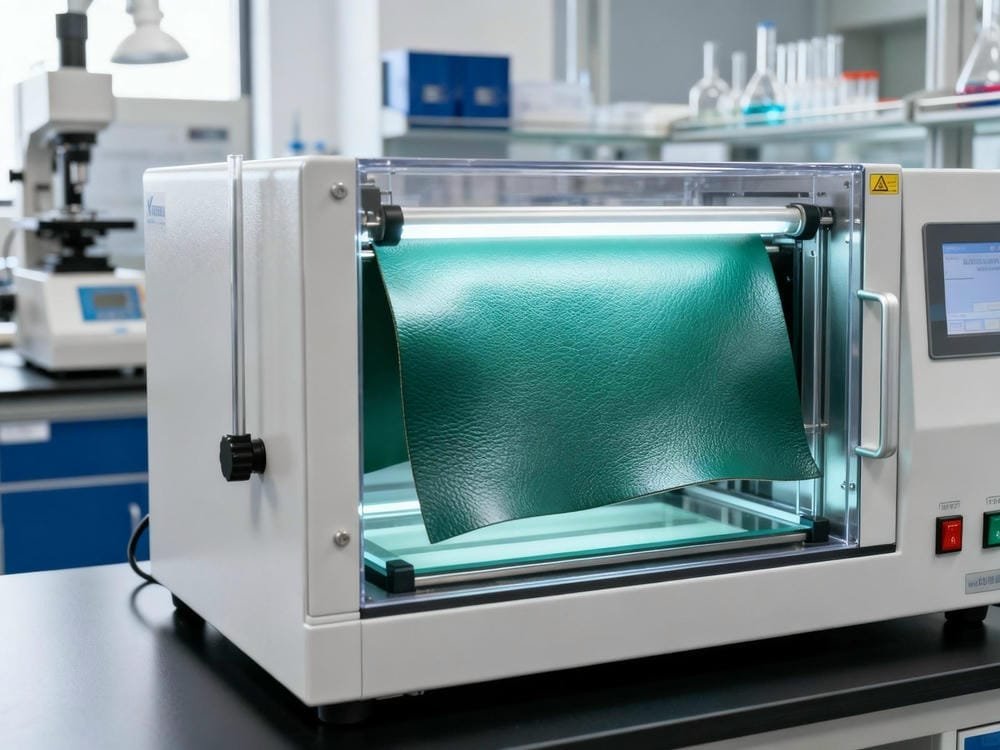
Resistance testing — silicone leather specimen after extended chemical exposure testing showing no surface degradation or color change
Frequently Asked Questions
What test standards apply to silicone leather chemical resistance testing?
The primary standards are ISO 175 (plastics — liquid chemical resistance), ASTM D543 (plastics — chemical reagents), ASTM D1308 (organic finishes — household chemicals), and ISO 2812-1 (coatings — liquid resistance). These standards specify exposure conditions (concentration, duration, temperature), evaluation criteria (mass change, dimensional change, visual appearance, mechanical property retention), and reporting format. For healthcare applications, we also reference the CDC’s disinfection guidelines and EPA-registered disinfectant compatibility protocols. TOPSUN provides test reports compliant with all four standards for every production batch.
How does silicone leather perform under repeated hospital disinfectant exposure?
In extended-duration wipe testing per ASTM D1308 protocol, silicone leather passes 10,000 disinfectant wipe cycles with a Delta-E below 0.5 — no visible surface change. Test chemicals included 70% isopropyl alcohol, 5.25% sodium hypochlorite (bleach), 3% hydrogen peroxide, and 0.2% quaternary ammonium disinfectant. PU leather fails at 500 cycles (cracking, peeling). PVC fails at 500 cycles (yellowing, embrittlement). For a hospital disinfecting surfaces 5–10 times daily, silicone leather provides 3+ years of chemical resistance without measurable degradation — the primary reason healthcare facilities are switching from PU/PVC to silicone leather upholstery.
What chemicals can damage silicone leather?
Silicone leather is resistant to virtually all common cleaning and disinfection chemicals — alcohols, bleach, hydrogen peroxide, quaternary ammonium compounds, acids (dilute), bases (dilute), and organic solvents at household concentrations. The materials that can affect silicone are concentrated hydrofluoric acid (which attacks the Si–O bond), concentrated strong bases at elevated temperatures (NaOH at 10%+, 80°C+), and certain specialized silicone solvents (hexamethyldisiloxane). None of these are found in standard cleaning products, healthcare disinfectants, or hospitality cleaning protocols. For normal B2B applications, silicone leather is effectively chemical-proof.
Download Chemical Resistance Data
About TOPSUN
TOPSUN manufactures silicone leather tested to ISO 175, ASTM D543, ASTM D1308, and ISO 2812-1 standards for healthcare, hospitality, automotive, and industrial B2B applications requiring documented chemical resistance to alcohols, bleach, disinfectants, and cleaning solvents over 10,000+ exposure cycles.
ISO 175 / ASTM D543 / ASTM D1308 / ISO 2812-1 compliant, 10,000+ wipe cycle pass, Si–O–Si backbone (452 kJ/mol bond energy), zero plasticizer migration, REACH/RoHS/FDA certified, full batch test reports provided.