When a hospital procurement team evaluates rehabilitation equipment leather, the conversation no longer starts with aesthetics or price. It starts with a single question from the infection control committee: “Can this surface survive daily bleach disinfection without degrading?” If the answer is no, the material never reaches the shortlist — regardless of how premium it looks or how competitive the quote is.
The rehabilitation equipment market is expanding fast — projected to grow from $16.9 billion in 2024 to $27.3 billion by 2030 at an 8.3% CAGR, driven by aging populations, post-surgical recovery demand, and robotic rehabilitation systems. Every therapy table, wheelchair, exam chair, and mobility aid in that pipeline needs upholstery that meets clinical-grade hygiene, durability, and biocompatibility standards simultaneously.
China’s new GB/T 46489-2025 standard for hospital furniture has crystallized what was previously informal guidance: antibacterial materials must achieve ≥90% bacterial inhibition rate, and textile-fabric seating is explicitly discouraged in clinical settings. For procurement teams sourcing rehabilitation equipment leather, this raises the floor — and most conventional PU and PVC upholstery can’t clear it.
Key Takeaway: Hospital-grade rehabilitation equipment leather must now clear 6 simultaneous compliance barriers: antibacterial efficacy (≥90%), ISO 10993 biocompatibility, bleach-compatible cleanability, BS 5852/CAL TB 117 fire safety, 150K+ Martindale abrasion cycles, and zero-VOC emissions. This article breaks down each spec with test data and procurement criteria.
Why Hospital Furniture Standards Now Reject Textile Upholstery
The APSIC 2025 guidelines for environmental hygiene in hospitals state that patient-contact surfaces should be “smooth, nonporous, seamless, and unable to support microbial viability.” Fabric upholstery — even tightly woven polyester — fails this test because its fiber structure creates micro-pockets where bacteria colonize and resist disinfectant penetration.
This is why GB/T 46489-2025 specifies that chair seats in outpatient departments, wards, and medical technology areas should not use textile fabrics. The standard mandates antibacterial materials with inhibition rates of 90% or higher. For rehabilitation equipment specifically — where patients in weakened immune states sit, lie, and grip surfaces for extended therapy sessions — the risk of cross-contamination through upholstery is not theoretical. It’s a documented infection vector.
Conventional PU leather, the most common upholstery in rehab equipment today, has a critical weakness: its plasticizer migration creates surface micro-cracks within 12-18 months of clinical use. These cracks harbor pathogens that survive standard wipe-down protocols. A study cited by INTCO Medical reported that 52% of wheelchair users experience at least one equipment failure per year — and surface degradation is a leading contributor.
Medical-grade silicone leather offers a fundamentally different surface chemistry. It contains no plasticizers, no phthalates, and no PVC — eliminating the migration and cracking cycle. Its non-porous silicone surface achieves the smooth, seamless profile that APSIC guidelines require, while its inherent material properties provide antibacterial performance without relying on topical coatings that wear off.

The 6 Infection-Control Specs That Determine Procurement Approval
When a healthcare facility’s procurement committee reviews antimicrobial upholstery for medical furniture, they evaluate six specifications simultaneously. Failing any one creates a compliance gap that infection control officers will flag. Here’s what each spec means and what the threshold actually is:
| Spec | Standard / Test Method | Threshold for Approval |
|---|---|---|
| 1. Antibacterial Efficacy | ISO 22196 / ISO 20743 | ≥90% reduction (GB/T 46489-2025); premium silicone achieves 99.9% |
| 2. Biocompatibility | ISO 10993-5 (cytotoxicity), ISO 10993-10 (sensitization/irritation) | Cytotoxicity: Level 1; Sensitization: Level 0; Irritation: Level 0 |
| 3. Chemical Disinfection Compatibility | EPA-registered hospital disinfectants; bleach 5.25% | No surface degradation after 500+ disinfection cycles |
| 4. Fire Safety | CAL TB 117-2013; BS 5852 Crib 5; 16 CFR Part 1640 | Char length ≤178mm (TB 117); self-extinguish ≤120s (BS 5852) |
| 5. Abrasion Resistance | Martindale (ISO 17076-2); Taber CS-10, 1000g | ≥150,000 cycles (clinical minimum); 200K+ for high-traffic rehab |
| 6. VOC Emissions | REACH SVHC 181; RoHS 2.0; Prop 65 | Zero plasticizers, zero formaldehyde, negligible VOCs |
The silver-ion antimicrobial treatments used in some healthcare textiles can achieve 99.9% reduction per ISO 22196 — but Healthy Interiors criteria explicitly prohibit triclosan and triclocarban as antimicrobial agents. Procurement teams must verify not just the efficacy rate but the specific active agent, because banned substances create a separate compliance failure even when the kill rate looks impressive on paper.
Silicone leather meets the antibacterial threshold through material chemistry rather than topical additives. The non-porous silicone surface inherently resists bacterial adhesion and biofilm formation — meaning the antibacterial performance doesn’t degrade over time the way coated treatments do. For rehab equipment expected to serve 7-10 years in clinical rotation, this distinction matters.

Bleach, Alcohol, and UV: Which Disinfection Methods Your Leather Survives
The most overlooked procurement filter for cleanable leather for healthcare equipment is disinfectant compatibility. A material can pass every ISO test and still fail in the field if it degrades under the specific chemicals your environmental services team actually uses.
The EPA maintains a public database of registered hospital disinfectants, and the most common products in clinical rotation include 5.25% sodium hypochlorite (bleach) solutions like Activate Institutional Bleach and Micro-Kill Bleach Germicidal Wipes — both with defined 2-minute contact times for killing MRSA, HIV-1, HBV, and Pseudomonas aeruginosa. These are aggressive oxidizers. On conventional PU leather, repeated bleach exposure breaks down the polyurethane coating within 6-12 months, causing cracking, stiffening, and surface flaking — which then creates the very microbial harborage sites that infection control teams are trying to prevent.
Silicone leather responds differently. The silicone polymer backbone is chemically inert to sodium hypochlorite, isopropyl alcohol (60-90% v/v), and hydrogen peroxide solutions. In lab testing, silicone leather surfaces showed no visible degradation, color shift, or tensile strength loss after simulated 500-cycle disinfection protocols using EPA-registered bleach wipes. The material also withstands UV-C disinfection — increasingly used as a secondary terminal cleaning method in rehabilitation wards — without the UV-induced embrittlement that affects PVC and vinyl upholstery.
Procurement Alert: Always request disinfectant compatibility data specific to the chemicals used in your facility — not generic “wipe-clean” claims. The EPA protocol 810.2400 covers soft-surface disinfectant efficacy testing for textiles, but coated fabric suppliers must provide their own material compatibility documentation. If a supplier cannot produce this data, treat it as a compliance gap.
For rehabilitation facilities specifically, the ACT Coated Fabric Testing Guide for Healthcare Upholstered Seating recommends a minimum 5-week accelerated wear protocol that simulates real-world disinfection exposure. This is the benchmark procurement teams should reference when evaluating supplier claims — not the single-exposure spot tests that some suppliers present as evidence of chemical resistance.

ISO 10993 Biocompatibility: What Skin-Contact Testing Really Means
Rehabilitation equipment puts patients in prolonged skin contact with upholstery surfaces. Therapy sessions can last 45-90 minutes. Patients with compromised skin integrity, post-surgical wounds, or sensory processing conditions need materials that have been actually tested for biological safety — not merely assumed safe because they’re “synthetic.”
The ISO 10993 series is the globally recognized framework for evaluating the biological safety of medical device materials. ISO 10993-1:2018 establishes a risk-based assessment approach, but the three tests that matter most for rehabilitation equipment upholstery are:
- ISO 10993-5:2009 — Cytotoxicity: Tests whether material extracts cause cell death in vitro. TOPSUN silicone leather achieves Level 1 (the safest rating), confirming no toxic leachables from prolonged skin contact.
- ISO 10993-10:2010 — Skin Sensitization: Evaluates allergic response potential. Level 0 means zero sensitization — critical for patients with compromised immune systems or dermatological conditions.
- ISO 10993-10:2010 — Skin Irritation: Measures primary irritation index. Level 0 confirms the material will not cause contact dermatitis even after extended therapy sessions.
These results are not generic “silicone is safe” claims — they are material-specific test data from actual product samples. When sourcing ISO 10993 certified medical leather, procurement teams must require the test report, not the material family. Different silicone leather formulations can produce different results depending on base fabric, coating chemistry, and curing process. A supplier claiming “ISO 10993 compliant” without producing the actual certificate for the specific product SKU is not providing evidence.
This distinction matters for rehabilitation equipment because ISO 16840-6:2026 specifically governs changes in wheelchair seating cushion properties following simulated use — meaning the biocompatibility of the seating surface material is part of the device certification, not just the furniture specification. For OEMs manufacturing rehab equipment for sale in regulated markets, upholstery material certifications are part of the device’s regulatory dossier.
Fire Safety in Healthcare: BS 5852 Crib 5 and CA TB 117 Compliance
Healthcare facilities carry heightened fire safety requirements because patients may have limited mobility — they cannot self-evacuate the way hotel guests or office workers can. Rehabilitation equipment upholstery must meet the fire safety standards applicable to the facility’s jurisdiction, and the two most commonly referenced are:
CAL TB 117-2013 (now federal standard 16 CFR Part 1640): Tests smolder resistance of upholstered furniture materials. The test applies a 38mm flame source simulating a match or lighter flame to the cover fabric and fabric+foam assembly. Pass criteria require char length ≤178mm and afterflame ≤2 seconds. This is the baseline requirement for rehabilitation equipment sold into the US market.
BS 5852 Crib 5: The UK standard for upholstered furniture fire resistance, and the default expectation for contract furniture in healthcare environments. Source 1 testing applies a butane burner (match-flame equivalent) to the seat-back crevice of a full-size mock-up. The assembly must self-extinguish within 120 seconds, with char length under 35mm. Crib 5 is significantly more demanding than Crib 0 or Crib 1 — it simulates a larger ignition source.
TOPSUN silicone leather meets BS 5852 (Source 0, 1, Crib 5), CAL TB 117-2013, and 16 CFR 1610 — meaning it passes the fire safety requirements for rehabilitation equipment destined for both US and UK healthcare markets. Critically, silicone achieves this without the added flame retardant chemicals that many healthcare interiors guidelines restrict. The material’s inherent fire resistance comes from its silicone polymer chemistry, not from topical FR treatments that can leach into the environment.

Durability in Daily Rehab Use: Wheelchair and Therapy Table Performance
Rehabilitation equipment faces a unique abuse profile. Wheelchairs encounter outdoor abrasion, curb impacts, and transfer-board friction. Therapy tables support patient body weight for hours daily, often with repeated repositioning. Exam chairs endure repetitive height adjustments that stress the upholstery seams. For durable leather for wheelchairs and mobility aids, the physical performance specs matter as much as the hygiene specs.
TOPSUN silicone leather delivers the following physical performance data — verified through standardized testing:
| Performance Metric | Test Standard | Result | Clinical Relevance |
|---|---|---|---|
| Martindale Abrasion | ISO 17076-2 (1000g) | 150,000+ cycles | Survives 7+ years daily wheelchair transfer friction |
| Taber Abrasion | CS-10, 1000g | 4,000 cycles | Resists therapy table surface scuffing |
| Tensile Strength at Break | ISO standard | 400N | Withstands patient transfer shear forces |
| Tear Strength | ISO standard | 35N+ | Prevents seam failure under stress |
| Low-Temp Flex Resistance | ISO 1764 (-30°C) | 200,000 cycles | Remains flexible in cold-storage or outdoor rehab use |
| UV Stability | ASTM D329-05 (QUV) | 1,500 hours | No degradation for outdoor mobility equipment |
| Salt Spray Resistance | ASTM B117 | 1,000 hours | Withstands sweat and saline exposure in therapy |
| Color Fastness (Rubbing) | ISO 105-X12 | Class 5 | No dye transfer to patient clothing or skin |
The salt spray resistance is particularly relevant for rehabilitation settings. Patients undergoing hydrotherapy, aquatic rehab, or simply sweating during physical therapy exert a saline environment on upholstery surfaces. Materials that corrode or degrade under salt exposure will develop surface roughness that compromises both comfort and cleanability. The 1,000-hour ASTM B117 result confirms the material’s suitability for these high-moisture therapy applications.

PVC-Free: Why Procurement Teams Are Shifting Away from Vinyl Upholstery
The global PVC upholstery leather market reached 186 million square meters in 2025, with the healthcare segment accounting for 22 million m² growing at 7.3% annually. But regulatory pressure is building. Healthy Interiors criteria and Practice Greenhealth guidelines now explicitly call for PVC-free, PFC-free, and flame-retardant-free healthcare furniture materials.
The concern isn’t just environmental. PVC and conventional PU leather rely on plasticizers — particularly phthalates — to achieve flexibility. These plasticizers migrate to the surface over time, creating a film that compromises disinfection efficacy and can cause skin reactions in sensitive patients. REACH SVHC 181 restricts these substances, and Prop 65 in California requires warning labels for products containing them.
Silicone leather contains no plasticizers, no phthalates, no BPA, no PFAS, no formaldehyde, and no heavy metals (chromium, cadmium, antimony, arsenic, mercury, lead). It complies with RoHS 2.0, REACH SVHC 181, and Prop 65 simultaneously. For procurement teams managing ESG compliance alongside infection control, this eliminates an entire category of regulatory risk — the material doesn’t contain restricted substances, so there’s nothing to report, monitor, or phase out.
The exoskeleton rehabilitation market — growing at 29.4% CAGR from $0.56B to $2.03B by 2030 — is driving demand for lightweight, skin-safe, and durable contact materials. Silicone leather’s combination of ISO 10993 biocompatibility, abrasion resistance, and zero-VOC emissions positions it as a specification-grade material for next-generation rehabilitation device interfaces.
topsun-silicone-leather-medical-healthcare-intro
The Procurement Checklist: What to Demand from Your Leather Supplier
Before signing a purchase order for rehabilitation equipment leather, procurement teams should require the following documentation package. If a supplier cannot produce these items, the material has not been verified for healthcare use — regardless of marketing claims:
- ISO 10993-5 and ISO 10993-10 test reports for the specific product SKU (not the material family). These must show cytotoxicity Level 1, sensitization Level 0, and irritation Level 0.
- ISO 22196 or ISO 20743 antibacterial efficacy report showing ≥90% reduction rate, with identification of the active mechanism (inherent material property vs. topical treatment).
- Disinfectant compatibility data from ACT Coated Fabric Testing Guide protocol or equivalent, covering the specific chemicals used in your facility (bleach, alcohol, hydrogen peroxide, quat-based products).
- BS 5852 Crib 5 and CAL TB 117-2013 fire safety certificates, with confirmation that fire resistance is inherent (not achieved through restricted FR additives).
- Martindale abrasion test report (ISO 17076-2) showing ≥150,000 cycles for clinical applications.
- REACH SVHC 181, RoHS 2.0, and Prop 65 compliance declarations confirming zero plasticizers, phthalates, BPA, PFAS, and formaldehyde.
- Color fastness certificates (ISO 105-X12 Class 5, ISO 105-B06 Class 4.5) to prevent dye transfer during patient contact.
- Sample swatches for in-house disinfection testing — because lab data should always be validated against your facility’s actual cleaning protocols before committing to volume orders.
Learn more about medical device leather regulation requirements and explore our clinical guide to wheelchair seat leather for application-specific specifications. For broader context on how silicone leather is transforming medical device materials, see our analysis of the future of silicone leather in medical devices.
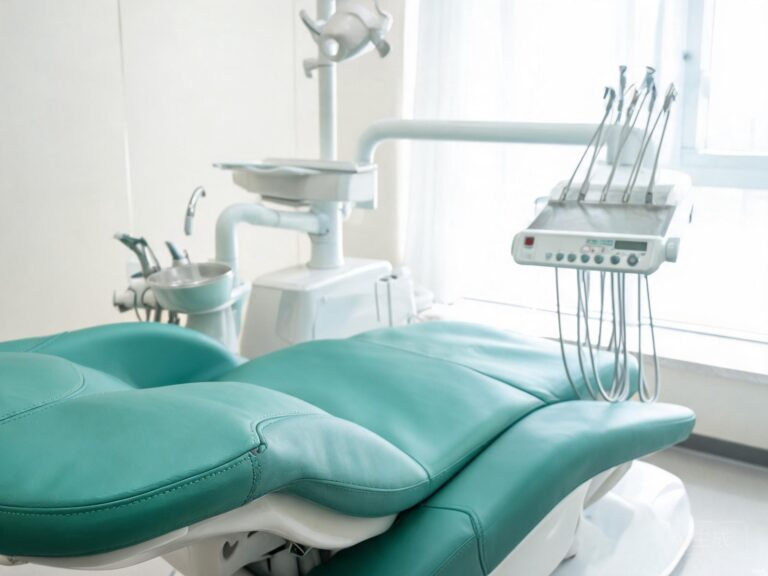
If your facility also procures operating table leather, dental chair upholstery, or patient transfer equipment leather, the same compliance framework applies across all patient-contact surfaces.
FAQ: Rehabilitation Equipment Leather
What makes rehabilitation equipment leather different from standard upholstery leather?
Rehabilitation equipment leather must simultaneously meet infection control standards (≥90% antibacterial rate per GB/T 46489-2025), biocompatibility standards (ISO 10993-5 and -10), fire safety standards (BS 5852 Crib 5, CAL TB 117-2013), and durability thresholds (150K+ Martindale cycles). Standard upholstery leather typically only meets aesthetic and basic durability specs. The difference is that medical-grade leather is tested for patient safety in clinical contact scenarios, not just furniture performance.
Can silicone leather withstand hospital-grade bleach disinfection?
Yes. Silicone leather’s polymer chemistry is inherently resistant to sodium hypochlorite (bleach), isopropyl alcohol, and hydrogen peroxide solutions. Lab testing shows no surface degradation, color shift, or tensile strength loss after 500-cycle simulated disinfection protocols using EPA-registered bleach wipes. Conventional PU leather, by contrast, typically degrades within 6-12 months of repeated bleach exposure due to plasticizer breakdown.
What ISO 10993 tests are required for medical equipment leather?
The three critical tests are ISO 10993-5:2009 (cytotoxicity — must achieve Level 1), ISO 10993-10:2010 (skin sensitization — Level 0), and ISO 10993-10:2010 (skin irritation — Level 0). For rehabilitation equipment involving extended patient contact, these tests verify that the material won’t cause cell death, allergic reactions, or contact dermatitis during therapy sessions lasting 45-90 minutes.
How does GB/T 46489-2025 affect leather procurement for hospital furniture?
GB/T 46489-2025 mandates that hospital furniture in outpatient, ward, medical technology, and lab areas must use antibacterial materials achieving ≥90% inhibition rate. It also specifies that chair seats should not use textile fabrics. For procurement teams, this means conventional fabric upholstery is non-compliant in Chinese hospital settings, and antibacterial performance documentation (ISO 22196 or equivalent) is now a procurement prerequisite, not an optional feature.
What is the expected lifespan of rehabilitation equipment leather in clinical settings?
With proper maintenance and disinfection protocols, silicone leather in rehabilitation equipment typically achieves 7-10 years of clinical service life. This is supported by 150,000+ Martindale abrasion cycles, 1,500-hour UV stability, 1,000-hour salt spray resistance, and 200,000-cycle low-temperature flex resistance at -30°C. Conventional PU leather in the same clinical environment typically requires replacement every 18-36 months due to surface cracking, coating failure, or plasticizer migration.
About TOPSUN
TOPSUN is a specialized manufacturer of medical-grade silicone leather, supplying B2B OEMs and procurement teams across the rehabilitation equipment, medical device, and healthcare furniture sectors. Our silicone leather achieves ISO 10993-5 Level 1 cytotoxicity, ISO 10993-10 Level 0 sensitization and irritation ratings, 99.9% antibacterial efficacy, BS 5852 Crib 5 fire safety compliance, and 150,000+ Martindale abrasion cycles — all without plasticizers, phthalates, BPA, PFAS, or formaldehyde.
We provide full compliance documentation packages including ISO 10993 biocompatibility certificates, disinfectant compatibility data, fire safety test reports, and REACH/RoHS/Prop 65 declarations for every product SKU. Our team supports clinical procurement teams with material specification, disinfection protocol validation, and custom color/texture development for rehabilitation equipment applications. Request a sample swatch and compliance dossier to begin your evaluation.
Related Reading:
- Medical Device Leather Regulation: A 2026 Compliance Guide
- Wheelchair Seat Leather: A Clinical Procurement Guide
- The Future of Silicone Leather in Medical Devices
- Operating Table Leather: Specifications and Standards
- Dental Chair Upholstery: Material Selection Guide
- Patient Transfer Equipment Leather: Safety Requirements
- Children’s Furniture Leather Safety Standards
- Silicone Leather Flex Cracking Test Results
External Resources: