Buyers type “is PU leather real leather” into search boxes every day, and product pages answer with marketing fog. Here is the clean conclusion: 100% PU leather is not real leather. It is a polyurethane polymer layer over fabric, with zero hide content. One exception muddies the market: bicast leather, a PU-coated split hide, does carry real leather underneath.
This article defines both sides of the comparison, examines that exception in detail, runs four dimensions side by side, and closes with a judgment table for your next purchase order. As a procurement manager, you will also see where mislabeled material creates customs and warranty risk, and how to close that gap with two contract lines.
PU Leather vs Real Leather: The Definition Gap
Real leather is processed animal hide. Tanneries grade it into full-grain, top-grain, split, and bonded layers, and each grade behaves differently over time. PU leather skips the tannery entirely. A polymer first synthesised in 1937 is spread onto polyester or cotton, then embossed with a grain pattern. Nothing in the finished sheet comes from an animal.
The distinction sounds academic until it reaches a purchase order. “Genuine leather” on a quote can mean full-grain hide, or a split layer with a polymer finish. “PU leather” can mean pure plastic, or bicast with hide inside. Write the definition into your spec sheet before you compare prices, because suppliers sell under whatever label moves fastest.

Swatch walls mix hide, PU, and silicone samples; only the spec sheet tells them apart.
The Bicast Exception: When PU Leather Does Contain Real Hide
Bicast leather is the exception that keeps this debate alive. Manufacturers take a split hide, the lower layer separated from the grain, and laminate a polyurethane film on top. The result contains real leather, yet the surface you touch and clean is polymer. Some suppliers list it as “PU leather”, which is technically wrong and commercially misleading.
So, is PU leather real leather under the bicast label? Partly. The hide content is genuine, but performance lives or dies at the bond between film and split. Ask suppliers to state hide content percentage in writing, and treat any refusal as a red flag worth walking away from.

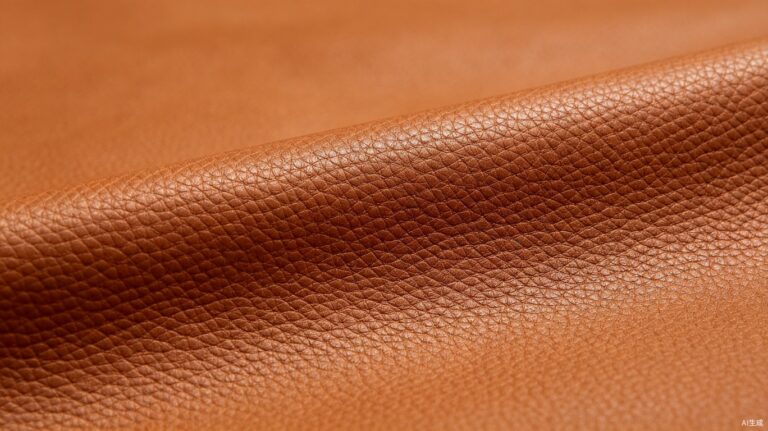
Real cowhide grain: random pore patterns no polymer film can duplicate.
In our sample room we keep bicast and full-silicone panels side by side. After two years of flex testing, the bicast bond line is where failure starts first.
Four Dimensions Compared: Source, Breathability, Aging, Lifespan
| Dimension | Real Leather | 100% PU Leather |
|---|---|---|
| Source material | Graded animal hide | Polyurethane film on fabric |
| Breathability | High, natural fiber structure | Low, polymer blocks airflow |
| Aging pattern | Develops patina, softens | Dries, cracks, peels |
| Typical service life | 10-20+ years with care | 2-5 years before cracking |
Breathability explains much of the comfort gap. Hide fibers move air; polymer films do not. Aging differs even more. Genuine hide develops patina, a surface polish that raises resale value. PU dries out as plasticizers escape, then cracks along fold lines. Most PU office chairs start cracking within two to five years, and low-grade coatings can peel inside 18 months.
Our own bench adds the column buyers forget. Silicone leather holds 200,000+ Martindale cycles under ISO 12947-2 and rates excellent for hydrolysis under ISO 11507. Rated service life exceeds ten years, roughly three times typical PU. When you compare quotes, put all three materials in one table, or the cheapest polymer wins by default.

Bench data turns a labeling debate into a measurable purchasing decision.
See the durability gap between polymer coatings in a side-by-side comparison.
Double Rubs and the 30,000 Benchmark on Chair Quotes
Chair and seating quotations carry their own abrasion language: the double-rub count from a Wyzenbeek tester. One double rub equals one back-and-forth stroke of a standard fabric pad. Industry practice treats 15,000 double rubs as suitable for home use and 30,000 or higher as heavy-duty material built for eight-hour daily seating.
The number is useful and abused in equal measure. Some suppliers quote coating-only results, while the real chair fails at the bond line first. Cheap PU can peel before 18 months regardless of a glossy double-rub figure. Insist on two corrections in writing: the test method behind the number, and whether the result covers the full laminate or just the film.
For comparison discipline, convert every quote to the same basis. Our silicone leather is reported on the Martindale scale, 200,000+ cycles under ISO 12947-2, because that is the standard our EU furniture clients audit against. Martindale and Wyzenbeek numbers are not interchangeable, so ask which machine produced the figure before adding it to your comparison sheet.
Labeling Risk: Mislabeled PU Leather and Your Shipment
Mislabeling is where this topic turns from theory to liability. EU consumer law and US trade rules treat material description as a contract term. A shipment invoiced as “genuine leather” that arrives as 100% PU can trigger customs reclassification, refused delivery, or warranty claims. Our export desk has watched buyers absorb heavy losses because nobody verified coating chemistry at the sample stage.
Protect the order with two contract lines. First, require the supplier to state coating chemistry and hide content in writing. Second, reference a test standard such as ISO 12947-2 for abrasion, so disputes have a measurable benchmark. Eco claims deserve equal discipline; review REACH and VOC documentation before the material reaches your eco-friendly product line.
Where Silicone Leather Fits in the Same Decision
Silicone leather is not real leather either, and that honesty matters in specification work. It is a silicone polymer coating, produced in full-silicone and semi-silicone builds that we compare in our full vs semi silicone guide. The microfiber-backed version is the closest synthetic match to hide texture, detailed on our silicone microfiber leather page.
The practical difference shows up in duty cycles. No plasticizers means no brittle aging. The surface tolerates alcohol wipes, sunlight, and humidity that destroy PU bonds, which is why commercial seating programs keep switching mid-contract. Silicone also passes FMVSS 302 flame testing for transportation programs. The same material can therefore serve a lounge chair and a vehicle cabin without a second qualification round.
Cost per Year: The Math That Settles the Quote
Unit price hides the real difference, so run one more calculation before you award the order. Divide delivered cost by expected service life. A PU lounge chair at $120 that peels in year three costs $40 per year. A silicone-upholstered equivalent at $180 with a 10+ year rating costs under $18 per year, before you count avoided reupholstery labor.
Real leather follows the same logic from the top end. Full-grain hide carries the highest unit price in the comparison, yet a two-decade lifespan brings cost per year down to the silicone range. Bicast sits awkwardly in the middle: cheaper than full-grain, but a shorter bond life means its per-year advantage over silicone often disappears in commercial duty cycles.
One of our hospitality clients ran this math across a 400-room refit. The PU baseline saved 30 percent on day one and demanded a mid-cycle replacement of two hundred headboards by year four. The silicone specification cost more upfront and has passed five years without a single surface claim. That outcome, not the unit price, is the number finance remembers.
The Verdict for Your Next Order
| If your priority is… | Specify… |
|---|---|
| Decades of use and a status patina | Full-grain real leather |
| Lowest upfront cost on a 2-3 year cycle | 100% PU leather |
| Some hide content at mid-range pricing | Bicast, with hide percentage in writing |
| 10+ year life with a clean VOC story | Silicone leather |
So, is PU leather real leather? For 100% PU, no: it is polymer over fabric. For bicast, partly, and the label should say so. Put the definition, the test standard, and the chemistry disclosure into your spec sheet, and this question stops being a marketing argument. PU leather vs real leather becomes a line item you can defend in any audit, and your cost-per-year figure becomes the metric your finance team actually trusts.
Is bicast leather real leather?
Partly. It starts with a split hide, then a PU film is laminated on top. The hide is real; the wearing surface is polymer. Durability depends on the bond between the two layers, which is the first point of failure in our flex tests. Ask for the split thickness as well, because a thinner base shortens bond life.
How long does PU leather last compared with real leather?
Typical PU furniture starts cracking within two to five years, and low-grade coatings can peel inside 18 months. Well-maintained real leather lasts decades and develops patina. Silicone leather sits between them on price while rating 10+ years in service life.
About TOPSUN
TOPSUN produces silicone leather for buyers replacing PU lines in furniture, automotive, and marine programs across EU and US markets.
Full-silicone and semi-silicone builds, 200,000-cycle Martindale data, ISO 10993 and REACH documentation, and OEM color matching from swatch to bulk.
References
1. https://www.merryfair.com/latest_updates/blog/w… — 100% PU contains no hide and is vegan; bicast versions carry a cowhide layer; PU chairs crack within 2-5 years(2026)
2. https://lalagebeaumont.com/blogs/fashion/what-i… — polyurethane first synthesised in 1937; petroleum-based polymer vs genuine hide longevity