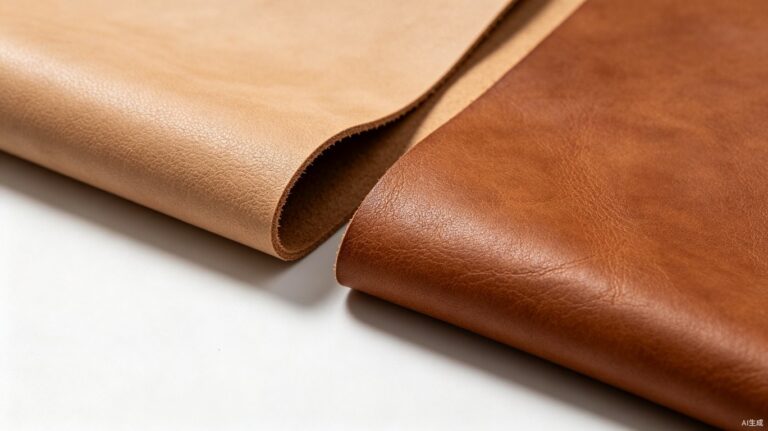
Buyers searching for PU leather China usually have one of two problems. Either they are placing a first order and do not know what to verify, or they placed one last year and watched the coating peel off the goods. Both problems share the same root: the market is enormous, the price is attractive, and almost nobody checks the chemistry before wiring the deposit.
Our position is simple. PU leather from Chinese factories can be a perfectly sound choice for the right application. But the order survives or dies on a handful of verifiable checks, not on the swatch that looked good in the showroom. This article walks through the market as it stands in 2026, the hydrolysis issue that sinks most failed orders, and the seven-point checklist we would run before committing a cent.
The PU Leather China Market in 2026: Scale, Prices, and MOQs
Start with the numbers, because they explain the supply side. Analysts at VynZ Research value the Chinese PU leather market at $6.49 billion in 2026. They project it to reach $15.06 billion by 2035, a 9.8% CAGR. That scale means something practical for buyers: whatever spec you need, several hundred factories can claim to make it. The hard part is telling them apart.
Price bands are equally wide. On the major B2B marketplaces, standard PU sheet quotes run from roughly $2 to $4 per meter or yard. Specialty constructions, such as hydrolysis-resistant grades for marine seating, list several times higher. Minimum order quantities range from a single meter for stock lots to 500 yards for production runs. A low quote is not a red flag by itself. A low quote paired with silence about resin type and test data is.
Geography matters too. Coating clusters sit around Guangzhou, Ningbo, and Shanghai, and many listings on marketplaces are trading companies rather than factories. Neither is automatically wrong. But a trader who cannot put an engineer on a video call cannot answer the questions in the checklist below.
Scale cuts both ways. Large coating operations can quote a single line at hundreds of thousands of meters per month, which keeps lead times short and pricing stable. The trade-off is that smaller buyers get less attention. Decide early whether your volumes justify a tier-one line, or whether a mid-size factory that answers emails within a day serves you better.

Marketplace listings blur the line between factories and traders. The checklist exists to cut through that blur.
Why Hydrolysis Kills PU Leather From China in Two Years
If you take one technical point from this article, make it this one. Standard PU chemistry is polyester-based. Moisture in the air slowly breaks the ester bonds in the coating. Industry failure analyses describe the outcome consistently: after one to two years of consumer use, the top coat flakes off and exposes the fabric base underneath. No amount of surface repair brings it back.
The uncomfortable part is how rarely this gets tested before shipment. One hospitality-sector case study states that fewer than 30% of Chinese PU suppliers perform hydrolytic stability testing as standard, and recommends demanding the report in every RFQ. The test itself, ISO 14184, exposes samples to elevated humidity and temperature for five weeks. Materials that delaminate or crack in the chamber will fail within about two years in a humid lobby or a coastal venue.
Resin choice changes the math. Polycarbonate-based PU resins and water-based PU formulations resist hydrolysis far better than commodity polyester grades. Some technical suppliers now engineer against five-year targets and publish the data. Ask which resin family your quote is based on. If the salesperson cannot answer, the factory floor probably cannot either.
We approach the same failure mode from a different chemistry. Silicone leather carries no ester bonds at all, so hydrolysis has nothing to attack. Our material is verified in an 85°C / 85% RH climate chamber for up to 14 weeks with no delamination, no strength loss, and no surface degradation. That translates to a 10-15 year service life, roughly triple the 3-5 years typical of PU in comparable conditions. When an application cannot tolerate peeling, this is the exit door.

The resin recipe decided at the mixing stage determines whether the coating survives year three.
Side-by-side durability comparison: where PU fails at hydrolysis, silicone coating holds.
The 7-Point Checklist for Sourcing PU Leather From China
Here is the checklist we would run before any deposit leaves the account. It takes a few emails and one video call. Skipping it takes a container of peeling goods.
- 1. Confirm you are talking to the coating line. Ask for the factory address, then verify it appears on the business license and matches the production photos. A trader can still serve you, but the person answering hydrolysis questions should be at the mixing tank.
- 2. Demand the resin family in writing. Polyester ester-based, polycarbonate-based, or water-based PU. This single line predicts more about year-two performance than any catalog photo.
- 3. Require a hydrolysis test report. ISO 14184 or an equivalent climate-chamber method, run on the actual production batch, not a five-year-old datasheet.
- 4. Pin the physical specs to test standards. Thickness per ISO 5084, peel strength per ISO 2411, and abrasion cycles per Martindale. Numbers without standards are marketing.
- 5. Book third-party inspection. SGS, BV, or TÜV should inspect before shipment. Reputable factories welcome this; the ones who resist have told you something.
- 6. Confirm MOQ and lead time against your real volumes. Typical runs quote 500 yards or meters with 7-15 day production. Stock-lot offers at tiny MOQs often mean obsolete inventory.
- 7. Collect compliance documents early. REACH, California Prop 65, and FMVSS 302 for automotive use. Retroactive compliance costs far more than a copy of the certificate.
The same checklist applies if you end up comparing silicone coating as an alternative. Our silicone vs PU comparison goes through the chemistry in detail, and we supply SGS test reports with every order as standard practice.

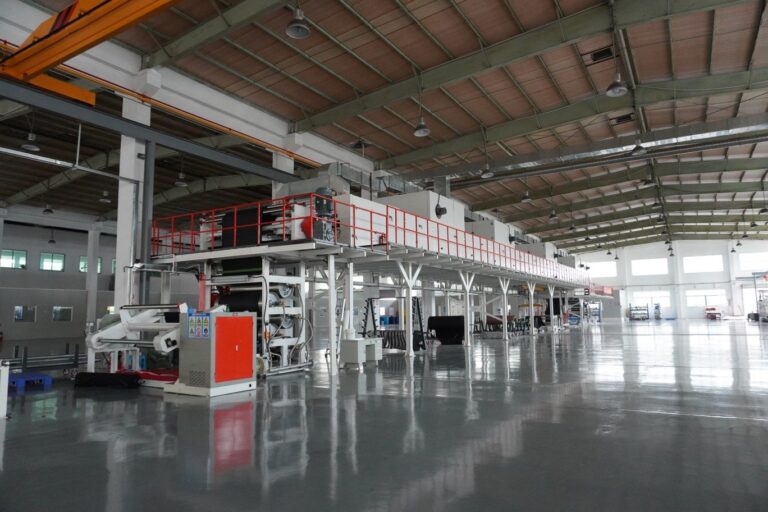
Release-paper coating lines produce the consistent surface quality that batch testing is meant to confirm.
Request Tested Material Samples
From Sample Approval to Shipment: Running the Verification
The checklist gets a supplier shortlisted. What happens next decides whether the goods in the container match the report in the email. Treat the process as three gates, and hold each one.
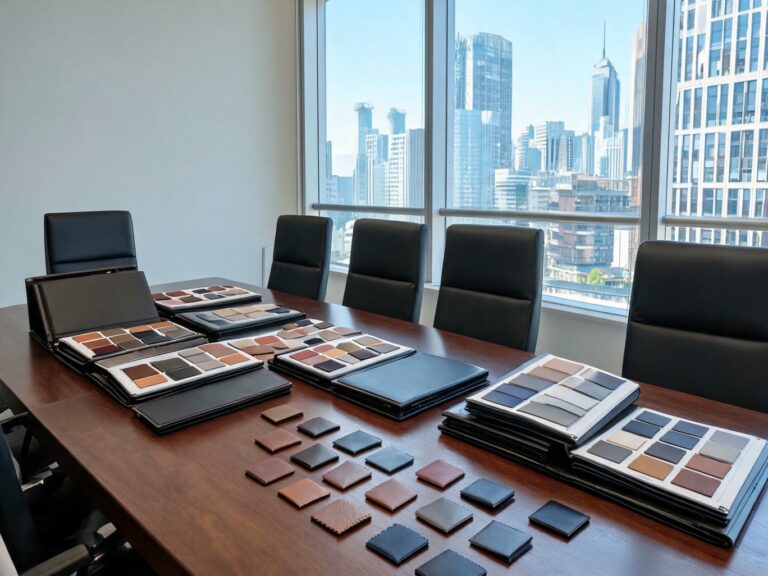
Gate one is the sample program. Ask for samples from current production, not from a showroom binder. Test them against the same standards you wrote into the RFQ, and keep sealed references of the approved lot. When production goods arrive, anyone can compare against the retained sample in minutes.
Gate two is in-production control. Serious coating factories do not wait for the final roll to find problems. On our own lines, QC starts with raw material checks on viscosity and solids content, continues with in-line coating thickness monitoring and curing temperature verification, and includes spectrophotometer color control to hold Delta E tight across the run. Martindale sampling happens mid-run. Ask a prospective supplier to describe their equivalent steps. A factory that answers in specifics is a factory that runs them.
Gate three is pre-shipment. Third-party inspection on packed goods, plus a final roll inspection report, closes the loop. Capacity matters here as well: a line rated in the hundreds of thousands of meters per month can absorb your inspection schedule without rushing your order. If a supplier pushes back on any of the three gates, price the friction into the decision. It is cheaper than a claim.
Decision Tree: Which Material Path Should Your Next Order Take?
Not every order needs the most durable chemistry on the shelf. Match the material to the real service conditions:
- Short-life indoor goods (fashion accessories, decorative panels, seasonal items): standard polyester PU at $2-4 per meter is usually the right call. Replace on schedule and treat the material as consumable.
- Humid or contract environments (hotel lobbies, coastal venues, healthcare seating): specify polycarbonate PU or water-based PU, and make the ISO 14184 report a payment condition. If nothing else, this one demand will filter your supplier list fast.
- Long-life or regulated applications (automotive interiors, marine, medical, 10-year furniture warranties): step up to silicone leather. The chamber data, the 10-15 year service life, and certifications such as FMVSS 302 put it in a different tier. Our automotive interior applications page shows the spec sheet in context.
- Sustainability-positioned products: solvent-free silicone with non-detect VOC per ISO 16000-6 supports the claim in an audit. The background is on our eco-friendly silicone leather page.
Run the checklist, read the resin line, and match the chemistry to the service life you actually owe your customer. That sequence turns PU leather China from a gamble into a procurement decision.
Frequently Asked Questions
Q: What does PU leather from China cost per meter?
A: Standard grades list at roughly $2-4 per meter or yard on major marketplaces, with hydrolysis-resistant and marine grades quoted several times higher. MOQs range from single meters for stock lots to 500 yards for production. Treat any quote far below the band with suspicion and ask what changed in the recipe.
Q: Can I get hydrolysis test reports before placing an order?
A: You should insist on them. Ask for an ISO 14184 report from the current production batch. Fewer than 30% of Chinese PU suppliers run this test as standard, so the request doubles as a supplier filter. If a partner cannot produce the report, we can provide chamber data for silicone alternatives instead.
References
- 1. https://www.vynzresearch.com/chemicals-material… — China PU leather market $6.49B (2026), projected to $15.06B by 2035, CAGR 9.8%
- 2. https://taiteleather.com/pu-leather-quality-pro… — surface peeling and flaking from hydrolysis after 1-2 years of consumer use; polycarbonate-based PU and WBPU as solutions
- 3. https://neveitaliafurniture.com/pu-leather-sofa… — ISO 14184 hydrolytic stability testing; fewer than 30% of Chinese PU suppliers perform the test