A sourcing director posts a request for quote on a B2B platform. Within 48 hours, 12 suppliers respond — all claiming to be a “fabric manufacturer” with factory-direct pricing, in-house production, and ISO-certified quality control. All 12 profiles show factory photos. All 12 promise competitive lead times. But when the technical questions start — “What’s your daily output per coating line?” and “Can I see a live video of the production floor?” — 8 of the 12 go silent for 72 hours. The 4 that respond within 2 hours, walk you through their machinery inventory, and connect you with a production engineer? Those are the real manufacturers. In synthetic leather and textile sourcing, the gap between a fabric manufacturer and a trading company masquerading as one isn’t just about price — it’s about quality consistency, lead time control, and whether your specification survives the production floor or gets lost in translation through an intermediary. Here’s the 7-point audit framework that separates real mills from intermediaries, and why it matters for your next production run.

1. Production Capacity: Cross-Reference Machines Against Claims
Every fabric manufacturer claims a monthly capacity number. Most sourcing teams write it down and move on. The audit step that separates real mills from trading companies is cross-referencing that claim against physical machine output. A single automated silicone coating line running 24 hours at standard speed produces approximately 1,500–2,000 meters per day. If a supplier claims 500,000 meters per month, they need at least 8–10 lines running at full utilization — or they’re reselling from multiple unnamed factories. Ask for: (a) the number of production lines, (b) the model and manufacturer of each coating/calendering machine, (c) the daily output per line, and (d) the current utilization rate. A factory at 100% utilization cannot absorb new orders without extending lead times — and a supplier who claims infinite capacity is almost certainly a trading company aggregating output from multiple sources they don’t control.
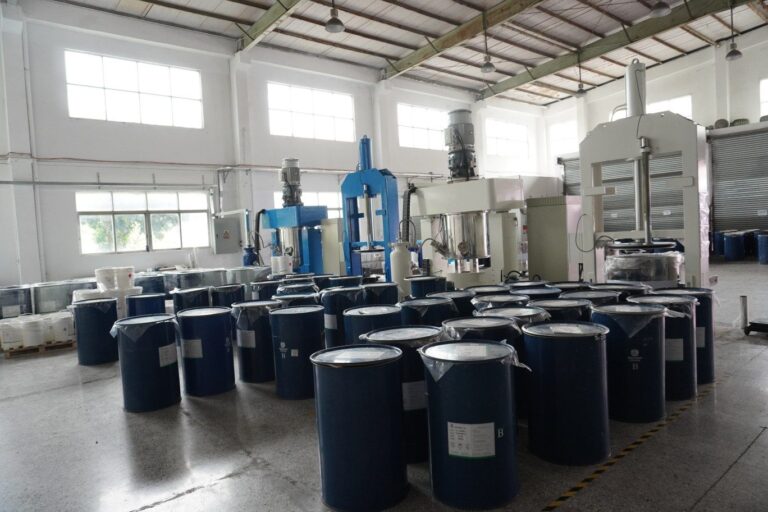
TOPSUN operates 10+ automated lines across three facilities in Dongguan, Yichang, and Xiangyang, producing 16,000 meters daily with a verified monthly capacity exceeding 500,000 meters. The factory production page documents the equipment inventory, line configurations, and capacity allocation — information a trading company cannot provide because they don’t own the machines.
2. Live Video Walkthrough: The Ultimate Lie Detector
According to B2B sourcing data, over 60% of suppliers listed as “fabric manufacturer” on online marketplaces are trading companies — intermediaries who add 15–30% markup without owning any production equipment [$TRAE_REF](https://www.fobsourcify.com/wholesale-fabric-from-china/). The single most effective verification method is not a factory photo, not a business license, and not a promotional video — it’s a live, unscripted video call on the production floor. Request a WeChat, WhatsApp, or Zoom call and ask the supplier to walk you through the facility in real time. Ask them to show you the unwinding racks, the coating head, the calendering rollers, the drying oven, and the rewinding station. A real fabric manufacturer will do this without hesitation. A trading company will stall, offer to schedule it “next week,” or redirect you to a “partner factory” they claim is too far away. The response within the first 5 minutes tells you everything.
3. Certification Verification: Beyond the PDF
A PDF certificate is a starting point, not proof. Trading companies frequently share generic catalog certificates that don’t match their entity name, or recycle expired reports from unrelated factories. The audit step: verify every certificate against the issuing body’s database. For SGS and Intertek reports, check that the lab report number, the tested entity name, and the validity dates all match the supplier you’re evaluating. A “REACH-compliant” claim without a test report number — or with a number that returns no result when verified — is a fabricated claim [$TRAE_REF](https://globalfabricwholesale.com/how-to-audit-fabric-supplier-12-point-checklist/).
TOPSUN’s certifications are issued by SGS-CSTC Guangzhou and FAA-approved laboratories, covering ISO 10993-5 biocompatibility, REACH chemical compliance, FDA 21 CFR 177.2600 food-contact, EN 13773 Class 4 flame retardancy, FAR 25.853 aviation flammability, and RoHS heavy-metal testing. Each certificate includes a traceable report number, testing scope, and validity period — viewable on the certificates page and verifiable directly with the issuing laboratory.

4. In-House QC Lab vs Outsourced Testing
A fabric manufacturer’s quality control system is only as reliable as the testing infrastructure behind it. Ask two questions: “What tests do you run in-house?” and “What tests do you send to third-party labs?” A real manufacturer has an in-house testing lab with equipment for Martindale abrasion, tensile strength, tear strength, color fastness, flex resistance, and UV resistance — because they need real-time data to adjust production parameters. A trading company cannot describe the testing process in technical terms because they don’t control it [$TRAE_REF](https://www.arcusag.com/fabric-manufacturers-how-to-source-and-vet-mills/). Request a redacted example inspection report showing the test method, the acceptance criteria, and the pass/fail result. If the supplier cannot produce one, they are not running inline QC — they’re relying on the factory’s word, which becomes your risk.
TOPSUN’s in-house lab runs ISO-standard testing on every production batch: Martindale abrasion (ISO 12947-2, ≥200,000 cycles), tensile strength (ISO 3376, ≥10–15 N/mm), tear strength (ISO 34-1, ≥15–20 N), flex resistance (ISO 5402, ≥50,000–100,000 cycles), color fastness to light (ISO 105-B06, Grade 4–5), and UV resistance (ASTM G154, 1,000+ hours). Full testing standards are documented on the technical data sheet page.
5. Sample-to-Bulk Consistency Protocol
The most expensive mistake in fabric sourcing is approving a golden sample that doesn’t match bulk production. Trading companies often source samples from one factory and place bulk orders with a different, cheaper factory — and the buyer discovers the mismatch only when the container arrives. The audit step: ask for the supplier’s sample-to-bulk consistency protocol. Do they retain a reference sample from every production batch? What is their color tolerance (Delta E)? What happens when a bulk batch falls outside spec? A real fabric manufacturer has a structured answer with defined tolerances, a retention sample program, and a corrective action process. TOPSUN maintains a Delta E ≤ 1.0 color accuracy standard with batch-to-batch consistency verified through retained reference samples — meaning the A4 swatch you approve is the same material that ships in the production order.
| Audit Point | Trading Company Signal | Real Manufacturer Signal | Verification Method | Risk if Missed |
|---|---|---|---|---|
| Production Capacity | Claims without machine details; infinite capacity | Line count, daily output per line, utilization rate | Cross-reference machines vs claimed output | Lead time slips; quality varies by source factory |
| Live Video Tour | Delays; redirects to “partner factory” | Immediate; walks through equipment live | Unscripted WeChat/Zoom call on production floor | No factory exists; 15–30% hidden markup |
| Certification Validity | Generic PDF; entity name doesn’t match | Traceable report numbers; scope matches product | Verify with issuing lab (SGS/Intertek) | Compliance failure; shipment rejection at port |
| In-House QC Lab | Cannot describe testing process; no reports | Equipment list; redacted inspection reports | Request test report with method & criteria | No batch-level quality control; defect risk |
| Sample-to-Bulk Match | No tolerance spec; sample from different source | Delta E ≤ 1.0; retention sample program | Ask for color tolerance & corrective action process | Bulk shipment doesn’t match approved sample |
| MOQ & Lead Time | Rigid MOQ; can’t explain lead time drivers | Flexible MOQ based on relationship; clear drivers | Compare stock vs custom MOQ & lead time | Over-ordering inventory; unpredictable delivery |
| Technical Communication | Sales staff only; 48+ hr response on specs | Production engineer available; 2-hr response | Ask 3 technical questions; measure response time | Spec errors; production delays; no root-cause analysis |
6. MOQ Transparency and Lead Time Control
Minimum order quantity reveals whether a fabric manufacturer controls their own production schedule. A real factory can negotiate MOQ based on order frequency, relationship history, and production line availability — because they control the line. A trading company’s MOQ is fixed because they’re buying from a factory that sets it. Ask for two numbers: the MOQ for stock colors and the MOQ for custom-developed colors/textures. Then ask what drives the lead time — coating setup, color matching, embossing roller production, or drying time. A manufacturer can break down each component; a trading company gives a single number with no explanation [$TRAE_REF](https://langsumfabric.com/blogs/fabric-news/upholstery-fabric-moq-b2b-buyers-guide). TOPSUN offers a 500-meter MOQ — significantly lower than the industry standard of 1,000–3,000 meters for synthetic leather mills — with 7–15 day lead times for standard orders and 7–10 days for custom embossing roller development.

7. Technical Communication Depth
The fastest way to test whether you’re talking to a fabric manufacturer or a trading company is to ask three technical questions and measure response time and depth. Ask: “What’s the Martindale abrasion result for your standard silicone leather?” “What temperature range does your material handle without cracking?” and “Can you explain your hydrolysis resistance testing protocol?” A real manufacturer connects you with a production engineer who answers in under 2 hours with specific numbers, test standards, and process details. A trading company routes the question through a sales representative who takes 48 hours and returns a vague answer or a copied spec sheet. TOPSUN’s technical team — 10+ engineers across three facilities — responds to technical inquiries with ISO-standard test data, material specifications, and process documentation, ensuring that your specification questions reach the people who actually run the machines.
The difference between these two responses isn’t just communication efficiency — it’s the difference between catching a specification error during sampling and discovering it after 5,000 meters of production. When a coating line operator can explain why a specific silicone formulation achieves 200,000+ Martindale cycles — and a sales intermediary cannot — you know which supplier will prevent problems versus which one will explain them after the fact.
About TOPSUN: A Direct Fabric Manufacturer, Not an Intermediary
TOPSUN manufactures silicone leather as a direct fabric manufacturer for B2B sourcing directors and supply chain leaders who need verifiable production capacity, in-house ISO-standard testing, and direct technical communication with production engineers — not sales intermediaries. Operating 10+ automated coating lines across 60,000+ m² of facility space in Dongguan, Yichang, and Xiangyang, TOPSUN produces 500,000+ meters monthly with a 500-meter MOQ, 7–15 day lead times, and free A4 sample swatches shipped worldwide via DHL/FedEx. Every batch undergoes full ISO-standard QC testing — Martindale abrasion, tensile strength, tear strength, UV resistance, hydrolysis resistance, and color fastness — in an in-house lab staffed by 10+ engineers. Certifications from SGS-CSTC and FAA-approved labs cover ISO 10993-5 biocompatibility, REACH, FDA food-contact, EN 13773 Class 4 flame retardancy, and RoHS, each traceable to a verifiable report number. Learn more about TOPSUN or request free samples to audit our material before you commit.
Factory production capacity — 500,000+ meters monthly, with in-house QC on every batch.
FAQ
How can I tell if a fabric manufacturer is actually a factory or a trading company?
Request a live, unscripted video call on the production floor — not a pre-recorded promotional video. Ask for the number of production lines, daily output per line, and current utilization rate, then cross-reference those numbers against the claimed monthly capacity. A real fabric manufacturer can connect you with a production engineer who answers technical questions within 2 hours. A trading company stalls, redirects to a “partner factory,” and cannot describe coating parameters or testing protocols in technical detail. Over 60% of suppliers listed as “fabric manufacturer” on B2B platforms are trading companies, so always verify before committing to a purchase order.
What should I ask a fabric manufacturer to verify production capacity?
Ask four questions: (1) How many production lines do you operate, and what is the model of each coating/calendering machine? (2) What is the daily output per line at standard speed? (3) What is your current utilization rate — are you at 60%, 85%, or 100%? (4) Can you show me machine purchase invoices or a live CCTV feed? Cross-reference the claimed monthly capacity against what the machines can physically produce. A single automated silicone coating line produces approximately 1,500–2,000 meters per day; if a supplier claims 500,000 meters monthly, they need at least 8–10 lines — or they’re aggregating from multiple uncontrolled sources.
If you’re evaluating silicone leather suppliers and want to run these 7 audit points against a real fabric manufacturer — not a trading company — we’re ready. Schedule a live factory video audit with our production team, or request free A4 sample swatches shipped worldwide via DHL/FedEx. Our engineers respond to technical questions within 2 hours, and every certification is verifiable with the issuing laboratory.
Schedule a Factory Video Audit
Request Production Capacity Documentation