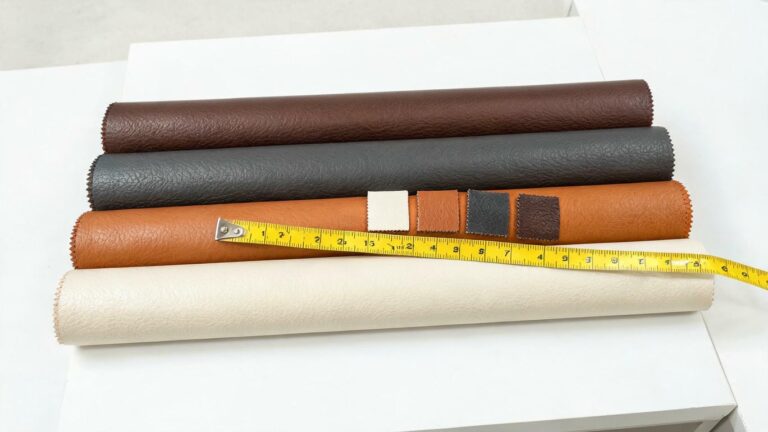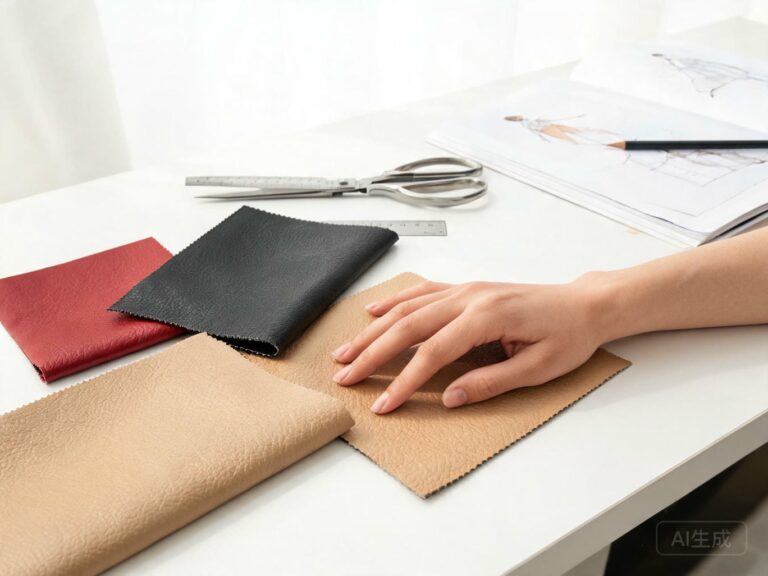
A Berlin fashion brand ordered 8,000 meters of printed faux leather with a custom crocodile pattern for a handbag collection. The print looked flawless at delivery — sharp lines, accurate color, consistent repeat. Six months after the bags hit retail, the pattern was rubbing off at handles, corners, and flap edges. The ink sat on the surface of the PU coating without molecular bonding. Every bag that sold at $240 came back under warranty. The brand’s pattern designer had specified the print method based on visual samples — no one tested for abrasion resistance of the ink layer itself. The result: 1,200 returns and a €96,000 warranty bill.
TOPSUN manufactures printed silicone leather with patterns bonded at the molecular level during the coating process — not applied as a surface ink layer. With 200,000+ Martindale abrasion cycles, ISO 105-X12 rubbing fastness Grade 4-5, and 100+ standard textures, our printed silicone leather eliminates the pattern degradation cycle that drives warranty claims in fashion, accessories, and upholstery applications.
How Printed Faux Leather Patterns Are Applied (and Why They Fail)
Printed faux leather uses one of three methods to apply visual patterns to a synthetic leather surface. Each method creates a different bond between the ink and the substrate — and the bond quality determines whether the pattern lasts six months or six years.
Rotary gravure printing is the industry standard for high-volume printed faux leather. Engraved rollers transfer ink onto the PU or PVC surface in a continuous web. The ink is solvent-based and adheres through physical adhesion — the solvent evaporates and leaves pigment particles embedded in the surface texture. The problem: the bond is mechanical, not chemical. When the surface flexes, the ink particles dislodge. Under abrasion, they wear away. The embossed pattern engineering guide documents that rotary-printed patterns lose 30-50% of their visual density after 10,000 Martindale abrasion cycles.

Calendering roller with safety guard — pattern embossing rollers create physical texture in the silicone surface during coating, producing wear-resistant grain that cannot rub off
Digital inkjet printing is used for short runs and custom patterns. Piezo printheads deposit ink droplets onto the surface. The ink sits in a thin film on top of the coating — there’s no mechanical keying or chemical crosslinking. Digital prints fail fastest: the thin ink layer abrades in 5,000-8,000 Martindale cycles. A handbag handle that’s gripped daily will show visible pattern wear within 4-8 months.
Topcoat-sealed printing applies a clear polyurethane topcoat over the printed layer to protect it. This extends the abrasion life to 15,000-25,000 Martindale cycles — but introduces a new failure mode. The topcoat itself is PU, which means it’s susceptible to hydrolysis, UV yellowing, and flex cracking. When the topcoat cracks, the printed layer beneath delaminates. The pattern doesn’t just fade — it peels in sheets.
The Ink Bonding Problem: Mechanical vs Molecular
The fundamental problem with printed faux leather is that the pattern is a surface application — it exists on top of the material, not within it. The faux leather description guide explains that PU and PVC coatings are non-reactive surfaces: they don’t form chemical bonds with ink. The ink adheres through physical interlocking with surface texture and solvent evaporation. This is a mechanical bond, and mechanical bonds fail under abrasion.
Silicone leather solves this differently. Patterns and textures are created during the coating process itself — not applied afterward. The silicone elastomer is embossed with a textured roller while still in its uncured state. When the silicone cures, the pattern becomes an integral part of the material surface. There is no ink layer to abrade. The pattern is the material itself. This is why TOPSUN’s embossed silicone leather maintains its visual texture after 200,000+ Martindale abrasion cycles — there’s nothing to rub off.

Spacious coating production line — the solvent-free dry coating process applies and textures silicone in a single pass, embedding pattern structure into the material surface
Print Method Comparison: What Actually Lasts
| Property | Rotary Gravure | Digital Inkjet | Topcoat-Sealed | Silicone Embossed |
|---|---|---|---|---|
| Ink/pattern bond type | Mechanical | Surface film | Sealed layer | Molecular integral |
| Martindale abrasion (pattern visible) | 10,000-15,000 | 5,000-8,000 | 15,000-25,000 | 200,000+ |
| Rubbing fastness (ISO 105-X12) | Grade 3 | Grade 2-3 | Grade 3-4 | Grade 4-5 |
| Real-world pattern lifespan | 6-12 months | 4-8 months | 12-24 months | 10+ years |
| Flex cracking | Ink flakes at flex | Ink splits at flex | Topcoat cracks, print delaminates | No failure (integral) |
| UV resistance of pattern | Fades in 1-2 years | Fades in 6-12 months | Topcoat yellows, pattern shifts | 1,000+ hours no fading |
| Custom pattern lead time | 3-4 weeks (engraving) | 2-3 days | 3-4 weeks + topcoat | 7-10 days (CNC/laser mold) |
| MOQ for custom pattern | 5,000m | 100m | 5,000m | 500m |
The data shows why digital printing looks attractive for samples but fails in production. The low MOQ and fast turnaround are real advantages — but the pattern lifespan makes it unsuitable for any product that experiences daily abrasion. For brands that need custom patterns with commercial durability, the custom leather texture design process at TOPSUN uses CNC engraving and laser etching to create embossing rollers in 7-10 days with a 500m MOQ.
How TOPSUN Produces Pattern-Durable Printed Silicone Leather
TOPSUN’s pattern creation process is fundamentally different from ink-based printing. Instead of applying pigment to a finished surface, we create physical texture in the silicone coating during the curing phase. The process works as follows:

Coating line with controlled lighting — the production environment is maintained at precise temperature and humidity to ensure consistent silicone curing and pattern definition
- Mold creation — Custom patterns are engraved onto steel rollers using CNC machining or laser etching. Standard textures (100+) use pre-existing mold libraries. Mold depth: 0.3-1.5mm. Mold hardness: HRC 58-62.
- Coating and embossing — Liquid silicone elastomer is applied to fabric substrate via calendering rollers. The embossing roller presses the pattern into the silicone while it’s still uncured. The pattern becomes part of the material.
- Curing — The coated and embossed fabric passes through temperature-controlled ovens (120-180°C) where the silicone crosslinks permanently. The pattern is now locked into the molecular structure.
- Color integration — Pigment is mixed into the liquid silicone before coating, not applied to the surface. The color extends through the full thickness of the coating — it can’t wear off because it’s not a surface layer.
For brands requiring printed visual patterns (floral, geometric, photographic), TOPSUN offers laser-engraved surface patterning on cured silicone leather. The laser removes material from the surface to create visual contrast — and because the color is integral to the silicone, the pattern can’t rub off. The laser-engraved pattern maintains ISO 105-X12 Grade 4-5 rubbing fastness after 200,000+ abrasion cycles.
Frequently Asked Questions
Why does printed faux leather rub off?
Printed faux leather patterns rub off because the ink is applied as a surface layer on top of a non-reactive PU or PVC coating. The bond between the ink and the coating is mechanical — physical interlocking with surface texture — not chemical. Under daily abrasion from handling, friction, and flex, the ink particles dislodge and the pattern degrades. Digital inkjet prints fail fastest (5,000-8,000 Martindale cycles) because the ink sits in a thin film with minimal mechanical keying. Rotary gravure prints last longer (10,000-15,000 cycles) but still degrade within 6-12 months of daily use.
Can printed faux leather patterns be made permanent?
Yes — by changing the method from surface printing to integral embossing. Silicone leather patterns are created during the coating process by pressing a textured roller into uncured silicone. When the silicone cures, the pattern becomes part of the material’s surface structure. There’s no ink layer to abrade. The pattern maintains its visual definition after 200,000+ Martindale abrasion cycles and 50,000-100,000+ flex cycles. For photographic or multi-color patterns that can’t be created by embossing, laser engraving removes material from the surface to create visual contrast — and because the color is mixed into the silicone before coating, the pattern can’t wear off.
Pattern durability isn’t a finishing problem — it’s a material engineering problem. When you specify pattern application by abrasion test data (Martindale cycles, ISO 105-X12 rubbing fastness) instead of visual approval, the warranty claims disappear. TOPSUN provides free A4 pattern samples, ISO test certificates, and custom pattern development via DHL worldwide. Request your printed silicone leather evaluation kit today.