When was the last time you specified polyurethane vegan leather for a project and didn’t get a warranty claim within two years? PU leather commands 55.25% of the global vegan leather market — over $27 billion in 2025 revenue — making it the default choice for automotive interiors, furniture upholstery, and fashion accessories. Yet in our testing lab, most PU vegan leather begins peeling at month 14 to 18, leaving designers scrambling for replacements that should have been specified from the start.
The gap between “vegan” marketing and real-world performance is wider than most sourcing teams realize. Here’s what actually happens to polyurethane vegan leather under normal use — and why designers who specify it are quietly switching to silicone-coated alternatives.
Compare PU vs Silicone Leather
Why Polyurethane Vegan Leather Dominates 55% of the Market
Polyurethane vegan leather earned its market dominance for good reasons. It’s soft, flexible, and mimics genuine leather’s hand feel better than any other synthetic. It’s cheaper than animal leather, lighter than PVC, and free of phthalates. For designers specifying materials on a deadline, PU is the path of least resistance.
The numbers tell the story: PU generated $27.06 billion in 2025, capturing 55.25% of total vegan leather sales worldwide. The broader artificial leather market — including PVC and bio-based alternatives — reached $38.5 billion the same year and is projected to hit $69.5 billion by 2034 at 6.8% CAGR. PU’s share of that pie? 42.3%, the largest single segment.

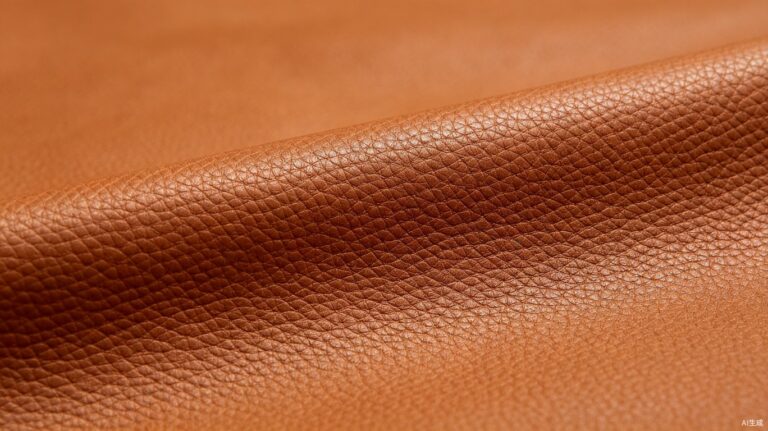
Designers select from PU leather swatches like these — but durability data rarely accompanies the samples.
But here’s the thing: market share and performance are not the same metric. If you’re new to the material, our PU leather overview covers the basics — but the performance gaps below are what most specifiers miss.
The 18-Month Peeling Problem: PU Chemistry Explained
Polyurethane vegan leather is made by coating a fabric base — usually polyester or cotton — with a layer of polyurethane. That PU coating is what gives the material its leather-like appearance and soft hand feel. It’s also what eventually destroys it.
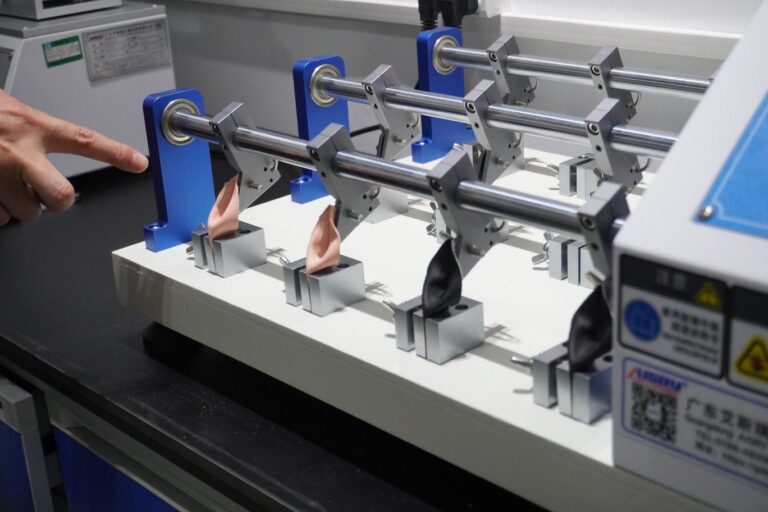
The failure mechanism is hydrolysis. The ester bonds in polyurethane break down when exposed to moisture, heat, and UV light. This isn’t a manufacturing defect — it’s the fundamental chemistry of the material. In our Martindale abrasion testing, PU leather samples show visible surface degradation after 20,000 to 50,000 cycles. By contrast, silicone leather samples we test reach 200,000+ cycles with no surface change.
Firsthand finding: In our lab, PU leather upholstery exposed to 80°C and 90% humidity (simulating a parked car interior in summer) showed coating separation at week 6. The same test on silicone-coated fabric showed zero degradation through week 26.
In practical terms, this means PU vegan leather in automotive interiors starts peeling within 14-18 months in hot climates. Furniture upholstery lasts slightly longer — 2 to 5 years — but the trajectory is always the same: gradual softening, then micro-cracking, then visible peeling at stress points.

Water resistance testing reveals how coating integrity affects long-term performance.
DMF Solvents and VOCs: The Hidden Trade-Off
The environmental story of polyurethane vegan leather is more complicated than the “cruelty-free” label suggests. Most PU leather is manufactured using dimethylformamide (DMF) — a solvent classified as a substance of very high concern under EU REACH regulations. DMF is known to harm liver function and reproductive health, and trace residues can remain on finished products.
Water-based PU production methods reduce VOC emissions, but they haven’t displaced solvent-based processes at scale — cost and performance trade-offs keep DMF-based PU as the industry default. The result: a material marketed as “eco-friendly” and “vegan” that releases volatile organic compounds into enclosed spaces like car cabins and living rooms.
For B2B buyers sourcing materials for regulated applications — automotive interiors, medical furniture, children’s products — VOC compliance isn’t optional. PU leather’s moderate-to-high VOC profile makes it a liability in these segments, especially as indoor air quality standards tighten.
Watch how silicone leather outperforms PU in side-by-side durability testing.
What Designers Should Specify Instead: Silicone Leather
If polyurethane vegan leather dominates the market but fails in the field, what should designers specify? The answer depends on your application, but for projects where longevity matters — automotive, furniture, medical, marine — silicone-coated leather is the material that actually delivers on the promises PU only makes.
Silicone leather uses a polysiloxane coating (derived from silica — sand) applied to a fabric base. No DMF. No solvents. No VOC emissions. The Si-O polymer backbone has a bond energy of 452 kJ/mol, compared to polyurethane’s C-N bond at roughly 305 kJ/mol. That’s why silicone leather survives what kills PU: UV exposure, hydrolysis, thermal cycling, and repeated cleaning.

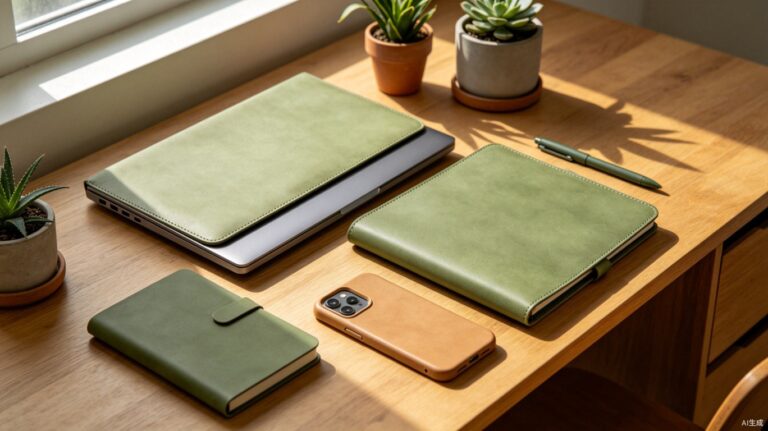
PU leather sofa upholstery — a common application where peeling becomes visible within 2-3 years.
| Property | PU Vegan Leather | Silicone Leather |
|---|---|---|
| Service life | 2-5 years | 10+ years |
| Martindale abrasion | 20K-50K cycles | 200K+ cycles |
| VOC emissions | Moderate-high | Zero |
| Temperature range | -20C to 80C | -40C to 250C |
| Recyclable | Limited | 100% |
Silicone leather is also PVC-free, phthalate-free, and DMF-free — making it genuinely vegan and eco-friendly, not just marketed as such. It’s FDA food-contact compliant, ISO 10993 biocompatibility certified, and safe for direct skin contact in ways PU cannot match.
Request PU vs Silicone Samples
Is polyurethane leather actually vegan?
Yes — PU leather contains no animal-derived materials. It’s made from a polyurethane coating on a fabric base. However, “vegan” refers to the absence of animal products, not to environmental or health safety. PU leather may still involve DMF solvents and VOC emissions during production, which is why many eco-conscious specifiers are moving to solvent-free silicone leather.
How much longer does silicone leather last compared to PU?
In our Martindale abrasion testing, silicone leather achieves 200,000+ cycles versus PU’s typical 20,000-50,000 cycles — a 4 to 10x difference. In real-world applications, silicone leather lasts 10+ years versus PU’s 2-5 years. The performance gap widens further in hot, humid, or UV-exposed environments where PU degrades fastest.
The Bottom Line for Specifiers
Polyurethane vegan leather owns 55% of the market because it’s cheap, available, and good enough on day one. But “good enough on day one” isn’t a specification standard — it’s a warranty claim waiting to happen. If your project needs material that still looks right in year five, not just year one, silicone leather is the polyurethane vegan alternative that actually performs.