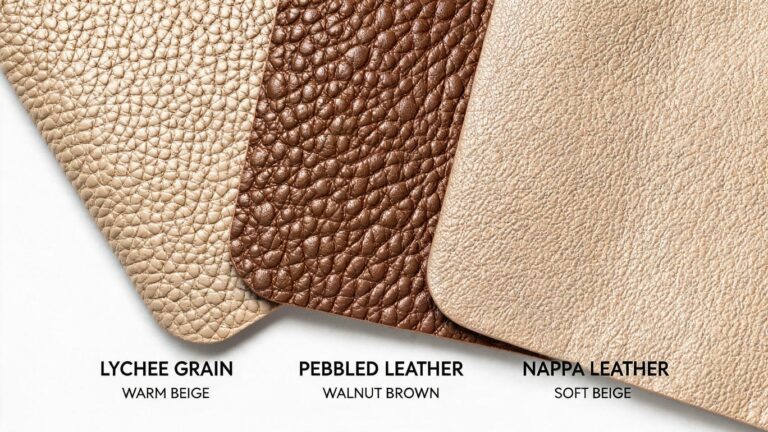
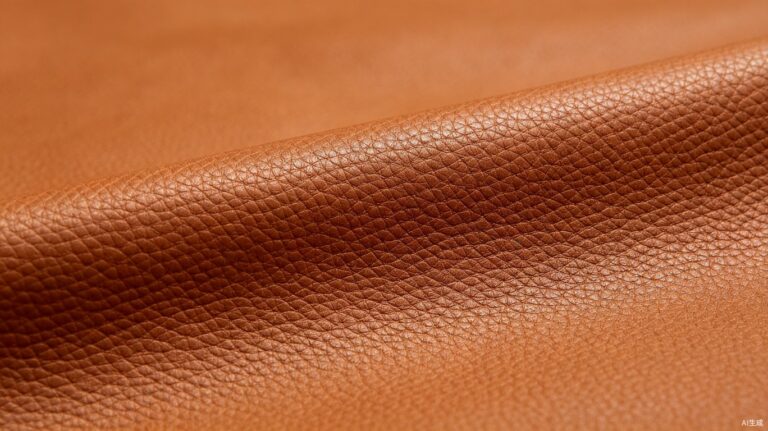
Vegan leather is now a $12.6 billion market, heading toward $26.8 billion by 2033. Here is the uncomfortable part. Roughly 89% of it is plastic. Synthetic coated fabrics dominate the category, not plant-based or next-gen materials.
Buyers who search for leather free upholstery often read the label as a promise of durability, ethics, or sustainability. It certifies none of the three. This article runs the five-year cost numbers on the four materials hiding behind that label. It also lists exactly what to verify before you sign.
| Material | What the Label Hides | Typical Field Failure | Replacements by Year 5 | 5-Year Material Spend* |
|---|---|---|---|---|
| PVC coated fabric | Phthalate plasticizers, oil-based feedstock | Stiffens, shrinks, cracks as plasticizers leach out | 1-2 | 2-3x the upfront quote |
| PU coated fabric | Urethane bonds vulnerable to hydrolysis | Topcoat peels in humid or wet-cleaned settings | 1-2 | ~2x the upfront quote |
| Microfiber PU | Better substrate, same PU binder | Edge wear and delamination at 5-7 years | ~1 | ~1.5x the upfront quote |
| Silicone leather | Nothing — Si-O backbone resists hydrolysis | 10+ years of normal service | 0 | 1x the upfront quote |
*Typical landed-cost multiples we see across B2B furniture and seating programs, per square meter.
What “Leather Free” Actually Certifies — and What It Doesn’t
The label excludes one thing: animal hide. That is all it claims. “Vegan leather,” the term most often printed beside it, is a marketing word, not a technical material. Most versions are PVC or polyurethane made from fossil feedstock, and they do not biodegrade at end of life.
It gets messier. A leather free sofa can still contain animal-derived adhesives, dyes, or padding underneath the surface. So the hang tag proves neither vegan status, nor plastic-free content, nor sustainability. When a supplier shows you a leather free fabric, ask one real question: what is the coating chemistry? Ask for the composition sheet, not the label.

Most leather free rolls are plastic coatings like this PVC material — the label never says so.
The Leather Free Roll That Dies in Year Two
Each plastic-backed option fails in its own way, and the failure mode sets your replacement clock. PVC rarely dies from abrasion. It dies from plasticizer loss: the sheet stiffens, shrinks, and spider-cracks, usually in year two or three. PU rarely loses plasticizers. It dies from hydrolysis, and humid climates or daily wet wiping accelerate the reaction.
We have watched this play out on hospitality jobs. A contract seating line that looked flawless at handover showed cracking on the seat returns within 20 months. On furniture and sofa upholstery programs, that is the moment re-upholstery budgets wake up.

Seat edges and returns are where leather free PU coatings fail first in daily use.
The Four Hidden Costs Missing From Your Quote
Procurement teams compare dollars per square meter because it is the only number the quote sheet shows. The five-year bill includes three more lines that never appear on it.
- Replacement material bought at year two or three, at then-current prices
- Re-upholstery labor, freight, and the downtime of every pulled seat
- Compliance rework when VOC or phthalate limits tighten under REACH
- Warranty claims and the review traffic that follows a peeling sofa
Stack those lines and the cheapest roll often costs double its sticker price by month 36. That is the arithmetic behind this leather free cost analysis. Run it per service-year, not per meter, and the ranking on your bid sheet flips.

Coating chemistry is decided here, long before any label is printed.
Running the Five-Year Numbers: Silicone vs the Plastic Pack
Silicone leather is the one leather free option whose chemistry removes the replacement clock. The Si-O backbone does not cleave under water-driven hydrolysis. In our accelerated testing at 70°C and 95% relative humidity for 14 days, tensile strength and elongation showed no measurable change. Surface durability clears 200,000 Martindale cycles (ISO 12947-2), and VOC emissions come back non-detect (ISO 16000-6).
The honest trade-off: silicone leather quotes higher per meter than PVC or PU on day one. The gap closes around year three and never reopens. Our silicone vs PU durability data walks through the full comparison, test by test.

Every leather free candidate should survive this rig before it survives your warranty period.
Watch how silicone stacks up against PVC and PU when the clock, not the price tag, is the judge.
Is leather free the same as plastic free?
No. The label only excludes animal hide. Roughly 89% of the vegan leather market is plastic-coated fabric. If plastic-free content matters to your spec, verify the coating chemistry and the backing fiber in writing.
Which certifications should a leather free material carry for furniture?
Demand REACH compliance, phthalate-free testing, and a VOC report to ISO 16000-6 at minimum. Child-adjacent product lines should add EN 71. Our rolls pass all three, and the reports ship with every sample pack.
How to Buy Leather Free Without Overpaying
| If your brief needs | Choose |
|---|---|
| Lowest upfront price on a 2-3 year refresh cycle | PVC — and budget the replacement into the model |
| Five-plus years in a dry residential setting | PU, only with a written hydrolysis report |
| Ten-plus years, wet cleaning, child-safe, or marine | Silicone leather |
| A defensible vegan or low-impact claim | Audit the full bill of materials, not the hang tag |
“Leather free” is a starting filter, not a finish line. The five-year numbers decide the purchase, not the label. If your brief needs a leather free material that survives the warranty period, our eco-friendly silicone leather line was built for exactly that job.
About TOPSUN
TOPSUN supplies organic silicone leather to furniture and hospitality brands replacing PVC and PU rolls that fail inside their warranty window.
Three production bases deliver 6 million meters a year. Rolls clear 200,000+ Martindale cycles, non-detect VOC, and EN 71 / FDA contact-grade lines, with OEM color and texture matching.
References
1. https://www.grandviewresearch.com/industry-anal… — vegan leather market at $12.6B (2026) growing to $26.8B (2033); synthetic segment holds ~89% share.
2. https://ambianto.com/blogs/living/is-leather-fr… — leather-free labeling does not exclude animal-derived adhesives, dyes, or padding.
3. https://www.leathernaturally.org/faqs/ — “vegan leather” is a marketing term; most variants are oil-based PVC or PU that do not biodegrade.