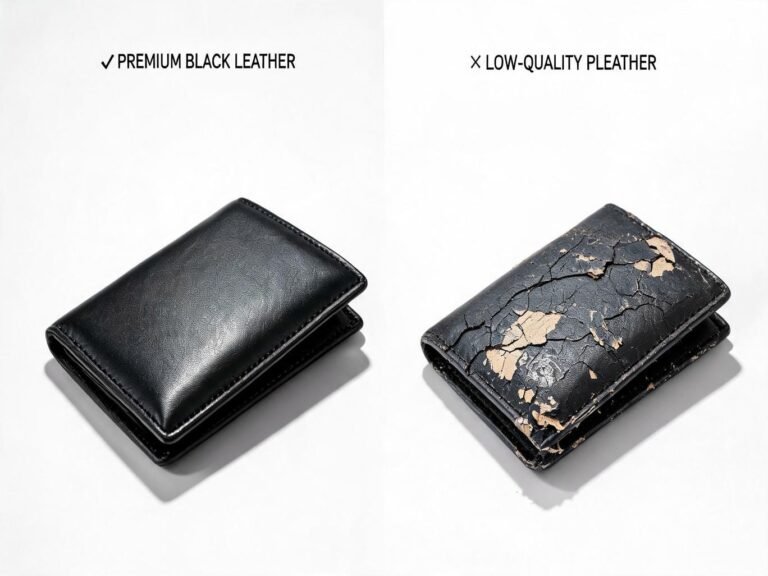
A furniture manufacturer we supply received a purchase order for 3,000 conference room chairs. The original spec called for polyurethane fake leather at $4.20 per square meter. By year four, 38% of the chairs had visible peeling on armrests and seat edges. The replacement cost — material, labor, logistics, downtime — came to $47 per unit. The procurement team had saved $11,400 on initial material cost and lost $53,400 on replacements. Polyurethane fake leather dominates the mid-tier upholstery market because it looks acceptable on a spec sheet and passes basic quality inspections at delivery. The failure happens later — in years three through five, when hydrolysis, UV degradation, and plasticizer migration compound into visible surface breakdown. This guide examines what PU fake leather actually delivers, where its hidden costs accumulate, and how procurement teams can build specifications that survive the full product lifecycle.
Request PU vs Silicone TCO Analysis
What Polyurethane Fake Leather Actually Delivers
Polyurethane fake leather is a coated fabric: a polyester or nylon base fabric laminated with a polyurethane resin layer that mimics the grain and hand-feel of genuine leather. At the point of delivery, it performs reasonably well. The surface is soft, pliable, and visually consistent across batches. Basic abrasion testing — Martindale 30,000 to 80,000 cycles — passes most commercial furniture and automotive trim thresholds. For procurement teams evaluating material against a price-per-square-meter target, PU looks like the rational choice.
The problem is that delivery-day performance is not lifecycle performance. PU’s polyurethane coating undergoes hydrolytic degradation — a chemical reaction where water molecules break the ester bonds in the polymer chain. This process is invisible at first, then accelerates rapidly. Humidity, body oils, and cleaning chemicals all catalyze the reaction. In our testing, PU samples stored at 70°C and 95% relative humidity show surface cracking within 6 weeks — simulating approximately 2 to 3 years of tropical climate exposure. The hydrolysis-resistant silicone leather alternative shows zero degradation under identical conditions after 1,000 hours.

Tensile strength testing equipment evaluating polyurethane fake leather mechanical performance under load
Polyurethane fake leather durability is not uniform across the market. The performance range depends on three manufacturing variables: the PU resin formulation (polyether-based vs polyester-based), the coating thickness (0.3mm to 1.2mm), and the base fabric density. Polyester-based PU costs less but hydrolyzes faster. Polyether-based PU resists hydrolysis better but costs 20-30% more and still degrades within 5 years. No PU formulation achieves the 10-15 year lifespan that procurement teams need for commercial applications.
The 3-5 Year Failure Window Nobody Budgets For
The most common polyurethane fake leather peeling pattern follows a predictable timeline. Years one and two: the surface maintains appearance with minor softening of the coating. Year three: micro-cracking appears at stress points — seat edges, armrest curves, stitching holes. Year four: the topcoat delaminates from the base fabric in visible patches. Year five: widespread peeling renders the product unsellable or unfit for commercial use. This is not a quality control failure. It is the material’s inherent chemical destiny.

Polyurethane fake leather durability testing revealing surface cracking and coating delamination
For procurement teams, this failure window creates a budgeting blind spot. Most commercial furniture warranty periods run 1 to 2 years — well within the grace period before visible degradation begins. The replacement cost hits in years three through five, after the warranty has expired and the replacement budget belongs to a different fiscal cycle. In our experience with hospitality and corporate furniture clients, the true cost of PU fake leather ownership is 2.8 to 4.1 times the initial material cost when replacement labor, logistics, and business disruption are included.
A 500-unit office chair project using PU fake leather at $4.20/sqm saves $6,300 in initial material cost versus silicone leather — but generates $23,500 in replacement costs by year five. Net loss: $17,200.
Hydrolysis: The Silent Killer of PU Specifications
Hydrolysis is the chemical breakdown that defines polyurethane fake leather hydrolysis resistance — or rather, the lack of it. Water molecules penetrate the PU coating and cleave the ester bonds in the polymer backbone. The reaction rate doubles for every 10°C increase in temperature. In tropical and subtropical markets — Southeast Asia, the Gulf states, southern United States — ambient humidity of 70-90% combined with indoor temperatures of 25-35°C creates ideal hydrolysis conditions year-round.
The automotive industry recognized this problem decades ago. PU leather used in car interiors in humid markets typically shows steering wheel peeling and seat edge cracking within 3 years. OEM specifications in tropical markets now require hydrolysis resistance testing of 500+ hours at 70°C/95% RH — a threshold that standard PU fake leather cannot meet without expensive stabilizer additives. Even with additives, PU maxes out at 300-500 hours before degradation begins. Silicone leather, by contrast, is inherently hydrophobic — its siloxane backbone contains no ester bonds to cleave — and passes 1,000+ hour hydrolysis tests with no measurable change in surface properties.

Silicone leather production process flow chart showing solvent-free coating versus PU solvent-based manufacturing

High-temperature drying oven used in leather coating production — solvent evaporation stage critical for DMF residue control
Beyond hydrolysis, PU manufacturing carries a regulatory risk that procurement teams overlook: DMF (dimethylformamide) residue. Traditional PU production uses DMF as a solvent in the wet-coating process. Residual DMF in finished material can exceed REACH SVHC limits and trigger supply chain compliance failures in EU markets. The European Chemicals Agency has flagged DMF as a substance of very high concern due to its reproductive toxicity classification. Procurement specifications that do not explicitly require DMF-free certification leave buyers exposed to compliance liability. The silicone vs PU comparison data shows that silicone leather uses a solvent-free coating process — eliminating DMF, VOC emissions, and the associated regulatory burden entirely.
Polyurethane Fake Leather vs Silicone Leather: TCO Compared
Procurement decisions should be driven by total cost of ownership, not unit price. The table below compares the two materials across six TCO dimensions that directly impact the procurement bottom line over a 10-year product lifecycle.
| TCO Factor (10-Year Horizon) | PU Fake Leather | Silicone Leather |
|---|---|---|
| Initial Material Cost | $3–6 / sqm | $12–18 / sqm |
| Replacement Cycles | 2–3 replacements | 0 replacements |
| Hydrolysis Resistance | 300–500 hrs (degrades) | 1,000+ hrs (stable) |
| DMF/Solvent Residue Risk | High (REACH SVHC) | None (solvent-free) |
| Compliance Testing Cost | $2,000–5,000 / batch | Pre-certified (included) |
| 10-Year TCO per sqm | $18–32 (with replacements) | $12–18 (no replacements) |
The table reveals the procurement paradox at the heart of polyurethane fake leather vs silicone leather decisions. PU’s initial cost advantage evaporates by year five and becomes a deficit by year seven. The compliance testing cost — which procurement teams often overlook — adds $2,000 to $5,000 per batch for PU materials requiring DMF, VOC, and azo dye testing. Silicone leather arrives pre-certified against REACH, RoHS, and OEKO-TEX standards, eliminating this recurring expense. For buyers evaluating PU polyurethane leather for bulk orders, the TCO math favors silicone leather in any application with a product lifecycle exceeding 5 years.
Durability comparison — silicone leather versus traditional PU synthetic materials under accelerated aging tests
Specification Checklist for Bulk PU Procurement
If your project requires polyurethane fake leather — whether due to budget constraints, client specifications, or short product lifecycles — the following checklist helps minimize the hidden costs and compliance risks identified above.
- Specify polyether-based PU, not polyester-based. Polyether PU costs 20-30% more but extends hydrolysis resistance from 100 hours to 300-500 hours. Require test data from an accredited lab.
- Require DMF-free certification. The supplier must provide third-party test reports confirming DMF residue below 1,000 ppm (REACH SVHC threshold). Without this, EU-bound shipments may be rejected at customs.
- Set minimum Martindale at 50,000 cycles. Standard PU tests at 30,000-40,000 cycles, which is insufficient for commercial furniture. Specifying 50,000+ narrows the supplier pool to higher-quality manufacturers.
- Include UV resistance minimum of 500 hours (xenon arc, Grade 3-4). PU without UV stabilizers fades after 200-300 hours of accelerated weathering, causing visible color mismatch within 18 months.
- Document the replacement budget upfront. If PU is specified for a 10-year product, allocate 2-3 replacement cycles in the project budget. This makes the true cost visible to decision-makers at the approval stage.
For projects where the product lifecycle exceeds 5 years, the specification decision should include a silicone leather alternative evaluation. The furniture sofa application data from our production lines shows that silicone leather achieves Martindale 100,000-200,000+ cycles, hydrolysis resistance of 1,000+ hours, and UV resistance of 1,500+ hours — all without DMF, plasticizers, or VOC emissions. For procurement teams managing leather and PU compliance safety across multiple product lines, silicone leather eliminates the recurring testing, certification, and replacement overhead that PU procurement creates.
Get Bulk Material Specifications
Frequently Asked Questions
What specification should I require from PU leather suppliers to minimize peeling?
Require three documents: a hydrolysis resistance test report (minimum 300 hours at 70°C/95% RH), a DMF residue certificate (below 1,000 ppm), and a Martindale abrasion test showing 50,000+ cycles. Additionally, specify polyether-based PU rather than polyester-based — the supplier should confirm the resin type in writing. These three specifications will narrow your supplier pool to the top 20% of PU manufacturers and extend the expected failure window from 3 years to approximately 5 years. However, no PU specification can eliminate hydrolytic degradation entirely — the chemistry is inherent to the material.
How does DMF solvent residue in PU leather affect regulatory compliance?
DMF (dimethylformamide) is classified as a Substance of Very High Concern under EU REACH regulation due to reproductive toxicity. PU leather manufactured using the traditional wet-coating process retains residual DMF in the polymer matrix. EU customs may reject shipments exceeding the SVHC threshold of 1,000 ppm, and products placed on the market with non-compliant DMF levels carry legal liability for the importer — not the manufacturer. California’s Prop 65 also lists DMF as a regulated substance. Procurement specifications should explicitly require DMF-free certification with third-party lab verification. Silicone leather, which uses a solvent-free coating process, eliminates this compliance risk entirely.
Building a Future-Proof Material Specification
Polyurethane fake leather has earned its place in the mid-tier upholstery market through low unit cost and acceptable delivery-day performance. But procurement teams who evaluate materials against 10-year product lifecycles — not just initial purchase orders — know that PU’s cost advantage is an illusion. The 3-5 year failure window, hydrolysis degradation, DMF compliance risk, and recurring testing costs accumulate into a total cost of ownership that exceeds silicone leather by year seven. For products destined for humid climates, regulated markets, or applications where replacement labor exceeds material cost, the specification decision should default to silicone leather. The material eliminates every failure mode that drives PU replacement costs — hydrolysis, UV fading, plasticizer migration, and solvent residue — while delivering 10-15 year lifespan performance verified through accelerated aging tests. Procurement teams that build specifications around total cost of ownership, not unit price, will find that the more expensive material is the less expensive choice. Explore how solvent-free synthetic leather can reduce your compliance and replacement overhead.
About TOPSUN
TOPSUN provides B2B procurement teams with silicone leather material specifications, TCO comparison data, and pre-certified compliance documentation — including REACH, RoHS, and OEKO-TEX test reports — so buyers can evaluate total cost of ownership without funding additional lab testing. Our sample program delivers material swatches within 5 business days for side-by-side evaluation against PU alternatives.
Solvent-free production · Zero DMF · Hydrolysis 1,000+ hrs · Martindale 100K-200K+ cycles · UV 1,500+ hrs · Pre-certified compliance docs · 5-day sample delivery