The visual and tactile character of synthetic leather — its grain pattern, surface texture, and hand-feel — is not created by the coating chemistry alone. It originates in the mold making process, where precision-engineered embossing rollers transfer texture patterns onto the material surface during production. For OEM buyers who need custom textures, unique brand signatures, or specialized surface finishes, understanding how molds are designed and manufactured is essential for evaluating suppliers and managing lead times. This technical guide covers the key mold making methods used in synthetic leather production, design considerations, and practical tips for specifying custom textures.
The Role of Molds in Synthetic Leather Production
In synthetic leather manufacturing, molds serve one primary function: they imprint the surface texture onto the material during the coating and curing process. The mold is typically an embossing roller (also called an embossing cylinder) mounted on the production line, which presses a pattern into the coated surface before the material is fully cured. The MoldMaking Technology industry resource highlights that precision roller engraving has advanced significantly with modern CNC and laser systems, achieving tolerances under 0.01mm — critical for high-fidelity leather texture reproduction.
The quality of the mold directly determines the fidelity of the final surface texture. A precisely machined mold transfers clean, consistent grain patterns across the full width of the production line. A poorly machined mold produces inconsistent textures, visible defects, and registration errors that are impossible to correct after production.
At TOPSUN, our mold making process begins with the customer’s texture design or reference sample. We then engineer the embossing roller to replicate that texture at production scale, testing and refining through multiple prototype iterations before committing to full production. Our texture design service covers the full workflow from concept to production-ready mold.

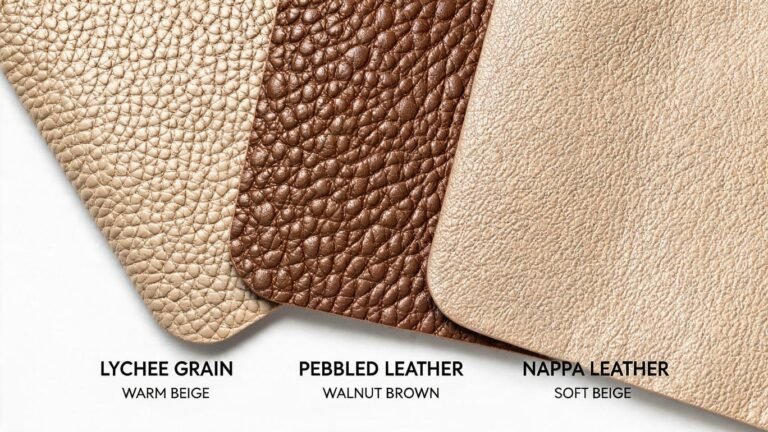
Surface texture detail — the quality of mold making is directly visible in the precision of the final leather grain pattern.
Mold Making Techniques for Leather Textures
Several mold making methods are used in synthetic leather production, each suited to different texture complexity levels and production volumes:
| Technique | Process | Best For | Lead Time |
|---|---|---|---|
| CNC Engraving | Computer-controlled milling cuts the pattern directly into a steel roller | High-fidelity reproduction of complex textures | 15-25 working days |
| Chemical Etching | Acid or electrochemical etching creates patterns on roller surface | Uniform fine-grain textures (pebble, haircell) | 10-15 working days |
| Laser Engraving | High-precision laser ablates material from roller surface | Deep textures and 3D patterns | 10-20 working days |
| Electroforming | Electrodeposition builds a nickel shell from a master pattern | Exact replication of natural leather samples | 20-30 working days |
Engineering Insight: In our experience, the most common mistake buyers make is underestimating the importance of mold depth. A texture that looks perfect on a 5cm sample may not transfer consistently across a 1,500mm-wide production line if the mold depth is insufficient. We recommend specifying a minimum embossing depth of 0.3-0.8 mm for standard leather textures, and 0.8-1.5 mm for deep-grain patterns like crazy horse or distressed effects.
Design Considerations for Custom Leather Textures
When commissioning custom mold making for synthetic leather, several technical factors affect the feasibility and cost of the final texture:
- Pattern Repeat Size. Smaller repeat sizes (under 50mm) require higher mold precision and cost more to produce. Larger repeats are easier to engineer but may create visible repetition on large surfaces like sofa backs.
- Depth Variation. Textures with variable depth (like natural leather grain with pores and wrinkles) require more complex molds. Uniform-depth textures (like pebble grain) are simpler and cheaper.
- Directionality. Some textures look different when rotated 90° or mirrored. If your product involves cutting from different orientations, specify a non-directional texture or plan for matched cutting.
- Release Characteristics. The mold design must allow clean release of the material after embossing. Deep undercuts or fine details that trap the coating compound will cause defects. This is especially critical for silicone leather, which has different release properties than PU or PVC.
- Roller Material. Most embossing rollers are made from hardened steel (HRC 58-62) for long service life. Nickel-shelled rollers offer faster prototyping but shorter lifespan. For high-volume production, steel is the standard.

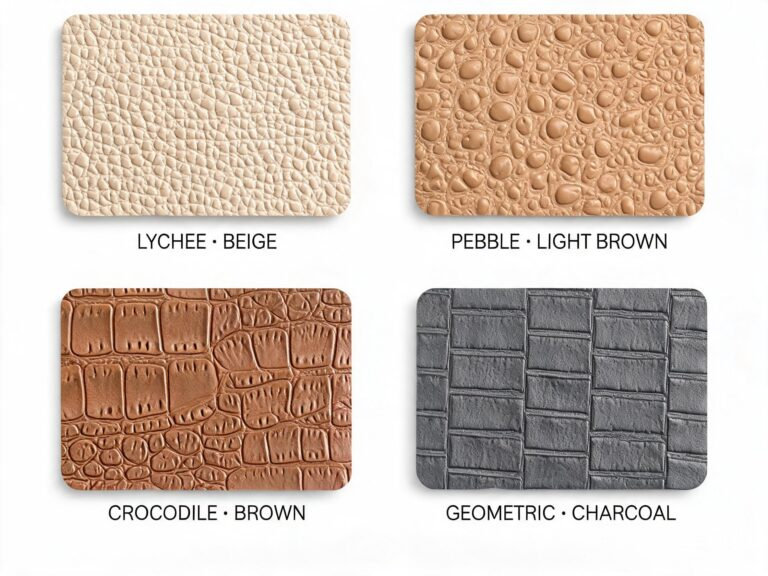
Printed silicone leather patterns — each texture starts as a mold design before being transferred to the production line.
From Mold to Finished Surface: Texture Transfer in Production
Understanding how the mold interacts with the production line helps buyers appreciate why texture consistency requires both mold precision and process control. The video below shows how different surface finishes are achieved through various mold configurations:
See how different mold configurations create various silicone leather surface finishes — from smooth to deep-grain textures.
Visit Our Mold Making Workshop
Evaluating Mold Making Capability in a Leather Supplier
A supplier’s mold making capability is a strong indicator of their overall technical sophistication. Here is what to assess:
- In-House vs. Outsourced. Suppliers with in-house mold making can iterate faster and maintain tighter quality control. Outsourced molds add lead time and communication complexity.
- Prototype Capability. Can they produce prototype samples from the mold before committing to full production? A single texture proof that you can inspect, touch, and test is invaluable.
- Mold Inventory. How many standard textures do they stock? A supplier with 100+ textures can offer faster turnaround for common patterns. Custom molds are still needed for unique designs.
- Texture Library Access. Do they provide physical sample books or digital texture previews? This is essential for comparing options before committing to a mold. For our full range, see our leather texture customization guide.
- Mold Maintenance Program. Embossing rollers wear over time and need periodic refinishing. A supplier with a structured maintenance program ensures consistent texture quality across production batches.

Embossing rollers on the production line — precision mold making ensures consistent texture transfer across every meter of material.
Frequently Asked Questions
How long does it take to create a custom leather texture mold?
Typically 15-30 working days, depending on complexity. Simple uniform textures (pebble grain, smooth) can be completed in 10-15 days. Complex multi-depth patterns with natural leather characteristics require 20-30 days. This includes design engineering, prototype production, and approval rounds.
Can a mold replicate genuine leather grain exactly?
Yes, through electroforming. This technique uses a genuine leather sample as the master pattern, creating a nickel shell that captures the exact surface topography including pores, wrinkles, and natural variations. The result is virtually indistinguishable from the original leather under visual and tactile inspection.
What is the cost of a custom embossing mold?
Costs vary widely based on technique, complexity, and roller dimensions. As a rough guide, a standard-width (1,500mm) CNC-engraved steel roller for a medium-complexity texture typically costs $3,000-$8,000. Electroformed nickel shells for exact leather replication are $2,000-$5,000. These are one-time costs — the mold itself lasts for millions of meters of production.
How do molds for silicone leather differ from PU leather molds?
The fundamental mold making process is similar, but silicone leather requires molds with slightly different release characteristics. Silicone has lower surface energy than PU, which affects how it flows into fine mold details. Additionally, silicone’s higher processing temperatures (150-200°C) demand molds made from heat-resistant materials — standard aluminum molds may deform. Steel and nickel molds are preferred for silicone leather production. For more on how silicone processing differs from conventional methods, see our silicone vs PU comparison.
Getting Your Texture Right from the Start
Mold making is the invisible foundation of synthetic leather quality. A well-engineered embossing roller produces textures that are consistent, reproducible, and faithful to the design intent — across millions of meters of production. A poorly made mold produces defects that cannot be fixed after the fact.
For buyers commissioning custom textures, the most important step is investing in a thorough prototype review. Touch the sample, examine it under different lighting angles, and test it with your intended production process. The time spent evaluating a texture proof before production will save far more time and money than correcting texture problems after thousands of meters have been manufactured.
Discuss Your Custom Texture Project
About TOPSUN
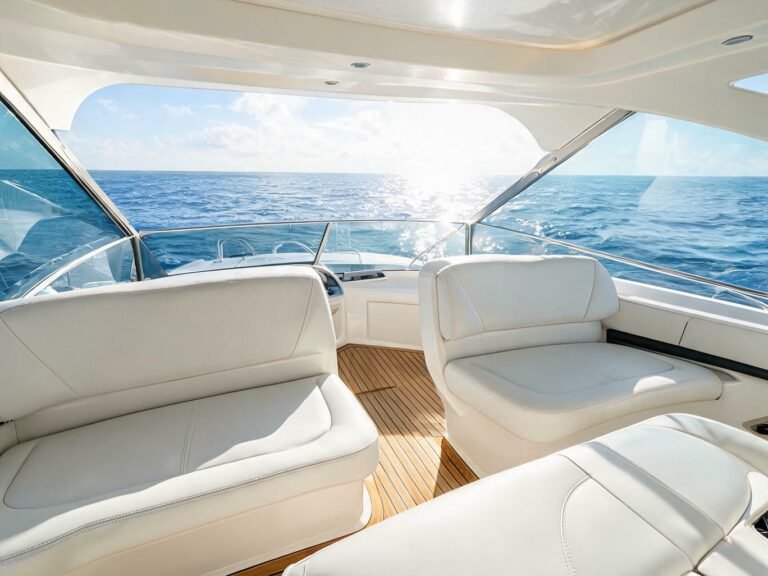
TOPSUN operates in-house mold making capabilities with CNC engraving, chemical etching, and electroforming technologies. Our mold library includes 100+ standard textures, and we develop custom embossing rollers for OEM buyers across automotive, furniture, fashion, and marine sectors. 18 production lines ensure fast turnaround from mold approval to volume production.
Relevant Certifications: ISO 9001 Quality Management | REACH | SGS & Intertek Tested