A microfiber upholstery fabric spec sheet arrives on your desk showing 50,000 Martindale cycles, 30,000 double rubs, and a “heavy-duty commercial” rating. The numbers look solid — until year three, when the lobby sofa starts flaking. The armrests develop a chalky white residue. The seat cushions show permanent indentations where the same guest sat every morning. And the deep charcoal black you specified has faded to an uneven gray-brown. Lab tests passed. Real furniture failed. As a product development engineer who has run both sides of this equation — accelerated aging chambers and field failure analysis — I can tell you the gap between Martindale ratings and real-world service life is where B2B specifiers lose millions. Here’s what the data actually shows.
Request Material Comparison Samples
What Is Microfiber Upholstery Fabric? Composition and Structure
Microfiber upholstery fabric is constructed from ultra-fine polyester or polyester-nylon fibers — typically under one denier in diameter — woven or non-woven into a dense, suede-like surface. In its leather-variant form, microfiber leather adds a polyurethane (PU) coating or coagulated PU binder to create a leather-like hand feel. The fiber matrix gives it decent tensile strength and a softness that approaches genuine leather, which is why it became a popular mid-tier furniture upholstery material for sofas, recliners, and automotive seats.

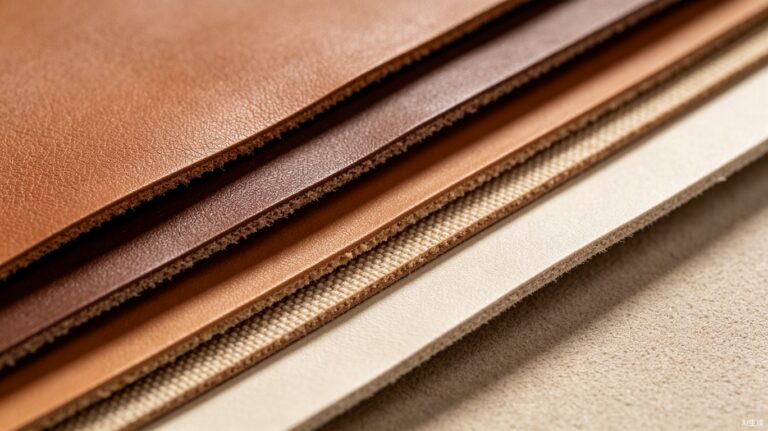
Color fastness testing equipment used to evaluate UV resistance and fading in upholstery materials
But here’s the engineering problem: the PU binder in microfiber upholstery is the same chemical family that fails in standard PU leather. The polyester fiber substrate is durable — it’s the coating and binding chemistry that degrades. When a specifier sees “microfiber” on a spec sheet, they’re often thinking about the fiber durability. When I run failure analysis on returned commercial furniture, the fiber is usually intact. It’s the PU matrix surrounding it that has hydrolyzed, cracked, or delaminated.
Failure Mode 1: Hydrolysis — The PU Binder Breaks Down
Hydrolysis is the chemical breakdown of polyurethane when exposed to heat and humidity. In microfiber upholstery fabric, the PU binder holding the fiber matrix together undergoes the same reaction that destroys standard PU leather — just slower, because the fiber substrate provides partial structural support. But “slower” still means failure within 3 to 5 years in humid environments like Southeast Asia, the US Gulf Coast, or any commercial space with daily cleaning and humidity control cycles.
The chemistry is straightforward: water molecules attack the ester bonds in polyester-based PU resins (the most common and cheapest type used in microfiber upholstery). The result is chain scission — the polymer chains literally break apart, causing the surface to become tacky, then brittle, then flake. Premium microfiber uses polyether-based PU resins that resist hydrolysis better, but they cost 40-60% more, and most B2B suppliers don’t specify which resin they’re using.
I’ve run the 5-week Jungle Test (70°C, 95% RH) on both standard and premium microfiber upholstery. Standard polyester-PU microfiber showed surface cracking by week 2. Premium polyether-PU microfiber survived to week 4 but showed measurable tensile strength loss (-18%). Silicone leather showed zero degradation after the full 5 weeks — because silicone has no ester bonds to hydrolyze. For more on this, see our hydrolysis resistance data.
Failure Mode 2: UV Fading and Fibril Matting
Microfiber upholstery fabric faces a second failure mode that lab Martindale tests don’t capture: UV degradation. The polyester fibers themselves are moderately UV-stable, but the PU coating and surface treatment are not. After 2 to 3 years of exposure to sunlight through windows or UV from fluorescent lighting in commercial spaces, the surface treatment breaks down. What follows is fibril matting — the microfibers collapse and fuse together, reducing surface reflectance from ~42% to ~29%. The material doesn’t just fade in color; it physically changes its light-scattering properties, creating a permanent “graying” effect that no cleaning process can reverse.

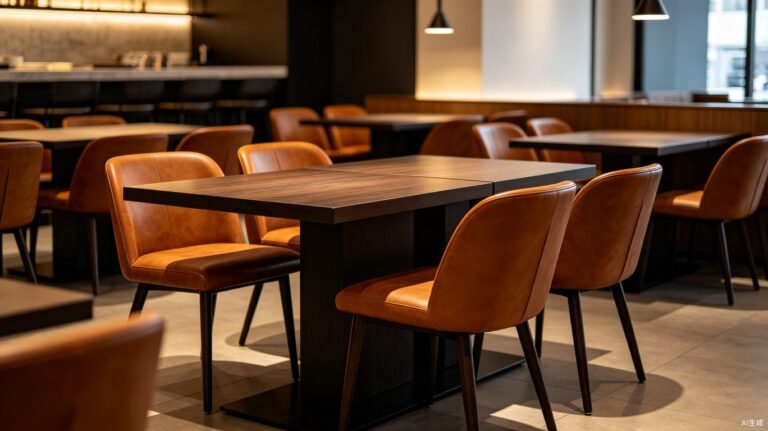
Microfiber upholstery in furniture applications — surface wear patterns visible after commercial use
This is distinct from dye fading. Many specifiers assume UV fading means color loss, but in microfiber upholstery, the dominant failure mode is structural: the fibrils themselves lose their integrity. Alkaline cleaners — the standard in hospitality disinfection protocols — accelerate this matting by swelling and softening the polyester fibers. Black and dark-colored microfiber is particularly vulnerable because the visual contrast between intact and matted fibers is highest, making the graying more noticeable.
Compare this to silicone leather, which maintains UV stability for 1,000+ hours of accelerated weathering (ASTM G154) with no fading or yellowing. The silicone polymer is inherently UV-stable — it doesn’t rely on UV inhibitors or surface treatments that can wear off. This is a fundamental chemical advantage, not a formulation improvement.
Failure Mode 3: Pile Crushing Under Sustained Point-Load
The third failure mode is mechanical, and it’s the one that catches specifiers off guard because it doesn’t show up in any standard abrasion test. Microfiber upholstery has a pile — a raised fiber surface that creates the suede-like texture. Under sustained point-load pressure (a 100kg guest sitting in the same position repeatedly, which is exactly what happens in lobby seating, restaurant booths, and transit seating), the pile collapses. The fibers compress flat and, once compressed, do not recover. The result is a permanent visible mark — a “sit print” — that appears within weeks on high-traffic commercial furniture.
This is a non-negotiable limitation. No amount of Martindale cycle testing will predict it because Martindale tests distributed abrasion, not localized compression. The fiber type, pile height, and backing density all affect crushing resistance, but no microfiber formulation eliminates it entirely. For hospitality specifiers writing FF&E specifications, pile crushing is the failure mode that triggers premature furniture replacement — not because the material is “worn out” but because it looks worn out.

Tensile strength testing equipment used to evaluate structural integrity of upholstery materials
Microfiber Upholstery Fabric vs Silicone Leather: Side-by-Side Data
When you place microfiber upholstery fabric next to silicone leather across the failure modes that actually determine commercial service life, the gap becomes measurable:
| Performance Metric | Microfiber Upholstery | Silicone Leather | Failure Risk |
|---|---|---|---|
| Martindale Abrasion | 50,000–80,000 cycles | 200,000+ cycles | Microfiber 2.5–4× lower |
| Hydrolysis Resistance | PU binder degrades in 3–5 yrs | No ester bonds — immune | Microfiber fails in humidity |
| UV Resistance | Fades in 2–3 years | 1,000+ hrs no fading | Microfiber grays permanently |
| Pile Crushing | Permanent sit-prints | No pile — solid surface | Microfiber non-recoverable |
| Heat Resistance | Up to 80°C | -40°C to 250°C | Microfiber deforms in sun |
| Cleanability | Water-safe, alkaline-sensitive | Bleach-safe, alcohol-safe | Microfiber degrades with disinfectant |
| Service Life | 3–5 years commercial | 10+ years commercial | Silicone 2–3× longer |
| VOC Emissions | Contains PU solvents | Zero-VOC process | Microfiber contributes to indoor VOC |
The pattern is clear: microfiber upholstery fabric performs well on the tests manufacturers choose to run (distributed abrasion, tensile strength) and fails on the conditions commercial furniture actually faces (humidity, UV, compression, chemical cleaning). For a deeper comparison, our silicone vs microfiber leather analysis covers additional performance attributes.
Why Silicone Leather Outlasts Microfiber in Commercial Use
The fundamental difference isn’t incremental — it’s chemical. Microfiber upholstery fabric relies on a PU binder for its leather-like properties. That binder has a predictable failure trajectory under real-world conditions. Silicone leather replaces the PU binder entirely with a platinum-cured silicone coating applied through a solvent-free dry coating process. Silicone has no ester bonds to hydrolyze, no UV-sensitive additives to degrade, and no pile structure to crush. It’s a solid, non-porous surface that maintains its physical properties across the full range of commercial environmental stressors.
One of our hospitality clients replaced microfiber upholstery on 200 lobby armchairs with TOPSUN silicone leather. After 4 years of continuous commercial use — daily cleaning with hospital-grade disinfectant, UV exposure through floor-to-ceiling windows, and constant guest seating load — zero panels required replacement. The microfiber it replaced had failed at 2.5 years with visible pile crushing, surface graying, and armrest delamination. The total cost of ownership calculation favored silicone leather by 38%, even at a higher per-meter initial cost.
For specifiers working on high-performance applications — hospitality, healthcare, marine, transit — the relevant question isn’t “what Martindale rating does this material have?” but “what happens to this material at year 3, year 5, and year 10?” Silicone leather answers that question with 10+ years of verified field performance. Microfiber upholstery fabric answers it with hydrolysis, fading, and crushing data that most suppliers don’t volunteer.
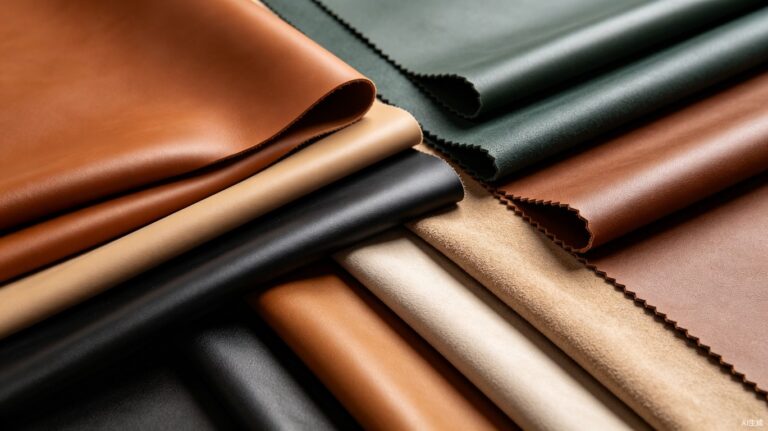
Durability comparison — how silicone leather outperforms microfiber and PU leather in real-world conditions
How to Specify Upholstery That Survives 10+ Years
If you’re writing a specification that needs to hold up in commercial environments, here’s what to document beyond Martindale numbers:
1. Hydrolysis test data: Request 5-week Jungle Test results (70°C, 95% RH) per ISO 11507. If the supplier can’t provide it, assume standard polyester-PU and plan for 3-year replacement.
2. UV stability data: Request ASTM G154 or ISO 105-B06 results showing 1,000+ hours with no color change above Grade 4. If fading data is absent, the material will gray in commercial UV exposure.
3. Compression recovery: For pile materials, request point-load compression testing data. If none exists, assume permanent sit-prints within 6-12 months of commercial use.
4. Chemical resistance: Specify compatibility with your actual cleaning protocol — not just water. If you use bleach, alcohol, or quaternary ammonium disinfectants, the material must survive repeated exposure without surface degradation.
5. VOC certification: Require ISO 16000-6 or VDA 277 results. Zero-VOC materials protect indoor air quality and meet increasingly stringent building codes.
For more on how silicone compares to PU-based materials across all performance dimensions, our technical comparison provides the full dataset. You can also review our microfiber leather vs genuine leather analysis for additional context on where microfiber fits in the material hierarchy.
Frequently Asked Questions
How long does microfiber upholstery fabric last in commercial use?
In commercial environments with daily use and regular cleaning, microfiber upholstery fabric typically lasts 3 to 5 years before showing visible failure — hydrolysis cracking, UV graying, or pile crushing. Premium grades with polyether-based PU resins can extend this to 5-8 years in moderate-humidity environments, but the underlying PU chemistry still degrades over time. Silicone leather, by comparison, maintains its physical properties for 10+ years in the same environments because it has no PU binder to hydrolyze and no pile structure to crush.
Why does microfiber upholstery fabric pass Martindale tests but still fail?
Martindale abrasion testing measures distributed surface wear under controlled conditions — it doesn’t capture the three failure modes that dominate real-world commercial use: hydrolysis (chemical breakdown from humidity), UV degradation (fading and fibril matting from light exposure), and pile crushing (permanent compression from sustained point-load). A material can achieve 50,000+ Martindale cycles and still fail at year 3 because the failure mechanism in commercial furniture isn’t distributed abrasion — it’s environmental and mechanical stress that the Martindale test doesn’t simulate.
Closing the Lab-to-Real-World Gap
Microfiber upholstery fabric isn’t a bad material — it’s a material specified for the wrong test. When the specification is based on Martindale cycles alone, microfiber looks competitive. When the specification includes hydrolysis resistance, UV stability, compression recovery, and chemical cleanability — the four metrics that actually determine commercial furniture lifespan — the performance gap becomes clear. For B2B specifiers who need upholstery that survives 10+ years of commercial use without replacement cycles, silicone leather delivers the chemical stability, UV resistance, and solid-surface durability that microfiber’s PU-dependent structure fundamentally cannot. That’s not a formulation difference. It’s a chemistry difference. And it’s the difference between replacing furniture at year 3 and replacing it at year 10.
Get a Durability Comparison Quote
About TOPSUN
TOPSUN manufactures silicone leather for B2B product developers and specifiers who need upholstery materials verified against real-world commercial failure modes — not just lab abrasion ratings.
200,000+ Martindale cycles verified per ISO 12947-2 | Hydrolysis-proof: no ester bonds, no PU degradation | UV-stable 1,000+ hours per ASTM G154 | -40°C to 250°C thermal range | Zero-VOC solvent-free process certified to REACH and FDA 21 CFR 177.2600 | 10+ year commercial service life documented across hospitality, healthcare, and marine applications