Zero point zero zero four dtex. That is the fineness of a single microfiber in top-grade synthetic leather. It is finer than the collagen bundles inside a cowhide, and one square meter packs thousands of them into a three-dimensional web. That web is why microfiber synthetic leather feels like leather instead of like plastic. I run a microfiber lab at a coated-fabric factory, and this guide opens the structure for you.
Four things follow: what the material actually is, how the eight-step process builds it, how it compares with PU and genuine leather, and how to judge quality before your order ships.
What Is Microfiber Synthetic Leather?
Start with the name. Microfiber synthetic leather is a nonwoven composite. A web of ultra-fine fibers, usually polyamide, is entangled into a felt, saturated with polyurethane, and finished with a surface layer. The fibers imitate the collagen bundles inside real hide. That structural mimicry separates it from ordinary PU leather, which is simply a PU film laid over a woven or knit fabric.
The extreme fineness comes from sea-island spinning. Two polymers are extruded together as one filament. One polymer forms the island, and the other forms the sea around it. After the web is built, the sea is dissolved away and only the islands remain as microfiber bundles. Softness and drape come from geometry, not from plasticizers that can migrate out later.
Under our lab microscope the difference is easy to see. Cut ordinary PU leather and you find fabric plus film. Cut microfiber synthetic leather and the cross-section looks like a felted maze. That maze is what grips stitches, absorbs flex, and keeps the surface from peeling off in sheets.
Thickness ranges tell you what a grade was built for. Thin sheets around 0.6 to 0.8 millimeters serve gloves and bag linings. Mid weights near 1.2 millimeters cover footwear and furniture. Heavy grades above 1.4 millimeters go into automotive seating and contract programs. The web structure keeps every tier flexible, because fibers bend where a film would crack. Match the tier to your stress profile before you compare prices.
How Microfiber Synthetic Leather Is Made
The process reads like tanning in reverse. Instead of preserving a hide, the factory builds a replacement from polymers. The eight steps below are the route most serious producers follow:
| Step | What happens | Why it matters |
|---|---|---|
| 1. Yarn creation | Two polymers extruded as one composite filament | Sets island count and final fiber fineness |
| 2. Spinning and cutting | Filament spun and cut into staple lengths | Prepares fibers for carding |
| 3. Carding | Fibers intertangled into nonwoven basecloth sheets | Gives the web its initial layout |
| 4. Needle punching | Barbed needles punch the basecloth, often 600-1,200 punches per square centimeter | Density here decides later strength |
| 5. Impregnation | Basecloth saturated with PU resin solution | PU becomes the binder between fibers |
| 6. Coagulation | Water bath coagulates the PU into a porous structure | Pores deliver breathability and hand feel |
| 7. Extraction | Sea component dissolved away | Leaves the microfiber bundles behind |
| 8. Finishing | Buffed and dyed for suede type, PU-coated for grain type | Decides the final look and surface spec |
Step 4 is where cheap products fail. If the needle density runs low, the web stays loose. After the sea dissolves, a loose web loses tear strength and the surface pills under abrasion. We run a simple fold test on incoming samples, but the honest number always comes from the supplier’s process sheet.
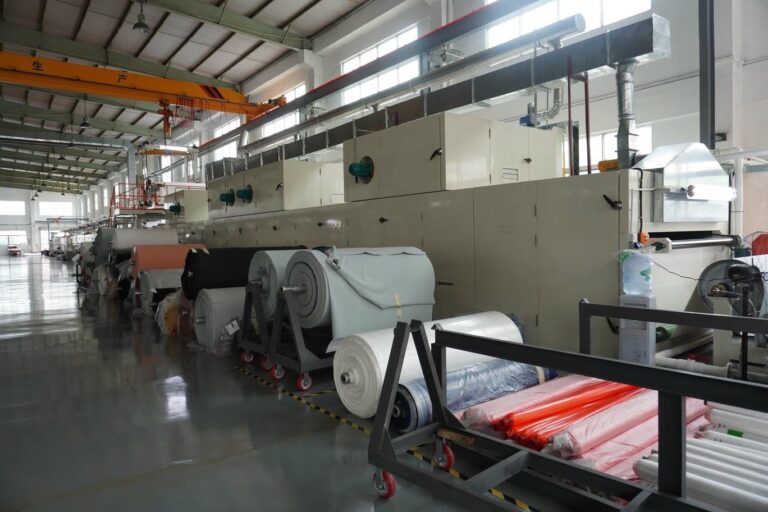
The substrate line: whatever the chemistry later, web handling discipline starts here.
Impregnation and coagulation deserve one more look. The PU must penetrate evenly, then coagulate slowly enough to form connected pores. Rush the bath and you get a dense skin with a hollow core. That defect passes a quick look but fails a flex test within weeks, which is why we section every incoming roll before approval.
Water use deserves attention as well. Coagulation and extraction both run through water, and responsible plants recycle it in closed loops. The question costs nothing on a supplier call. It also tells you a lot about the age of the plant you are buying from.
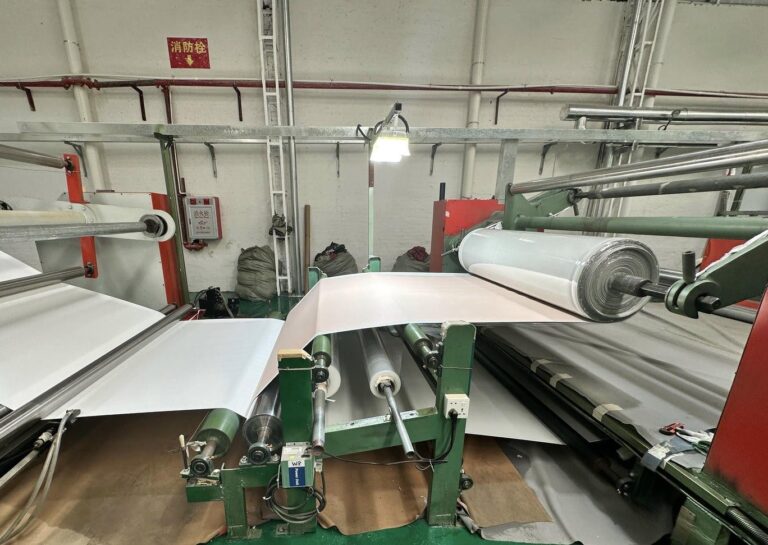
Surface decisions: release-paper texturing is how grain, gloss, and consistency get locked in.
Microfiber Synthetic Leather vs PU and Genuine Leather
Buyers usually weigh three materials. The table condenses what our bench tests and published data agree on:
| Property | Microfiber synthetic leather | Standard PU leather | Genuine leather |
|---|---|---|---|
| Durability | High tear and flex resistance | Film peels over time | Varies by hide grade |
| Breathability | Good, through the porous fiber maze | Poor, film blocks airflow | Excellent |
| Water behavior | Repels water and wipes clean | Good surface until seams fail | Absorbs unless treated |
| Aging mode | Slow, even surface wear | Hydrolysis then delamination | Patina, cracks if dried out |
| Cost index | Highest among synthetics | Lowest | Usually the ceiling |
Numbers make the gap concrete. In published wear tests, genuine leather develops holes after roughly 1,800 to 1,900 abrasion cycles. Microfiber constructions commonly pass well beyond that mark. This is why footwear uppers and high-frequency bags migrated to it. The catch is price: microfiber carries a premium of roughly 20 to 40 percent over standard PU, and it weighs more than film-coated goods.
One material sits above this ladder. Silicone-coated construction removes the hydrolysis clock entirely, and our silicone leather introduction explains that chemistry in detail. For many programs we treat the two as complements rather than rivals.
Where Microfiber Synthetic Leather Earns Its Keep
Footwear uppers were the beachhead. The fiber maze grips stitches tightly, so eyelets and seams survive daily flexing. Premium bag brands followed, because the material cuts cleanly, embosses deeply, and holds shape without heavy backing. Sofas and automotive seats adopt it where pets, kids, or delivery cycles destroy film-coated PU within a year.
Sports goods belong on the list too. Ball covers, batting gloves, and training pads use microfiber builds for grip plus washability. Washability surprises buyers the most. Many grades tolerate gentle machine washing, something a film-coated PU never offered at any price.
Automotive seating deserves its own note. Cabin programs specify abrasion cycles, fogging limits, and flame behavior together. A microfiber grade can carry all three when the impregnation and topcoat are matched. Ask which formulation meets your full test menu, rather than one headline number.

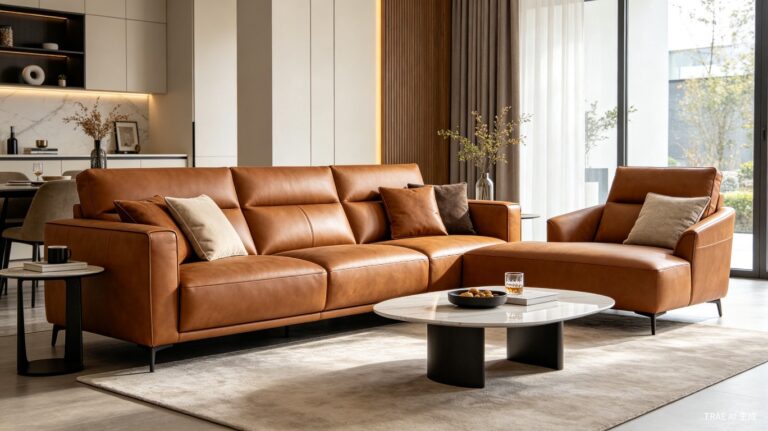
Furniture is the proving ground: daily use exposes any shortcut in the web.
We supply microfiber-based constructions alongside our silicone line, and our silicone microfiber leather page lists the current grades. If your program sits between the two chemistries, send both spec sheets and we will tell you honestly which one fits.
How to Judge Quality Before You Order
Quality differences hide inside the roll. Four checks catch most of them:
- Fiber fineness: ask for island count and dtex; below 0.1 dtex is the premium zone
- Web density: request needle-punch data, or run a fold-and-tear check on a sample
- Impregnation uniformity: a good cross-section colors evenly; pale patches mean weak binder
- Bond and finish: coating adhesion by pull test, plus Martindale cycles matched to your use case
Then ask for the test menu, not the slogan. A supplier who lists Martindale cycles, adhesion values, and hydrolysis aging results per grade is telling you the numbers were measured. One who sends only grain photos is selling hope. Our own lines log coating weight and test results batch by batch, and our factory production walkthrough shows the bench where it happens.

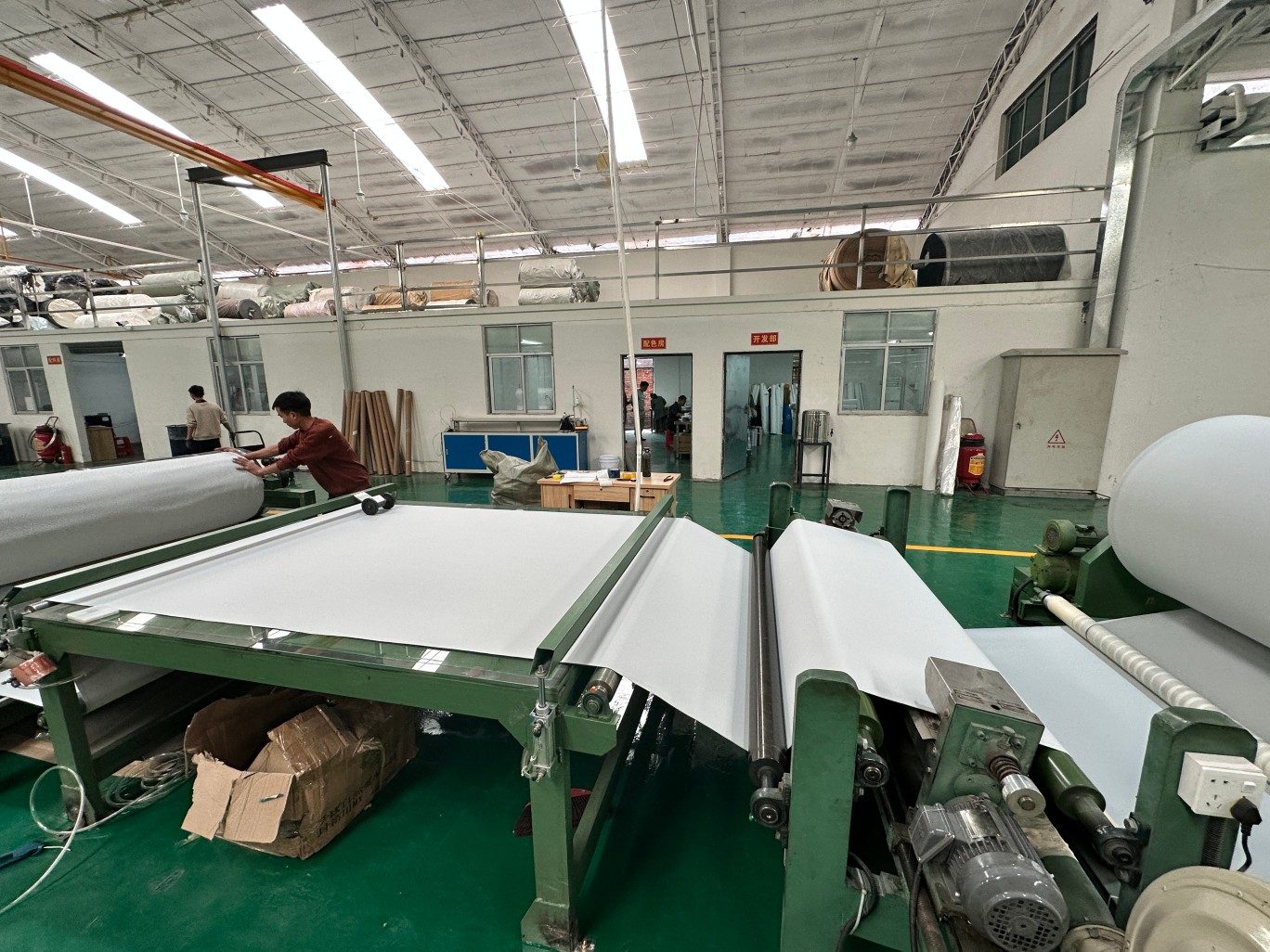
Operator discipline at the coater: the step that separates even webs from hollow ones.
Inside the Lab: Three Tests We Trust
Flex testing comes first. We fold samples around a mandrel at low temperature and count cycles to the first crack. A good microfiber grade clears tens of thousands of folds, while a film-coated PU often shows white lines early. Cold is the honest condition, because polymer phases stiffen as temperatures drop.
Hydrolysis aging comes second. Samples sit in a humidity chamber at 85 degrees Celsius and 85 percent relative humidity, then return for tear and adhesion checks. Film structures lose their bond here first. The fiber maze keeps working, because strength lives in the web rather than in a single layer.
Stitch tear testing completes the set. We pull a stitched seam until it fails and record where it gives. In microfiber, the tear line runs through fiber bundles and leaves the surface intact. In film goods, the same pull can unzip the coating. That single difference explains most of the lifespan gap in daily-use products.
The Honest Limits
No material review is complete without limits. Cost comes first, because the premium is real and never disappears at volume. Weight comes second, since a dense fiber web outweighs a film on fabric. Process comes third: impregnation historically used solvent-borne PU, and some plants still run it. Water-based systems exist and keep spreading. Ask which one your supplier runs, the same way you would ask about solvent recovery on any coated line.
Microfiber also is not leather. It will not develop a patina, and its grain is embossed rather than grown. Where patina sells the product, genuine hide still wins. Where consistency, washability, and stable supply sell the product, the synthetic wins, and it wins on data.
One more boundary is worth naming. Top-end microfiber production is capacity-constrained, because spinning and extraction are slow and capital-heavy. Lead times for premium grades run longer than for film goods. Plan orders earlier, and lock grades with a signed sample when a program spans seasons.
A Decision Tree for Your Next Order
Run three questions in order. If your product flexes daily and must survive three years or more, microfiber synthetic leather earns its premium. If your product is a short-cycle fashion item under tight unit cost, standard PU remains the rational pick. If your product lives outdoors, under UV, or under daily disinfectant, move up to silicone construction and skip the hydrolysis question entirely.
Whatever you choose, ask for cross-sections and test data before you ask for price. Structure first, then numbers, then money. That order has saved my programs more than once, and it will save yours. Buyers who send cut patterns alongside spec sheets get samples tested at the real stress points, which shortens approval by weeks.
References
- https://clarino.kuraray.com/eu/about/material/ — island-in-the-sea spinning, fibers as fine as 0.004 dtex, and the eight-step route from yarn to finished microfiber substrate
- https://www.kueenseglarleather.com/resources/wh… — microfiber vs genuine vs PU comparison across durability, breathability, and water resistance, plus buyer authentication checks