Peeling topsides are the reason procurement teams call us about faux leather microfiber. Standard PU keeps winning first purchases on price, then losing renewals when covers delaminate in year three. Over a five-year horizon the verdict is clear: microfiber construction outlasts, breathes, and cleans better than a PU topcoat, at a price still far below genuine hide. Here is the full comparison, plus the checks we run before approving any microfiber grade.
What Faux Leather Microfiber Is Made Of
The secret is architecture. Microfiber leather starts with a three-dimensional non-woven mat of sea-island ultra-fine fibers, usually nylon or polyester at a fraction of a denier. That mat mimics the collagen web of real hide. PU resin is then impregnated through the entire thickness, not sprayed on top. The resin becomes part of the structure instead of a coat sitting over it.
This is why the material resists peeling. A conventional PU leather fails when its thin surface film separates from the base fabric. In faux leather microfiber there is no single weak interface to fail. Our silicone microfiber product page shows cross-section photos of both constructions if you want the visual proof.

The fine-fiber structure gives microfiber its suede-like, matte hand feel.
Why It Outlasts Standard PU
Durability follows structure. Industry comparisons put microfiber at 5-10 years of service against 2-5 for standard PU, with quality grades lasting longer still. Breathability improves for the same reason: air moves through the porous fiber matrix, avoiding the stuffy feel of a dense PU film. Stains and water sit on the surface instead of soaking in, so a damp cloth handles most spills.
| Material | Typical lifespan | Market share | Position |
|---|---|---|---|
| Standard PU leather | 2-5 years | ~57% | Lowest upfront cost |
| Faux leather microfiber | 5-10 years | 10-15% | Premium synthetic tier |
| Genuine leather | 10+ years | — | Reference standard, highest cost |

Fold tests show how the impregnated structure recovers instead of creasing.
Humidity is the quiet killer, and it is where we test hardest. Our hydrolysis chamber runs 85°C and 85% relative humidity for up to 14 weeks. Samples come out with no delamination, no strength loss, and no surface degradation. Conventional PU under the same regime typically shows film separation in a fraction of that time. That is also why our silicone-impregnated grades carry 10-15 year service expectations, against the 3-5 years typical of PU in humid climates.
What Faux Leather Microfiber Costs per Meter
Buyers ask this first, and the honest answer is a range, not a sticker. Microfiber grades typically price between standard PU and genuine leather. Ex-factory quotations often land in the $10-25 per meter band, against $3-8 for commodity PU and $30-100+ for genuine hide. The spread inside that band is wide, and it is driven by specification rather than by brand names.
Three factors move the quote. Fiber content comes first, because a higher share of ultra-fine nylon raises both cost and durability. Thickness comes second, since a 1.4 mm furniture grade consumes more resin and more machine time than a 0.6 mm accessory grade. Finish comes third: embossed patterns, flame-retardant treatments, and custom Pantone colors each add a production step with its own cost.
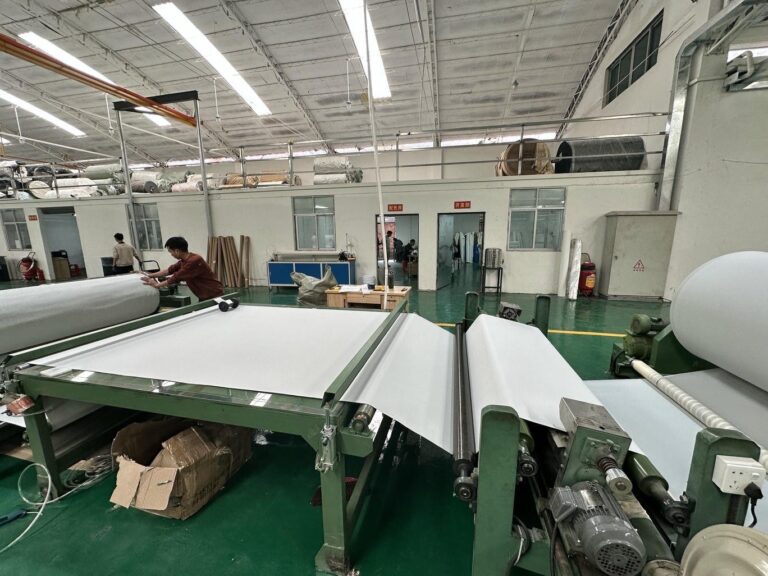
Normalize the basis before comparing quotes. Confirm whether the price is per linear meter or per square meter, and whether backing treatment is included. At our plant, microfiber-based silicone grades run from a 500 m MOQ with 7-15 day delivery, and SGS reports ship with every order. A quote that looks 20% cheaper usually differs on one of those three details.
Faux Leather Microfiber vs Standard PU Over Five Years
The five-year ledger is where opinions end. PU looks cheaper on the purchase order, but a program that re-covers seats in year three pays twice for material, labor, and downtime. Microfiber typically prices 30-50% below genuine leather while avoiding that second intervention. For busy households and commercial lobbies, the cleaning savings compound on top: stain resistance and water repellency cut maintenance time week after week.
One of our fashion clients ran the numbers on a small-goods line. Their PU version showed returns for lining wear within two seasons. The microfiber relaunch eliminated those returns and held shelf color across batches, and the premium was absorbed inside the first reorder cycle. Product teams browsing bag and accessory applications can see similar constructions on our fashion and sports applications page.

Small goods expose lining and edge wear faster than any catalog test.
Warranty structures tell the same story. Suppliers who trust PU rarely stretch coverage past 12 months. Microfiber programs routinely carry multi-year coverage because claim rates stay low. When you weigh a quote, ask what the warranty assumes about humidity, cleaning chemistry, and daily hours of use. The answers reveal how long the supplier expects the material to look good, not just to survive.
How to Care for Faux Leather Microfiber
Care is simple, and it differs from standard PU in one useful way. Because the fiber mat breathes, moisture that passes the surface can escape again. The material does not blister the way a sealed PU film can. Wipe spills with a damp cloth, use mild soap for stubborn stains, and avoid solvents. Conditioning is optional rather than required.
Two habits extend service life. First, manage direct sunlight. Our color fastness holds grade 4-5, but years of window exposure fade any synthetic surface. Second, vacuum seams and creases on commercial seating so grit never grinds the face. Disinfecting is where the gap widens: alcohol-based wipes and hospital-grade routines are safe on our grades, which is why healthcare and salon programs specify them.
Standard PU demands the opposite discipline. Its film cracks under aggressive cleaning, so owners delay the routine, and soil builds up. Microfiber tolerates the cleaning schedule that real facilities actually run, week after week.
Where Microfiber Wins, and Where PU Still Makes Sense
Honesty helps procurement more than cheerleading. Microfiber wins wherever a cover must survive years of flex, moisture, and cleaning. Sofas and sectionals, office seating, bags, footwear, and small goods all sit in that zone. It wins hardest where a peeling cover would trigger returns or reputational damage, because the five-year ledger above is unforgiving.
Standard PU still earns its place in three cases. Short-cycle products with a design life under two years, such as promotional furniture or seasonal displays, rarely recover the microfiber premium. Prototype runs and pilot budgets justify PU as well. Low-abrasion applications like wall panels or headboards can hold a mid-grade PU for years without complaint.
The mistake to avoid is matching material to purchase price instead of service life. Specify the cover for the years of hard use it will actually see, whatever the label says.
Common Myths About Faux Leather Microfiber
Three myths keep surfacing in buyer conversations. Myth one: microfiber is just premium PU. The two structures differ at the fiber level, which is why one peels and the other does not. Myth two: microfiber is not breathable. A dense PU film traps heat, while an impregnated fiber mat lets air move. Myth three: every microfiber on the market is certified vegan. Most grades are, but confirm the resin system and surface treatment in writing when certification matters to your program.
The Checks We Run Before Approving a Grade
Not every roll sold as microfiber deserves the name. We approve a grade only after four checks. First, fiber denier and mat density, because structure is the whole point. Second, impregnation uniformity across the thickness, verified on a cross-section cut. Third, Martindale abrasion sampling from production rolls, with our high-performance grades rated to 200,000 cycles. Fourth, a hydrolysis chamber run for any program destined for humid climates.
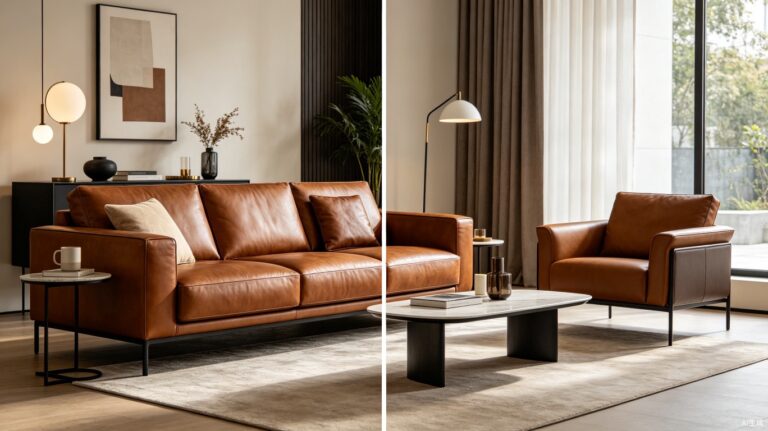
Sofa and seating programs add one more layer: flex endurance at the seat crease and color fastness under daylight. Furniture buyers can review how these grades behave in full-room settings on our furniture and sofa applications page. A supplier who cannot produce this data is selling a label, not a material.

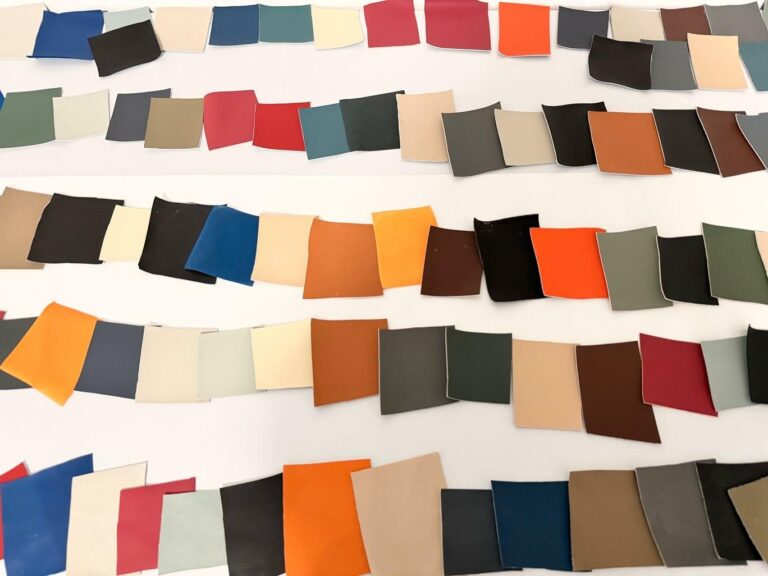
Sample racks hold the batch records behind every approved grade.
Microfiber construction in bag production, from fiber mat to finished panel.
The Verdict for Procurement Teams
Faux leather microfiber wins the five-year comparison wherever covers must survive daily use, humidity, and cleaning. Before your next order, work through this list:
- Ask for the fiber denier and whether the PU is impregnated or topcoated.
- Request Martindale and hydrolysis data for the exact grade, not a family brochure.
- Price the five-year cost, including one re-upholstery cycle, not just the first roll.
- Order samples and cut a cross-section yourself. The structure should look uniform edge to edge.
Standard PU still earns its place on tight budgets and short-cycle products. For everything meant to last, the microfiber verdict stands.
About TOPSUN
TOPSUN supplies microfiber-based silicone leather to furniture, fashion, and 3C accessory brands that need leather-like hand without leather costs.
Martindale 200,000+ grades, 500 m MOQ with 7-15 day delivery, Pantone/RAL color matching, and SGS reports with every order.
References
- https://taiteleather.com/zh/why-microfiber-leat… — sea-island ultra-fine nylon 3D nonwoven impregnated with PU resin through full thickness, eliminating delamination risk
- https://www.microfiberfauxleather.com/pu-microf… — lifespan 5-10 years (microfiber) vs 2-5 years (PU); market share 57% PU vs 10-15% microfiber; stain and water resistance