A QA lab at a Texas furniture manufacturer ran a routine REACH compliance check on a “synthetic leather” upholstery sample and found 34% phthalate plasticizers by weight — the material was PVC, not the PU leather the supplier had claimed on the spec sheet. The entire 12,000-yard shipment was rejected. The cost: $96,000 in material, eight weeks of production delay, and a compliance flag that took three months to clear. When B2B buyers write material synthetic leather on a purchase order, they assume they’re buying one material. They’re not. That phrase covers four chemically distinct polymers — PVC, PU, microfiber, and silicone — each with radically different performance, compliance, and cost profiles. Here’s what’s actually in your synthetic leather.
Request Free Material Composition Samples
What “Synthetic Leather” Actually Means (and Why It’s Not One Material)
The term “synthetic leather” is a category, not a specification. It describes any material that uses a polymer coating applied to a textile or non-woven backing to simulate the appearance and feel of genuine leather. But the polymer determines everything — durability, chemical safety, temperature tolerance, environmental impact, and unit cost. A B2B buyer who treats all synthetic leather as equivalent is accepting the risk that their supplier may swap one polymer for another between batches without notification.
The global material synthetic leather market reached $56.0 billion in revenue in 2025 and is forecast to hit $142.3 billion by 2035 at a 9.8% CAGR (Market.us, 2025). But that growth obscures a fragmentation problem: four chemically distinct material families are lumped under one label, and suppliers routinely blur the lines between them in spec sheets and quotations.

Chemical drums and mixing equipment — the polymer formulation stage determines whether your synthetic leather is PVC, PU, microfiber, or silicone
The 4 Material Types: Chemical Structure to Performance
PVC leather uses polyvinyl chloride resin blended with 30–40% plasticizer content — typically phthalates like DEHP, DBP, and BBP — to achieve flexibility. The European Chemicals Agency restricts these phthalates to a maximum of 0.1% by weight in regulated products under REACH (ECHA, REACH Annex XVII). A material that exceeds this limit — like the Texas shipment — is non-compliant for sale in the EU market. PVC’s advantages are low cost ($3–6 per m²) and ease of calendering. Its limitations are a 2–5 year lifespan, poor hydrolysis resistance, and plasticizer migration that causes embrittlement over time.
PU (polyurethane) leather applies a polyurethane coating to a woven or non-woven fabric backing. Two manufacturing routes exist: the dry process (transfer coating on release paper) and the wet process (DMF-based coagulation). Wet-process PU produces a microporous structure for better breathability but emits significantly more VOCs — the survey data shows PU wet-process lines averaging 0.191 kg VOC per m² compared to 0.179 kg/m² for dry-process lines. PU leather offers 50,000–100,000 Martindale abrasion cycles and a 5–8 year lifespan. DMF residue above 10 ppm triggers REACH non-compliance, driving the current industry shift toward silicone vs PU material selection.
Microfiber leather uses ultra-fine polyester or nylon fibers (0.01–0.5 denier) formed into a non-woven substrate, then impregnated with PU resin via the wet coagulation process. The result is a structure that mimics the three-dimensional fiber network of genuine hide. Microfiber delivers 100,000–150,000 abrasion cycles, strong hydrolysis resistance, and an 8–12 year lifespan. However, the wet-process PU impregnation still introduces DMF solvent management issues, and the material cannot be recycled as a single polymer stream.
Silicone leather uses a silicone polymer with a Si-O (silicon-oxygen) backbone — the same chemistry family used in medical-grade implants and food-contact materials. The coating is applied via solvent-free dry coating onto a fabric substrate, eliminating DMF, plasticizers, and phthalate content entirely. For a technical overview of the material’s properties, see our silicone leather introduction. Silicone leather achieves 200,000+ abrasion cycles, operates from -40°C to 250°C, and carries ISO 10993 biocompatibility certification — making it suitable for medical and infant-contact applications that no other synthetic leather type can address.

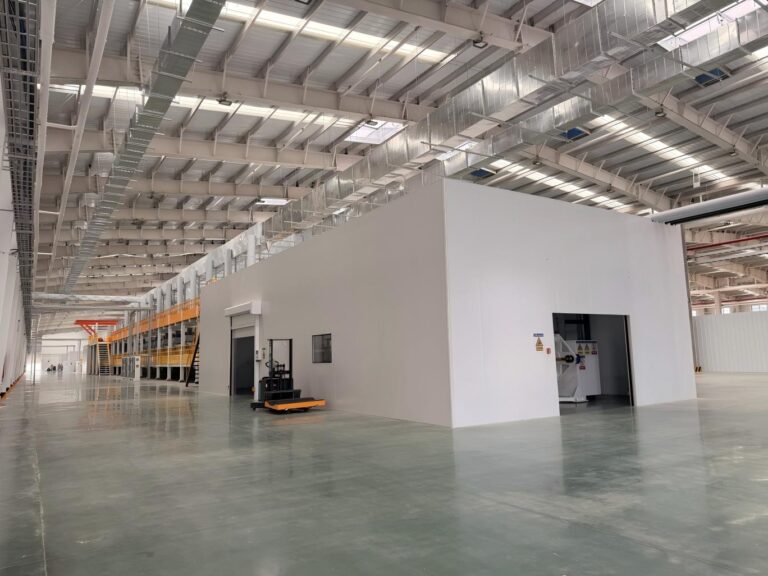
Production process flow — silicone leather uses a solvent-free dry coating line that bypasses tanning and DMF coagulation entirely
Key distinction: “Synthetic leather” on a spec sheet is meaningless without the polymer name. PVC means phthalates and 2–5 year lifespan. PU means DMF residue risk. Microfiber means PU impregnation. Silicone means zero solvents, zero plasticizers, and ISO 10993 biocompatibility. If your supplier can’t identify the polymer in writing, you’re buying a category, not a material.
VOC Emissions: The Hidden Compliance Cost in Your Material Spec
VOC emissions are the compliance metric most B2B buyers overlook when specifying synthetic leather — and the one that carries the highest regulatory risk. A survey of 175 synthetic leather enterprises found average VOC emission coefficients of 0.168 kg per m² of finished product. PU-based production averaged 0.170 kg/m², while PVC-based production averaged 0.142 kg/m². Finishing operations — coating, printing, and surface treatment — add approximately 0.120 kg/m² on top of the base figure.
The key VOCs released during conventional synthetic leather production include DMF (dimethylformamide), toluene, methyl acetate, acetone, ethyl acetate, and butanone. Under REACH and ZDHC MRSL V3.1, DMF residue in finished materials must remain below 10 ppm. Water-based PU leather reduces DMF to near-zero levels but carries a 15–25% cost premium over solvent-based PU — a tradeoff that ESG-driven brands are increasingly willing to accept. Our analysis of leather production processes covers how different manufacturing routes affect the compliance profile of finished materials.

Cross-section comparison — the polymer layer determines VOC profile, plasticizer content, and end-of-life recyclability
4-Way Material Comparison: PVC vs PU vs Microfiber vs Silicone
| Property | PVC | PU | Microfiber | Silicone |
|---|---|---|---|---|
| Abrasion (Martindale) | 30K–60K cycles | 50K–100K cycles | 100K–150K cycles | 200K+ cycles |
| Lifespan | 2–5 years | 5–8 years | 8–12 years | 10–15+ years |
| VOC Emissions | 0.142 kg/m² | 0.170 kg/m² | 0.170 kg/m² (PU base) | Near zero |
| Temp Range | -10°C to 80°C | -20°C to 120°C | -30°C to 130°C | -40°C to 250°C |
| Plasticizer Content | 30–40% (phthalates) | None (solvent-based) | None (PU impreg.) | None |
| DMF Residue | N/A | Risk (wet process) | Risk (wet process) | Zero |
| Cost Index | $ (lowest) | $$ | $$$ | $$$ |
| Biocompatibility | No | No | No | ISO 10993 |
Cost Per Yard vs. Cost Per Year: The TCO Gap
The procurement trap with material synthetic leather is optimizing for unit cost while ignoring replacement frequency. PVC leather at $3–6 per m² looks attractive against silicone leather at $12–18 per m². But a 5-year replacement cycle for PVC versus a 15-year cycle for silicone means the PVC material must be purchased and installed three times over the same service period. At that point, the “cheaper” PVC costs 50–80% more on a total-cost-of-ownership basis — before accounting for the labor, downtime, and waste disposal costs of each replacement cycle.
For automotive interiors, the equation sharpens further. A PVC seat surface that embrittles at 80°C cannot survive summer cabin temperatures that routinely exceed 90°C in parked vehicles. The material fails not from wear but from thermal degradation — a failure mode that unit-cost analysis never captures. Buyers seeking eco-friendly silicone leather alternatives can review the full technical data sheet for specification parameters.
How to Specify Synthetic Leather That Won’t Fail Compliance
The Texas furniture manufacturer’s $96,000 loss was preventable with a three-line specification requirement on the purchase order. Instead of writing “synthetic leather,” the spec should have read: “PU leather, dry-process, DMF residue <10 ppm per ISO 16000-6, phthalate content <0.1% per REACH Annex XVII." That specification would have forced the supplier to either deliver compliant material or decline the order — either outcome preferable to a rejected shipment.
- Identify the polymer: Require PVC, PU, microfiber, or silicone stated explicitly on the quotation — not “synthetic leather” or “faux leather”
- Set VOC limits: Reference ISO 16000-6 chamber testing with maximum emission thresholds for your target market (EU REACH, US CARB, China GB)
- Demand third-party test reports: SGS or Intertek certificates for restricted substances (phthalates, DMF, AZO dyes, Cr(VI)) — not supplier self-declarations
- Specify abrasion minimums: State the Martindale cycle requirement (e.g., 50,000 cycles for furniture, 100,000 for automotive) so polymer substitution is detectable
Request Free Material Spec Sheet
Frequently Asked Questions
Is synthetic leather the same as PU leather?
No. Synthetic leather is a category that includes four chemically distinct polymer types: PVC, PU, microfiber, and silicone. PU leather is one type within that category. Suppliers who use “synthetic leather” and “PU leather” interchangeably on spec sheets are either imprecise or deliberately obscuring a PVC-to-PU substitution. Always require the specific polymer name — PVC, PU, microfiber, or silicone — in writing on the purchase order and quotation.
What is the safest synthetic leather material for REACH compliance?
Silicone leather is the safest option for REACH compliance because it contains zero plasticizers, zero phthalates, and zero DMF solvent residue. The silicone polymer’s Si-O backbone is chemically stable and does not require plasticizers for flexibility — eliminating the primary REACH restricted-substance risk. PU leather (particularly water-based PU) can achieve compliance with DMF levels below 10 ppm, but requires third-party verification. PVC leather carries inherent phthalate risk and should be specified only when third-party test reports confirm phthalate content below 0.1% per REACH Annex XVII.
Stop Buying a Category — Start Specifying a Material
The Texas manufacturer that lost $96,000 didn’t fail because synthetic leather is bad — it failed because “synthetic leather” isn’t a material. It’s a label that covers everything from $3 PVC with 34% phthalates to medical-grade silicone with zero VOCs. The gap between those two materials is the gap between a rejected shipment and a ten-year warranty. Specify the polymer. Set the VOC limits. Demand the test reports. That’s the difference between buying a category and buying a material.
Whether you’re specifying materials for automotive, furniture, or consumer goods applications, the framework is the same: identify the polymer, verify the compliance data, and calculate total cost of ownership — not just unit price. A material that costs 3x more per yard but lasts 3x longer and passes every compliance check isn’t more expensive. It’s just better specified.
Request Free A4 Material Swatches
About TOPSUN
TOPSUN manufactures silicone-based synthetic leather using a solvent-free dry coating process — zero DMF, zero plasticizers, zero phthalates — for B2B buyers in automotive, furniture, medical, and consumer goods who need a material that passes REACH, ZDHC, and ISO 10993 compliance without compromise.
500,000+ m monthly capacity · 7–15 day lead time · MOQ 500m · Free A4 swatches worldwide via DHL/FedEx · 18 ISO technical standards · ISO 10993 biocompatibility certified · 30% deposit / 70% against B/L