Choosing the best leather for sofa upholstery is one of the most consequential decisions a furniture specifier makes. A sofa is the visual anchor of any room — but it also takes a beating: daily use, spills, pet claws, UV exposure, and the slow creep of wear patterns on seat cushions.
From a design perspective, the ideal leather checks three boxes at once: it looks beautiful the day it’s installed, it stays beautiful for a decade or more, and it doesn’t blow the project budget. The challenge is that most materials force you to pick two out of three.
Browse Furniture & Sofa Applications
The 5 Leather Types Used in Sofa Upholstery Today
Let’s start with clarity. The term “leather” covers a surprisingly wide spectrum — from the untouched surface of a premium cowhide to engineered materials that contain no animal hide at all. Here’s how they stack up for sofa applications.

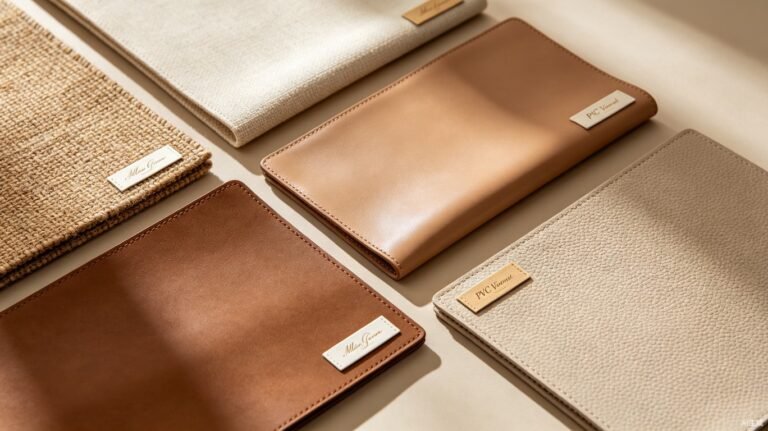
Material selection starts with understanding the full spectrum of leather grades and alternatives
| Material | Real Hide Content | Lifespan | Cost (per yard) |
|---|---|---|---|
| Full-Grain Leather | 100% (top layer intact) | 15–25+ years | $40–$80+ |
| Top-Grain Leather | 100% (sanded & corrected) | 10–15 years | $25–$50 |
| Genuine / Split Leather | 100% (flesh side) | 5–10 years | $15–$30 |
| Bonded / Blended Leather | 10–20% (shredded) | 1–3 years | $8–$15 |
| Silicone Leather | 0% (silicone-coated fabric) | 12–20+ years | $20–$35 |
Here’s the thing: the hierarchy above describes quality and price, not necessarily suitability. The best leather for a high-end residential living room isn’t the best leather for a busy family room — and it’s definitely not the best leather for a commercial hotel lobby.
Full-Grain vs. Top-Grain: The Classic Dilemma
For most premium furniture projects, the decision comes down to full-grain versus top-grain leather. They’re both genuine leather, but they behave very differently over time.

Full-grain leather develops a rich patina over years — a feature some clients love and others see as wear
Full-grain leather keeps the entire top layer of the hide intact. No sanding, no buffing, no correction. That means it retains the natural grain pattern, pore structure, and even minor imperfections from the animal’s life. The upside is unmatched durability — the dense fiber structure of the top layer resists tearing and abrasion better than anything else. Over time, it develops a patina that many designers and homeowners find beautiful. The downside: it’s expensive, it absorbs spills quickly, and every scratch tells a story (whether you want it to or not).
Top-grain leather is the sweet spot for many mid-to-high-end residential projects. The very top surface is lightly sanded to remove blemishes, then dyed or given a protective coating. The result is a more uniform appearance that’s still genuine leather and still quite durable — about 60–70% as durable as full-grain, which still means 10–15 years of normal use. It’s more stain-resistant than full-grain and significantly less expensive. The trade-off: it doesn’t develop the same rich patina, and the protective coating can crack or wear through on high-contact areas like seat cushions and armrests.
Designer tip: Specify full-grain for formal living rooms where patina is a feature. Use top-grain for family rooms and daily-use spaces where consistency matters more.
Why Silicone Leather Is Quietly Entering the Conversation
A material that wasn’t on most specifiers’ radars five years ago is now showing up in hospitality, multi-family, and even high-end residential projects: silicone-coated synthetic leather. Let’s be clear — it’s not leather. But from a performance and aesthetic standpoint, it deserves a seat at the table.

Modern silicone leather has a realistic grain texture that’s visually indistinguishable from top-grain at arm’s length
Silicone leather is made by applying a silicone coating onto a woven fabric substrate. The silicone layer can be textured, embossed, and colored to match virtually any leather look — from smooth aniline to deep pebbled grain. From a design perspective, what’s interesting is that it offers aesthetic consistency that genuine leather simply can’t match:
- Perfect color matching across an entire project — no batch-to-batch variation
- No natural imperfections — every panel looks identical, which matters for large sectional sofas
- Custom textures on demand — embossing can replicate any grain pattern without being limited by hide characteristics
- Vegan by default — increasingly requested by hospitality and commercial clients
But where silicone leather really shines is performance. Wine spills, coffee rings, ink marks — they all wipe off with a damp cloth. Pet claws slide off instead of catching. UV exposure doesn’t cause fading the way it does with dyed genuine leather. In our testing, high-grade silicone leather has survived 100,000+ Martindale abrasion cycles without significant wear — comparable to mid-tier top-grain.
Silicone vs PU Leather: See the Difference
Watch how silicone leather handles coffee, wine, and ink stains — no harsh cleaners needed
Matching Material to Project Type
The best leather for a sofa isn’t the most expensive — it’s the one that fits the project’s use case, budget, and aesthetic vision. Here’s a quick reference for common scenarios:
| Project Type | Best Material | Why |
|---|---|---|
| Luxury residential, formal use | Full-grain aniline | Patina is a feature; light use means slow aging |
| Family home, daily use | Top-grain protected or silicone leather | Stain resistance and durability are priority |
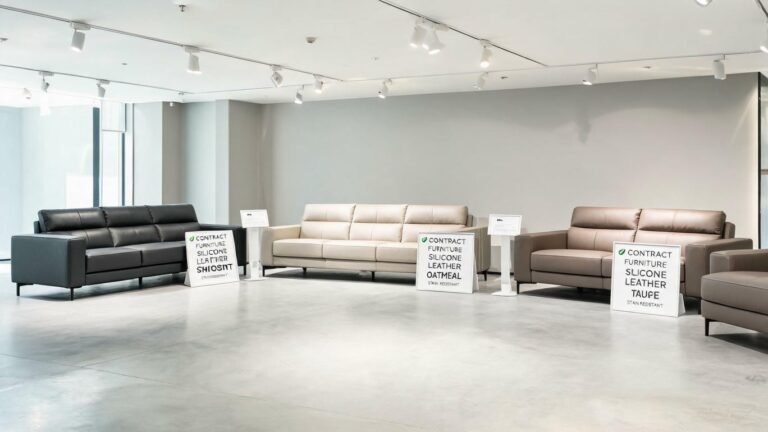
| Hotel / hospitality, high traffic | Silicone leather (commercial grade) | Easy to sanitize, zero color variation, flame retardant options |
| Office / co-working spaces | Silicone leather or top-grain | Professional look, low maintenance, consistent appearance |
| Pet-friendly homes | Silicone leather | Scratch-resistant, easy to clean, hair wipes off |
| Budget / rental furniture | PU faux leather (avoid bonded) | Lowest cost, but expect 3–5 year lifespan |
What to Verify Before You Specify
Any supplier can claim their material is durable. Here’s what to actually check on the spec sheet before committing to a sofa upholstery material:
- Martindale abrasion rating — Look for 50,000+ cycles for residential, 100,000+ for commercial. Below 20,000 is decorative-only.
- Hydrolysis resistance — Critical for humid climates. Genuine leather and PU both degrade under constant moisture; silicone is inherently resistant.
- UV / fade resistance — For rooms with direct sunlight, ask for a fade resistance rating (grade 4+ on the blue wool scale).
- Flame retardancy — Required for commercial and hospitality projects. Verify the specific standard: CAL 117, NFPA 260, BS 5852, etc.
- VOC emissions — Cheap materials off-gas for months. Look for low-VOC or zero-VOC certifications, especially for residential projects.
Let’s be honest — spec sheets only tell you so much. The best way to evaluate any sofa upholstery material is to get a physical sample and test it yourself. Pour coffee on it. Scrape it with a key. Rub it with a damp cloth. If it holds up in your hands, it’ll hold up on a sofa.
Making the Right Material Choice
Finding the best leather for sofa upholstery is ultimately about aligning material performance with project reality. Full-grain leather is unbeatable for luxury and patina. Top-grain is the workhorse of residential furniture. And for high-traffic, commercial, or family-friendly projects, silicone leather is increasingly the smartest choice on the board.
The good news is you don’t have to guess. Order sample swatches from multiple suppliers, compare them side by side, and test them under real-world conditions. The right material will make itself obvious.
Order Free Silicone Leather Samples
About TOPSUN
TOPSUN supplies premium silicone leather for furniture and sofa upholstery, working with designers, specifiers, and furniture manufacturers who need consistent color match and high-performance durability across every project.
100K+ Martindale cycles · Stain & water resistant · Zero VOC emissions · Custom embossing & colors · CAL 117 / NFPA 260 flame retardant options