A B2B client ships 5,000 premium leather pouches to a retail partner. By month six, 12% come back — the PU surface is peeling at the fold lines, the black dye has transferred onto white stitching, and the zipper reinforcement stitching has torn through the material. The client asks their factory what went wrong. The factory shrugs: “The material passed Martindale testing.” Here’s the problem: Martindale abrasion testing alone doesn’t predict leather pouch failure. Pouches fail at stress points — fold lines, stitch holes, zipper ends, and edges — through mechanisms that abrasion testing doesn’t capture. As an OEM/ODM specialist who has managed pouch production across hundreds of SKUs, I can tell you that the difference between a 6-month failure and a 10-year product comes down to five specific material specifications that most factories don’t volunteer. Here they are.
Request Pouch Material Samples
Why Leather Pouches Fail Earlier Than Expected
A leather pouch faces a unique stress profile that no single test captures. Unlike furniture upholstery (distributed surface wear) or automotive interiors (thermal stress), pouches concentrate mechanical stress at specific failure points: fold lines where the material creases every time the pouch opens, stitch holes where needle penetration weakens the substrate, and edge curves where tension peaks during flexing. A material that scores 30,000 Martindale cycles can still fail at month six if it can’t survive 50,000 flex cycles at a fold line.

Modern factory workshop — cleanroom environment where precision material handling determines pouch quality consistency
The B2B leather pouch market spans everything from cosmetic pouches and tech accessory cases to jewelry rolls and gift packaging. MOQs typically start at 500-1,000 pieces with lead times of 15-30 days. But the material specification — not the stitching or the design — is what determines whether those pouches last months or years. For ultra-thin applications like pouches and small accessories, material specs matter even more because thinner materials have less margin for degradation before visible failure.
Spec 1: Flex Resistance (ISO 5402)
Flex resistance measures how many times a material can be bent at a fold line before surface cracking appears. For leather pouches, this is the single most predictive test — more important than Martindale abrasion. Every time a pouch opens and closes, the fold line flexes. A cosmetic pouch opened twice daily accumulates 730 flex cycles per year. Over 5 years, that’s 3,650 cycles at a single stress point.
Standard PU leather typically survives 10,000-20,000 flex cycles before visible cracking — adequate for 3-5 years of light use. But accelerated aging at elevated temperatures reduces this by 40-60%. Silicone leather, tested per ISO 5402, withstands 50,000-100,000 flex cycles with no surface degradation — a 5× margin that translates to 10+ years of daily use. If your factory can’t provide ISO 5402 data, assume the material will crack at fold lines within 2-3 years.
Spec 2: Hydrolysis Resistance (ISO 11507)
Leather pouches stored in bathroom cabinets, gym bags, or humid climates face hydrolysis — the chemical breakdown of PU binders when exposed to heat and humidity. The PU coating delaminates, the surface becomes tacky, and the material eventually flakes. ISO 11507 accelerated weathering testing simulates years of humid storage in weeks.

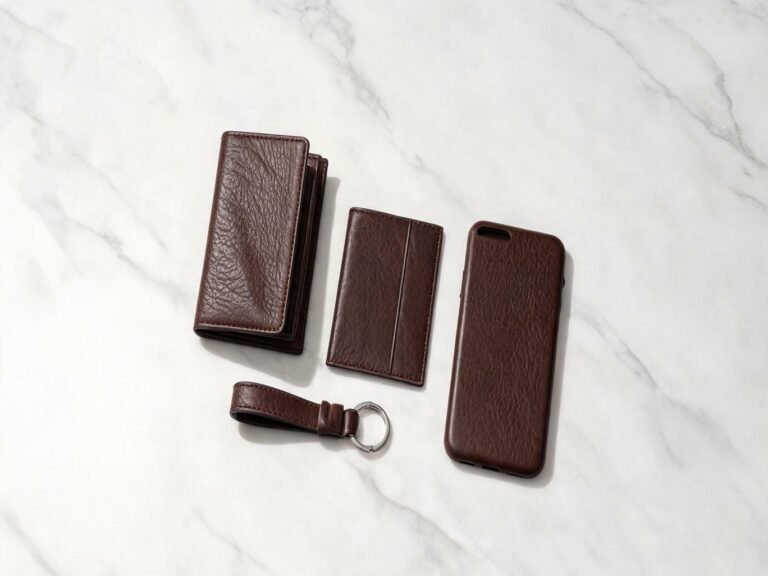
Leather pouch craftsmanship — surface quality and stitching detail that material specifications must support
Standard PU pouches show hydrolysis symptoms within 2-3 years in humid environments. Premium polyether-PU extends this to 5-8 years but still degrades — the ester bonds in the polymer chain are inherently vulnerable. Silicone leather has no ester bonds. It’s chemically immune to hydrolysis. A silicone leather pouch stored in a bathroom cabinet for 10 years will show zero surface degradation. For brands selling pouches into tropical markets or beauty/cosmetic applications where humidity exposure is guaranteed, this spec is non-negotiable. See our hydrolysis resistance data for full test results.
Spec 3: Tear Strength and Stitch Retention (ISO 3376, ISO 34-1)
A leather pouch’s structural integrity depends on tear strength — the force required to propagate a tear from a stress concentration point. Stitch holes are stress concentrators. Every needle penetration creates a micro-tear that can propagate under load. If the material’s tear strength is low, the stitching pulls through the substrate under repeated stress, especially at zipper ends and corner reinforcements.
TOPSUN silicone leather achieves tensile strength ≥10-15 N/mm (ISO 3376) and tear strength ≥15-20 N (ISO 34-1). Standard PU leather typically registers 30-50% lower values, meaning stitch holes in PU pouches are more likely to tear through under stress. For pouch designs with complex stitching patterns, multiple compartments, or heavy zipper hardware, specify tear strength minimums in your purchase order — don’t assume the factory will select a grade that meets structural requirements.
Spec 4: Color Fastness (ISO 105-B06, ISO 105-X12)
Color fastness determines whether the dye stays in the material or transfers onto everything it touches. For leather pouches, this manifests as dye migration onto white stitching, lining fabric, or adjacent materials during storage. ISO 105-B06 tests color fastness to light (UV fading), and ISO 105-X12 tests rubbing fastness (color transfer from friction).

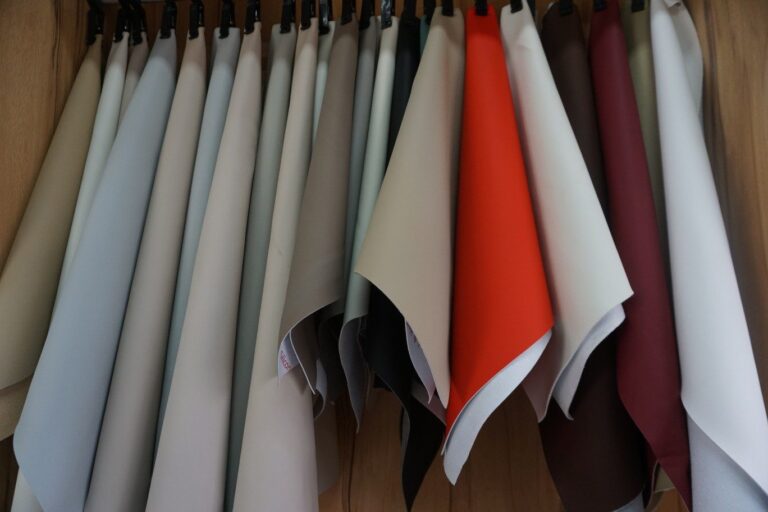
Six-color leather rolls — the range of customization options available for leather pouch manufacturing with color stability
TOPSUN silicone leather achieves Grade 4-5 color fastness — the highest rating — meaning no visible color transfer under standardized rubbing tests and no fading under 1,000+ hours of UV exposure. Standard PU leather, especially dark colors (black, navy, burgundy), frequently fails at Grade 3 or lower, causing visible dye migration within months. For pouch designs that combine dark exterior materials with light-colored stitching or lining, specify Grade 4-5 minimum on both ISO 105-B06 and ISO 105-X12. For custom color matching, our color customization service guarantees Delta E ≤1.0 batch-to-batch accuracy.
Spec 5: Abrasion Resistance (ISO 12947-2)
Finally — the spec most factories cite because it’s the easiest to pass. Martindale abrasion testing measures surface wear under distributed friction. Standard PU achieves 10,000-30,000 cycles; microfiber PU reaches 50,000-150,000; silicone leather delivers 200,000+. But here’s what factories don’t tell you: Martindale is a necessary but insufficient spec. A material can pass 30,000 Martindale cycles and still fail at month six through flex cracking, hydrolysis, stitch tear-through, or color migration. The five specs work together — and all five must pass for a 10-year product.
PU vs Silicone Leather Pouch Materials: Spec Comparison
| Specification | Test Standard | PU Leather Pouch | Silicone Leather Pouch | Lifespan Impact |
|---|---|---|---|---|
| Flex Resistance | ISO 5402 | 10,000-20,000 cycles | 50,000-100,000 cycles | PU: cracks at fold lines in 2-3 yrs |
| Hydrolysis | ISO 11507 | Degrades in 2-3 yrs (humid) | Immune — no ester bonds | PU: delaminates in bathroom storage |
| Tear Strength | ISO 34-1 | 30-50% lower | ≥15-20 N | PU: stitching pulls through |
| Color Fastness | ISO 105-X12 | Grade 3 (migrates) | Grade 4-5 (no transfer) | PU: dye stains stitching/lining |
| Abrasion | ISO 12947-2 | 10,000-30,000 cycles | 200,000+ cycles | PU: surface wear in 3-5 yrs |
One of our cosmetics brand clients was producing PU leather pouches that failed at 6-8 months — primarily through flex cracking at the fold line and dye migration onto white stitching. After switching to TOPSUN silicone leather (0.6mm, Ultra Thin Collection), the pouches passed 100,000 flex cycles in testing, showed zero color transfer at Grade 5, and eliminated all return claims related to material failure. The material cost increased by approximately 40%, but the elimination of returns (previously 12% of production volume) and the ability to position the pouches as “10-year warranty” products more than offset the cost increase.
Customization Options for Leather Pouch Manufacturing
Once the material spec is locked, customization is where pouch differentiation happens. TOPSUN supports the full customization chain for leather pouch production:
1. Texture and embossing: Custom texture design with 100+ standard textures or custom embossing rollers produced in 7-10 days. Options include cowhide grain, pigskin, sheepskin, and bespoke patterns.
2. Color matching: Pantone and RAL matching with Delta E ≤1.0 accuracy, ensuring brand colors are consistent across production batches.
3. Thickness optimization: 0.23-2.0mm range allows ultra-thin pouch materials (0.4-0.8mm for compact designs) or structured pouches (1.0-2.0mm for box pouches).
4. Surface finishes: Metallic and pearlescent finishes for premium pouch lines, matte for understated designs.
5. Logo application: Silicone leather accepts debossing, hot foil stamping, and digital printing — the same customization techniques available for PU, but with a substrate that won’t crack or fade around the branded area.
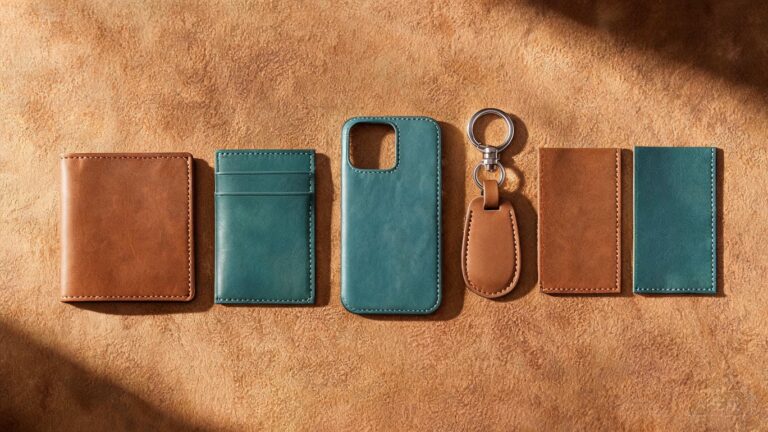
Bag and pouch manufacturing overview — how silicone leather reduces total production cost through eliminated returns
How to Specify Leather Pouch Materials for OEM Production
When writing an OEM purchase order for leather pouches, include these five specs as line items — not as a general “good quality material” note:
1. Material type: Specify “silicone-coated fabric, solvent-free dry coating process” — not just “leather” or “faux leather.”
2. Flex resistance: ≥50,000 cycles per ISO 5402 — request the test report from an accredited lab (SGS or Intertek).
3. Hydrolysis: 5-week Jungle Test (70°C, 95% RH) per ISO 11507 — zero surface degradation.
4. Color fastness: Grade 4-5 per ISO 105-B06 (light) and ISO 105-X12 (rubbing) — especially critical for dark-colored pouches.
5. Thickness and tolerance: Specify exact thickness (e.g., 0.6mm ±0.05mm) and request batch certificates. Inconsistent thickness causes stitching problems and visible quality variations. For more on material specifications for small leather goods, see our wallet material comparison guide and 3C accessories applications.
Frequently Asked Questions
What material is best for leather pouches?
For B2B leather pouch production requiring 10+ year durability, silicone leather is the best material. It delivers 50,000-100,000 flex cycles (ISO 5402) — critical for pouch fold lines — plus 200,000+ Martindale abrasion cycles, Grade 4-5 color fastness, hydrolysis immunity, and FDA/ISO 10993 certifications. Standard PU leather is acceptable for short-lifecycle products (2-3 years) at lower price points, but will fail at fold lines and zipper stress points within that timeframe. Genuine leather offers durability but carries cost, weight, and maintenance disadvantages that make it impractical for high-volume pouch production.
How thick should leather be for a pouch?
For standard leather pouches, 0.6-1.0mm thickness provides the optimal balance of structure, flexibility, and stitch retention. Compact cosmetic pouches and card holders work well at 0.4-0.6mm. Structured box pouches and rigid designs may use 1.0-2.0mm. Silicone leather is available from 0.23mm (ultra-thin for lightweight designs) to 2.0mm (rigid applications). The key is specifying thickness tolerance (±0.05mm) in the purchase order — inconsistent thickness causes stitching irregularities and quality variations that consumers perceive as “cheap.”
Spec the Material, Not Just the Design
A leather pouch’s lifespan is determined at the material specification stage — not at the stitching, design, or quality control stage. Factories cite Martindale because it’s the test they’re most likely to pass. But the five specs that actually determine whether a pouch lasts 6 months or 10 years are flex resistance, hydrolysis resistance, tear strength, color fastness, and abrasion resistance — tested together, not individually. Silicone leather passes all five by chemical design: no ester bonds to hydrolyze, no dye to migrate, no PU binder to crack at fold lines. For OEM/ODM buyers who are tired of writing quality claim emails at month six, the fix isn’t better stitching or tighter QC. It’s specifying the right material from the start. Write the five specs into your purchase order. Get the lab reports. And watch your return rate drop to zero.
About TOPSUN
TOPSUN manufactures silicone leather for B2B OEM/ODM buyers producing leather pouches, wallets, and small leather goods that require verifiable material specifications — not just Martindale numbers.
Flex resistance 50,000-100,000 cycles (ISO 5402) | Tear strength ≥15-20 N (ISO 34-1) | Color fastness Grade 4-5 | Hydrolysis-proof | 200,000+ Martindale (ISO 12947-2) | Thickness 0.23-2.0mm with ±0.05mm tolerance | Custom embossing in 7-10 days | Pantone/RAL matching Delta E ≤1.0 | 500m MOQ, 7-15 day lead time | Free A4 swatch samples worldwide