A furniture manufacturer in North Carolina ordered leather material by the yard for a 2,000-piece sofa production run. They used the standard conversion — 1 linear yard of 54-inch fabric equals 18 square feet of leather — and multiplied by their pattern area. What they didn’t account for: 22% hide waste from belly and edge zones that couldn’t be cut, thickness variance of ±0.15 mm across the hide requiring a 15% sorting buffer, and dye lot shifts that forced 8% of cut pieces into rework. The 4,200 yards they ordered should have covered the run. They ran short at 1,847 pieces. The missing 153 sofas went undelivered for six weeks while a rush order of 400 yards arrived at a 35% premium. The yard they bought wasn’t the material they needed — because “by the yard” means something fundamentally different depending on whether you’re buying hide, synthetic roll, or silicone roll goods.
Spec 1: Roll Width — Why 54 Inches Isn’t Universal
The standard roll width for synthetic leather material by the yard is 54 inches (137 cm), with some suppliers offering 60-inch (152 cm) widths. This width determines your cutting layout: a 54-inch roll yields 13.5 square feet per linear yard, while a 60-inch roll yields 15 square feet — an 11% yield improvement that compounds across thousands of yards. Genuine leather hides, by contrast, arrive in irregular shapes averaging 50–55 square feet for a standard cowhide, with usable area of 36–44 square feet after removing edges, bellies, and defect zones.
The conversion formula that most buyers use: 1 linear yard of 54-inch fabric equals 18 square feet of leather (Cortina Leathers, Hide Sizes). This formula already accounts for hide waste — but only for average hides in average condition. If your supplier ships hides at the lower end of the range (45 square feet total, 28–32 usable), your yield drops and your effective per-yard cost increases by 15–20% without any change on the invoice.

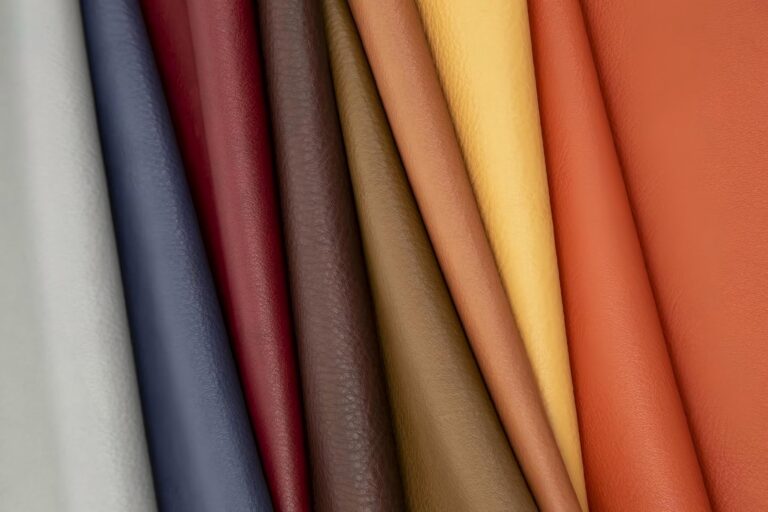
Roll-goods production line — uniform 54-inch width eliminates the hide-shape waste that inflates genuine leather per-yard costs by 15-25%
Spec 2: Thickness Tolerance — The Hidden Sorting Cost
Synthetic leather rolls maintain a thickness tolerance of ±0.05 mm — meaning a 1.0 mm specification delivers material between 0.95 and 1.05 mm across the entire roll. Genuine leather hides vary ±0.15 mm or more across zones: the bend (center back) is thickest and most consistent, the shoulder is slightly thinner, and the belly is loosest and most variable. This variance forces production teams to sort cut pieces by thickness zone, adding labor cost and slowing throughput.
For the North Carolina manufacturer, the thickness variance meant that 15% of cut pieces required re-sorting before assembly — a cost that never appeared on the material invoice but showed up in the labor variance report. Silicone leather rolls maintain the same ±0.05 mm tolerance as synthetic PU, with the added benefit of consistent density across the entire roll width. For the technical data sheet covering thickness specifications by application, our specification overview lists the ISO 2286-2 measurement standard.
Spec 3: Yield Factor — The 15-25% Waste Gap
Hide waste averages 15–25% due to the irregular shape of natural hides (StitchDesk, Yardage Calculator). The industry standard advice: purchase 20–30% more leather than your pattern area requires. For a furniture production run requiring 3,600 square feet of cut pieces, that means ordering 4,320–4,680 square feet of hide material — and paying for 720–1,080 square feet that ends up as waste.
Roll-goods leather material by the yard — both synthetic PU and silicone — eliminates this waste gap. Uniform rectangular rolls with consistent width allow computerized nesting that achieves 92–96% material utilization, versus 75–82% for natural hides. The calculation that determines whether roll goods or hides are cheaper: (hide price per sq ft) × (1 + waste factor) vs. (roll price per sq ft) × (1 + minimal waste). A hide at $4.50/sq ft with 22% waste costs $5.49/sq ft effective. A silicone roll at $5.50/sq ft with 5% waste costs $5.78/sq ft effective — a 5% premium that vanishes when you account for sorting labor, rework, and dye lot consistency.
Yield formula: Effective cost per sq ft = (Invoice price per sq ft) ÷ (1 − waste %). For hides: $4.50 ÷ (1 − 0.22) = $5.78/sq ft. For silicone rolls: $5.50 ÷ (1 − 0.05) = $5.79/sq ft. The “cheaper” hide costs the same as silicone once waste is accounted for — before labor and rework.

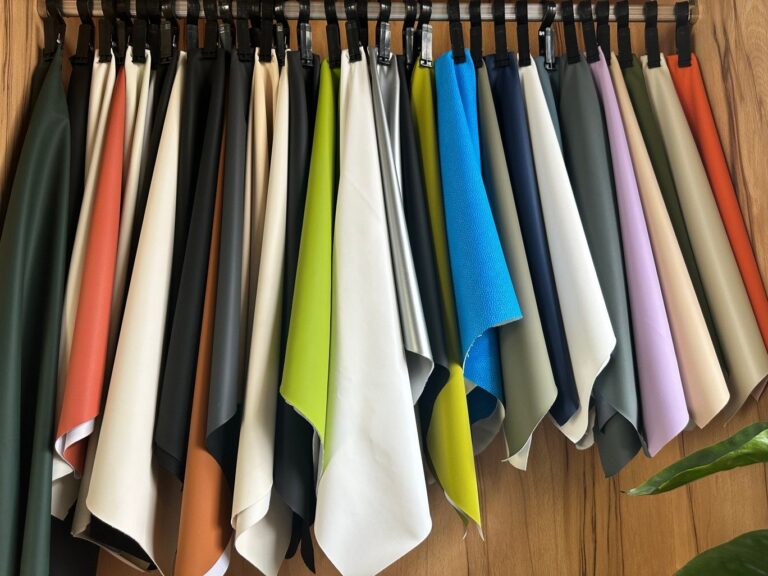
Color fastness testing — dye lot consistency across rolls determines whether cut pieces from different yards match at assembly
Spec 4: Dye Lot Consistency — The Rework Trigger
The North Carolina manufacturer’s 8% rework rate was driven by dye lot variation between hide shipments. Natural leather dye lots shift with each tanning batch — seasonal variations in the hide supply, differences in tanning agent concentration, and pH fluctuations in the drum create visible color differences between hides that arrive in the same purchase order. The result: sofa components cut from different hides don’t match at assembly, and the rework cost — disassembly, recutting, reassembly — runs $45–80 per unit.
Synthetic and silicone leather rolls are produced in continuous coating runs with automated color dispensing, achieving Grey Scale grade 4 or higher colorfastness per ISO 105-X12. A single production batch of 5,000+ meters maintains consistent color across the entire run. For B2B buyers, the specification should require: ISO 105-X12 rubbing fastness grade 4+ (dry), ISO 105-B02 lightfastness grade 5+ (for light colors), and a maximum color deviation of Delta E ≤ 1.5 between rolls in the same order. For a deeper look at how leather hide cost volatility affects sourcing, our previous analysis covers the pricing dynamics.
Spec 5-7: MOQ, Lead Time, and Width-to-Price Ratio
| Spec | Genuine Hide | Synthetic Roll | Silicone Roll |
|---|---|---|---|
| Roll Width | Irregular (45–55 sq ft) | 54″ (137 cm) standard | 54″ (137 cm) standard |
| Thickness Tolerance | ±0.15 mm | ±0.05 mm | ±0.05 mm |
| Waste Factor | 15–25% | 5–8% | 3–5% |
| Dye Lot Consistency | Batch-variable | Run-consistent | Run-consistent |
| Price / Yard | $80–200+ (top/full grain) | $3–8 (PU) | $12–18 |
| Effective Cost / sq ft | $5.78+ (waste-adjusted) | $1.50–3.00 | $5.79 (waste-adjusted) |
| MOQ | 55 sq ft (1 hide) | 500 meters | 500 meters |
| Lead Time | 4–8 weeks | 15–25 days | 7–15 days |
The table reveals the procurement paradox: genuine hide has the lowest invoice price per square foot but the highest effective cost once waste, sorting, rework, and dye lot management are factored in. PU synthetic rolls are the cheapest but carry compliance and durability limitations. Silicone rolls sit at the same effective cost as genuine hide — but deliver 200,000+ abrasion cycles, zero VOCs, and ISO 10993 biocompatibility that neither hide nor PU can match. For the silicone leather introduction, our overview covers the material properties that justify the per-yard investment.

Leather fabric sofa production — roll-goods material enables automated cutting and nesting that achieves 92-96% material utilization
The True Cost Calculation: Beyond the Invoice
The North Carolina manufacturer’s 153 undelivered sofas cost them $182,000 in lost revenue and $47,000 in rush-order premiums. The root cause wasn’t a pricing error — it was a yield calculation error. They used the standard 18 sq ft per yard conversion without adjusting for their supplier’s actual hide quality (lower-end hides with 28–32 sq ft usable area), without accounting for thickness sorting labor, and without building in a dye lot consistency buffer.
The corrected calculation for B2B buyers ordering leather material by the yard: (1) Start with pattern area. (2) Apply the supplier-specific waste factor — not the industry average. Require the supplier to provide their actual yield data from the last 12 months of shipments. (3) Add 10% for thickness sorting and dye lot rework if buying hides. Add 3% for roll goods. (4) Multiply by the per-yard price. (5) Divide by usable square feet to get effective cost per square foot. The number on the invoice is step 4. The number that matters is step 5.
Frequently Asked Questions
How much leather material by the yard do I need for a sofa?
A standard three-seat sofa requires approximately 120 square feet of cut leather pieces. For genuine hides with a 20% waste factor, order 144 square feet — roughly 3.6 standard hides (at 40 usable sq ft each) or 8 linear yards of 54-inch roll goods (at 18 sq ft per yard). For silicone leather rolls with a 5% waste factor, order 126 square feet — 7 linear yards. Always request your supplier’s actual 12-month yield data rather than using the industry 18 sq ft per yard conversion, which assumes average hide quality that may not match your supplier’s shipments.
What is the MOQ for leather material by the yard?
MOQs vary by material type and supplier. Genuine leather hides are sold per hide (typically 45–55 sq ft), with MOQs as low as one hide. Synthetic PU and PVC leather rolls typically require 500–2,000 meter MOQs. Silicone leather rolls have a 500-meter MOQ. For sample orders, most suppliers offer A4 swatches or 1-yard cuttings. At TOPSUN, our MOQ is 500 meters for production orders, with free A4 swatches available worldwide for material evaluation. Lead time runs 7–15 days for production orders, with 500,000+ meters of monthly capacity.
The Yard Is the Unit. The Yield Is the Cost.
Buying leather material by the yard is a procurement decision that looks simple on the invoice and complex in production. The per-yard price is the number you negotiate. The waste factor, thickness tolerance, dye lot consistency, and yield percentage are the numbers that determine your actual cost. Genuine hides offer low invoice prices but carry 15–25% waste and batch-variable dye lots. Synthetic PU rolls reduce waste and cost but introduce compliance and durability risks. Silicone rolls match the effective cost of genuine hide — after waste adjustment — while delivering 10–15+ year service life, zero VOCs, and 92–96% material utilization.
For B2B buyers across furniture, automotive, and consumer goods applications, the specification that matters isn’t “how much per yard?” — it’s “how much usable material per yard, at what tolerance, with what consistency?” Ask the second question. The first one will mislead you.
About TOPSUN
TOPSUN supplies silicone leather in 54-inch (137 cm) uniform roll format with ±0.05 mm thickness tolerance, 92–96% cutting yield, and run-consistent dye lots — giving B2B furniture, automotive, and consumer goods manufacturers the yield efficiency of roll goods with the durability and compliance profile of a premium material.
500,000+ m monthly capacity · MOQ 500m · 7–15 day lead time · 54″ (137 cm) standard width · ±0.05 mm thickness tolerance · Free A4 swatches worldwide via DHL/FedEx · ISO 105-X12 grade 4+ colorfastness · Delta E ≤ 1.5 between rolls