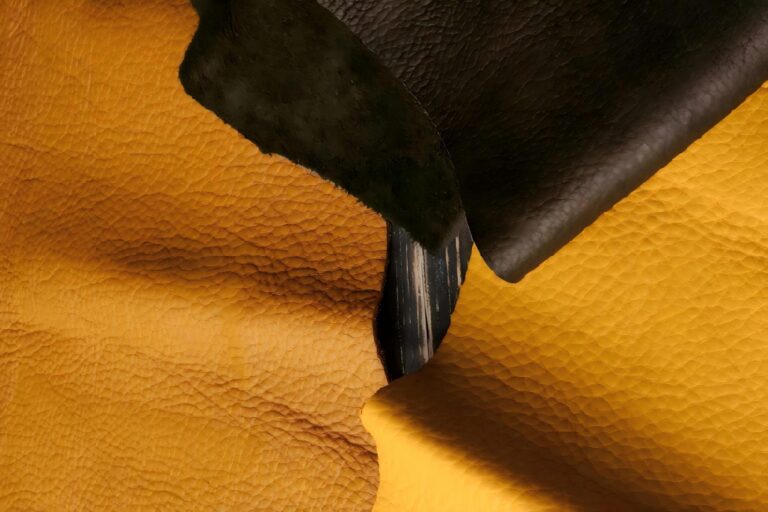
We source both — and the numbers don’t lie. A single cattle hide from a UK tannery costs less per square meter than silicone leather on paper. But by the time you account for cutting waste, grading rejects, batch inconsistency, and reordering lead times, the leather hide UK procurement reality inverts completely. Here’s what every B2B sourcing team should understand before committing to either material.
Request UK Leather Alternative Samples
The Real Cost of Sourcing Leather Hide UK
UK raw hides and skins trade at roughly US$0.85 per kilogram on the open market — a figure that looks attractive until you dig into what happens between the abattoir and your cutting table. The UK exports over 70,000 tonnes of raw hides annually, but domestic tannery capacity has been shrinking for decades. What remains is a supply chain where pricing volatility, grading disputes, and minimum order constraints quietly erode the unit-price advantage.
| Sourcing Factor | UK Leather Hide | Silicone Leather | Procurement Impact |
|---|---|---|---|
| Unit cost per m² | Lower (raw hide basis) | Higher (fixed pricing) | Hide wins on raw price |
| Cutting yield | 40–70% (grade-dependent) | 95%+ (uniform roll) | Silicone wins on usable material |
| Batch consistency | Variable — natural material | Delta E ≤ 1.0 | Silicone eliminates color matching |
| Lead time | 4–12 weeks (tanning + shipping) | 7–15 days | Silicone 3–8x faster |
| MOQ | Often full-hide batches | 500 meters | Silicone more flexible |

Organized silicone leather swatch rack — every roll matches the spec, no grading surprises
When you price per usable square meter — not per raw kilogram — silicone leather is often cheaper than UK leather hides. The cutting yield gap alone closes the unit-price difference for most applications.
Quality Grading: Why UK Leather Hides Are Inherently Inconsistent
UK leather hide grading follows systems like SATRA’s five-point method and ISO/TR 2822 guidelines for raw cattle hides. These standards exist for a reason: every natural hide carries defects — scar tissue, insect damage, branding marks, and growth wrinkles. A Grade 1 hide might yield 70% usable material. A Grade 3 hide? Sometimes 40%.
In our experience sourcing for UK furniture manufacturers, the gap between quoted grade and delivered grade is a recurring dispute. A tannery ships “mostly Grade 1–2” hides, but your cutting room finds enough Grade 3 sections to push actual yield below 55%. When you compare that to silicone leather’s uniform roll format, where every square meter meets the same spec, the procurement calculus shifts.

Batch-consistent swatch options — no natural hide variability means no cutting-room rejects
We’ve seen a UK sofa manufacturer switch from leather hide UK sourcing to silicone after losing a contract because their hide supplier delivered a batch with inconsistent grain patterns. The client rejected the entire order. With silicone leather, Pantone-matched color at Delta E ≤ 1.0 and 100+ texture options mean every shipment looks identical — because it is identical.
Supply Chain Risks UK Leather Hide Buyers Face in 2026
The UK leather hide supply chain carries risks that synthetic alternatives simply don’t have. Post-Brexit trade friction has increased customs documentation and extended lead times for both raw hide exports and finished leather imports. Climate pressures affect hide quality — drought-stressed cattle produce thinner, more scarred skins. And ethical sourcing demands now require traceability from farm to tannery, which many UK suppliers cannot fully document.
The sustainability gaps in natural leather extend beyond traceability. Chrome tanning — still the dominant process — generates wastewater containing heavy metals. Vegetable tanning is cleaner but slower and more expensive. For procurement teams under ESG mandates, neither option is ideal.

Genuine leather hide texture — natural variation that creates cutting yield uncertainty
Silicone leather sidesteps these issues entirely. It’s solvent-free, PVC-free, and 100% recyclable. No animal sourcing, no tanning effluent, no farm-to-tannery traceability gap. For brands that need to report Scope 3 emissions and supply chain ethics, silicone leather offers a cleaner story with fewer audit liabilities.
If you’re evaluating suppliers, watch for these red flags in leather suppliers — many apply equally to UK hide sources and international tanneries. Consistent documentation gaps, vague grading claims, and inability to provide batch-level test reports are warning signs regardless of material type.
Why Silicone Leather Eliminates Every Leather Hide UK Headache
For B2B buyers weighing a switch to silicone leather for furniture or upholstery, the operational case is straightforward. Every problem that makes leather hide UK sourcing difficult — grading inconsistency, supply volatility, tanning compliance, cutting waste — disappears when the material is engineered rather than harvested.
- Consistency: Pantone-matched color at Delta E ≤ 1.0 across every batch. No grading disputes, no cutting-room surprises.
- Supply stability: 500,000+ meters monthly capacity with 7–15 day lead times. No tanning bottlenecks, no seasonal hide quality fluctuations.
- Compliance: REACH-compliant, ISO 10993 biocompatible, zero VOC. No chrome tanning, no heavy metal effluent, no animal welfare audits.
- Cost predictability: Fixed pricing per meter vs volatile hide markets that swing with cattle prices, export tariffs, and tannery capacity.
See how silicone leather compares to natural hide and synthetic alternatives across key performance metrics

Controlled factory environment — consistent output replaces tannery variability
Frequently Asked Questions
Are UK leather hides still viable for B2B manufacturing in 2026?
UK leather hides remain viable for premium, low-volume applications where natural grain character and heritage branding justify the cost premium — luxury automotive interiors, high-end furniture, and artisanal goods. For high-volume, spec-driven manufacturing where consistency and cost predictability matter, silicone leather delivers better procurement outcomes. The decision should be driven by your application’s tolerance for variability, not by unit price alone.
How does the cost of silicone leather compare to leather hide UK sourcing?
On raw material cost per square meter, UK leather hides are typically cheaper. But when you factor in cutting yield (40–70% for hides vs 95%+ for silicone rolls), grading reject rates, batch-to-batch color matching labor, and lead-time inventory costs, silicone leather’s total cost per usable square meter is often lower. We’ve seen furniture manufacturers reduce their material spend by 15–25% after switching, primarily through eliminated waste and reduced rework.
The Verdict: Engineer Your Material, Don’t Harvest It
Leather hide UK sourcing has a place in the market — but that place is shrinking. For B2B manufacturers who need consistency, compliance, and cost predictability at scale, engineered materials like silicone leather solve the problems that natural hides create. The procurement question isn’t whether silicone leather is cheaper per kilogram. It’s whether your production line can afford the variability, waste, and supply chain risk that leather hide UK sourcing introduces. For most B2B applications, the answer is increasingly no.
Compare Silicone vs Leather Hide Costs
About TOPSUN
TOPSUN supplies silicone leather as a drop-in replacement for leather hide UK sourcing across furniture, automotive, and consumer goods manufacturing.
With monthly capacity of 500,000+ meters, Pantone-matched color consistency at Delta E ≤ 1.0, and REACH-compliant chemistry, we eliminate the variability that natural hides introduce into your production line.