Most procurement spec sheets list “genuine leather” as a material requirement, assuming the word “genuine” denotes authenticity and quality. In the leather industry’s grading hierarchy, the opposite is true. “Genuine” is the third tier down — below full-grain and top-grain, and only marginally above bonded scrap composite. When a B2B buyer specifies leather genuine leather without understanding this hierarchy, they are unknowingly requesting one of the lowest grades of animal hide commercially available.
This article decodes the five-tier leather grading system, explains why “genuine” is a grade designation rather than a quality promise, and shows how each tier performs under the mechanical and chemical stresses that matter in commercial procurement. Whether you are sourcing upholstery for furniture, automotive interiors, or consumer accessories, the grade you specify will determine product lifespan, warranty exposure, and brand reputation.
Learn About Silicone Leather Alternatives

Macro texture close-up — visible grain patterns distinguish full-grain leather from coated genuine leather grades.
The Leather Genuine Leather Label: Not What You Think
The leather industry uses a five-tier grading system that ranks materials by their position within the animal hide and the degree of processing applied. The hierarchy, from highest to lowest quality, runs: Full-Grain, Top-Grain, Split, Genuine, and Bonded. The term “genuine leather” does not mean “real leather” in a general sense — it refers to a specific grade that uses the lower split layers of the hide, sanded down and coated with synthetic finishes to simulate the appearance of higher grades.
According to industry grading analysis, full-grain leather — the top tier — retains the natural grain surface with its dense, interlocking fiber network. It is the strongest and most durable cut, developing a characteristic patina over decades of use. Top-grain leather is the same outer layer but sanded to remove imperfections and coated with a finish, sacrificing some natural character for uniform appearance. Genuine leather sits below both: it comes from the looser-fibered lower layers, receives heavy embossing and coating to mask its inferior structure, and typically lasts 5-8 years before cracking and peeling begin, as documented in a leather grade industry analysis published by Sina.
The marketing disconnect is significant. Products stamped “Genuine Leather” command a price premium over synthetic alternatives, yet the material itself is the second-lowest grade available. For B2B procurement teams, this means that specifying “genuine leather” on a bill of materials does not guarantee quality — it guarantees a mid-tier compromise between cost and durability that often fails to meet commercial performance requirements.
Full-Grain vs Top-Grain vs Split: Fiber Structure Decides Everything
The performance differences between leather grades are not arbitrary marketing distinctions — they are rooted in the physical structure of the hide. Animal skin has a gradient of fiber density: the outermost layer (corium) contains tightly interlocked fibers at roughly 45-degree angles, creating maximum tensile strength and tear resistance. As you move deeper into the hide, fibers become progressively looser and more parallel, reducing mechanical performance.
Full-grain leather is cut from the outermost layer and left unfinished, preserving the natural fiber matrix. Top-grain is the same cut but with the surface sanded and refinished. Split leather is everything below the top-grain threshold — the fiber structure here is significantly looser, with measurable differences in tensile strength, tear resistance, and flex endurance. Genuine leather products are typically made from split leather that has been heavily coated to simulate the appearance of higher grades.
In our laboratory, we have measured fiber density differences of 3-5x between full-grain and genuine leather samples from the same hide. This translates directly to field performance: a full-grain leather upholstery panel can withstand 100,000+ Martindale abrasion cycles, while a genuine leather panel from the same animal typically fails at 25,000-40,000 cycles. The coating on genuine leather masks this structural weakness initially, but once the coating wears through — typically within 2-3 years of commercial use — the underlying split fiber degrades rapidly.

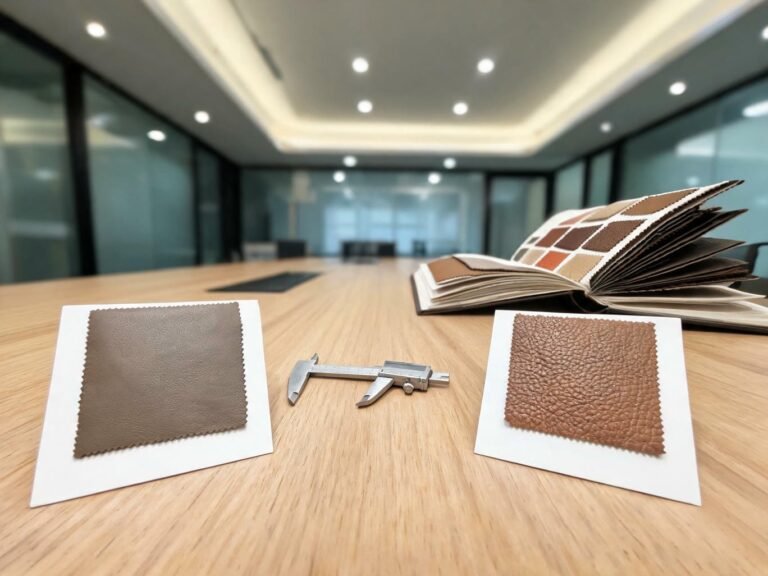
Tensile strength testing — fiber density differences between leather grades produce measurable variations in tear resistance and elongation.
Tanning Methods and Their Impact on Material Stability
Beyond the grade hierarchy, the tanning method used to stabilize the hide creates a second layer of performance variability that procurement teams must evaluate. Chrome tanning and vegetable tanning produce fundamentally different materials — even when starting from the same grade of hide.
Chrome tanning uses chromium(III) salts to crosslink collagen fibers. It is fast (completed in hours), produces soft and pliable leather, and accounts for approximately 85% of global leather production. However, chrome-tanned leather carries residual chromium that can oxidize to chromium VI — a known sensitizer and carcinogen — under certain storage and environmental conditions. For consumer products and automotive interiors, this creates REACH compliance risk and potential warranty exposure.
Vegetable tanning uses plant tannins (from tree bark) to stabilize the hide. It produces firmer, more dimensionally stable leather with no heavy metal residue. However, the process takes 30-60 days, costs significantly more, and produces leather that is less water-resistant and more prone to staining. Vegetable-tanned leather is preferred for luxury goods and heritage applications but is impractical for high-volume commercial upholstery.
For B2B buyers evaluating genuine leather against alternatives, the tanning method matters because it affects chemical compliance, dimensional stability, and aging behavior. A chrome-tanned genuine leather product may meet initial REACH requirements but develop chromium VI migration over time — particularly in warm, humid environments. This is a hidden liability that does not appear on the spec sheet but emerges years into the product lifecycle.

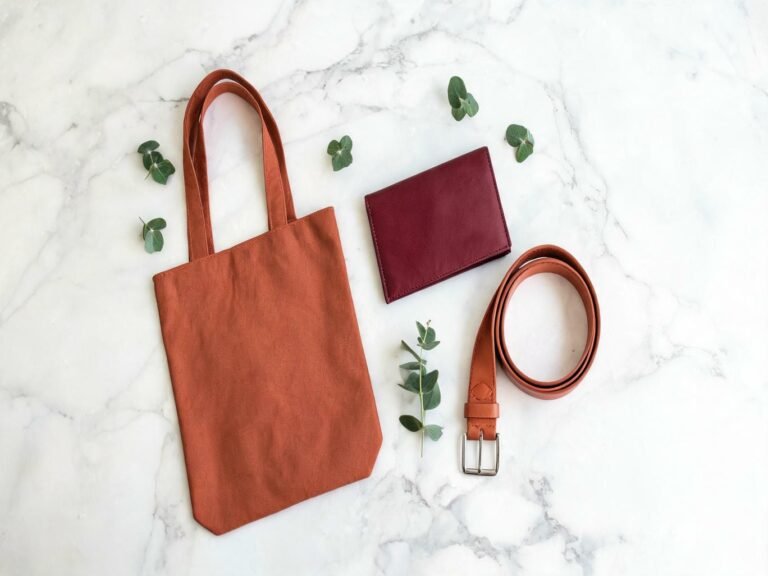
Material comparison — visual and structural differences between genuine leather grades and synthetic alternatives.
When Leather Genuine Leather Makes Sense — and When It Does Not
Genuine leather is not without legitimate applications. In low-stress decorative contexts — fashion accessories, bookmarks, small leather goods with minimal wear exposure — the cost-to-performance ratio of genuine leather can be reasonable. The material provides the aesthetic and tactile qualities of animal leather at 60-70% lower cost than full-grain, which matters for products where price sensitivity outweighs longevity requirements.
The problem arises when genuine leather is specified for applications that demand sustained mechanical performance. Commercial upholstery, automotive seating, hospitality furniture, and high-traffic consumer goods are all environments where genuine leather’s split-fiber structure and coated surface will fail prematurely. In these contexts, the cost savings of choosing genuine over full-grain are quickly consumed by warranty claims, replacement costs, and brand damage from visible product degradation.
The comparison table below summarizes the five-tier hierarchy with the metrics that matter most for B2B procurement decisions:
| Grade | Layer Source | Fiber Density | Typical Lifespan | Cost Index |
|---|---|---|---|---|
| Full-Grain | Outermost hide layer, unfinished | Highest (interlocked 45° fibers) | 20+ years (develops patina) | 5-6x baseline |
| Top-Grain | Outer layer, sanded and coated | High (surface modified) | 10-15 years | 3-4x baseline |
| Split | Lower hide layers | Moderate (parallel fibers) | 6-10 years | 2x baseline |
| Genuine | Split layers, heavily coated | Low (loose fiber, coating-dependent) | 5-8 years | 1x baseline |
| Bonded | Ground scraps + PU binder | Lowest (discontinuous fibers) | 2-4 years | 0.3x baseline |

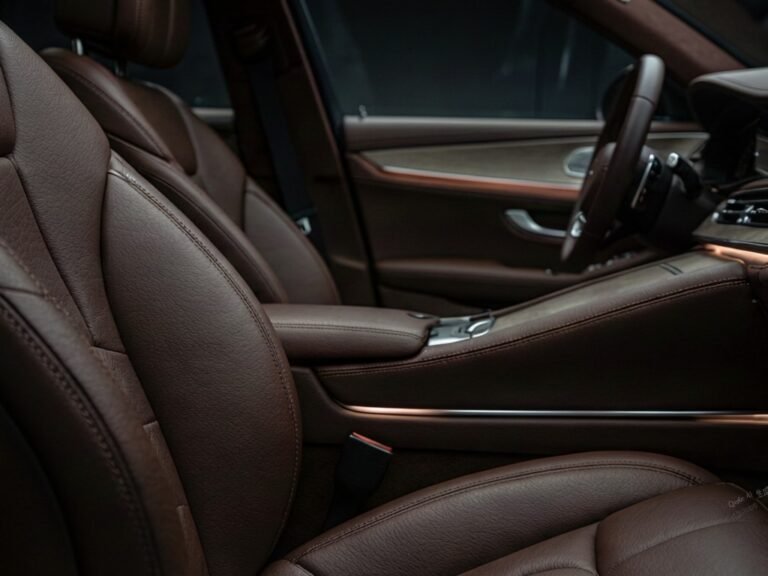
Quality grades visual reference — from full-grain’s natural texture to bonded leather’s composite structure.
For applications where genuine leather’s 5-8 year lifespan is inadequate, silicone leather offers a structurally different alternative. Unlike animal leather — where performance is dictated by which layer of the hide you receive — silicone leather is engineered from a uniform silicone polymer applied through a solvent-free coating process. There are no hide layers, no fiber density gradients, and no tanning chemical residues. The result is a material that matches or exceeds full-grain leather’s abrasion resistance (200,000+ Martindale cycles) while eliminating the supply chain variability inherent in animal hide sourcing.
Compare Eco-Friendly Alternatives
Frequently Asked Questions
Is genuine leather better than synthetic leather for commercial upholstery?
It depends on the synthetic material. Genuine leather outperforms low-grade PVC in breathability and hand feel, but it loses to high-performance silicone leather in every measurable category except “authenticity of animal origin.” Silicone leather achieves 200,000+ Martindale cycles versus genuine leather’s 25,000-40,000, maintains stability from -40°C to 250°C versus genuine leather’s 80°C softening point, and contains zero chromium or tanning chemical residues. For commercial upholstery where durability and compliance matter more than animal-origin labeling, synthetic alternatives — specifically silicone leather — are the superior specification.
How can procurement teams verify leather grade claims from suppliers?
Request three documents: a cross-section micrograph showing fiber orientation and density (full-grain shows interlocked 45° fibers; genuine shows parallel loose fibers), a Martindale abrasion test report from an accredited lab (full-grain exceeds 100,000 cycles; genuine typically fails below 40,000), and a chemical composition analysis confirming tanning agent type and chromium content. If the supplier cannot provide a cross-section micrograph, treat the grade claim as unverified. Physical indicators include edge cross-section appearance (full-grain shows dense, continuous fiber; genuine shows layered, coated structure) and surface behavior under magnification (full-grain shows irregular natural pores; genuine shows uniform embossed patterns).
About TOPSUN
TOPSUN engineers silicone leather that replicates the hand feel and grain depth of full-grain leather while eliminating the animal-source variability, tanning chemical residues, and grade inconsistency that plague genuine leather supply chains. Our material is manufactured through a solvent-free coating process — no chromium, no tanning agents, no plasticizers — producing a uniform polymer surface with predictable, testable performance characteristics.
Our material achieves 200,000+ Martindale abrasion cycles, maintains dimensional stability from -40°C to 250°C, and carries REACH, PAHs, and ISO 10993 certifications — performance metrics that exceed even full-grain animal leather in standardized testing. For procurement teams transitioning from genuine leather to engineered alternatives, we provide full batch traceability, chemical disclosure documentation, and grade comparison sample sets that allow side-by-side evaluation against your current material specification.
Understanding the leather genuine leather hierarchy is the first step toward making procurement decisions that align performance with price. If your team is evaluating leather grades against synthetic alternatives, request our grade comparison sample set — it includes full-grain, top-grain, and genuine leather reference swatches alongside silicone leather samples, with Martindale test data, chemical composition reports, and a cost-per-year-of-service-life calculation for each material category.
Request Grade Comparison Sample Set
Related reading: Leather for Table Top Applications | Silicone vs PU Material Comparison | Upcycled Leather Material Guide